Tag Archives: tacot

Wednesday 21st September 2022 – I KNOW THAT …

… this is rather late being posted, but better late than never and if a thing is good it’s worth waiting for. And so is this

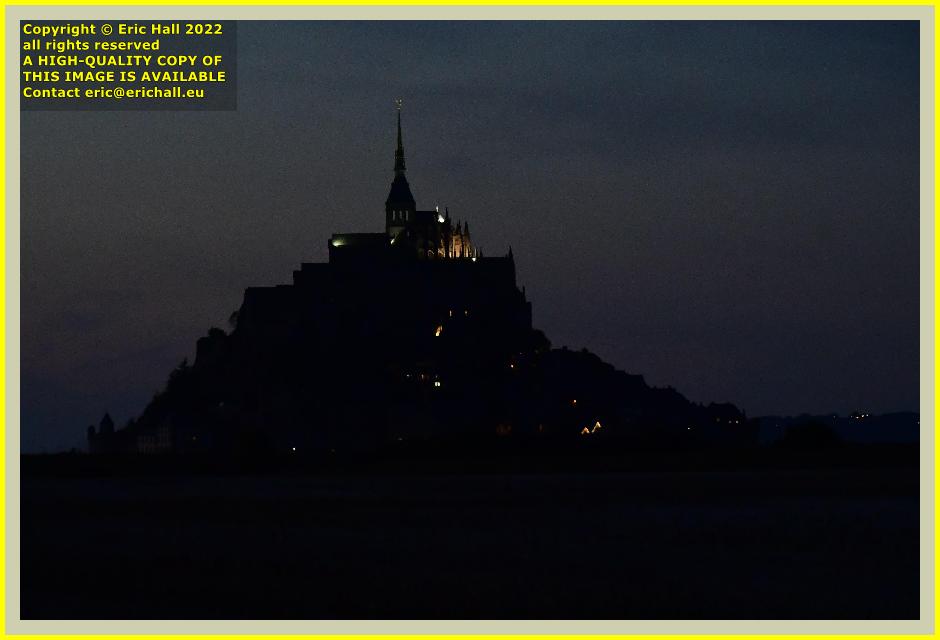
mont st michel by night Manche Normandy France Eric Hall photo September 2022In fact I’ve been out and about today and didn’t return home until after midnight, when I would let it all hang out.

So while you admire a couple of photos of Mont St Michel in the darkness, I shall tell you all about my busy day.

As usual, the alarm went off at 07:30 and after the medication etc I set about tidying up because I was going to have some visitors today. I seem to be in demand just now

And it’s a good job that I’d started early because they came early too and I wasn’t ready. I had a few things that I hadn’t done so I had to to finish off while I was chatting.

That’s rather an uncomfortable situation to be in but at least having visitors around means that I have to keep the place looking something like tidy.

mont st michel by night Manche Normandy France Eric Hall photo September 2022There was such a lot of things to say so we had a coffee and spent quite a while chatting, but it was such a nice day yesterday that it was a shame to waste it.

When they had been here the other day i’d mentioned about the beautiful views along the coast so I reckoned that that would be quite a nice drive today, and so we hit the road, Jack, or Jacques seeing as we are where we are.

The obvious place to go to in this nice weather is the viewpoint up on the Pointe de Carolles where there is the Cabanon Vauban. We’ve been here several times before but my visitors haven’t so off we went. I couldn’t actually remember where the turning was so we almost drove past it

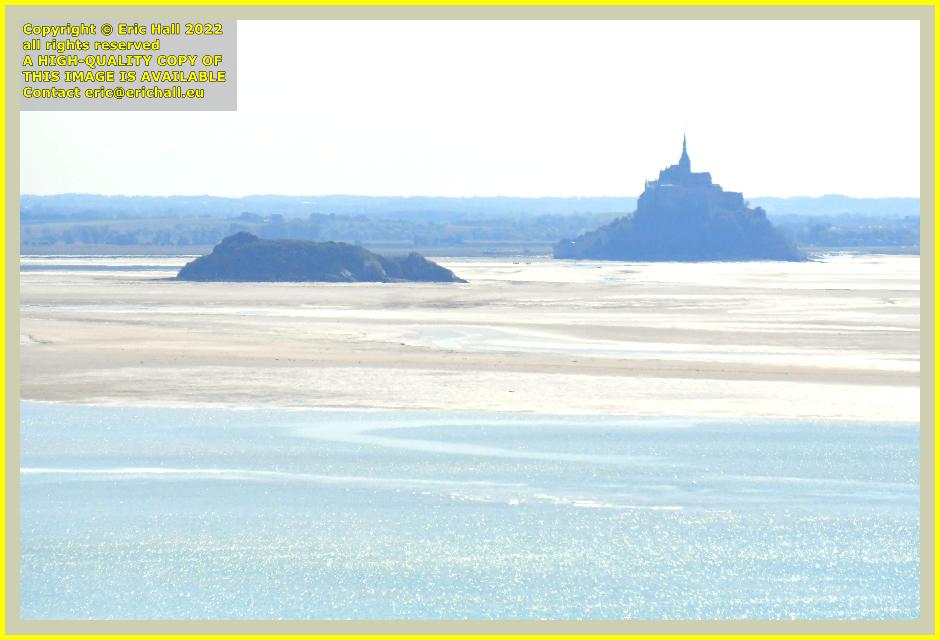
tombelaine mont st michel from pointe de carolles Manche Normandy France Eric Hall photo September 2022It was something of a long slow path across the fields once we’d parked the car, but the view from the end was worth it.

It’s one of the best views of Mont St Michel from up here, with the island of Tombelaine over to the left.

The tide is well out as you can see, and in certain conditions it’s possible to walk from the coast at Genets over to Tombelaine and Mont St Michel and it’s quite a popular thing to do. But you need a guide who knows the way because it’s not an easy trip and there’s no marked path.

There was plenty of marine traffic down there in the bay too, including a trawler that was having a go with its nets out to see what it could pull up.

fire on brittany coast Manche Normandy France Eric Hall photo September 2022But also over on the brittany side there was a fire in one of the small towns.

It’s not possible to say what it was at this distance – whether it was a bonfire or a house fire, but it looked as if it had been burning for a while.

We went for a walk along the clifftop but we couldn’t see very much else – I’m not up for clambering over the rocks these days – so in the end we headed for the car, once I remembered the correct trail. I seem to be forgetting everything.

And then we went back to the main road to carry on southwards.

tombelaine mont st michel viewed from champeaux Manche Normandy France Eric Hall photo September 2022There’s another viewpoint further along the road at Champeaux and I couldn’t remember where that was for a moment either.

The view from here is even better so when we eventually reached it we stopped here as well

Tombelaine was at one time the site of a monastic cell where in the 11th Century two monks from Mont St Michel came to live the life of hermit. The place was fortified in 1204 after the English had been expelled from Normandy and then by the English during the Hundred Years War.

There were various plans, such as to create a mini-Mont-St Michel here or, to turn it into a tourist destination but in the end it’s become a site for birdwatching (but not the kind of birds that I would be interested in watching) and is owned by the State and classed as a National Treasure.

st jean le thomas viewed from champeaux Manche Normandy France Eric Hall photo September 2022There’s also a good view from up here down onto the town of St Jean le Thomas.

The town was gifted by “William of the Long Sword” to the monks of Mont St Michel in 917AD but there was some conflict 200 years later between the monks and another “Lord of the Manor” about wood-cutting rights so it seems that the gift wasn’t as complete as it might otherwise have been.

There was a castle there at one time but Philippe-Augustus, King of France 1180-1223 ordered the castle to be surrendered to the monks and destroyed. At the turn of the 20th Century all of the remains of the castle had gone.

The narrow-gauge tacot railway line from Granville ran through here between 1908 and 1935. I’m not sure what there is that remains of the railway network in the town today. I suppose that one of these days I ought to go and have a look.

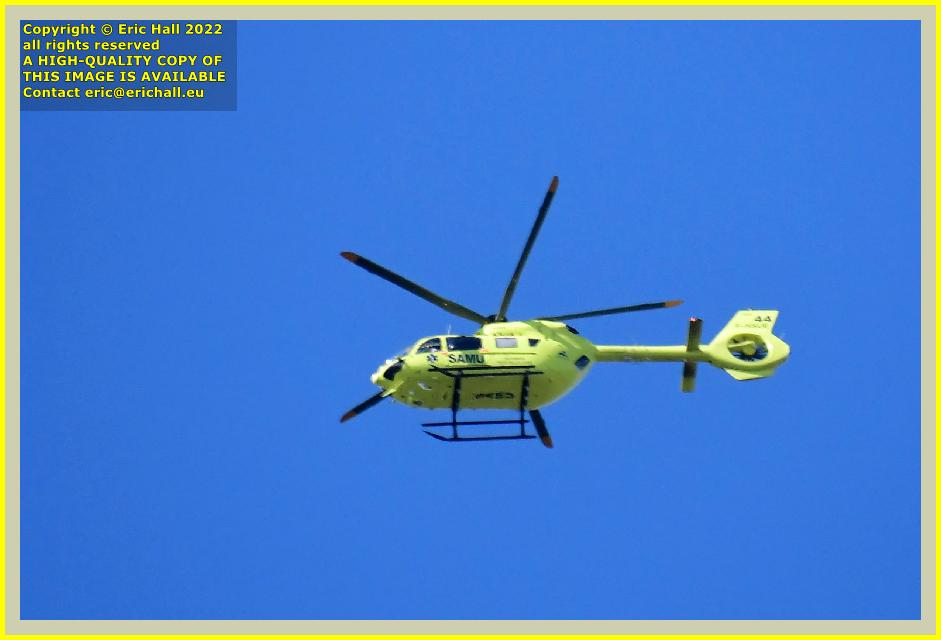
SAMU service d'aide medicale urgente helicopter airbus H145 T2 avranches Manche Normandy France Eric Hall photo September 2022By now we were hungry so we headed into Avranches for a snack.

We parked up the car and headed into town on foot. And as we did so we were overflown by a helicopter.

It’s not the Air-Sea Rescue helicopter that we usually see but one that belongs to the SAMU – the Service D’aide Medicale Urgente or “Emergency Medical Services” so I suppose that it’s the local air ambulance.

She’s an Airbus H145 T2 and we’ve seen a few of those flying around here. It’s the later version of the Air-Sea Rescue’s Eurocopter EC 145.

Once again we had to struggle to find something to eat but finally a little café came up trumps with some sandwiches.

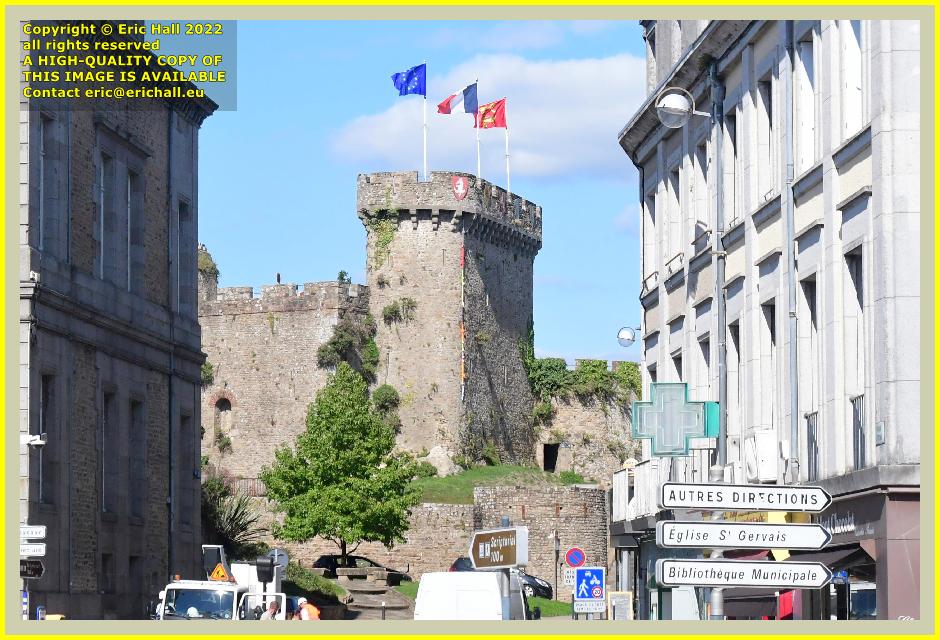
castle avranches Manche Normandy France Eric Hall photo September 2022We could sit outside in the sun where there was a really good view of the castle at Avranches.

Shame as it is to say it, I’d forgotten all about this castle. Its origins date from the middle of the 10th Century and was one of the earlies recorded stone castles. However there is no trace of that construction remaining. What we see dates to the time of William the Conqueror.

It’s actually built by the Dukes of Normandy on a promontory overlooking the baie de Mont St Michel on a site that was known to have been occupied by the Celts and then by the Romans.

From its position it could obstruct the passage of Breton forces in the days before both Brittany and Normandy were part of the Kingdom of France.

The castle was surrendered to the French in 1203 and was fought over on many subsequent occasions, including in 1944 when considerable damage was caused to the fabric of the building.

Back to the car after a very long chat and we headed off for our final destination.

As regular readers of this rubbish will recall, parking at Mont St Michel costs an arm and a leg and we were only going to be here for a couple of hours.

However a friendly café owner, having served us a couple of coffees, informed us that as we were now customers of hers, we could leave the car on her car park. She told us how to unhitch the barrier later and we expressed our gratitude in monetary terms.

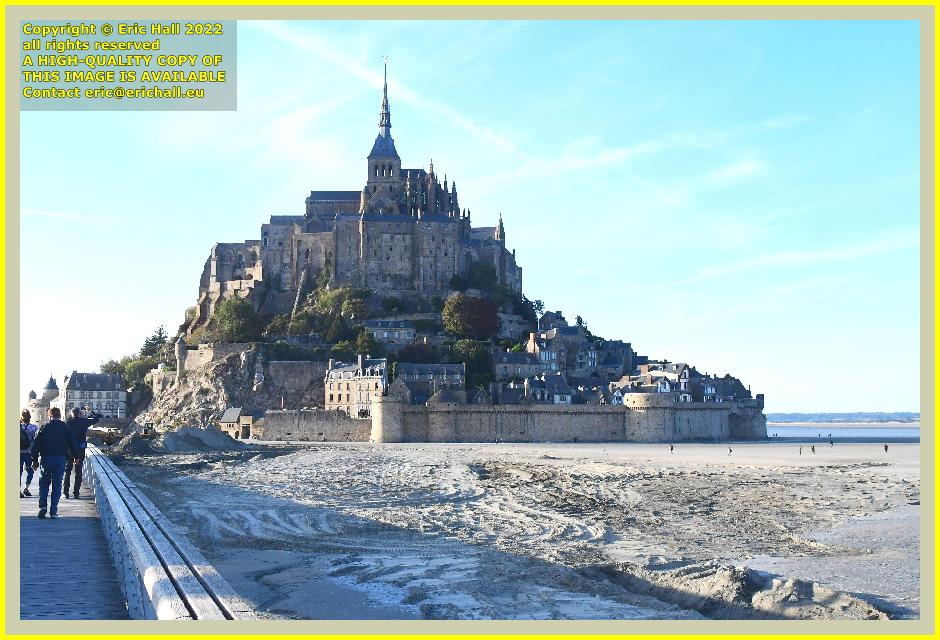
mont st michel Manche Normandy France Eric Hall photo September 2022There was a 15-minute walk to the shuttle terminus and a 15-minute wait for a bus to arrive, and then we were off.

My friends were quite impressed with the push-me-pull-you nature of the bus and, as they had never been here before, with the view that we had of the Mont as we approached it.

And as I have said before … “and on many occasions too” – ed … it’s all changed considerably since I first came here 40 or so years ago. The causeway was different and there was no official car park either. You drove down here and parked where you could.

In those days I’ve seen more than a few cars have to be winched out from the rapidly-approaching tide.

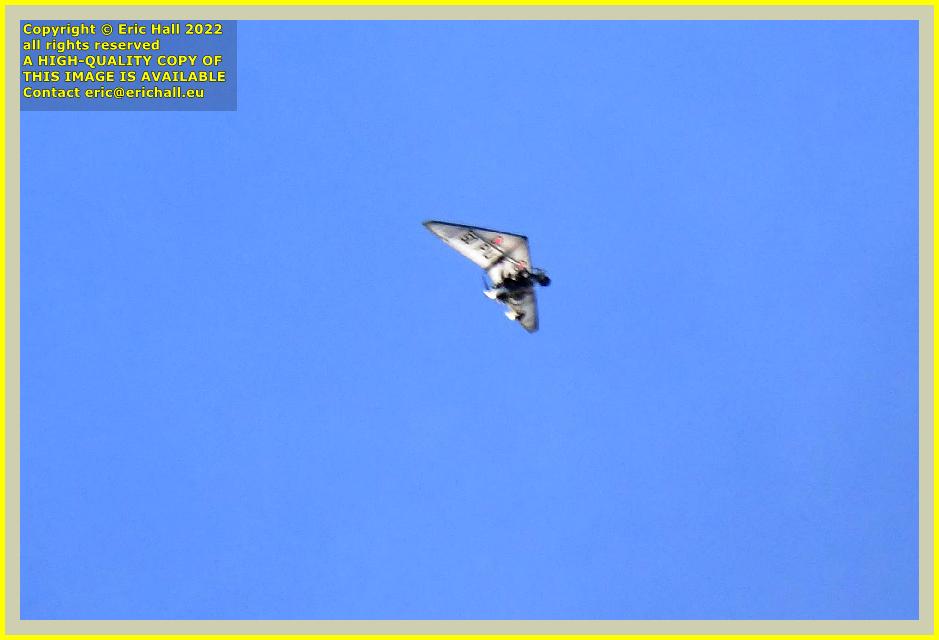
powered hang glider mont st michel Manche Normandy France Eric Hall photo September 2022And as we alighted from the bus, we had one of our old friends come to visit us.

When we’ve been wandering around the clifftops back at home we’ve seen the powered hang-gliders dozens of times coming back from the head of the bay and I’ve often speculated that they have been for a look at what’s going on down here.

Sure enough, one of them, the red one, flew past overhead as we walked the rest of the way towards the walls so we all said “hello” and continued on our respective ways.

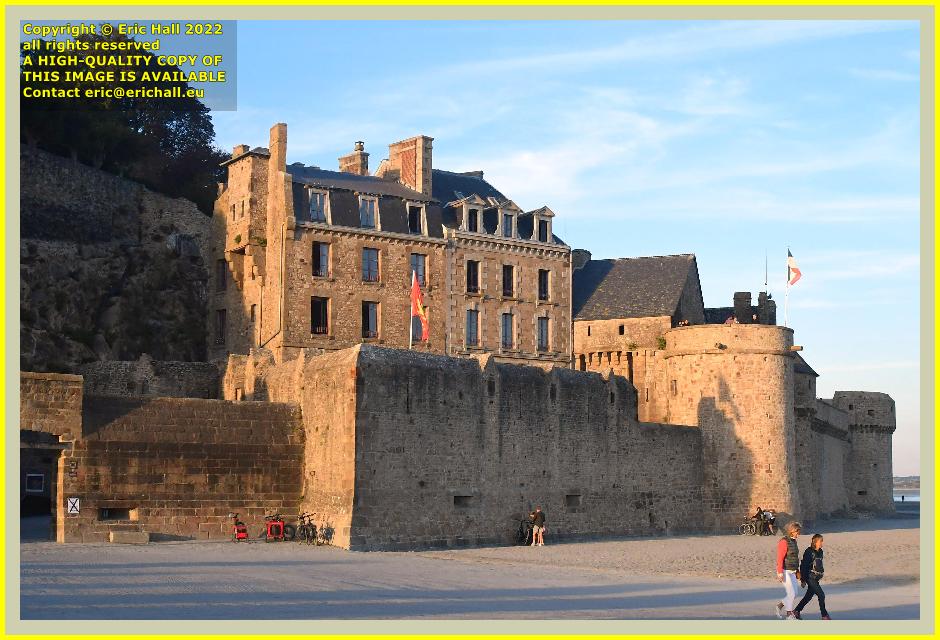
porte de l'avancée mont st michel Manche Normandy France Eric Hall photo September 2022bathed in the glorious early evening sunset is the entry, the Porte de L’Avancée.

Although there is, officially at any rate, only one way in, changes in technology over the past have meant that the original entrance, buit shortly after the Fall of Normandy when the inhabitants were massacred by Breton soldiers, was insufficient to defend the mount from invasion.

And this although the Porte de L’Avancée is the first part of the entrance that you encounter, it was actually almost the last part of the fortifications to be built, as far as I can tell, and dates from 1530.

tour gabriel mont st michel Manche Normandy France Eric Hall photo September 2022Over to the left is the Tour Gabriel or “Gabriel’s Tower”.

This was perhaps the last part of the fortifications to be built and dates from 1534. It was built on the orders of Gabriel du Puy who was in charge of the mount at the time. Because it’s round, it has a really good field of fire that can defend the entrance from attack by sea in this direction.

There was a windmill built on the tower in 1627 and the tower even served as a lighthouse.

The building in front of it is more modern although I’ve not been able to find out the date on which it was built. But it’s outside the walls so it presumably dates from a period when the military funnction of the mount ceased.

ramparts tour du roy tour de la liberté mont st michel Manche Normandy France Eric Hall photo September 2022Over on the right are the ramparts, the Tour du Roy, the “King’s Tower”, and theTour de la Liberté, “Liberty Tower”.

The Tour du Roy and the little Tour de l’Arcade that you can just about make out to its right date from the improvements of 1417 at the height of the Hundred Years War, presumably after Henry V of England landed in Normandy on 1st August and laid siege to Caen, which he captured on the 17th.

The Tour de la Liberté used to be known until 1789 as the Tour Beatrix and although I found the plans for it, I’ve not been able to find the date of its construction. It was certainly here in 1434 as it was reported as damaged by cannon fire in a siege by the English, and was repaired in 1441 and reconstructed in 1479.

There were important building works to strengthen the fortifications between 1389 and 1410 and it’s likely that it dates from that period.

mont st michel Manche Normandy France Eric Hall photo September 2022As for the abbey itself, this is what everyone comes to see, although I’m not going to see it as I’d never get up the hill.

The village itself is known to have existed in 709 but before that, as a result of several alleged miracles, it was a site of pilgrimage and the Abbots of the cathedral at Avranches promoted the site in various written tracts. Some kind of church was erected in the village and was gradually expanded.

Some monks came here to seek sanctuary but their church was sacked by the Vikings in 847.

It was re-established later but in 965 the construction of the Abbey began. In 1022 Richard Duke of Normandy gave to the monks the Ile de Chausey who then used rock from the islands to expand the Abbey.

However by the mid-18th Century the place was starting to fall into ruins and the French Revolution finished it off.

It was declared a “national Monument” as early as 1862 and restoration began shortly afterwards.

maison de l'artichaut mont st michel Manche Normandy France Eric Hall photo September 2022This is the Maison De L’artichaut, so-called because its decorations on the spire are said to resemble artichokes.

It was actually created as part of the Hotellerie de la Licorne – the “Hostel of the Unicorn” which dates from the 15th Century.

It was declared a “Historic Monument” in 1918 and the upper part in 1936, however it’s not stated in the Formal Notice when it was actually built. One can only assume that it was built either at the same time or shortly after the Hotellerie de la Licorne.

On the right just here are the steps that lead up to the ramparts but I wasn’t going for a stroll up there.

porte du roy mont st michel Manche Normandy France Eric Hall photo September 2022This here is the Porte du Roy – the “King’s Gate”.

This is another addition from the work of 1417. With no ditch here at the time, the mount was easy to attack and difficult to defend so a ditch was dug and the gate was built, with a drawbridge to protect the entrance.

There was also a metal portcullis here to defend the entrance.

Nevertheless all of this was still insufficient so another entrance was built in 1440, part of which you can see through the arch, because of the advances in artillery that rendered the gate obsolete.

The final entrance that we saw earlier in was added in 1530 following further advances in artillery and offensive techniques..

You can see all of the steps up to the ramparts again on the left of the photo.

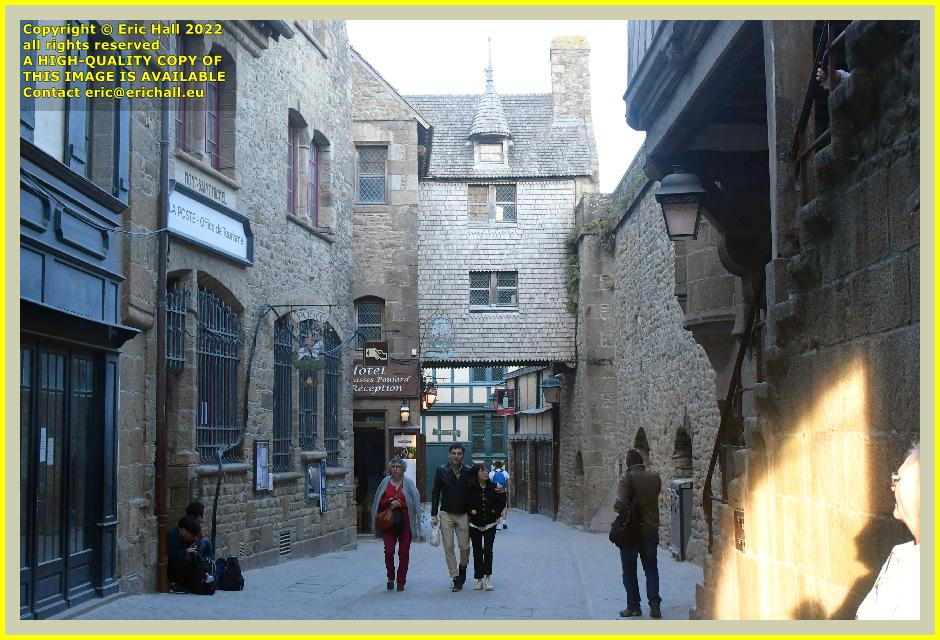
grande rue mont st michel Manche Normandy France Eric Hall photo September 2022This is the Grande Rue or “High Street”. I reckon that just about every building in here is a listed National Monument.

And it was here that I abandoned my friends for a while and let them carry on up the hill. It had defeated me so I wandered back outside to wait for them and to have a look around while they carried on trudging up the hill.

And while I was waiting outside I took many of the photos that you saw just now.

When they returned we had a very leisurely walk back to the bus stop, and then an even more leisurely wait for a bus to arrive. There are only two running right now so it was a very long wait.

sunset mont st michel Manche Normandy France Eric Hall photo September 2022At least, the wait meant that we had a good opportunity to see the sun setting. That was quite beautiful.

Back at the shuttle terminal we walked back to the café, rescued the car and I took the photos of Mont St Michel in the darkness as the lights came on.

We had a good drive back to Granville and I invited them to a restaurant where I treated them to a meal to thank them for a wonderful day out. And as a result it was after midnight when I returned home.

No time to write up my notes so I’ll do that tomorrow. which I did, hence the amended page.

And I also transcribed the dictaphone notes too. There was a trawler whose registration number was something like KVKLNO something or other. We’d been to a football match watching Morton. people were saying about how poor the side was these days. I was thinking that it’s not a case of how poor the side was, it’s a case of the money becoming tight everywhere and they are suffering. A subject came up that involved trawlers. One of the group said that thanks to someone else but I can’t remember who, they were saved from certain events that might have happened invloving this trawler because that particular person made them aware of things but I can’t remember what that was.

There was something going on last night with my beige Cortina. I was at home and talking to my sister. She was cleaning the house really deeply but we didn’t have all that long to wait before we had to go out so I couldn’t understand why she had suddenly started on this plan. One of the topics of conversation was the local councillor when we lived in Shavington. He was my age and had been on a student exchange with me. On one particular coach trip coming back from somewhere there had been a few shenanigans as you would expect with a bunch of teenagers. He’d been a part of all of this yet here he was 30 years later being all “Holier Than Thou”. Of course everyone remembered him and we made our best to make sure that everyone knew exactly what had been happening back in those days.

Wonders will never cease.

Monday 20th July 2020 – TODAY WAS …

… something of a rather sad day. Nothing to do with anything that I have done, I hasten to add, but from a historical perspective – more of which anon

First off though, taking my bag off the bed, I noticed a rather large brown stain on the quilt. Somehow my bottle of gravy browning has leaked. So I had to scrub the quilt cover with soap to stop the stain fixing into the cover

Secondly, I still can’t make the internet work here. So having learnt the technique of USB tethering last night, I used it again, It’s not very satisfactory but at least it works.

That is, well enough to type up the notes off the dictaphone. There were some weird goings-on last night but unfortunately I can only remember a bit of it. There was a housing estate like Park Estate in Shavington and a house on there was all overgrown and filthy, full of weeds and the house was all infested with cobwebs. I was with a young guy. I don’t remember too much about how it started off but I remember that eventually we were driving around Park Estate together. We went to this house as we had to pick something up and this involved getting a third guy to go with us. There was a woman there and a guy – it might have been my friend from Stoke on Trent. In the meantime there was some discussion about someone else. As we were driving around this estate he said that he was the guy who did something or other. This young guy pointed out a building and said “that’s where that guy committed suicide 3 years ago. He gassed himself”. I could vaguely remember that so he said “yes, he had a washing machine that was for sale”. I was really interested. When I looked on my Social Network pages I found that he was born in Pwllheli. That was really interesting to me and I was very disappointed to find out that he had died. We got to this house and got a few things together. This living room was so untidy and no-one seemed to be bothered at all. Filthy, untidy, cobwebby. In the end to close the door it was just a case of pulling the curtains and kick a load of stuff out of the way. This woman was sitting there doing something said “yes, that’s fine”. We had to go outside then and get in my van ready to go but the other guy then started to move some sand and gravel and ash around. It was a case of getting a barrow-load of stuff, tipping it through a sieve and the stuff that passed through the sieve, throwing it away somewhere. All these long grass and weeds so he was doing that. At one stage he was pushing a load and went to tip it up and the barrow just folded up under the weight. He was cursing this and I thought to myself “now that they have messed up the wheelbarrow we might actually stand a chance of going”

Another thing that I mentioned on the dictaphone that I head when I transcribed my notes was “don’t forget to add that someone else’s flaming alarm awoke me at blasted 05:10 this morning”.

Having had a shower I went downstairs, made my excuses to the receptionist and then loaded up Caliburn. Reversing into the busy street was … errr … interesting, but eventually we set off and in the blistering heat, headed south.

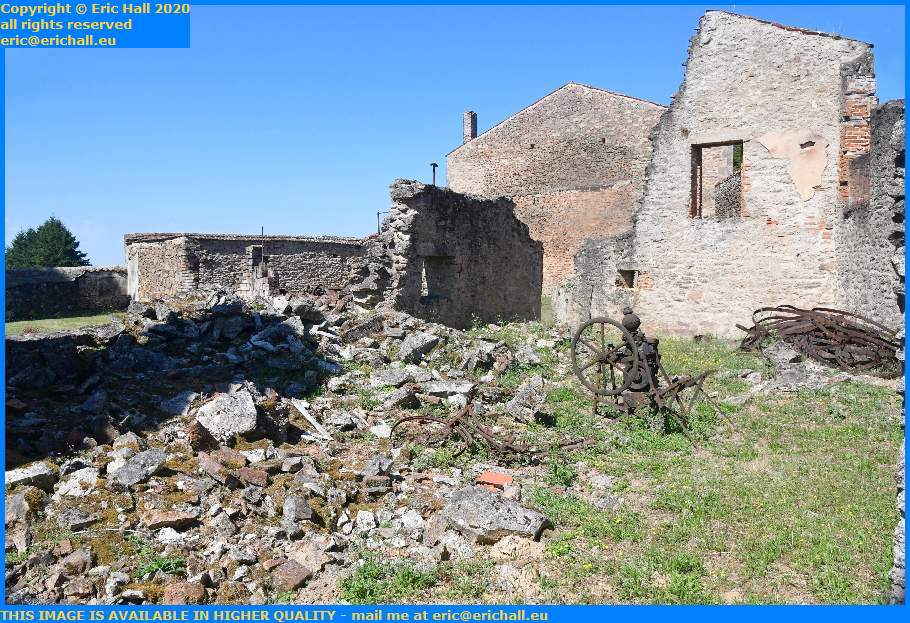
burnt out houses at entrance to oradour sur glane 87520 haute vienne france eric hallAfter a drive of several hours in the sunshine, I finally came to my first port of call.

My route took me round the city of Limoges on the ring road out westwards on the N141 toward Angouleme to reach what is probably the saddest place in Western Europe where the nadir of man’s inhumanity to man in the horrors of war was reached.

And if the burnt-out building on the hill over there in the previous photo hasn’t given you a clue as to where I am, then read on.
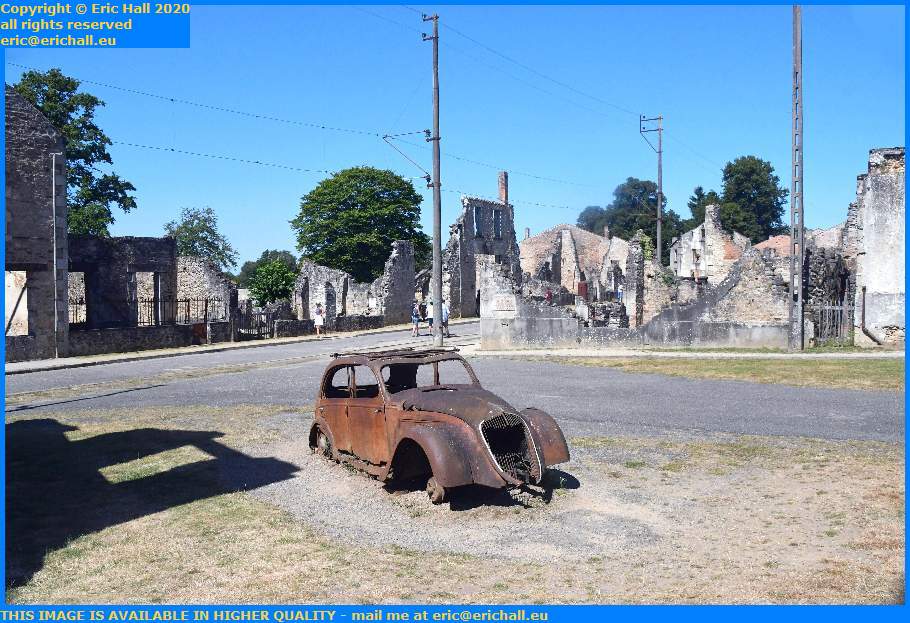
burnt out peugeot 202 square town centre town centre oradour sur glane 87520 haute vienne france eric hallThis is the photo that everyone has seen and which comes to everyone’s mind when the subject of Oradour sur Glane comes to the fore.

The burnt-out shell of the old Peugeot 202 in the town square has featured in just about every article or every story that has ever been written about that tragedy that took place here on the 10th of June 1944 as a company of the Das Reich 2nd Panzer Division of the SS passed by on its way to the Normandy beaches.

And after they left the village, only 6 people who had encountered the Germans remained alive and all were seriously wounded.
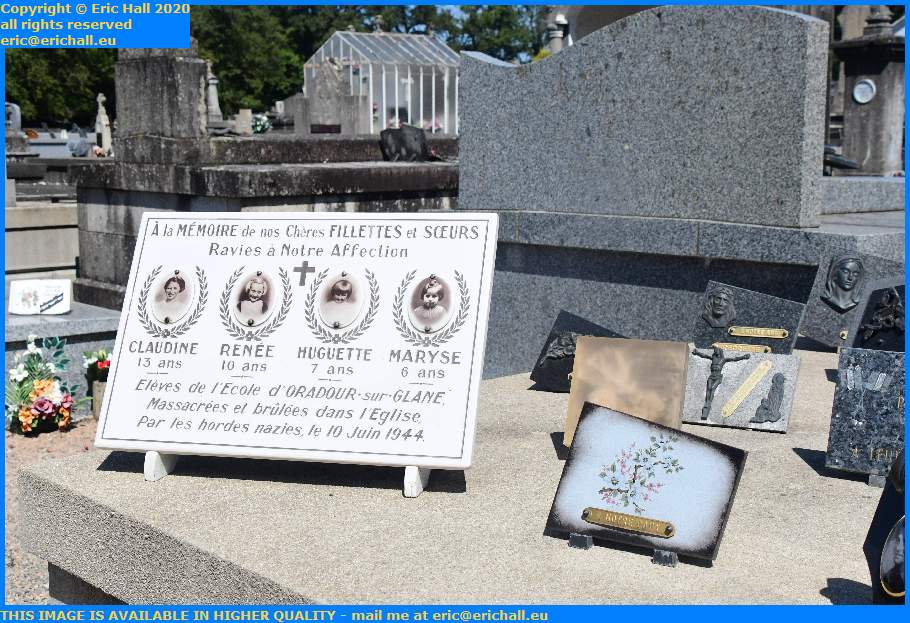
memorial in cemetery oradour sur glane 87520 haute vienne france eric hallThe scale of the massacre can be gauged by plaques such as this that cover the cemetery.

Of the women and children rounded up by the SS, only one woman survived to tell the tale. All of the others regardless of age, from the smallest baby to the oldest grandmother, were brutally killed, in many cases by being burnt alive, in the village church by the soldiers.

No-one knows the exact number because the village was home to dozens of refugees who had been bombed out from elsewhere and who were not recorded on the census held by the authorities, but the best estimate is that 349 women and children lost their lives either in the church or while attempting to escape from the inferno.
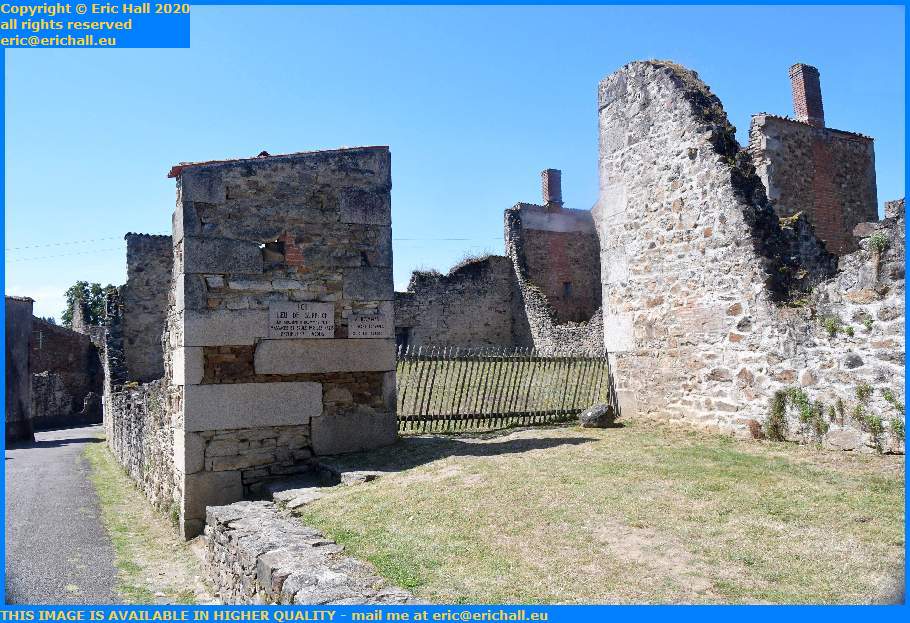
the grange laudy on the road to the cemetery oradour sur glane 87520 haute vienne france eric hallThe fate of the men was no better.

In places like this, the men who had been rounded up were shot – in the legs according to one of the 5 who survived – so that they would be disabled. Then wood and so on was piled up on top of the injured men and set alight so that they burned to death.

In this barn, the Grange Laudy or “Laudy’s Barn”, one of 6 places of execution, 62 men were herded. 6 of them made a run for the door when the fire was at its height and 5 managed to escape completely despite their wounds, the 6th being shot down and killed.

In total, approximately 643 unarmed civilians were brutally slaughtered, and the village was burned down around them. Everything that could burn was destroyed.

So while I post the remainder of the photos that I took, which in most cases have little bearing on the text that accompanies them, I’ll tell you a story.

Each photo is captioned individually by the way with as much information as I have found to date. Click on the photo to see it. If you have anything to add, please use the link to the contact form bottom-right.

And so, the history of the village of Oradour sur Glane is somewhat complicated because, as you might expect in a tragedy such as this, quite a few romantic notions have been allowed to creep into the story and which may or may not have some foundation in fact, and I’ll do my best to avoid perpetuating any myth.
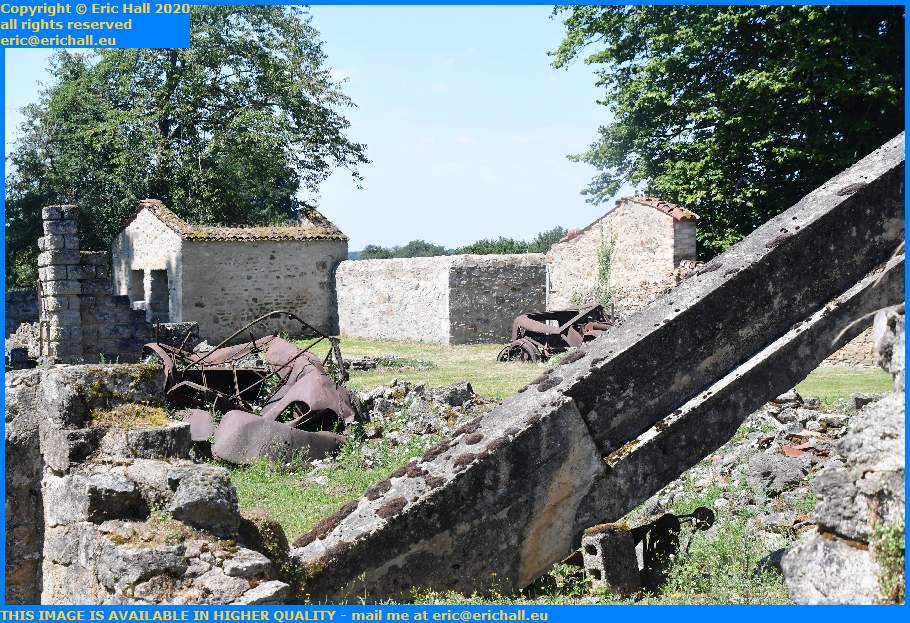
burnt out cars unknown makes and models road to saint junien oradour sur glane 87520 haute vienne france eric hallBut let’s start at the very beginning.

The name of the village, Oradour, is said to come from that Latin oratorium, which suggests that during the Gallo-Roman period … “you must NEVER say simply ROMAN in France” – ed … there was some form of place for prayer here.

Its first mention in print was in 1264 when it appears in the Chronique de Maleu, where it is stated that Oratorio supra Glanant belongs to the canons of the Abbey of St Junien.

As is usual with these places it passes into the hands of nobles and then by a variety of marriages and inheritances it changes hands quite rapidly until the French Revolution which swept all of the nobility away.

It’s often been said that by the time of the outbreak of the Second World War it was a sleepy little village in the countryside, but I’m wondering just how much of that is simply poetic licence.

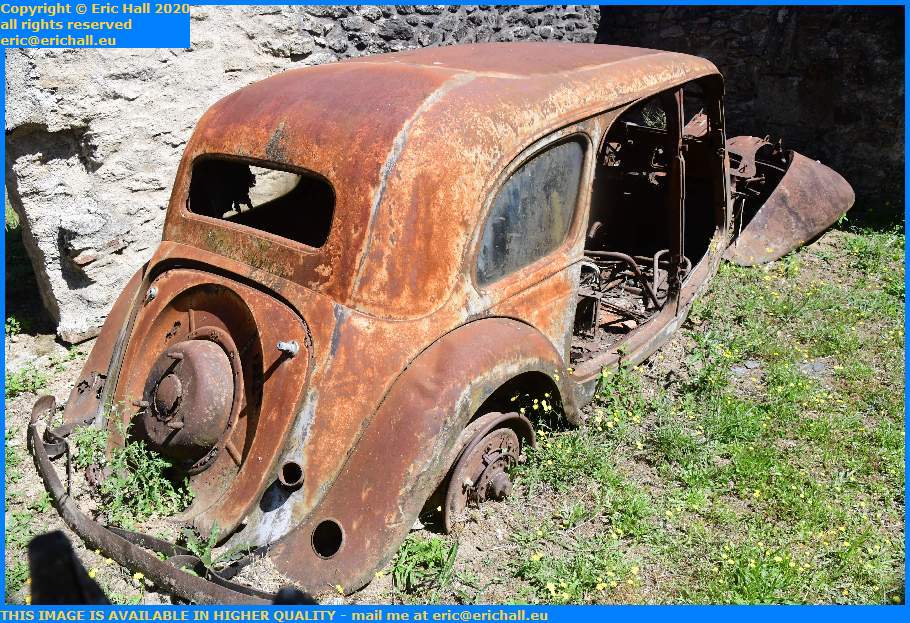
burnt out cars garage desourteaux oradour sur glane 87520 haute vienne france eric hallIf you have a look in many of the barns and garages of the town, like this one here, there are the remains of burnt-out vehicles everywhere.

As far as I could see, I counted 32 of them that were plainly visible and it’s almost inevitable that there were others that I wasn’t able to see. There were other vehicles, such as the draper’s van, that were known to have been driven away by the German troops when they left.

No village with that many vehicles is going to be sleepy by the standards of 1930s rural France, surely?

tramway burnt out houses road to javerdat sur glane 87520 haute vienne france eric hallFurthermore, there was electricity in the village, and even an electric tramway that connected the village to Limoges and you can see the remains of the line in this photo.

It’s quite true to say that there was a network of “tacot” – the narrow-gauge lightweight tramways that honeycombed their way all across rural France, but for the most part they were shoestring operations rather like the railways of Colonel Stephens in the UK, staggering on under a burden of financial uncertainty and barely surviving into the 1950s.

An electric tramway shows a degree of investment that would never ordinarily be seen in a “tacot” network. It seems that the population of the village must have been wealthy enough to have been considered a worthwhile target for the railway company under these circumstances.

burnt out houses on the road to st junien oradour sur glane 87520 haute vienne france eric hallDuring World War II 168 men from the village were conscripted into the French Army and at the cease-fire 113 of them returned to the village. The rest were either prisoners, displaced or lost.

That was basically the village’s only connection with a War that had largely passed them by, other than of course the arrival of different groups of refugees who came to the area.

The villagers were never really bothered by the pressures of occupation, being content at first with life under the Vichy regime.

Gradually as the war wore on they became more and more disillusioned. The general opinion drifted towards a yearning for liberation and an Allied victory and several people joined the Resistance.

Several more people assisted with the “rat lines” of exfiltrating evading Allied soldiers and airmen.

burnt out houses on the road to javerdat oradour sur glane 87520 haute vienne france eric hallThe Normandy landings were greeted with a great deal of relief and people began to look for the day that they could return to peacetime normality.

But this is when Das Reich entered the scene.

On the Eastern Front the 2nd Waffen SS Division Das Reich had been through the mill and at the 4th Battle of Kharkov in April 1944 it had been very badly mauled and had been withdrawn from the fighting.

It had been sent to south-west France, the area around Montauban, to rest and be reconstructed with new recruits.
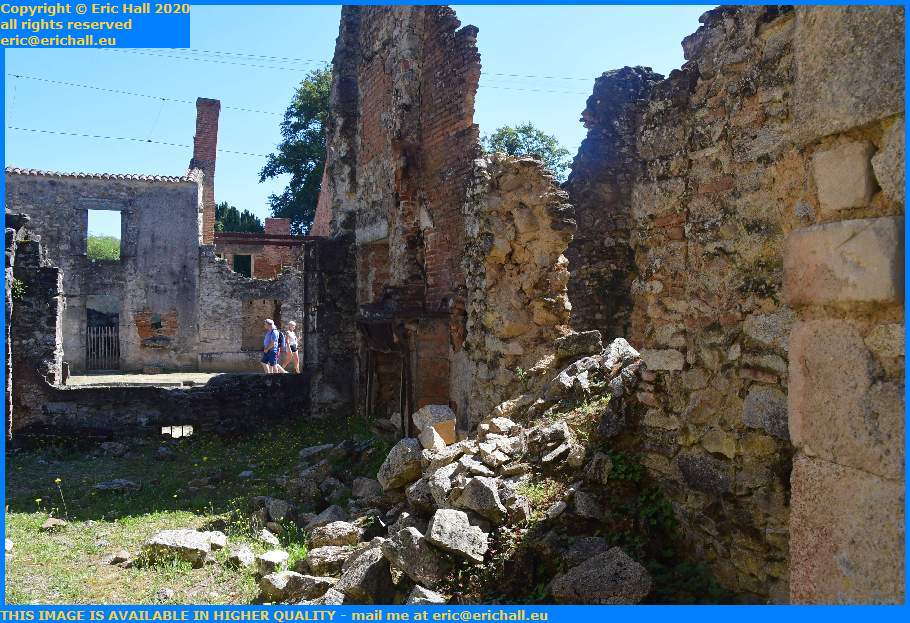
burnt out houses on the road to javerdat oradour sur glane 87520 haute vienne france eric hallThe D-Day Landings had caught it in a state of unreadiness but nevertheless it was ordered North to confront the Allies.

What should have been a fairly pleasant journey northwards was fraught with problems as the resistance left no stone unturned in their efforts to delay the troops. Destruction of bridges, dynamiting the railway, ambushes in country lanes were the norm.

On the Eastern Front, no quarter was ever asked for or given and a decree of 3rd February 1944 signed by Hitler had made it clear that extreme action against the civilian population in the face of terrorist action was appropriate.
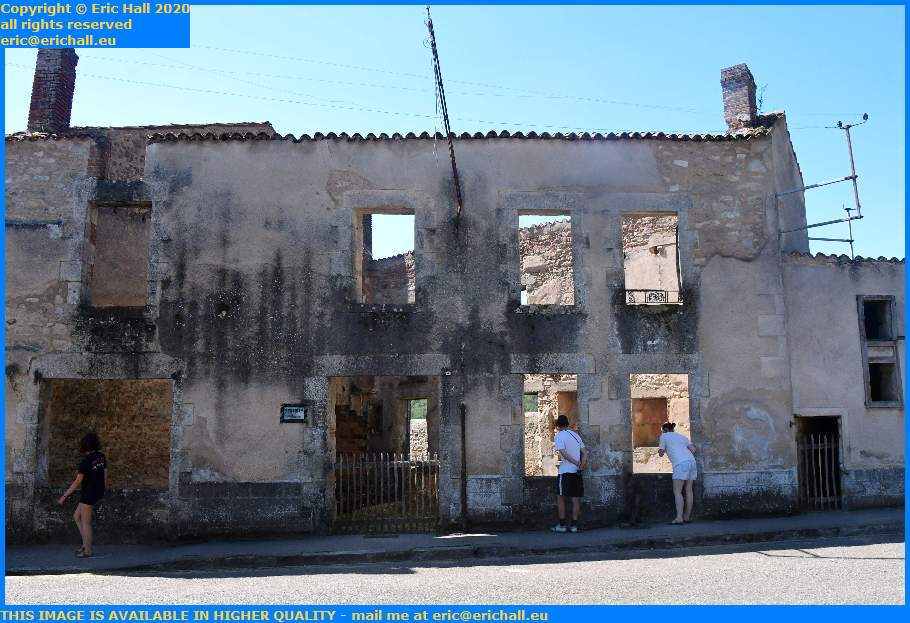
burnt out offices of the dentist M Regnier oradour sur glane 87520 haute vienne france eric hallDas Reich brought with them to the Western Front this behaviour and as their route north was littered with Resistance attacked, it was also littered with atrocities committed by Das Reich against the civilian population in revenge.

Regular readers of this rubbish will recall that WE VISITED TULLE in 2014 where Das Reich had hanged 99 civilians from lamp-posts, but the worst is yet to come.

The reason why Oradour-sur-Glane was chosen to be the site of the worst massacre of civilians in Western Europe in modern times has never been satisfactorily explained.
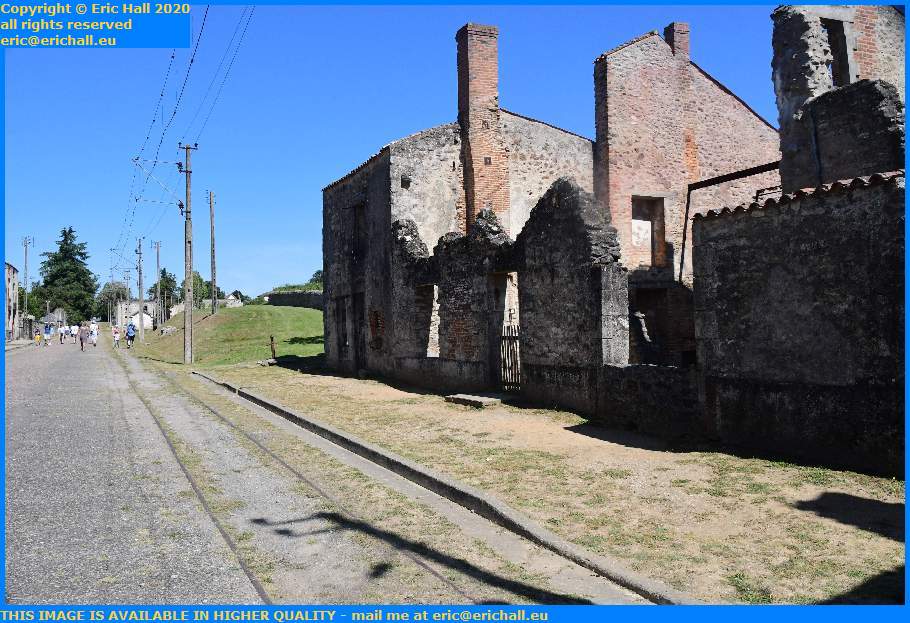
tramway and burnt out houses on the road to javerdat oradour sur glane 87520 haute vienne france eric hallA German officer, a certain Lieutenant Gerlach, had been carried away by the Resistance. Legend has it that the Germans suspected the village as being the home of the Resistants concerned, but this has never been established with any certainly.

It was however a day when there was to be a medical inspection of the inhabitants so everyone from the village and the surrounding neighbourhood would be in the vicinity of the schools where the inspections were to take place.

But whatever the reason, Sturmbannfuhrer Adolf Deikmann had received instructions to create “an event of the greatest possible terror” to quieten the resistance activity in the area.

burnt out houses on the road to javerdat oradour sur glane 87520 haute vienne france eric hallAt some time between 13:30 and 13:45 the village is surrounded by a force of about 150 German soldiers.

And when I say “German” I have to be very careful because there were without any doubt several soldiers of Das Reich were Alsatian – from the French province of Alsace that was forcibly incorporated into Germany.

A German officer present, Heinz Barth, is quoted by the French author Jean-Jacques Fouché as saying “now we’ll see what the Alsatians are capable of”.
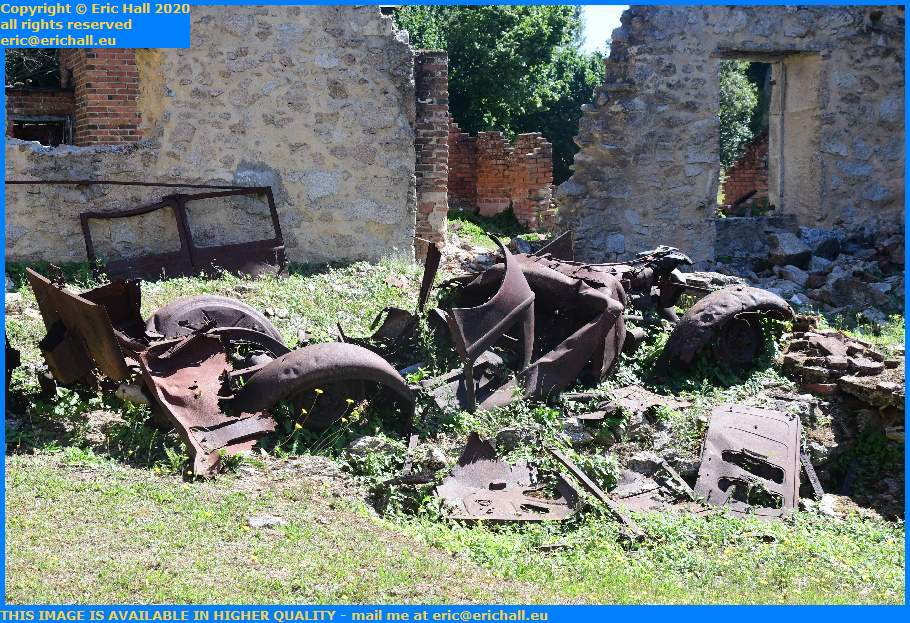
burnt out car unknown make and model on the road to javerdat oradour sur glane 87520 haute vienne france eric hallOne has to be very careful not to make or imply any kind of suggestion that the Alsatian troops in Das Reich took part willingly in the massacre.

The merest hint or suggestion brings down the wrath of at least one Alsatian ex-combatants’ association onto the heads of the author.

It’s not been unknown for these Associations to trawl the literary world for such allegations and to haul authors and historians before the Courts on charges of slander and libel. And while these cases are generally dismissed, it’s still quite an expensive and time-consuming process.

champ de foire looking towards town square oradour sur glane 87520 haute vienne eric hallWhere we are standing is in the Champ de Foire, the marketplace of the village, with the burnt-out Peugeot 202 down at the far end.

The German troops advanced into town from all directions herding the civilians into the marketplace. By 14:45 there were almost 250 people there

Other troops were out in the neighbourhood rounding up the agricultural workers labouring in the fields while more soldiers made a systematic search of the houses for anyone hiding or attempting to escape and discovered something like 150 people hiding.
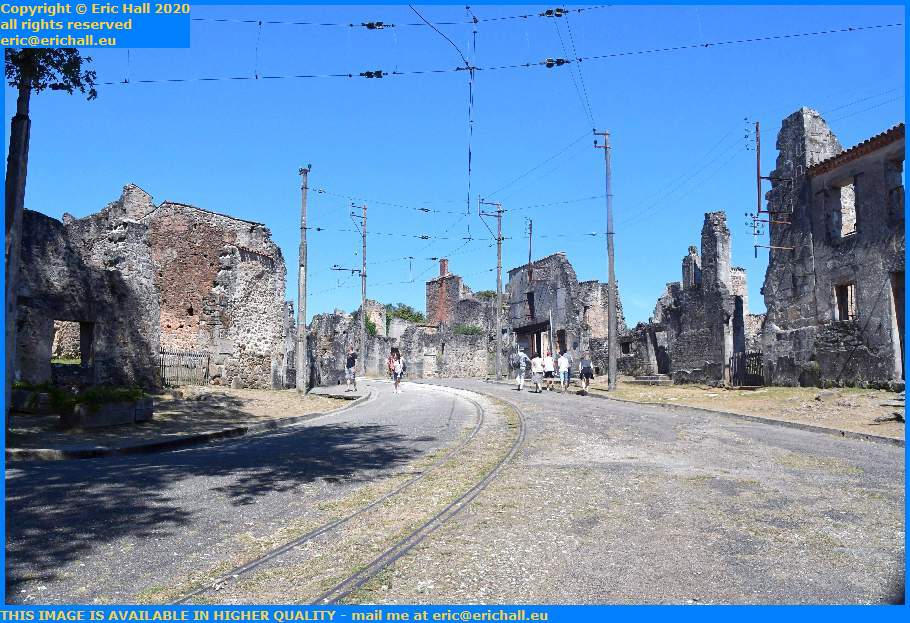
tramway from limoges near church looking towards javerdat oradour sur glane 87520 haute vienne france eric hallThere is good evidence to suggest that some of the women and girls found hiding were sujected to sexual violence by the soldiers and several were shot dead or beaten to death on the spot.

And at this moment, to add to the confusion, a tram from Limoges pulled up in the town. One of the people on board leapt down as if to make good his escape but was immediately shot down on the spot and his body thrown in the river.

As for the two member of the crew on board, their papers were checked by an officer and ordered to return with their tram to Limoges.
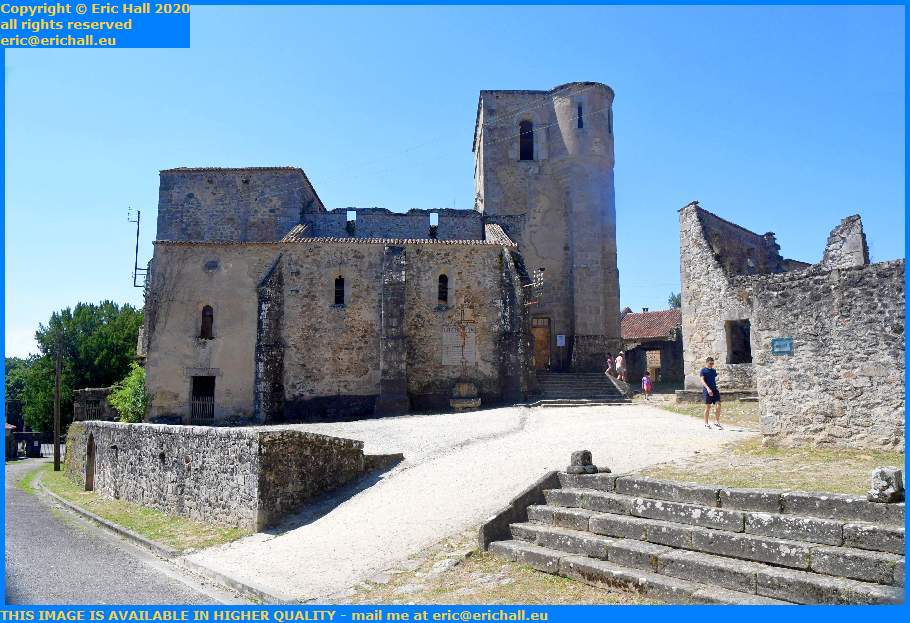
eglise saint martin oradour sur glane 87520 haute vienne france eric hallBy 15:00, with as many as possible of the village now assembled in the Champ de Foire, the women and children, believed to be 350 in total, were led off to the Eglise St Martin, St Martin’s Church.

Boys over the age of 14 remained in the marketplace with the men.

As to what happened that afternoon in the church, there was only one survivor, Marguerite Rouffanche. She was questioned on several occasions and swore a deposition on 13th June 1944 before the Prefect of Limoges, according to a report prepared for the French Government 2 days later. Her story never varied from one moment to the next

inside eglise saint martin oradour sur glane 87520 haute vienne france eric hallThe women and children were herded into the church and once they were inside the Germans place some kind of large container in there.

This container had cords trailing from it and the Germans lit these cords. As a result there was a loud, enormous explosion and a huge thick wave of black suffocating smoke.

According to subsequent testimony, the aim was to bring down the roof of the church onto the people inside but the explosive charge was insufficient so the Germans threw hand grenades and fired bursts of machine gun fire through the door and windows in an orgy of slaughter.

missing roof of eglise  saint martin oradour sur glane 87520 haute vienne france eric hallOnce the Germans were convinced that there was no-one left alive in the church they heaped a pile of straw inside and set the church alight.

However there were a great many people still alive in the church. Several people who had taken shelter behind the altar attempted to escape from under cover of the smoke. There was a broken window behind the altar near to which they found a step ladder that was used when the curé had to light the candles.

A crying baby held by one of the escapees alerted the Germans who machine-gunned them all down. Marguerite Rouffanche, badly injured, managed to haul herself into the shelter of a nearby garden. She was the only survivor from the church. Everyone else was killed.

burnt out houses in the champ de foire oradour sur glane 87520 haute vienne france eric hallAs for the 180 or so men and boys, they were kept waiting here in the Champ de Foire while the Germans searched the houses for any arms and ammunition.

The “official reason” that the Germans had visited the village, according to the survivors, was that the Germans suspected that there was an arms dump in the village. This was what they had all been told while they were waiting in the Champ de Foire

The Germans found nothing of any particular significance, so the next stage was that round about 16:00 the men were led off in groups of about 30 to various locations.

forge beaulieu tramway road to javerdat oradour sur glane 87520 haute vienne france eric hallAmongst the places to which they were taken were

  • The Grange Laudy
  • The Forge Beaulieu (here on the right of this photo
  • The Chai Denis
  • The Garage Desourteaux
  • The Grange Milord
  • The Grange Bouchoute


burnt out garage near forge beaulieu oradour sur glane 87520 haute vienne france eric hallAccording to the 5 survivors, after a long wait, the Germans opened fire on the men and boys, first of all aiming for the legs to cripple them.

And while they were still alive, they were covered with straw and other flammable material which was then set alight so that they were burnt to death.

At the Grange Laudy, 6 wounded men made a break for it under cover of the smoke. One was gunned down but the others made good their escape.

burnt out car unknown make and model near chai denis on the road to javerdat oradour sur glane 87520 haute vienne france eric hallHaving murdered all of the villagers that they could find, the Germans then turned their attention to the buildings.

The buildings were looted of anything of value and then set alight. During this operation many more civilians were discovered hiding and either pulled out by the Germans or attempted to flee the flames.

These were shot down in cold blood, and it was discovered subsequently that the bodies of some women and girls were in positions that suggested sexual violence.

forge beaulieu tramway road to javerdat oradour sur glane 87520 haute vienne france eric hallRound about 18:00 an engineer from the tramway turned up to find out what was going on. He was met by a mass of flames. He was also met by a German patrol who checked his identity and then told him to clear off and think himself lucky.

Also round about this time a tram from Limoges turned up, and a further one arrived two hours later. They too were searched, the identity of the passengers and crew were checked and they were all turned back.

Several other people attempted to reach the village from across the fields but met German patrols and were turned away.

burnt out car unknown make and model on the road to javerdat oradour sur glane 87520 haute vienne france eric hallLater on that evening most of the troops departed, taking away a great deal of the booty and leaving a detachment of soldiers secured in one of the shops to guard the village.

The discovery later on of several hundreds of empty bottles of wine and champagne in the building tells its own story of what went on during this night and it’s possible that the deaths of some of the girls and women occurred during this period.

Over the following two days the main body of troops returned and did what they could to clear away the human remains and render impossible any identification of the deceased, just as they would do on the Eastern Front.

All that they could find were buried in a hastily-dug pit behind the church.
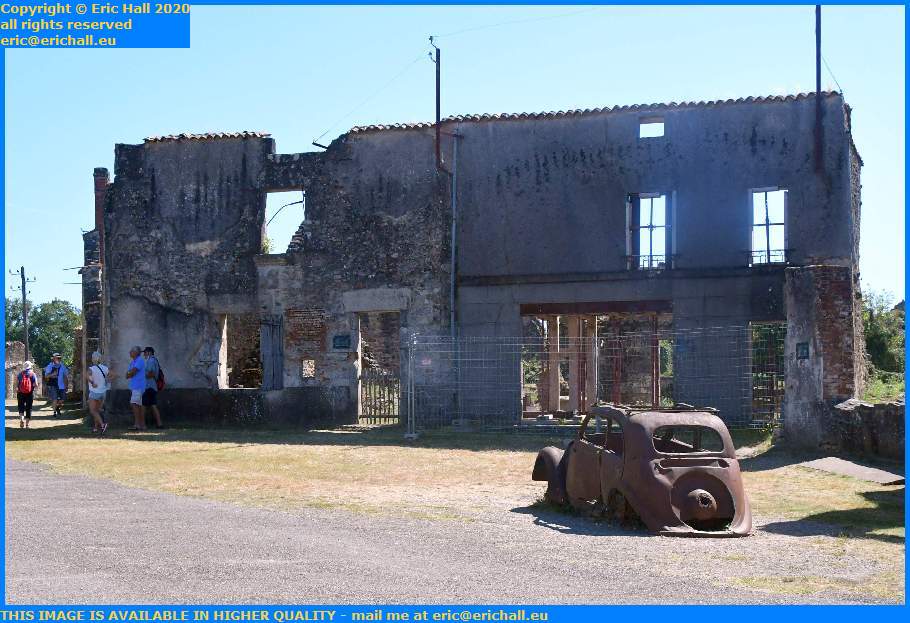
burnt out peugeot 202 square town centre oradour sur glane 87520 haute vienne france eric hallDuring these two days a cordon of troops around the village tried to keep the civilians away.

However, some people, including the sous-préfet of the region, managed to infiltrate themselves into the village to see the situation.

What they saw rendered them speechless and their subsequent report need not be repeated, save one remark from the sous-préfet that the village was beyond help.

If you remember our railway engineer who was met by a mass of flames, it’s hardly a surprise.
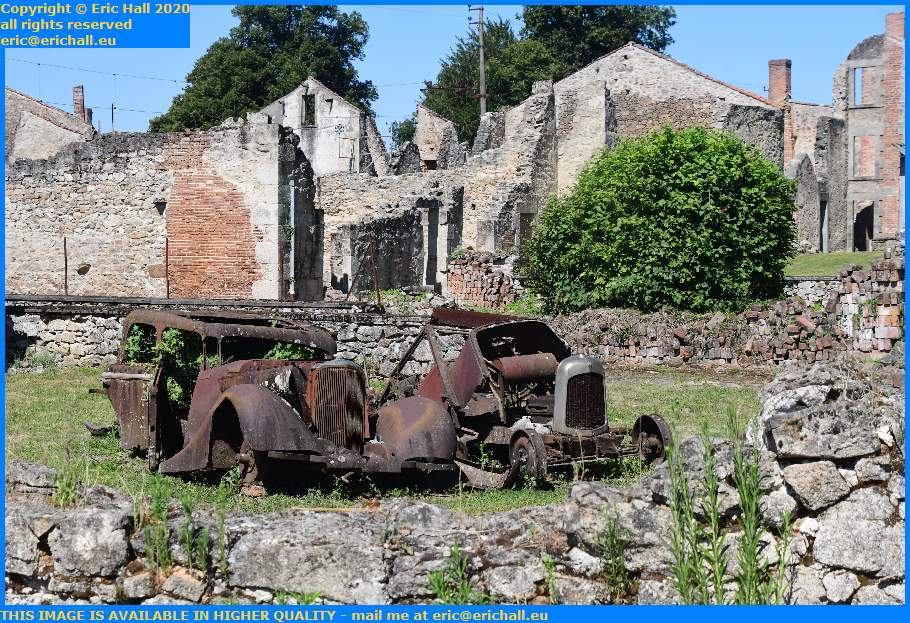
burnt out cars unknown make and model near forge beaulieu oradour sur glane 87520 haute vienne france eric hallIncluding the 5 men and one woman who escaped directly from the slaughter, it’s reckoned that in total about 30 people actually present in the village at the time survived.

One 8 year old boy waiting for his medical inspection saw the Germans arrive and ran away into the woods just before the cordon closed. Everyone else in his family was killed.

Two men took shelter in the drains and hid there until it was safe to leave, and then they sneaked off into the woods.
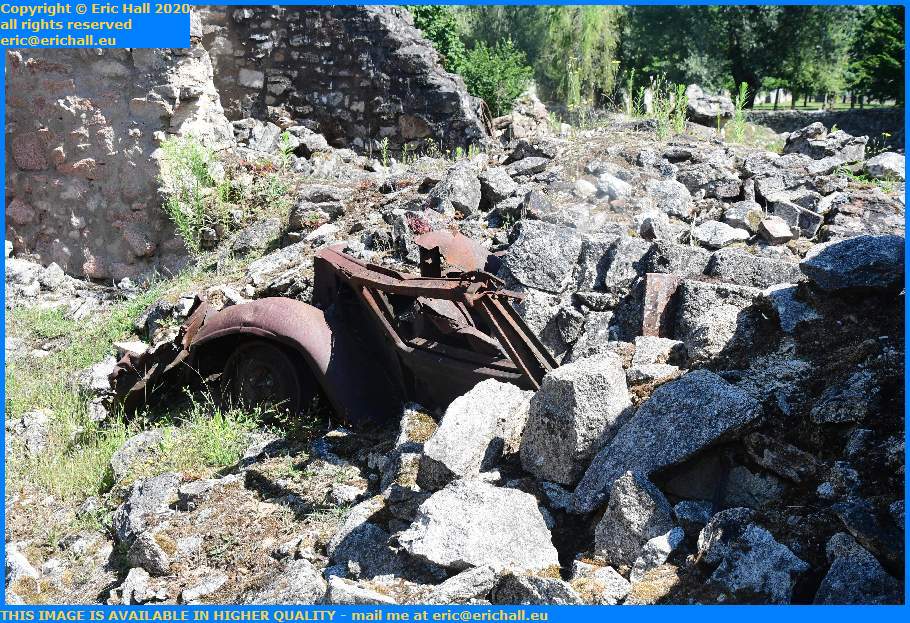
burnt out crushed car unknown make and model near forge beaulieu oradour sur glane 87520 haute vienne france eric hallOf those hiding in the houses, some managed to hold out amongst the flames until dark and then likewise sneak out into the woods.

One youth with a broken leg in plaster and who had been unable to attend the medical inspection nevertheless managed to make his way into the woods under cover of darkness.

Another dozen or so passengers from the tram that arrived in the evening also managed to slip away into the woods.

Everyone has his or her own story to tell about their own drama on that day in June.
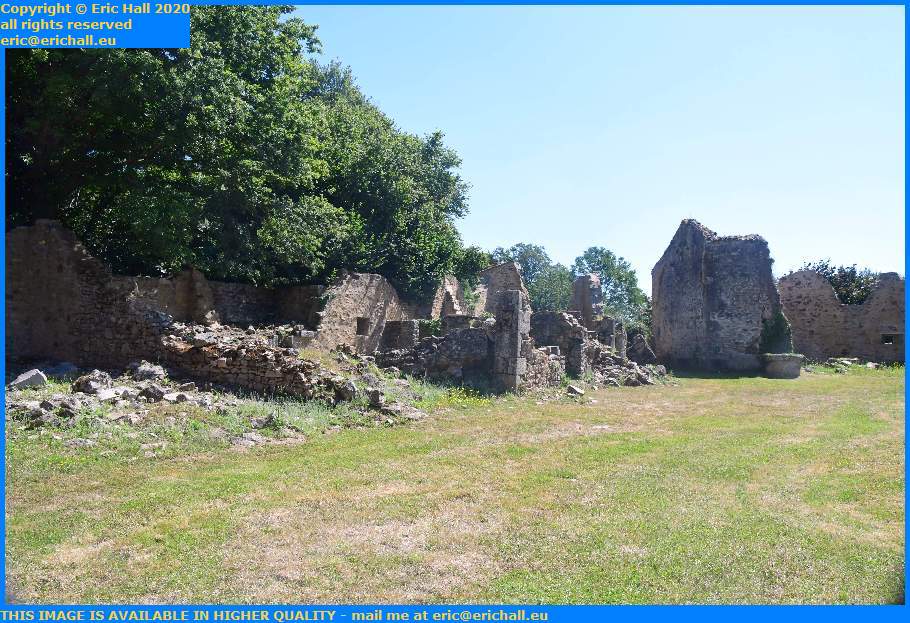
burnt out houses on the road to the cemetery oradour sur glane 87520 haute vienne france eric hallOn 13th June, the Préfèt of the département and Monseigneur Louis Paul Rastouil, the Bishop of Limoges, visited the village and made a report of the incident to the French authorities in Vichy.

It’s in this report that the first suggestion is made that the Germans were retaliating for the kidnap of one of their officers, although the Préfèt added that the village was one of the calmest and hard-working in his area.

On the 14th of June the Bishop sent a strongly-worded protest to the German General in charge of the area, and 2 days later held a mass to mark the event. Several other masses were said and a ceremony was held in the Cathedral on 21st June despite the best efforts of the Vichy police to disrupt it.
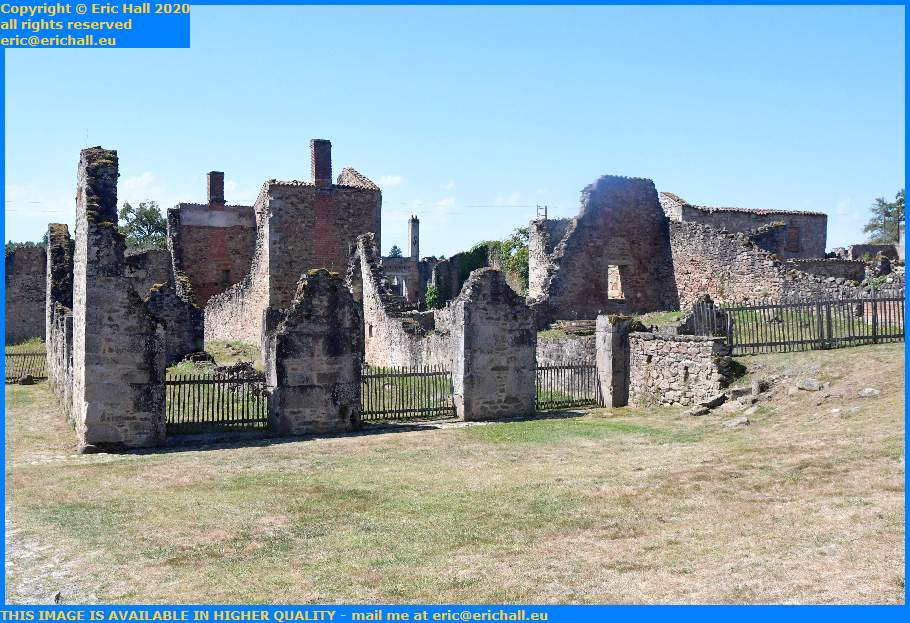
burnt out houses on the corner of the champ de foire and the road to the cemetery oradour sur glane 87520 haute vienne france eric hallBy now, the Pope had come to learn of the event and his ambassador sent a strongly-worded rebuke to Marshall Petain, President of the Vichy Republic.

Petain in his turn summoned the German Ambassador to him and in a most untypical outburst told him inter alia ‘you’ve burnt our villages, massacred our children, profaned our churches and heaped shame upon your country. You are nothing but a bunch of savages”.

And I have often wondered about the German Ambassador’s response to that. It must have been very interesting, but history does not record it.

burnt out cars citroen possibly a rosalie and a peugeot 202 on the road to the cemetery oradour sur glane 87520 haute vienne france eric hallPetain didn’t stop there either.

He wrote to the German Chief of Staff and told him that even if bands of people, often inspired by foreign terrorists, are causing problems for the Germans, the depth and ferocity of the German response has gone beyond all bounds of all reason and threatens to undermine any hope of reconciliation between France and Germany.

The German Ambassador refused to transmit the letter so, not to be outdone, Petain caused a copy to be given to a General in Hitler’s entourage with a copy to the Pope.
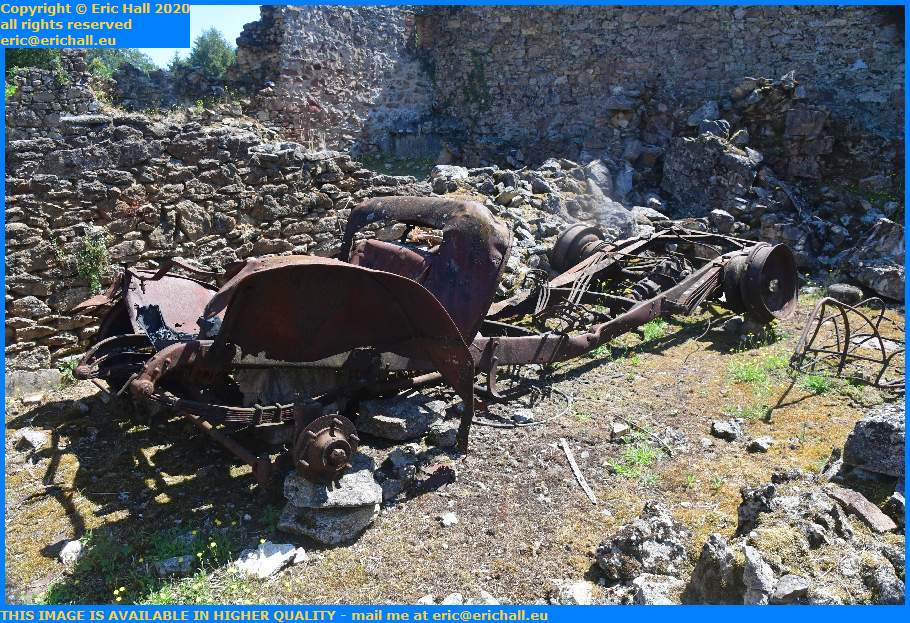
burnt out lorry unknown make and model near grange laudy oradour sur glane 87520 haute vienne france eric hallThe village was never rebuilt. It was decided in January 1945 to treat it as a War Memorial and a new village was built several hundred metres away.

Meanwhile, the French authorities continued to make their investigations into the Massacre. A Court of Enquiry in Limoges set to work immediately and shortly later a German soldier who had been present at Oradour sur Glane fell into their hands.

He was tried and on 12th March 1946 sentenced to death for his role in the massacre. However the sentence was overturned due to the fact that at the time he had been a minor.
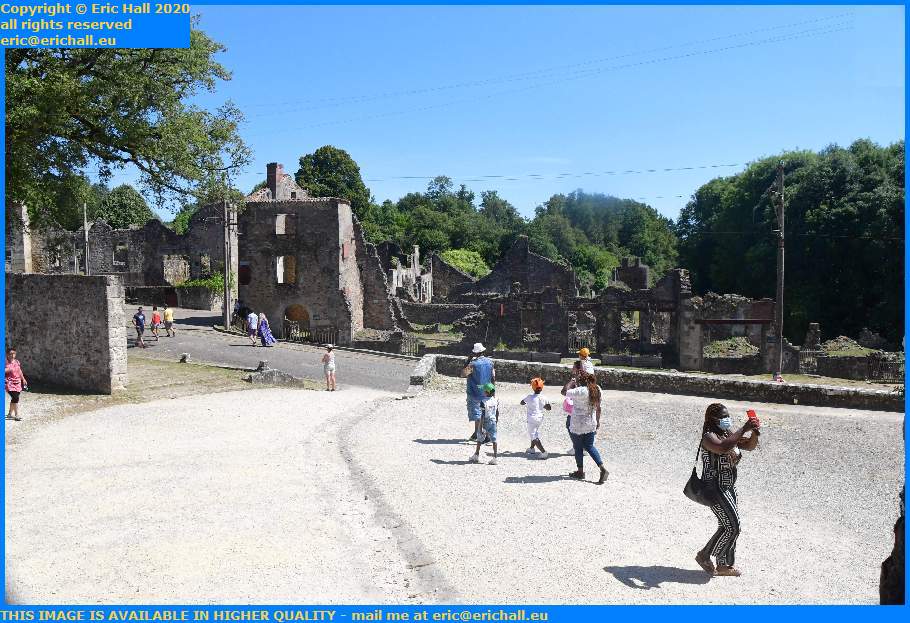
on steps of eglise st martin oradour sur glane 87520 haute vienne france eric hallIt took 8 years for sufficient evidence to be amassed in order that some soldiers alleged to be present could be identified, and then some French laws needed be changed so that they could be brought to trial.

One notable absentee at the Court hearings at Bordeaux was the German officer commanding Das Reich, Heinz Lammerding. He was traced to the British Zone of Occupied Germany but inexplicably, the British refused to allow him to be extradited. He had been apparently tried for other war crimes and served a sentence, and so was deemed by the British to be purged.

The French were not amused, as one might expect. He was sentenced to death in absentia and there was even talk of sending in a commando squad to kidnap him. That came to nothing and he died peacefully in 1971.

burnt out cars garage desourteaux oradour sur glane 87520 haute vienne france eric hallAmongst the defendants were 14 French soldiers from the Alsace.

That there were soldiers from the Alsace present at Oradour sur Glane has never been in dispute – the soldier who translated the orders from German to French in the Champ de Foire was unquestionably from the Alsace.

They all claimed that the Laws of Military Justice passed by the French did not apply to them as they were French, and in any case most had been conscripted into the Division.

The French response was to charge with treason the one, Georges René Boss, who admitted volunteering. He was found guilty and condemned to death. The others received various terms of imprisonment.
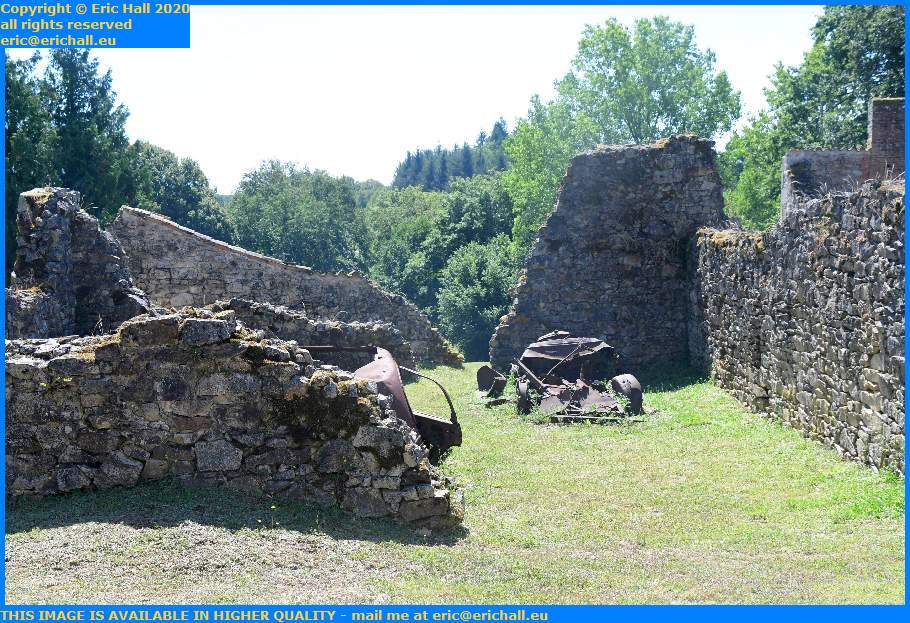
burnt out cars unknown makes and models oradour sur glane 87520 haute vienne france eric hallThe story doesn’t end here though – not by a long way.

There was a huge outcry in Alsace against the sentences and all kinds of turbulent events took place. In the end, the French Government voted a Law of Amnesty – a decision described by some as “shameful”. One author has suggested that the French Government preferred to placate a wealthy, industrialised region of France rather than a “poor rural community that posed no threat whatever to national unity”.

The 13 conscripts from Alsace were released and the one sentenced to death along with another Prisoner who had received a capital sentence were reprieved.
burnt out citroen traction avant 15 rear of church oradour sur glane 87520 haute vienne france eric hallAs you might expect, in the Limousin there was uproar as the prisoners were released.

Many people who lived in the area and who had been awarded honours and medals by the French Government returned them in disgust.

Even a bronze plaque that the French Government had presented to the town in commemoration of the atrocity was returned. In its place the villagers erected a plaque listing the names of all of the Parliamentarians who had voted in favour of the amnesty, along with another plaque listing the names of all of the convicted men who had been liberated.

Even some towns that had been honoured for their wartime rôle by the French Government returned their honours.

burnt out cars unknown makes and models road to javerdat oradour sur glane 87520 haute vienne france eric hallThe French Government had erected a “Crypt of The Martyrs” to house the ashes, but the citizens refused to allow the ashes to be transferred.

As well as that, they refused to allow the Government to sent any representative to any of the ceremonies that took place in the village to honour the dead.

As the mayor of the new town said at the time, “to our feeling of great sorrow and our struggle for survival has been added a feeling of injustice, abandonment and even of some revulsion”.

burnt out car or van chassis road to javerdat oradour sur glane 87520 haute vienne france eric hallIn 1981 in East Germany, the authorities arrested an old man who turned out to be one of the Company Commanders known to have been present at Oradour sur Glane, living in the East under a false name.

He was tried in East Berlin for various war crimes including that of Oradour sur Glane, during which three of the survivors gave evidence against him. He was found guilty and sentenced to life imprisonment, but was released in 1997.

It must have been an embarrassment to the French and British Governments that it was the East Germans who were most interested in pursuing the events of Oradour sur Glane.
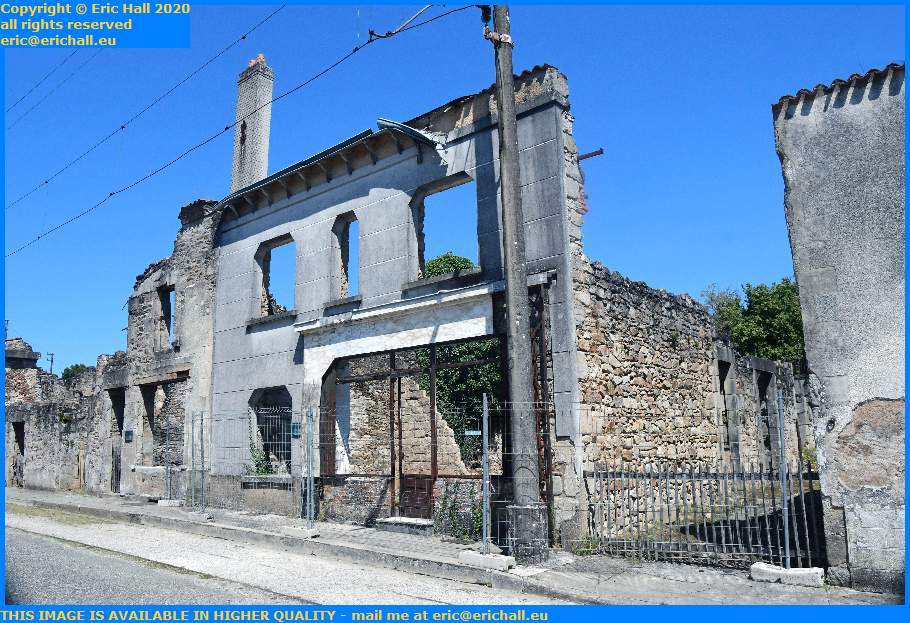
burnt out shop insecure frontage road to javerdat oradour sur glane 87520 haute vienne france eric hallAnd as subsequent events unfolded, the interest of the East German Justice system in the events here must have proved even more embarrassing to the West.

In October 2010 whilst searching through documents formerly held by the Stasi, the East German Secret Police, a researcher discovered a document that showed that the Stasi had conducted an enquiry into the massacre.

This document contained a great deal of incriminating evidence previously unknown to the French authorities. Furthermore, it identified many of the participants, of whom 6 were found by the German authorities to be still alive and living in what was West Germany.

burnt out cars maybe citroen b14 road to javerdat oradour sur glane 87520 haute vienne france eric hallIn an enquiry undertaken by the German police, two of them denied being present at the time and the other four, aged 85 and 86, could not remember or were in no medical condition to be questioned.

As a result, in January 2013 several representatives of the German Justice system from Dortmund visited Oradour sur Glane in the hope of finding additional supporting evidence.

In January 2014, a former soldier, Werner Christukat was tried in Germany but found Not Guilty due to lack of evidence, a decision that was upheld on appeal. Although it was held that he was present at the time, there was apparently insufficient proof to suggest that he took an active role.
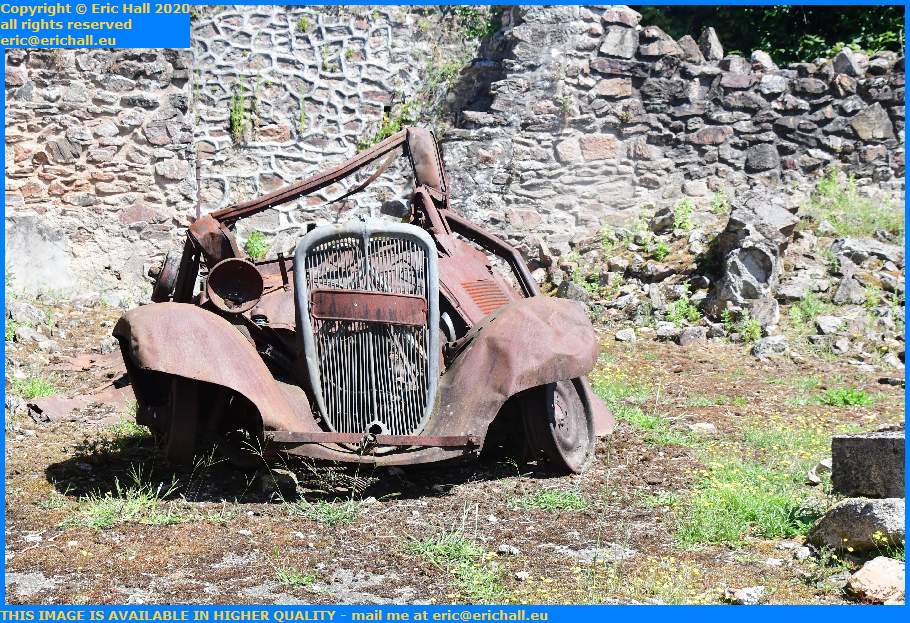
burnt out car maybe a citroen b14 road to javerdat oradour sur glane 87520 haute vienne france eric hallIn my opinion, not having access to the full facts of the case, this is a most extraordinary decision considering the verdict that was presented against John Demjanjuk a couple of years earlier.

In Demjanjuk’s case, a legal precedent was set that mere presence at an act of war crimes was sufficient for someone to be found guilty of being an accessory, a principle that was subsequently successfully applied against several other people who had served the German cause during the War.

Suspects are still being PULLED OUT OF THE UNDERGROWTH AND CHARGED in accordance with the Demjanjuk decision even today, and so I am curious to see why it did not apply in the case of Christukat.

Despite “the continuing enquiries”, which are being carried out by the German Government due to the “Demjanjuk decision”, it is doubtful if any other person will ever be brought to justice.

girls school road to javerdat oradour sur glane 87520 haute vienne france eric hallEven today, the body that represents the soldiers from Alsace is active in this field.

When he learnt that German Prosecutors were on French soil searching for evidence, a spokesman from the Association des Déserteurs, Évadés et Incorporés de Force (ADEIF) “wouldn’t it be better for someone in High Authority (in Germany) to have come and given a public apology to those people from Alsace who were incorporated by force” into the German Army?

As you can understand, anyone writing about the massacre needs to tread carefully. Any criticism of the involvement of soldiers from Alsace in the massacre even more than three quarters of a century after the event is met with a full barrage of everything that the defenders of their role can muster.
burnt out car unknown make and model road to javerdat oradour sur glane 87520 haute vienne france eric hallAnd it isn’t only the ADEIF that is on the warpath.

Revisionist history is all the rage these days as people, taking advantage of the death of eyewitnesses, now attempt to view the events through eyes of different colours and either deny their part in the massacre or shift the blame onto others.

These will inevitably be laid to rest eventually when the public records of the trial at Bordeaux in 1953 and the investigation by the Prefet of the département of Haute Vienne become available to the public and I for one can’t wait for that to happen, but these days people have a tendency to believe whatever suits their own opinion rather than be swayed by hard evidence.

memorial cemetery oradour sur glane 87520 haute vienne france eric hallBut retournons à nos moutons as they say around here.

The Association Nationale des Familles des Martyrs organised the building of their own Memorial to the Martyrs which contains the ashes of those who died at Oradour sur Glane.

But I wasn’t very happy about them being visible to public gaze, I have to say. There’s a glass panel in the monument through which you can see bones and ashes. For me, that was in rather bad taste.
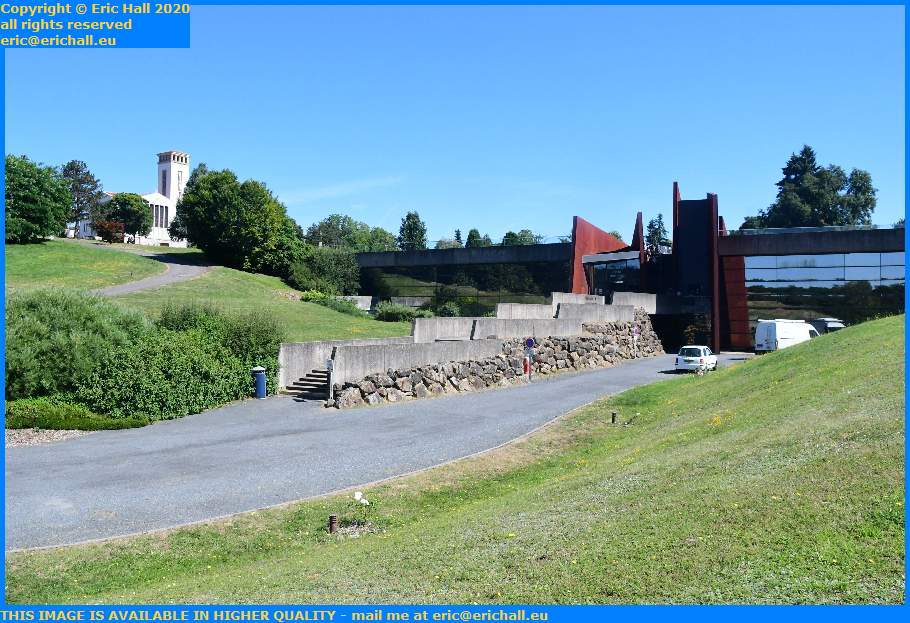
visitor centre oradour sur glane 87520 haute vienne france eric hallAs a result of a project going back to the late 1980s, on 16th July 1999 a Visitor Centre was opened at the village, complete with Ye Olde Gifte Shoppe, which was something else that I thought to be in pretty bad taste. It’s all completely different from when I came here the first time and when I brought Nerina here in 1991

It was opened by none other than the President of the Republic, Jacques Chirac accompanied by Catherine Trautmann, the French Minister for Culture. By now, the politicians from the Government were being allowed into the village by the population.

Francois Mitterand, who had voted in favour of the Amnesty in 1953 went there on 10th June 1994 but according to the local Press, all the inhabitants closed their window blinds in protest.

Unfortunately, since then the Centre has become the target for neo-Fascist revisionists who have been spraying the notices with graffiti saying such things as “Liars” and “Reynouard (a far-right Revisionist who has a whole list of convictions for Nazi apologia) is right” and things like that.

Several other French presidents have been to the village subsequently, and one significant visitor here, on 4th September 2013, was Joachim Gauck, President of Germany who came with the French President Francois Hollande. During this visit, Gauck gave a speech of apology and reconciliation.

One person who never, apparently came to Oradour sur Glane was Nicolas Sarkozy. He did however go to Colmar in the Alsace where, on 8th May 2010 where he publicly declared that the soldiers of Alsace recruited by the Germans were “not traitors but, on the contrary, victims of a real war crime”, something that went down like a lead balloon with the citizens of the Limousin.

In fact, this action of Sarkozy made me wonder whether the appearance of Hollande, Sarkozy’s opponent in the Presidential election of 2012, at Oradour sur Glane in 2013 might have been more of an opportunist nose-cocking at Sarkozy and a vote-winning exercise rather than any kind of personal sentiment, but sometimes I’m far too cynical for my own good.

But then again, Emmanuel Macron came to Oradour-sur-Glane in between the first and second round of elections for President in 2017, so I’ll let you make up your own mind.

And while you do that, I’m off to my next port of call. And I’ll leave you with one final thought about the events of Oradour sur Glane that has been missed by, as far as I can see, every commentator on the events.

And that is that the events here delayed Das Reich‘s journey to the Normandy battleground by three days and how might the course of the war have been different had they not been held up here? And how many lives were saved elsewhere because of the delay?

Even if nothing else, the events of Oradour sur Glane fulfilled one purpose that benefited the Allied cause.

So picking up a baguette and fuelling up Caliburn as I passed through the new village, I carried on south (stopping for lunch on the way).

strawberry moose Château de Châlus-Chabrol 37500 indre et loire france eric hallNext stop for this afternoon is the town of Chalus and its early medieval tower.

While Strawberry Moose works out how he’s going to take the keep by storm, I’ll mention something about our interest in this place.

Yesterday, as regular readers of this rubbish will recall, we visited Chateau Gaillard, the castle of Richard the Lionheart, and we talked about the siege of the castle by King Philip after the death of Richard.

ruins Château de Châlus-Chabrol 37500 indre et loire france eric hallThis castle would have been a much more important place than it would appear today.

There may not be much remaining of the fortifications here today but there are the remains of several stone walls such as these remains here . These might either be the remains of buildings or of walls, although the curved end is more suggestive of a former building in this particular case..

And the big pile of stones in the bacckground, I wonder where they came from and of what they were part.
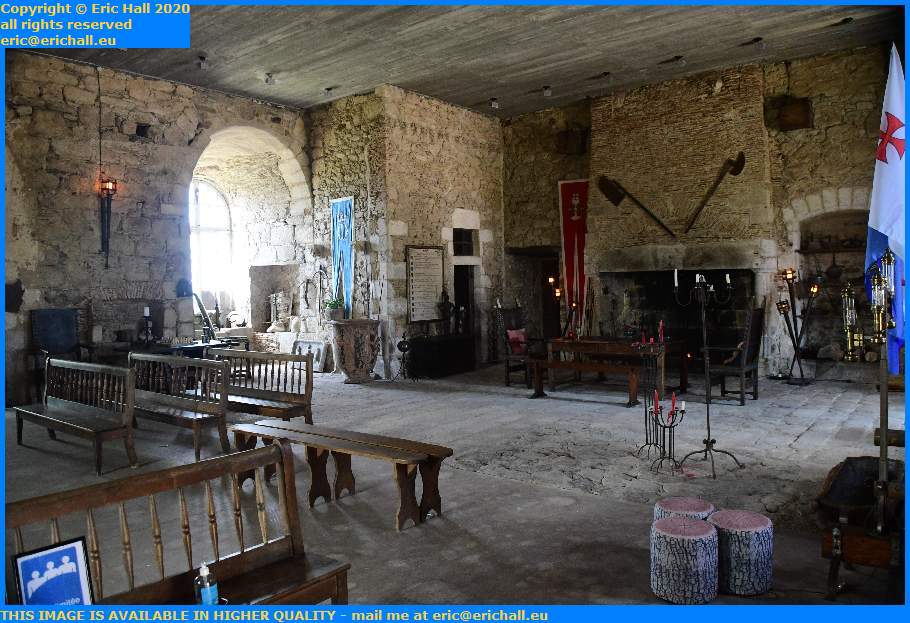
inside great hall Château de Châlus-Chabrol 37500 indre et loire france eric hallBut what we are looking at here, in the Great Hall of the Manor House to which the tower belongs, is said by some to be the spot where King Richard died in 1199.

It’s certainly true that he was carried to somewhere round about here, but there are several candidates for the place of his death. Some sources suggest that he even lived for 6 days after being wounded.

The castle is situated today in the département of the Haute-Vienne in the Limousin, but previously, back in antiquity it was quite close to the border between the Périgord, which was not then part of France and the domaine of Counts of Limoges.

This border took on a totally new significance in 1137 when Duke William X died without a male heir, and his lands passed to his daughter Eleanor. She was immediately married off to King Louis VII but the marriage was not a success.
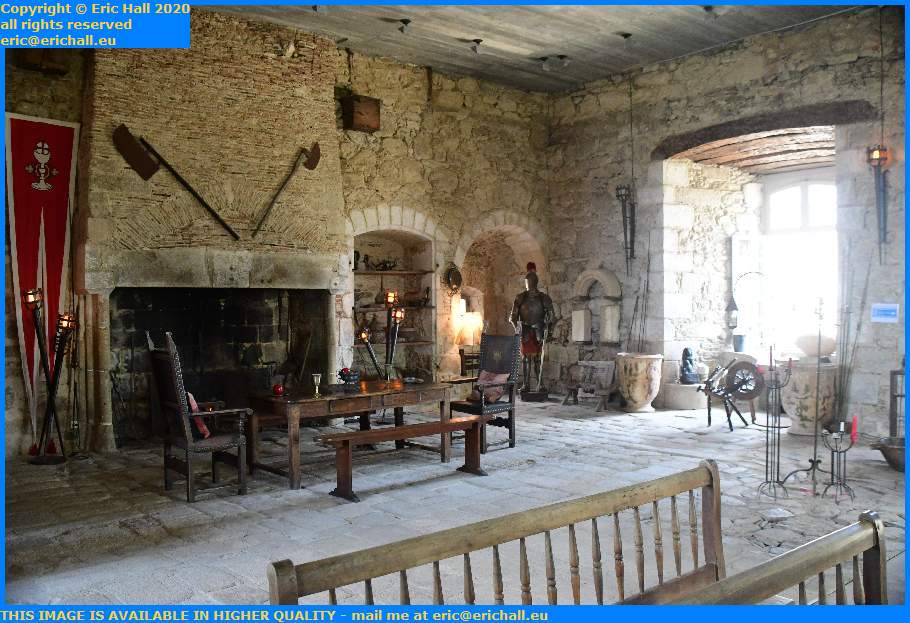
inside great hall Château de Châlus-Chabrol 37500 indre et loire france eric hallThe couple divorced in 1152 and just as quickly as her first marriage, she married Henry, Duke of Normandy.

Henry’s grandfather had been Henry I, King of England and after the death of Henry I there had been the disputes over the throne of England between the late King’s daughter Matilda (The Duke of Normandy’s mother) and Stephen, nephew of the late King.

With no direct male heir to the English throne (Henry I’s son had been lost in the “White Ship” disaster of 1120), Stephen invoked the right of male progeniture and claimed the throne. This had led to Civil War in England
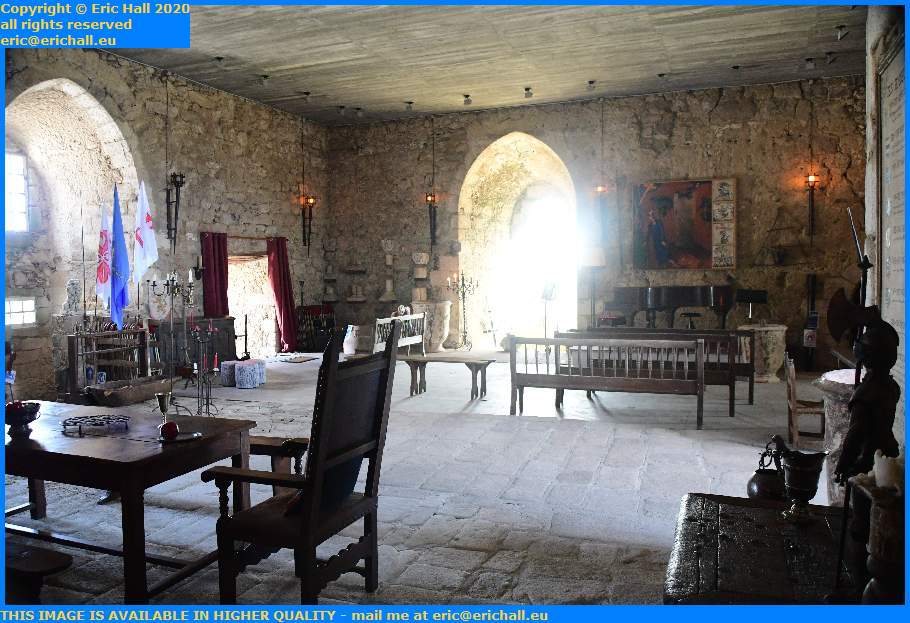
inside great hall Château de Châlus-Chabrol 37500 indre et loire france eric hallHenry had been campaigning against Stephen on behalf of his mother and the matter of succession was resolved in 1154 when Stephen died. Henry simply took over the crown by right of occupation, having no faith whatever in whatever promise Stephen had made.

This sent shock waves throughout the whole of the border area between Périgord – by now part of the region of the Aquitaine – and that area ruled by the Counts of Limoges.

Rather than being a boundary between two rulers of more-or-less equal stature, it was now an international boundary. Consequently a whole line of fortifications was either built or rebuilt by the Count of Limoges to secure his frontier.
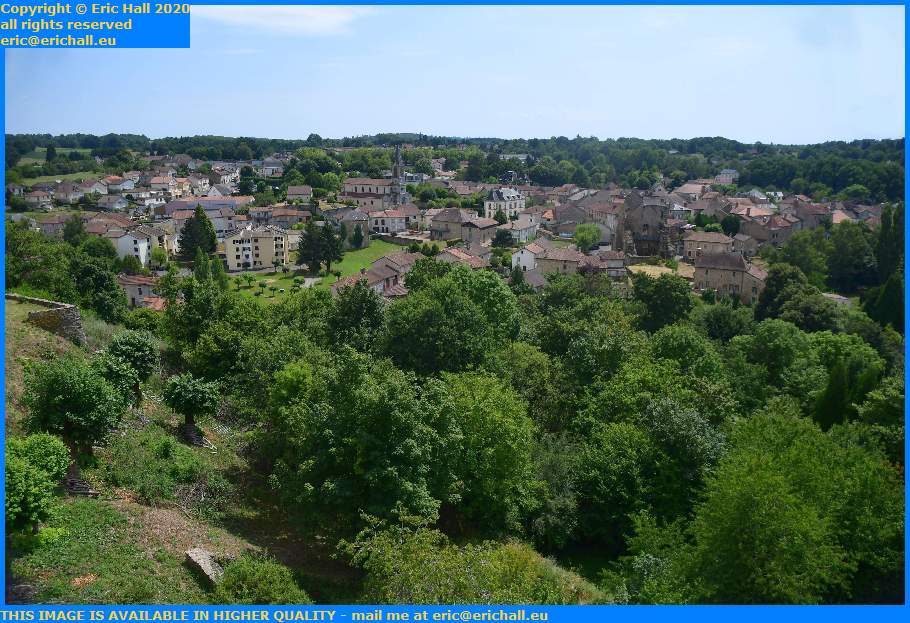
view from Château de Châlus-Chabrol 37500 indre et loire france eric hallThere was already an important road between the religious centre of Bourges and the port of Bordeaux in the Aquitaine. This passed by the town of Chalus and so the rocky outcrop was considered to be a logical place to build some kind of fortification that would protect the road.

Due to its strategic position it was subject to attack on many occasions, even once prior to the issues with Richard, but it is with Richard that we are particularly interested.

And for this, we need to turn our attention to the Third Crusade to Palestine.

While the object of the Crusade was the recapture of territory lost to Saladin after the disastrous Battle of Hattin, the Pope took the initiative to persuade Henry II of England and Philip of France to forget their disputes, take the cross and accompany the crusaders.

However Henry died before he could set out and his son Richard set out in his place.
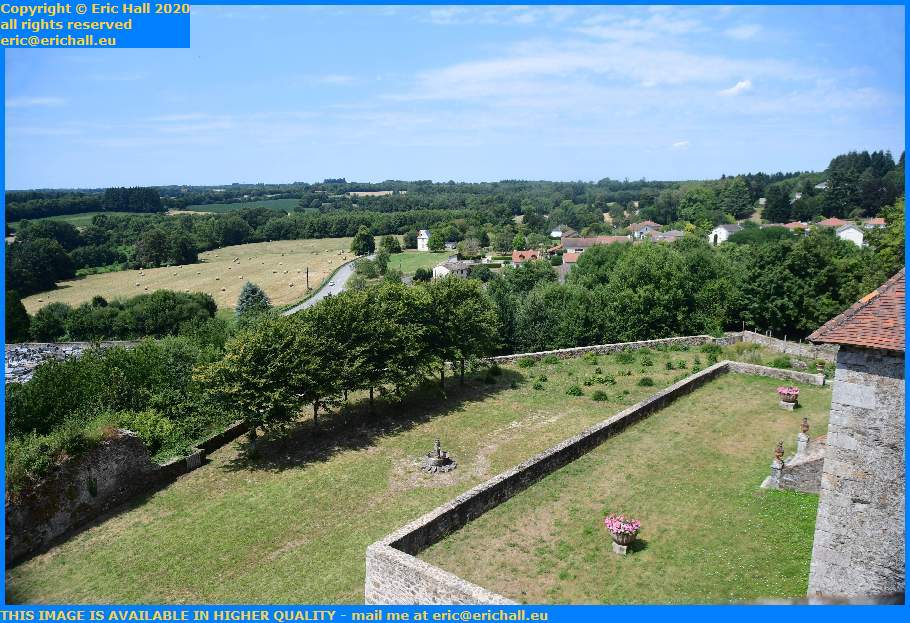
view from Château de Châlus-Chabrol 37500 indre et loire france eric hallThe Crusade was only partially successful and in 1192 Richard left Palestine to return to England. On his way home he was kidnapped by Leopold of Austria who had a personal grievance against him, and passed to the Holy Roman Emperor who held him to ransom. On payment of the ransom by the English, he was released.

While he had been imprisoned there had been several revolts against him, most notably by his brother John but also by the Counts of Limoges, and these continued.

During the rebellion of the latter a mercenary named Mercadier and his forces had attacked the castle on behalf of King Rechard.

The 38 local people present, men, women and children, fled to the tower and barricaded themselves in.
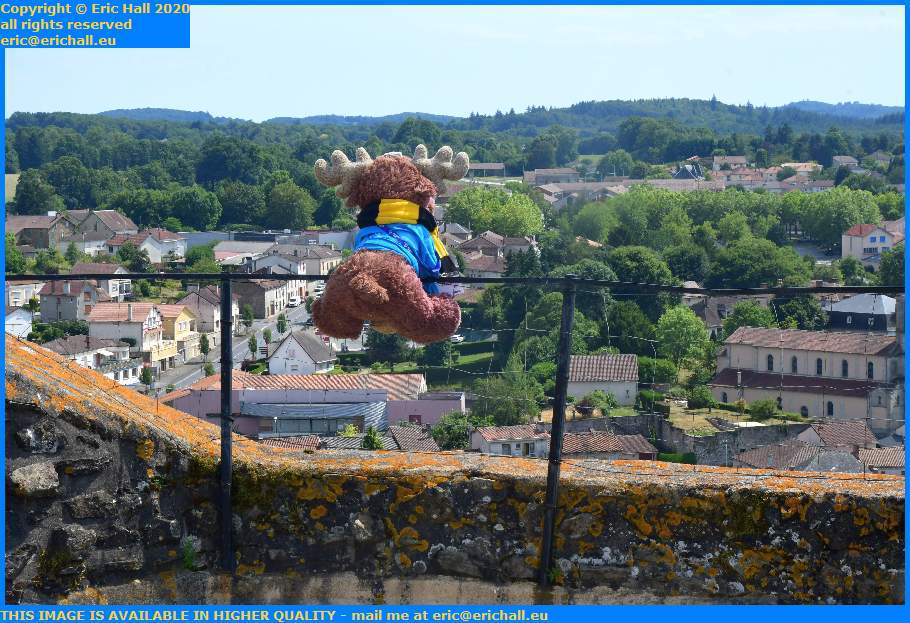
strawberry moose Château de Châlus-Chabrol 37500 indre et loire france eric hallMercadier began work on undermining the walls of the tower. And that would not have been easy because the walls are 3 metres thick, so I’m told.

Anyway, after 4 days of work, Richard came by to see how the attack was progressing.

While he was inspecting the works he was shot just underneath the neck by a bolt fired from a crossbow from the top of the tower roughly where Strawberry Moose is standing, and died of this wounds when gangrene set in.

And that unfortunately is that as far as Richard the Lionheart is concerned.

Château de Châlus-Chabrol 37500 indre et loire france eric hallSo now that we have set the scene, let’s go off on our guided tour of the premises.

The first thing that needs to be said is that while the tower here is original, the building probably isn’t. It dates from the enlargements of the 13th Century and I’ve seen a reference to reconstruction du logis du chateau en haut – “reconstruction of the lodgement of the upper chateau” – of 1280.

If that’s the case, this would be the garrison of the castle, where the defenders of the castle would lodge.
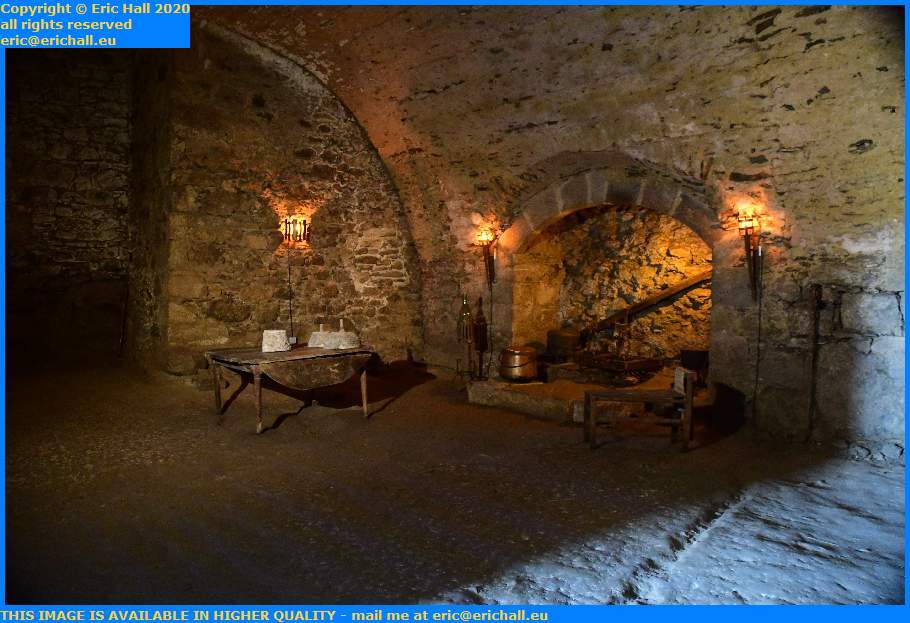
cellar Château de Châlus-Chabrol 37500 indre et loire france eric hallThere’s a doorway in the wall of the building that leads into the tower.

And from here we have a choice of two directions – upwards and downwards. We are going downstairs into the basement of the tower, complete with a lovely vaulted ceiling and beautiful arched fireplace.

Back in the 12th Century it would probably have been lit by tallow candles, presumably on a round chandelier that would be raised up or lowered down from the ceiling, rather than the reproduction medieval flares on the wall either side of the chimney.

strawberry moose in cellar Château de Châlus-Chabrol 37500 indre et loire france eric hallThere are two rooms underneath the tower.

We’re in the second room here. The entrance through which we walked from the first room is behind the pillar, under observation from Strawberry Moose who is presumably watching for English soldiers and mercenaries from the Perigord.

We’ve seen a few items of furniture around – in the previous photo and in this room. I’ve no idea if they are contemporary or reproduction but there certainly wouldn’t have been all that much furniture in a medieval building such as this. The occupants wouldn’t have been as wealthy or had as many possessions as is often depicted in Hollywood epics.

cellar Château de Châlus-Chabrol 37500 indre et loire france eric hallBack in the first room again you can see an example of the type of chandelier that I mentioned, although I doubt if it would have been as elaborate as this one.

Over to the left are the stairs down which we descended, and on the right is a doorway that leads out into the moat. For obvious defensive reasons, it’s doubtful that the doorway is contemporary with the construction of the tower and is more likely to be a comparatively modern alteration.

But I’m not going outside right now, I’m going back up the stairs, and right to the top too.
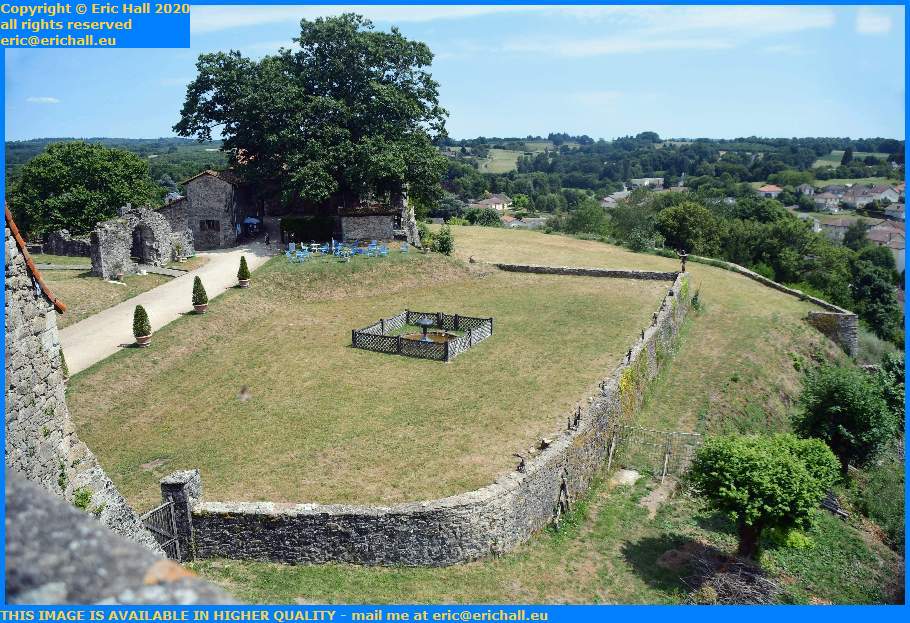
view from Château de Châlus-Chabrol 37500 indre et loire france eric hallAnd here I am, right up on the top of the tower and you can see the excellent view from up here.

Although it might not look like it from down below, it was in fact a real fortified castle and in this photo you can see part of the old walls of the place over there on the right with the remains of a little angled tower. I imagine that the walls continued round to the left of the line of trees covering that bank just there.

Even from this height you can see how the tower of the castle commands the view of the approaches to the butte. The main road that it covers is the one in the upper centre of the image heading slightly off to the right.

But now having had a good look, I’m going back downstairs and out through the door that we saw earlier.
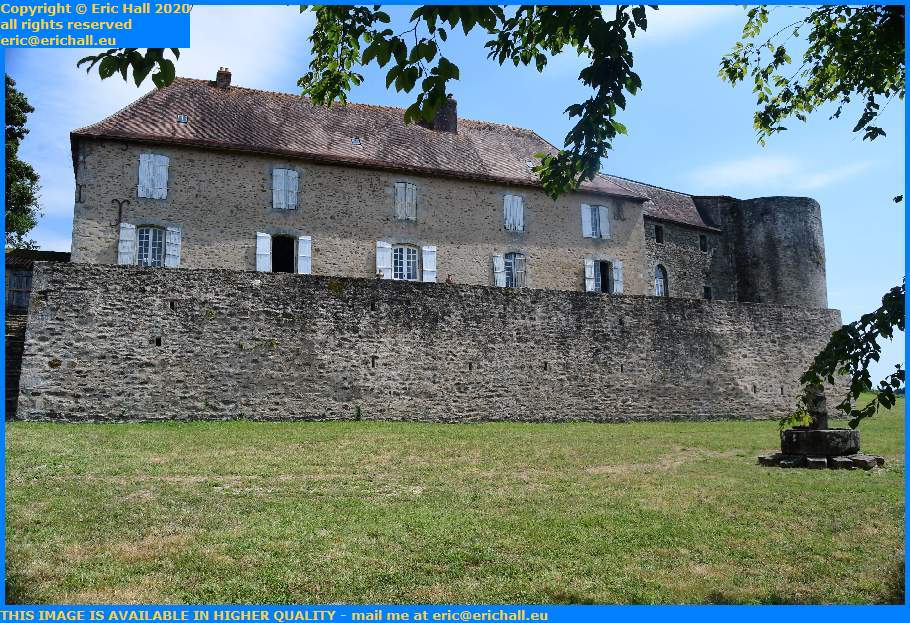
Château de Châlus-Chabrol 37500 indre et loire france eric hallHaving passed through the doorway in the tower into what I reckon may well have been the old moat, we can see the difference here between the old, original buildings and the more modern construction.

There was a part of the chateau built in the Seventeenth Century by the Bourbon-Busset family who had been the owners since 1530, and in the absence of any other information and of any other suitable candidate, I would suggest that the Hall on the left of this photo might be the more modern part.

As an aside, the Bourbon-Busset family is an illegitimate branch of the Royal House of France, the illegitimacy being due to the fact that Louis de Bourbon, cousin of King Charles VII, married without royal consent and later kept the marriage secret in order that he could become Bishop of Liege.

strawberry moose Château de Châlus-Chabrol 37500 indre et loire france eric hallAnd so Strawberry Moose and I climbed to the top of the main tower to see the view, which you have already seen in a few earlier photos.

And climbing to the top of the tower isn’t easy, although it’s easier than it might have been because there is one floor missing from how it was originally. That was somehow lost in the renovations of the 1960s although this might be the damage that was referred to when in 1870 there was “a fall of stones” at the chateau.

But the first obstacle that you have to overcome is the actual entry into the tower because it’s not as straightforward as it might be. The door is about 30 feet above ground and you need to climb up a rather steep ramp to enter.
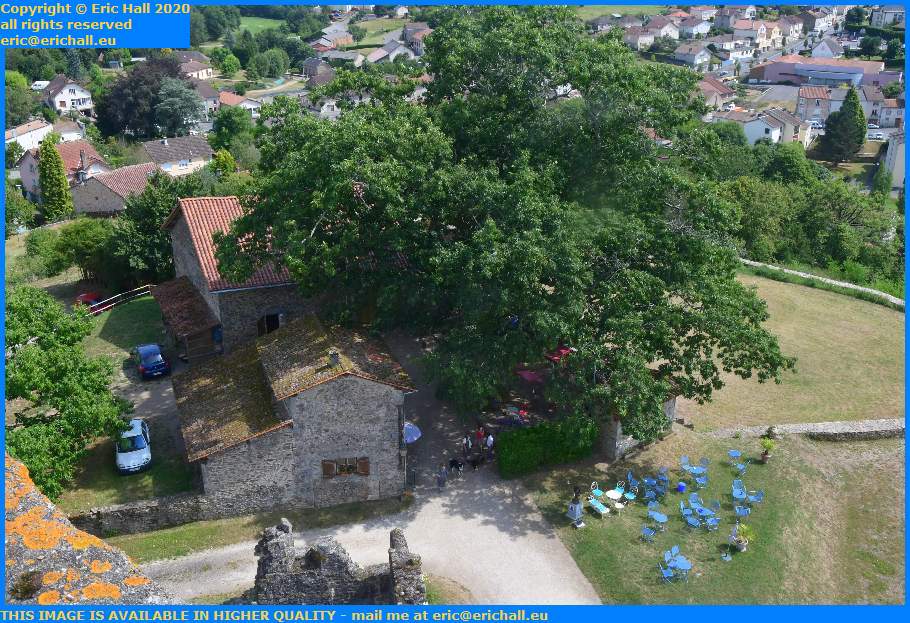
view from Château de Châlus-Chabrol 37500 indre et loire france eric hall And although it might not have been as easy as that 900 years ago, I have actually seen an old drawing of the tower that seems to suggest that there was some kind of building at the side.

It’s quite possible that if this was the case, there may well have been a stone staircase inside that went up to the main door.

Once inside, it continues to be something rather challenging to reach the top.
statue of crossbowman Château de Châlus-Chabrol 37500 indre et loire france eric hallIn certain places the original circular staircase around the inside of the outside wall. In other places the staircase is no longer there and there is some kind of ad hoc ladder arrangement to reach the floor above. It’s not for the faint-hearted.

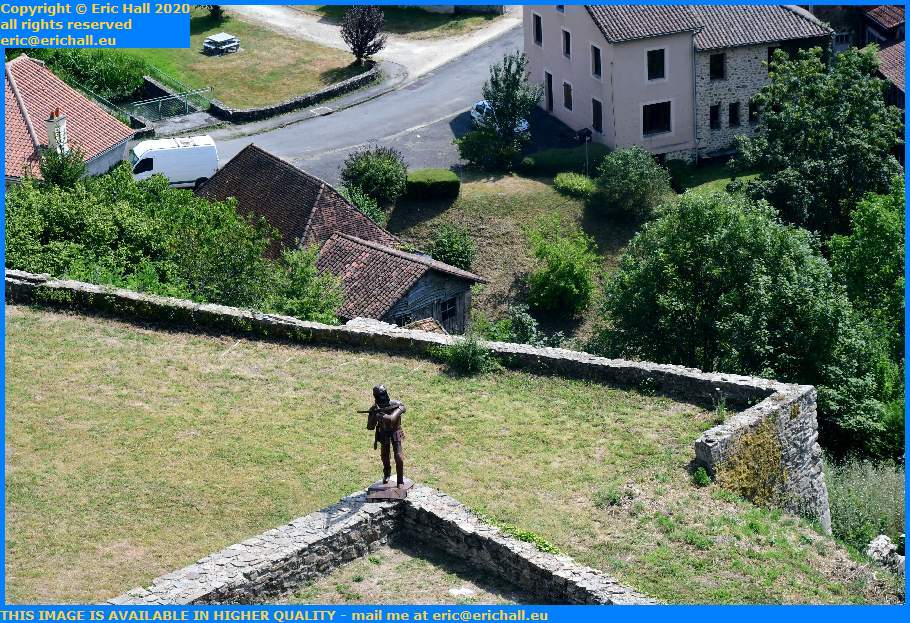
But once you do actually make it to the top, it’s well worth it because of the view. And not just of the view of the surrounding countryside either, but also because of the decorations in the garden. Like this crossbowman, for example.

The significance of this escapes me right now. But I did wonder whether it was on that spot that King Richard met his end.

flag of Château de Châlus-Chabrol 37500 indre et loire france eric hallFlying from the top of the tower is this rather beautiful flag.

Unfortunately I’ve not been able to identify it – it doesn’t belong to anyone who might have had any claim over the castle so it looks as if I’ll have to leave this for a while until chance plays its hand and I spot it somewhere else where there’s a legend.

But of course, there’s always my very knowledgeable readership. It might be that one of you lot might know. if so, please contact me using the contact link bottom-right.
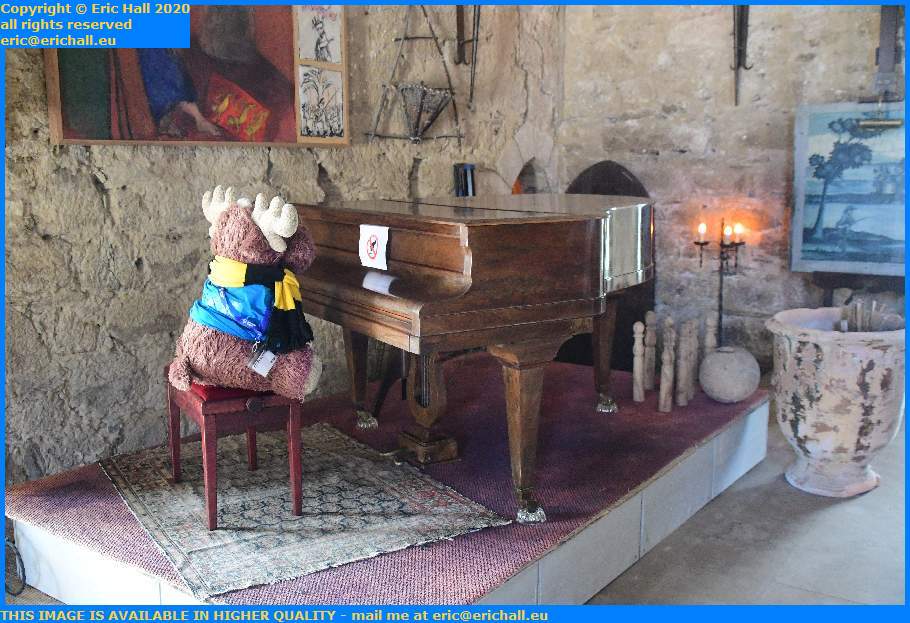
strawberry moose grand piano Château de Châlus-Chabrol 37500 indre et loire france eric hallSo while STRAWBERRY MOOSE entertains us with selections from the classics, I’ll tell you a little more about the subsequent history of the castle.

After a siege by soldiers from the Perigord in 1265 in which the defending captain was killed, a fine levied on the attackers enabled the chateau to be repaired. It passed to King Philip in 1306 and in 1317 he gave it to one of his advisers, Henri de Sully.

As a result of various marriages it passed through several families, including the Bourbon-Bussets whom we mentioned earlier, and also the Borgia family of Italy, the family of Cesare and Lucrezia.

During the Wars of Religion it was attacked twice, in 1569 and again in 1591 during which attack it came under artillery fire.
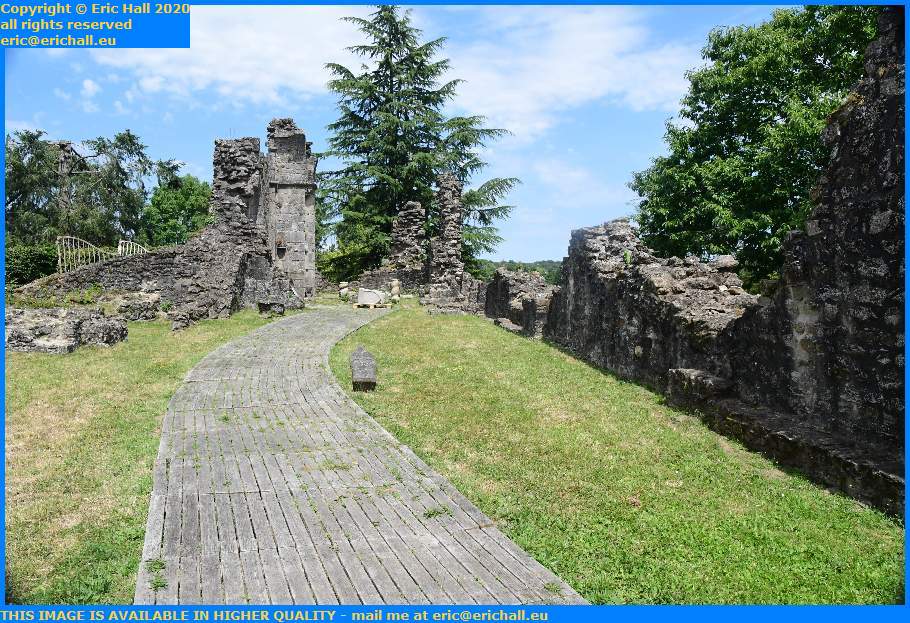
ruined church Château de Châlus-Chabrol 37500 indre et loire france eric hallAs usual in a medieval fortified place, there would be a chapel or church. And the Chateau de Chalus is no exception.

What we have here is the Eglise Notre Dame – the Church of Our Lady of High Chalus. Building commenced in the 11th Century and in 1095 Gerald, Abbott of the Monastery of St Augustin of Limoges took up possession. It later became the parish church and was expanded in the 15th Century.

ruined chapel Château de Châlus-Chabrol 37500 indre et loire france eric hallSubsequently a new church, the Eglise Notre-Dame de l’Assomption was built in the village and the one here became disaffected. It gradually slipped into decay and began to fall down. A visitor who passed by in 1888 noted that there was much more of it still standing back then than there is today.

But on a happier note, what remains of the church was added to the List Of Historic Monuments on 25th March 1981

Interestingly, the entrails of Richard the Lionheart are said to be buried somewhere within the precincts of the church, although I couldn’t find out exactly where they might be.

Having left the scene, a long drive brought Strawberry Moose, Caliburn and me as far as Gueret where, due to the heat and general fatigue, we abandoned our efforts to continue.

A brief shopping excursion to LeClerc and then I installed myself in a Premier Class hotel cross the road where I had a shower to cool myself down, and washed my clothes. Internet once more very patchy so the USB-tethering came ito the fore.

Having made myself a dish of pasta and vegetables in the slow cooker, I lay on the bed and crashed out completely.

That was that.

All translations in the text from French and German have been done by me.

Wednesday 24th June 2020 – I’VE BEEN …

baby seagull rue des juifs granville manche normandy france eric hall… out and about on my travels this morning.

So while you admire the photos of the baby seagull, which now seems to be very fit and healthy, I can give you the account of my day.

And just for a change, it got off to a very good start, for I was actually up and out of bed before the third alarm – something that doesn’t happen too often these day. Maybe it was the early night that helped there – if you can call 23:45 an early night.

baby seagull rue des juifs granville manche normandy france eric hallAfter the medication I had a listen to the dictaphone to see where I’d been during the night.

Last night there was a group of us working on a new history textbook for schools and this involved rewriting quite a bit of stuff that was already in it including a load of songs and so on. So we noticed that these songs to fit into the new way of things and it was quite difficult for everyone to get into the habit of hearing them in the new way and I remember my brother being particularly surprised at some of the changes made to the songs in order to make the songs fit the times more than anything else
There was something else going on during the night and I’ve forgotten a lot of it but I’d been caught doing something and been punished in some way by having to do something, carry out a few tasks and at the end of that time I was given £30:00 in 2x£15:00 vouchers to spend. Whoever I was with – it might have been Nerina – was really upset about that and demanded to talk to me about it. The guy who was watching me, I held up the two vouchers and waved them about to attract his attention and said that I was going into the building. Nerina came with me and I had to find a quiet room to have a discussion. There were about 6 rooms in this building and there wasn’t really one that was suitable – the walls were flimsy and there were people in adjacent rooms. In the end we found a room where the photocopier was and we were about to go into there. And that was when the alarm went off.

And even though it was Nerina who was with me for part of the evening I do have to say that regardless of any of our issues, I would much rather have her company on my nocturnal rambles than many of the others who have been putting in an appearance just recently.

I’m still not eating breakfast so having done a little work, Caliburn and I headed for the hills – Gavray, in fact.

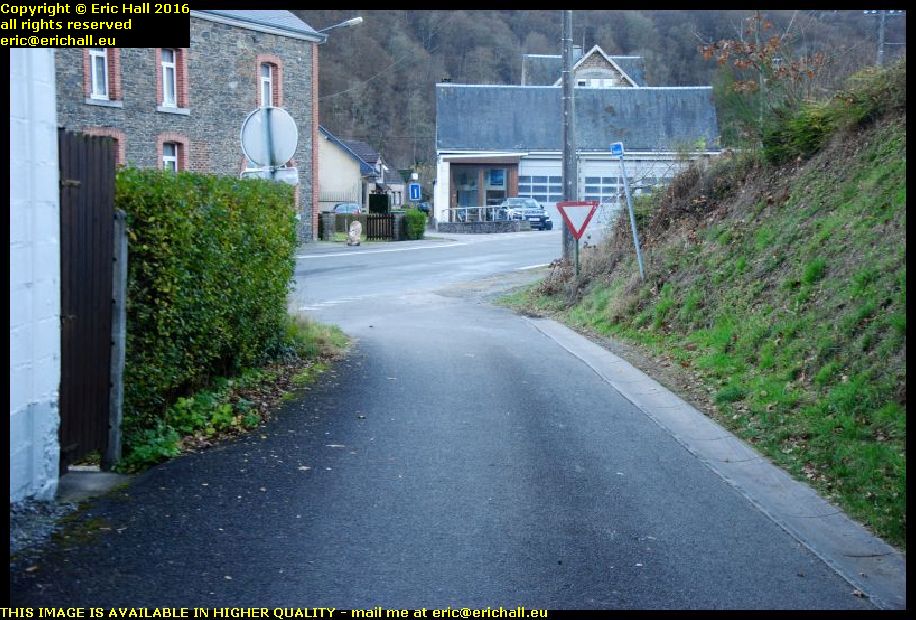
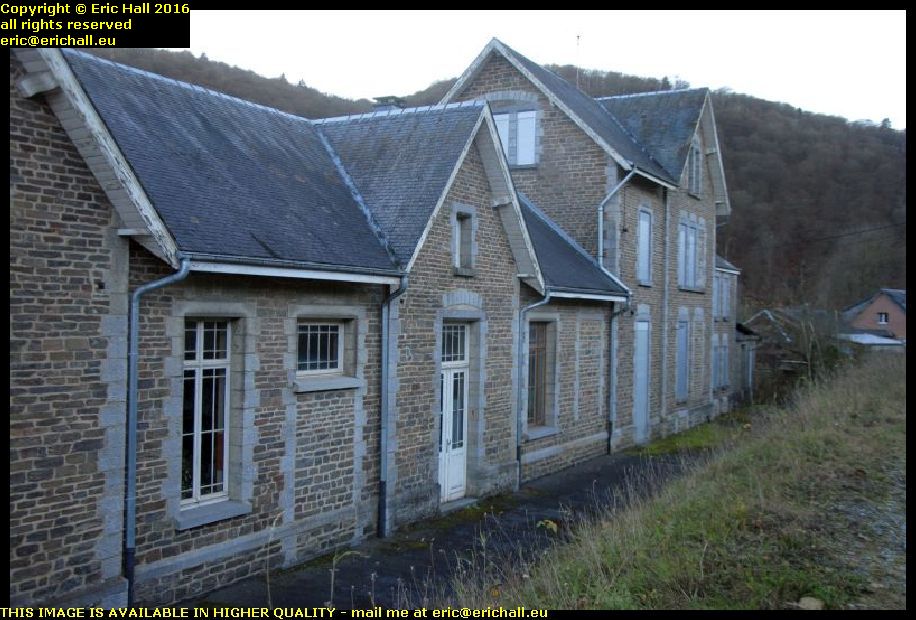
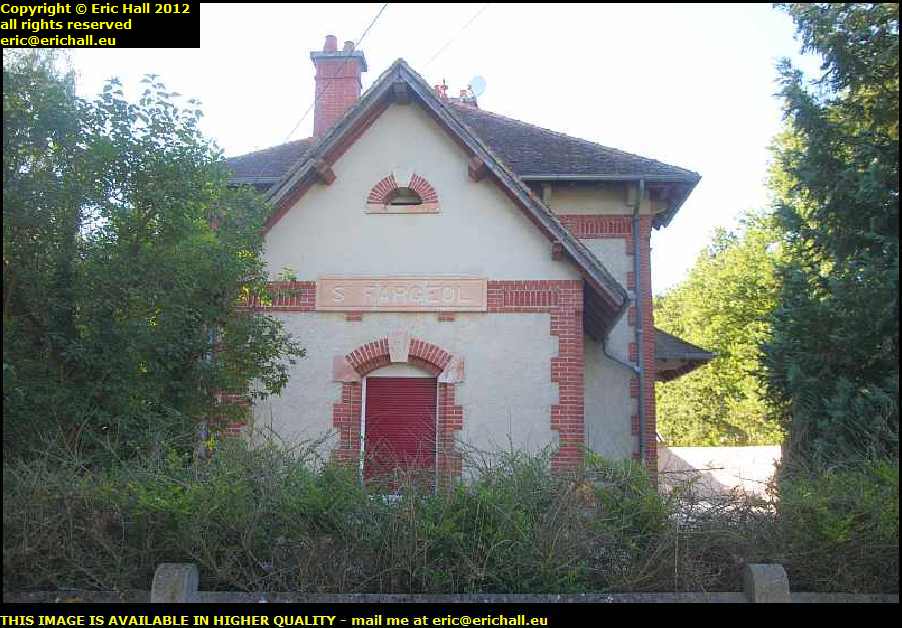
tacot voie metrique gare de gavray manche normandy france eric hallWhen I arrived in the town I took a wrong turning and I’m glad that I did because I found something that I would otherwise have missed – an old disaffected railway station.

There was a “Light Railway Act” in France similar to that in the UK of 1896, and for a period of about 50 years the whole of France became honeycombed with what they called the tacot or “rattletrap” – a narrow-gauge voie metrique railway network.

It’s the kind of system that was highlighted in the Alec Guinness FATHER BROWN series of films in the 1950s of the books by GK Chesterton
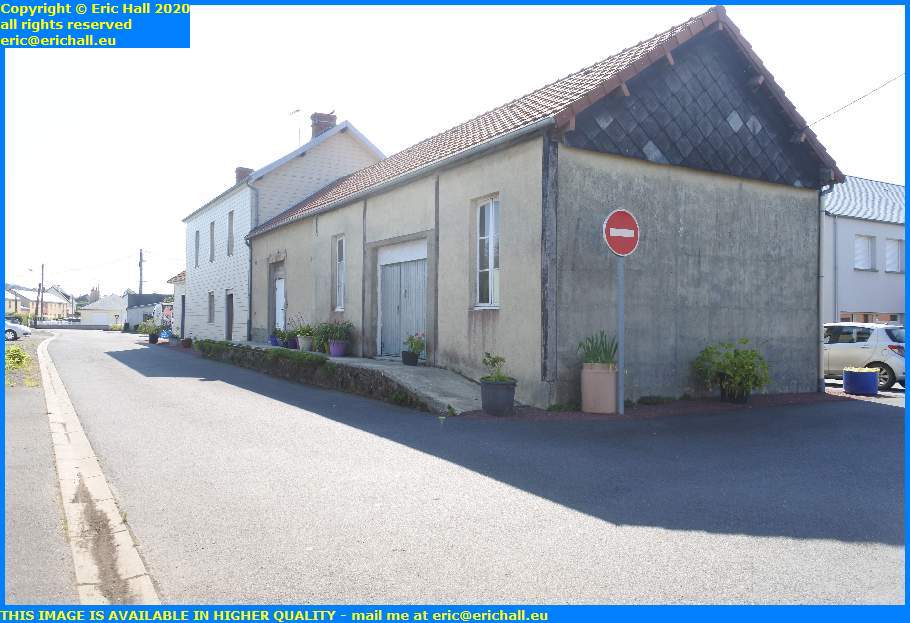
tacot voie metrique gare de gavray manche normandy france eric hallRegular readers of this rubbish will recall that we have seen plenty of examples of this on our travels, especially in the Auvergne where I used to live and also here in Normandy along the coast.

There was also a voie metrique that went across-country from Granville to Conde-sur-Vire, opened in 1910 and closed in 1936 (and we’ve seen lines closed much quicker than that too). That line passed through Gavray and there would almost certainly have been a railway station here.

That has always been one of the things that I’ve been aiming to do – to track it down – and having taken a wrong turning in Gavray when I was looking for something else, I find myself falling right on it, quite by chance.

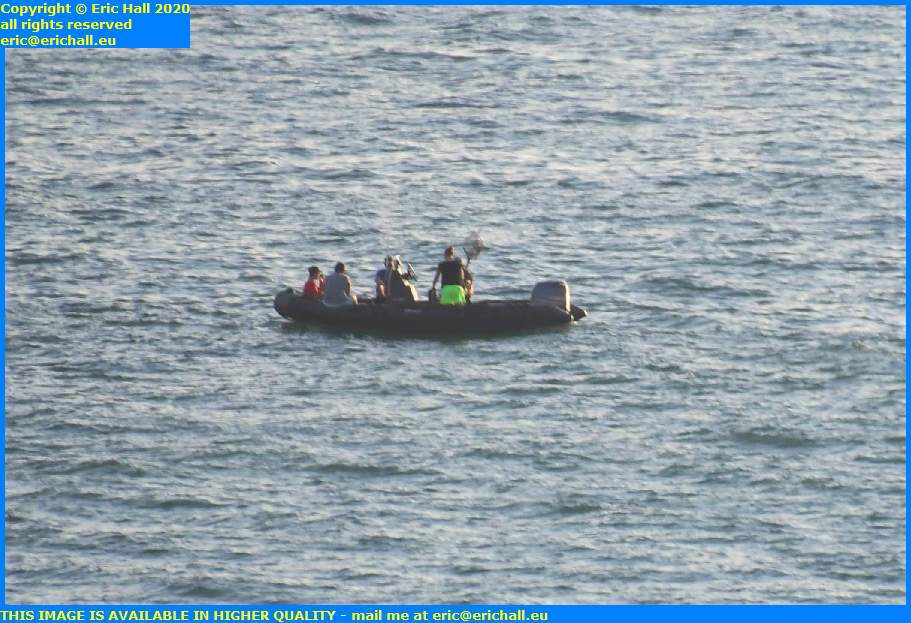
kayaker english channel granville manche normandy france eric hallSo while you admire the photos of the kayaker and othe rpeople in various water craft out there fishing today, I was busy tracking down the garage that I had come to visit.

Eventually I tracked it down and the guy had a good look at Caliburn. He reckons that it’s perfectly possible to do something with Caliburn. There’s no rot except in one wheel arch – the rest of it is simply rubbing down, rust-proofing, zinc priming and about a ton of underseal.
He’s not going to end up as he did out of the factory 13 years ago, and it’s not cheap either. But with my lifespan that’s left there’s no point in buying a new vehicle just for three or four years.

Caliburn and I may as well go out together.

buoys speedboat fishing english channel granville manche normandy france eric hallSo I headed on back to Granville and I’ll wait for the estimate to arrive. But I’ve decided that i’m going to have it done anyway.

When I reached the outskirts of Granville I took the by-pass and joined the traffic queue heading south towards St Pair sur Mer.

Brico Cash was where I was heading, to see what they had on offer today as I haven’t been there for a while.

And the answer is “not an awful lot”. There wasn’t anything that caught my eye particularly although I picked up some French plugs. A couple of the appliances that I brought from The Auvergne when I was there just now still have British plugs on them.

fishermen zodiac english channel granville manche normandy france eric hallTraffic queues back here as well. I was stuck behind a grockle in a motor home admiring the blasted seagulls instead of advancing in an orderly fashion.

Back here there was still plenty of time before lunch so I had another look at the web pages that I’ve been amending.

That one is now completed and I’ve made a start on the next. I’ve now crossed over the border into Great Satan and I’m on my way to Bar Harbor in Maine.

cranes ferry terminal port de granville harbour manche normandy france eric hallBy now it was lunchtime.

It was beautiful and warm and bright and sunny so I made my sandwiches (home-made bread, home-made hummus and salad) and went and sat outside on the wall again.

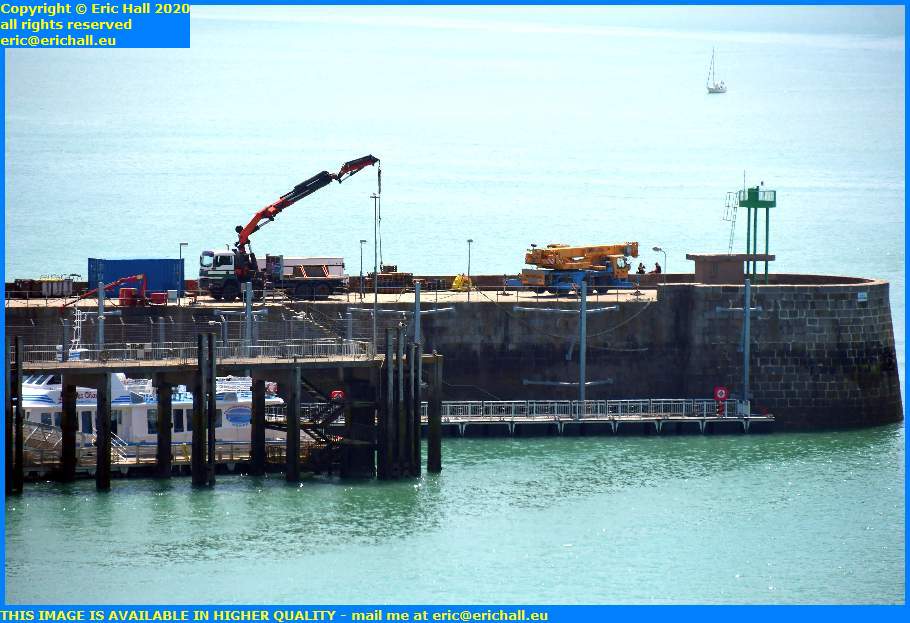
Even though the tide was well out and there were no ships or boats in the harbour, there was still quite a bit of activity going on down there today, despite it being the lunch hour.

joly france cranes ferry terminal port de granville harbour  manche normandy france eric hallThere was a mobile crane down there and as I watched, it was joined by another one – the big mobile crane that comes here every so often.

The big crane extended its jib and they were both performing some kind of activity out there. I couldn’t see what it was, so I shall have to go out that way on my Sunday walk to see what has changed.

It can’t be anything too complicated because all the way through the manoeuvre … “PERSONoeuvre” – ed … one of the Joly France boats – the newer one – was moored right there and with the tide being out, it wasn’t moving anywhere else.

Back at the apartment I tackled the last week of my Accountancy course. I’ve finished it, not very successfully I have to say because I can’t remember all that much about what I just learnt.

That’s one of the penalties of old age. Two things happen to you then.
The first is that you forget absolutely everything that you are supposed to remember.
And as for the second thing – well, I’ve forgotten what that was.

crowds on beach plat gousset granville manche normandy france eric hallThere was the usual break for my afternoon walk.

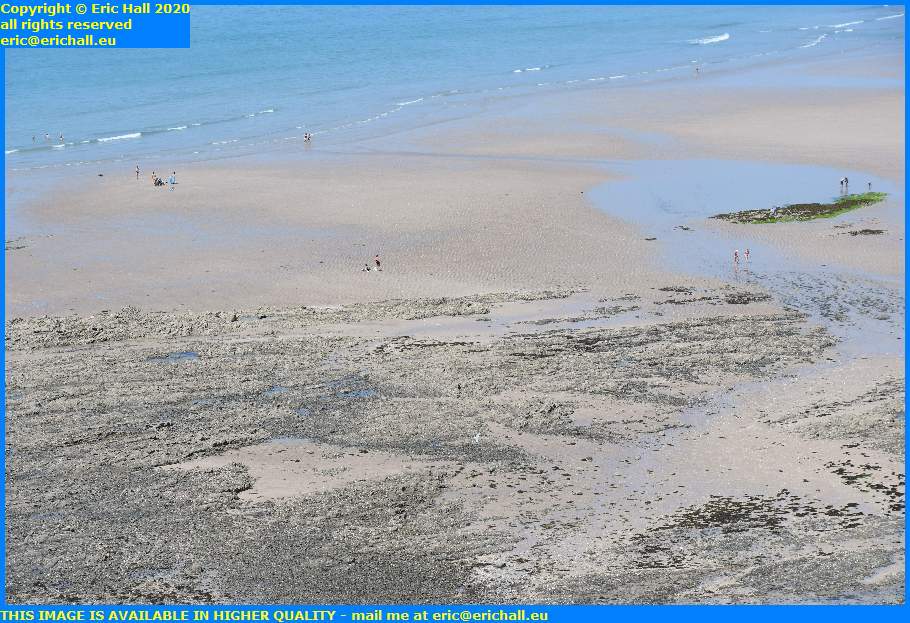
Today, in the gorgeous hot sunlight I went for a walk around the walls of the medieval town. From there I could look down on the beach at the Plat Gousset and watch all of the crowds enjoying themselves.

It’s Wednesday afternoon and the brats aren’t in school so the beach was busier than normal, and that’s not a surprise. Given half a chance, I’d be down there myself.

crowds tidal swimming pool plat gousset granville manche normandy france eric hallRegular readers of this rubbish will recall that a few weeks ago we saw the local council clearing out the old tidal swimming pool with a lorry and a digger – clearing out years of accumulated silt.

They’ve done a really good job by the look of it. It’s actually retaining some water and it’s attracted quite a crowd of people, splashing around in there.

And the people in the flourescent jackets – I’m convinced that they are the lifeguards, although how they are expected to swim while wearing those is anyone’s guess.

roofing place marechal foch granville manche normandy france eric hallMy walk went on along the walls and around to the viewpoint overlooking the Place Marechal Foch.

There’s been a roofing job going on on one of the roofs of one of the buildings down there for as long as I can remember, and they still don’t seem to have finished it.

Not long to go by the looks of things, but I recall having said that before. They were doing really well at one point but seem to have gone off the boil just recently.

lorry fork lift truck fishing nets port de granville harbour manche normandy france eric hallFrom there I passed through the Place Maurice Marland to check on my seagull chick, and then walked on to the viewpoint over the harbour.

There’s some activity down there right now. A lorry has turned up and there’s a fork-lift truck that looks as if it might be thinking about unloading the lorry. Does this mean that either Thora or Normandy Trader are going to be paying us a visit some time soon?

And we have another group of fishermen over there wrestling with a rather large fishing net

pointing medieval stone wall granville manche normandy france eric hallAnother thing that regular readers of this rubbish will recall seeing is the works van that appeared on the city walls near where they did all of that repointing.

The pointing on part of it in the Parvis Notre Dame was pretty poor so i speculated that the work might be something to do with that, and it seems that I was perfectly right. There are two men down there cleaning it all up

You can see how much excess cement that one of the guys has scraped off the wall – it’s all lying on the ground behind the car.

Back here I carried on with the course and, shame as it is to say it, crashed out a couple of times too. This is really getting on my nerves.

But I finished the course in the end and there was time to edit a few more photos. Tomorrow I’m going to start the final part of my music course. I want that out of the way too.

After the guitar I made tea. There was some left-over stuffing so I added some kidney beans and tomato sauce and made taco rolls

yacht baie de mont st michel granville manche normandy france eric hallSomewhat later than usual, iw ent out for my evening run. It was far too warm to go out at the usual time.

All the way up the hill and down to the cliff without stopping, saying hello to the itinerant sheltering under the tree. Out to the sea there was plenty of activity and we have already seen some of the boats. We haven’t seen this yacht though, sailing back from the Ile de chausey into port, towing its dinghy behind it.

It’s making me all broody again and I’m going to have to do something about all of this before too long.

fisherman picnickers pointe du roc granville manche normandy france eric hallJust for a change there was no family group picnicking in the old gun emplacement.

There were however plenty of people down on the viewpoint by the old watchman’s cabin and they were having a good time by the looks of things

Quite a few fishermen too, down there on the rocks casting their lines out into the water. It seems to be becoming quite a regular thing these days.

trawlers chantier navale port de granville harbour manche normandy france eric hallMy run continued on along the path on top of the clifftop on the south side of the headland

No kids jumping off the sea wall tonight, but instead we seem to have had some activity down at the chantier navale. One of the fishing boats that has been there for quite some considerable time seems to have gone back into the water.

There were a few other people down there taking photos of themselves in the evening sunshine. All in all, it was quite busy.

crowds on port de granville harbour manche normandy france eric hallAnd not just there either.

Way across the port on the sea wall that protects the port de plaisance – the yacht harbour – there were crowds of people milling around tonight. They were certainly making the most of it.

As for me, I cleared off and ran all the way round down the Boulevard Vaufleury and the rest of my vastly elongated route round to the viewpoint in the rue du Nord.

people sitting on rock plat gousset granville manche normandy france eric hallThe tide is right in right now so the chances of finding any picnickers on the beach was extremely remote.

However that little shelf that we noticed a few days ago – that seems to be the place to be these days as there are a couple more people making use of it.

And I’m still trying to work out the optical illusion surrounding the guy on the left. It looks thoroughly weird to me.

beautiful sunset ile de chausey english channel granville manche normandy france eric hallThe people down there were enjoying another magnificent evening.

There were quite a few people up here enjoying it too, and quite rightly so for although it wasn’t as good as last night’s, it was still something special.

having watched it for a while I headed on home to write up my notes.

Tomorrow, it’s shopping day. There’s not much that I need but it’s stuff that I can’t do without so I shall have to go.

And then i’ll make a start on the last week of my music course. I want to get that out of the way before the weekend. It’ll give me a chance to do some other work that’s been sitting on the back burner for the last month or so.

High time I got a move on.

Saturday 29th June 2019 – A RECESSION? YOU MUST BE JOKING!

We keep on being told that economies are in a bad state and that many businesses are in crisis. But at the rate that they are turning away good money, it must be just a false rumour.

Last night I went to the Food Court in the basement of the Gare du Midi at 20:50 for my evening meal, bearing in mind that it closes at 21:00. Most of the stalls were already closed, another one was tidying up and cleaning up, and the final one told me “we’re not cooking now – we’re just closing”.

Obviously, it’s too much like hard work for anyone to be bothered to earn good money when it’s 10 minutes short of going-home time.

Not like the Indian restaurant in Crewe all those years ago. One of my taxis was out at 04:00 and the driver radioed me to ask if there was anywhere where his passengers could find somewhere to eat.

I telephoned the Indian restaurant
“sorry, we’re closed”
“but I have a taxi with passengers who are hungry”
“A taxi? How many passengers?”
“Four passengers”
“Four passengers? WE’RE OPEN!!!!”

And people complain that they are taking over.

For the first time in I don’t know how long, I had a really decent sleep, right the way through until the alarm went off. I’d been on a little voyage too but I can’t remember anything at all about it. Any recollection of it evaporated before I had time to grab hold of the dictaphone.

After the usual morning performance I had a shower and washed my clothes, and then went down for breakfast. I need to start the day as I mean to go on;

Back up here, I dealt with a few things that needed doing, and tidied up and packed my possessions ready to leave tomorrow.

When Alison texted me, I headed down to the station and took the metro, changing at Arts-Loi to travel to Kraainem where she was waiting.

We went to Brico and Carrefour and then headed out, via her house to drop off some stuff, to the Ardennes in the sweltering heat.

We stopped off at Tellin for a cool drink and then off to the other side of the autoroute to Redu, which is the Belgian equivalent of Hay-on-Wye, full of second-hand bookshops.

Nothing there caught my eye so we headed off for Sohier. “Sohier we are”, I mused to myself.

It’s said to be one of the prettiest villages in Belgium. Pretty it may well be, but I’ve seen plenty that are prettier, and in Belgium too.

Back up the road to Han-sur-Lesse (home of the legendary caves) for a late lunch and a walk by the river.

Finally to Rochefort and its famous church, where I discovered not only carvings of masonic symbols such as the arc and compass but also a Sol Invictus – the Conquering Sun, a pagan symbol adopted by the emperor Constantine after the Battle of Milvian Bridge in 312AD.

We also stumbled, quite by accident, upon the old abandoned Rochefort railway station on the abandoned lne between Jemelle and Houyet, closed to passengers in 1959 and to freight in 1978. There was also a tacot – a rural tramway – that started here and went to Wellin

That was enough for today as we were sweltering by this time in 35°C. We headed back to Brussels.

Alison dropped me off at the Herman Debroux metro station where I fuelled up her car for her and then I took the metro back to the Gare du Midi and my adventures in the food court.

Tea ended up being a baguette and tomato, followed by a banana. At least the Delhaize supermarket in the basement was still open.

Back here I sat down and ate my tea, and then I had in mind the idea of writing up my notes. However, the next thing that I remember was that it was about 23:30 – I’d been asleep for 90 minutes “just like that”, so I gave up the idea and went back to sleep.

Wednesday 26th April 2017 – THAT’S TWO MORE …

… ruins crossed off the list this morning.

Two new constructions of which I would have been the first inhabitant.

The first one was a nice apartment but the finishing was terrible. They had installed the kitchen unit and then painted the walls with the result that half of the paint was on the unit. And they hadn’t painted behind the unit either, which gave me a good chance to look at the plasterboard. It wasn’t “hydro” plasterboard but cheap 10mm stuff that wouldn’t last five minutes once it became wet (which is an odds-on certainty behind a kitchen unit). It wouldn’t have been so bad had they tiled it, or even painted it, but that was a load of rubbish and I’m not becoming involved with those kinds of issues.

The second one was a studio, nice and big, but with the black damp already rising out of the floor – and in a new untenanted studio too.

So no danger of me moving into anywhere here.

garden gnome brehal manche normandy franceBut I was disappointed about these apartments anyway, because there is someone living just across the road from here that has a similar kind of sense of humour as me, and that’s something quite rare in France, isn’t it?

This isn’t all that was on display either. The whole garden front, sides and back, was covered in garden ornaments. And I have to be honest and say that the idea of Snow White and the Seven Dwarves, a pile of sprouting mushrooms and half a dozen tuinkabouwters living in the immediate vicinity is one that would appeal to me.

old railway station ancienne gare brehal manche normandy franceThat’s not the only exciting thing here in the vicinity either. This building is actually just across the car park from the building that I was visiting, and regular readers of this rubbish will recognise this for what it is.

It is of course a railway station.

Brehal did once have a railway service, on the line between Granville and Conde sur Vire. Opened in 1909, it was another one of these ephemeral local lines – a tacot with a narrow gauge of one metre.

Ephemeral it certainly was. Not quite matching the 8 years of railway line between Pionsat and Gouttieres, it struggled on for a grand total of 32 years, closing officially in 1941 due to “wartime conditions” and never reopening.

However, I have seen in someone’s memoirs a story that it closed in the mid-1930s and that the rails were removed some time round about 1937-38

I’d had a bad night again – not comfortable in my new bed. And far too much noise for my liking. Despite switching off the film early last night, I couldn’t go to sleep and that’s the thing that always puts me in a bad mood.

After breakfast I hit the streets to Brehal to see these ruins, and then wandered off to the bank for some money. And found myself passing a launderette. I was having a free morning, and I had a pile of dirty clothes in Caliburn and having found the washing soap when I had Caliburn stripped out the other day, I spend a pleasant hour in the launderette with a good book while my washing was going round.

Having picked up a baguette, I headed for the beach. Far too windy and hailstormy to sit outside but I did profit by pulling about 6 months worth of rubbish out of Caliburn and dumping it in a waste bin.

oyster beds coudeville plage manche normandy franceAnd having a good look at the oyster beds out here too. With the tide being quite low right now, you can actually see them.

While I was eating my butty I had an interesting exchange of text messages –
“Why didn’t you say hello to me?”
“What?”
“When you walked past me just now”
“Did I just walk past you?”
“Yes you did!”
“Where was that?”
“On the car park”
“Which one?”
“The one right outside the sous-prefecture“.
“But I wasn’t there”
“Where are you?”
“Sitting by the seaside in Brehal in Normandy”
“Ohh dear – I’ve texted the wrong number! Sorry”.

Back here, I sat outside in the verandah with a good book and a coffee for a while. And then I made my tea in the kitchen in the garage.

But I’m really fed up with this. Not only do I have the landlady sitting watching me while I eat my breakfast, she came to watch over me while I cooked and ate my tea. And I’m not comfortable in my new quarters either.

I can’t be doing with this. It’s the cheapest place in the whole of Normandy and it’s easy to see why. I’m moving on on Sunday morning – and I don’t care where to – and it will be a cold day in hell before I ever come back here.

Monday 5th December 2016 -DRAT AND DOUBLE-DRAT!

The other week, we discussed the problem of burst tyres on the motorway.

And so it should come as no surprise to learn that it was the turn of Yours Truly today.

Not quite on the motorway – in fact about 400 metres after I’d pulled off at Montlucon. But a flat tyre just the same. There’s a nail in it somehow.

Luckily, if there is such a thing that can be called lucky, regular readers will recall from 2012 when I had a blow-out on the M6 near Stoke on Trent, I’d pushed the boat out and bought three really good Hankook tyres. The fourth was a second-hand cheap tyre that I had bought because of the wheel that was attached to it. There was plenty of tread on it but I didn’t expect it to last very long. Anyway, it’s this one that has the puncture.

There’s a spare on Caliburn and that was a second-hand one that I bought for the wheel (it was the time when I was collecting a second set of wheels for the winter tyres). But when I had a look at it … well … I’ve thrown away better tyres than this. A fair amount of tread to be sure, but standing around for as long as it has has done it no favours. But at least I was mobile with not much effort.

selfish parking montlucon allier franceMy new enhanced mobility took me to the LeClerc supermarket where I stocked up with another big supply of food for Belgium. And while I was there, I had another big laugh at the selfishness of other drivers.

The driver of this car parked it up at the supermarket – and pretty badly parked at that – and walked away – and then turned round to come back and parked his car even worse, straddling the white lines.

The selfishness of people is astonishing, isn’t it?

Having done the shopping, I went off in search of some tyres. I’ve ordered two brand-new Hankooks and they will be delivered on Friday. They will be going on the front, the other Hankook that is still on the front will be the spare, and the nasty spare tyre will be going in the bin.

But I’m not thinking very clearly here. What I should have done was to forget about the new tyres, come back home and fitted Caliburn with his winter tyres on the front. And the money situation is going to be important because on the way down from Leuven, I could feel the other wheel bearing start to tighten up and that’s going to have to be looked at. It’s yet more expense that I can do without.

I had a decent sleep last night and the breakfast at the Premiere Class was quite good. And then I hung around there doing stuff until about 11:00. When they threw me out of the hotel I hit the road and drove steadily down to Montlucon

tacot railway station narrow gauge bourbon l'archambault allier franceI cut the corner off down at the end of the road and came back through Bourbon l’Archambault, and this building caught my eye.

You should all know what it is because I’ve taken you to see a few of these. It’s the old railway station of Bourbon l’Archambault and the railway concerned is the tacot, the metre-gauge railway network that covered the Allier during the first half of the 20th Century.

Built far too late to have a decisive influence on the country’s transport policy and built too cheaply, serving the layout of the terrain rather that the needs of the passengers (one commentator described the railway stations as decorating the abandoned landscape), the only surprise was that they lasted aslong as they did before road transport swept them away

There’s a new chain of budget hotels opening in France – called Ace Hotels. One has been built on the edge of Montlucon and so I went for a look around.

ace hotel montlucon allier franceAt just €49:00 per night, it’s excellent. Certainly the best budget hotel in which I’ve ever stayed. The only complaint is that there aren’t enough of them yet.

My view from the window was excellent, right across the motorway and into the Combrailles at the back. That’s where I’ll be heading tomorrow.

So in the meantime, I ordered a pizza and wasn’t that a disappointment? Overpriced, undercooked and crushed up on one side of the box – someone had carried it vertically.

I shan’t be going to that pizza place again.

Monday 28th November 2016 – I WAS RIGHT …

delhaize closed monday bohan belgium october octobre 2016… when I said the other day that I would probably find the Delhaize at Bohan closed if I were to come here today.

Well – I was half-right anyway. Had I come here this morning I would have found it open. But I didn’t – I didn’t arrive here until this afternoon and by then the supermarket here was well-closed.

It wasn’t much of a guess though really, was it? Knowing how things pan out when I’m involved, you should have had the mortgage on it.

delhaize bohan belgium october octobre 2016It wouldn’t be so bad if it were an out-of-town retail outlet but here it is, in pride of place right in the town centre, on a site that’s been used for retail purposes for maybe at least 90 years if an old postcard that I saw had anything to do with it.

But as luck would have it, and quite surprisingly if you are a regular reader of this rubbish, there was a boulangerie open up the side street to the right,and I was able to grab a loaf of bread.

I’d had yet another bad night – this one probably the worst that I’d had so far. and I was awake long before the alarm went off. I’d been travelling too – round Labrador as it happens and I’d been promoting some complicated and difficult projects that I found very hard to explain.

First down for breakfast, even before the staff yet again, and then back to my room and carrying on with my work on Labrador and the Happy Valley-Goose Bay web pages that I’m writing. And I’m stuck. I’ve forgotten the name of a ship that I saw in the harbour and I can’t identify it from the photo. All I know is that it’s the Woodwards oil tanker that takes the fuel out to the outports and isolated islands in the Labrador Sea.

After my butties I set off to Bohan. And it was cold too – the ice warning was going off which was no surprise as the temperature had dropped well below zero during the night and there had been frost everywhere this morning. I sorted out the woolly hat to go on my woolly head.

riviere semois pont cassé bohan belgium october octobre 2016There was a really good reason for wanting to go to Bohan, because it’s another place that has a lot that I would find interesting.

Amongst them is what is called the Pont Cassé – the broken bridge. And if you really need to know who it was who broke it, the answer was that it was the French Army. They blew it up on 11th May 1940 in order to prevent the German Army and its tanks from using it to cross over the river

riviere semois pont cassé bohan belgium october octobre 2016And when they blew it up, they did a really good job of it too.

It was “repaired”, if that’s the right word, with a temporary wooden structure but during the German retreat they set it alight on 6th September 1944 and it burnt down.

And after the war, the decision was made in 1947 not to replace it.

rivere semois pont cassé bohan belgium october octobre 2016It’s possible to walk onto the bridge these days – it’s not fenced off – and so I did.

And you can tell from this photograph exactly what kind of bridge it is can’t you? It’s a railway bridge of course if you need to be told, and more than that, it’s another tacot or “rattletrap” – one of the
chemins de fer vicinaux or local tramway-type railways that littered Belgium just as well as they littered France and which we had near us in Marcillat en Combraille.

riviere semois pont cassé bohan belgium october octobre 2016And talking of my home area in the Combrailles, if you think that the railway line from Pionsat to Gouttieres with its 9 years of existence was quite ephemeral, you haven’t seen anything yet.

This railway line had a lifespan of just about 5 years. It was opened on 5th May 1935 and came to a rather sudden end on 11th May 1940 as I mentioned just now when the French army blew up the bridge.

chemin de fer vicinal bohan belgium october octobre 2016But even that pales into insignificance when we talk about the extension of the line.

Just over there is the railway station. The line came to a full stop over there in 1935 but the decision had been taken to extend the line into France. Just down beyond the railway station is the French border and beyond there is the town of Sorendal.

This was the terminus of the Ardennes tacot – the metre-gauge rural railway network of the French, and on 17th October 1938 an extension was built to join them together.

chemin de fer vicinal gare bohan belgium october octobre 2016While we admire the back of the railway station and what might be a signal cabin to control a set of points that might have worked a siding that looks as if it might have gone to the left just there, I’ll tell you an even more tragic story about the line.

And that is that despite only being opened in October 1938, the French closed the border at the outbreak of war and this part of the line didn’t even manage a whole year of working.


chemin de fer vicinal gare bohan belgium october octobre 2016There wasn’t any doubt in my mind that this was the old railway station. There wasn’t anything carved on the stone or any old sign that might have given me a clue – it just looks exactly as anyone might expect.

Thoroughly magnificent and thoroughly over-the-top, which was a feature of these rural railway stations. No wonder that the lines didn’t last all that long with this kind of expense.

chemin de fer vicinal gare bohan belgium october octobre 2016This is the line-side of the station – the roadway today is the track-bed and there is a pile of waste-land in front of the building that might easily have been the platform.

It looks as if it’s derelict now – all closed down and with damp rising up the stone walls. But it was at one time a garage and then later became a dwelling-house. But there’s no land with it unfortunately, and it’s far too big for me, as well as needing far too much work.

pont cassé chemin defervicinal bohan belgium october octobre 2016But before we leave the Pont Cassé, all 90 metres of it, let me just explain to you why it took until 1935 for the railway line to reach here.

It actually reached Membre in 1913, construction from Gedinne having begun in 1909. But then we had the war of course and afterwards, we had to wait for the Belgian economy to restart. And then we had the decision as to how actually to reach here because it’s a horrendous civil engineering problem.

In the end, they dug a tunnel through the rock, a tunnel of 22O metres in length and which was one of the marvels of Belgian engineering. Unfortunately, the portal at this end is on private property and overgrown so it’s not accessible.

road bridge bohan belgium october octobre 2016While we are on the subject of bridges, this is the road bridge over the Semois.

Of course, it’s not the original. There’s no need for me to tell you what happened to that – and on the same day that the Pont Cassé went up too. They didn’t do things by halves.

We had another temporary type of bridge subsequently, so I was told, but this one here is built of concrete and dates from 1957

maison de marichau bohan belgium october octobre 2016So back in the town again, I went to have a look at one of the oldest houses in the town.

It’s called the Maison de Marichau and it’s said to be one of the very few remaining examples of traditional Ardennais architecture that’s remaining.

Although in dreadful condition, it was classed as an ancient monument in May 1973 and is currently undergoing renovation – and not before time either if you ask me.

bohan belgium october octobre 2016Not a lot seems to be known about the history of Bohan.

It first seems to be mentioned as a fief of Orchimont, where we were the other afternoon, in 1205 when the Lord Of Orchimont, Badouin passed it over to his younger brother Rigaud.

However, you only have to examine its situation here on an easy crossing of the Semois with several valleys feeding in from all points of the compass to consider that it must have been quite an important ford here, and subsequently a settlement, for hundreds of years prior to that.

river semois bohan belgium october octobre 2016
The river here by the way looks as if it has all the air of a natural border or frontier, and that was indeed the case in the early Middle Ages.

Long before the emergence of national states here in north-western Europe, it was the church, with its various bishoprics, that divided up the country amongst themselves, and when we were in Bouillon the other day we noted that the Bishops of Liège managed to hang on to their independent provinces until as late as 1795.

river semois bohan belgium october octobre 2016
But the River Semois was the frontier between the Bishops of Liege and the Bishop of Reims. The southern side of the river was part of the Bishopric of Reims and in 1190 came under the control of the Abbey Church of Mézières, where it surprisingly stayed until 1802 when it passed into the hands of the Bishops of Namur.

All of this makes me so surprised to have seen nothing mentioned whatever about a fortress. Obviously the Lord of the Manor would have to live somewhere impressive and in view of the town’s strategic importance right on some kind of border I would have expected the town to have been fortified and some kind of fortress built.

river semois bohan belgium october octobre 2016
In fact we are told that by 1287 it had become the seat of a feudal nobility and villages on both sides of the river depended upon it. But if there had been fortifications and a fortress here, mention of them has escaped me.

Bohan is next in the news in 1559 when the territory is willed to the two daughters of Gerlache de Bohan. And in 1605 it passes into the hands of one Jan Baptiste van den Bosch. He’s of the family “du Bois de Fiennes” and Lord of Drogenbos in the Province of Brabant, and it stays more-or-less in the hands of his family until maybe 200 or so years ago.

river semois bohan belgium october octobre 2016
And this is probably the reason why it’s part of Belgium and not, as you might expect, part of France, even though the Semois would make a wonderful natural boundary.

I said “more-or-less” just now because we all know that this area is the “cockpit of Europe”, with marauding armies passing back and forth through here continually even as late as 1944.

We’ve seen how the French went on the rampage all around here in 1635, recaptured by the Spanish in 1652, the French again in 1657 and finally back to the Spanish by the Treaty of Rijswijk in 1697. And then we had the Wars of the Spanish Succession, the Wars of the Austrian Succession, the Napoleonic Wars and so on.

river semois bohan belgium october octobre 2016
But by 1830 and Belgian independence, things had settled down and there were 130 houses counted here. Forestry products were important, as was agriculture, especially as the area seems to have a microclimate that makes it a couple of degrees warmer than one would expect here. There are excellent alluvial soils due to regular periodic flooding of the river and it’s sheltered from the winds.

There was also quite a substantial cottage industry here, making nails.

tobacco drying shed river semois bohan belgium october octobre 2016But surprisingly, 100 or so years ago, this area was quite famous for tobacco growing and all around us are open barn-like buildings that were actually the drying sheds for the leaves.

It seems that in 1876 someone brought some tobacco plants back from Kentucky and to everyone’s surprise, they flourished here and grew like wildfire. But all of that has been abandoned now – not that I would know a tobacco plant if I were to see one.

eglise st leger church bohan belgium october octobre 2016As for the church, this was built in 1760 and seems to be dedicated to St Leger. Its construction was financed one-third by the commune, one-third by the Lord of the Manor and one-third by the Monks of the Abbey of Laval Dieu in Monthermé.

It’s certainly not the first church on this site. There’s a reference in a will of 1235 in which a “Clarisse de Gedinne” leaves a sum of money for the “repair” of the church at Bohan, and a ducument of 1190 seems to imply a church here too. We don’t know what that one looks like, or why it was replaced.

This church is built of stone brought from a quarry at Don-le-Mesnil, near Charleville-Mézières.

Its tower is 30 metres high and formerly contained two bells. The larger one, cast in 1860, was taken away by the Germans in 1943 to be melted down. It was replaced in 1949 and a third bell was added in that year too. The second bell is apparently called Marie and was cast in 1839 and repaired in 1909.

eglise st leger church bohan belgium october octobre 2016The interior is quite basic. We have the typical paintings of the “Chemin de la Croix” which date apparently from the very early 20th Century and the painter is unkown. There’s the principal altars and two side altars are also present, one dedicated to Mary and the other to Joseph.

There are several statues too, including ones of St Antony of Padua, St. Theresa and St Hubert, and several paintings that are signed “Renon Letellier de Charleville, 1827”, as well as a painting of Mary that seems to be older than that.

calvaire bohan belgium october octobre 2016As well as the church, there are a couple of other places of religious significance in the town.

This is a calvaire, a calvary, and seems to be dedicated to Mary as far as I can tell. I think that that’s a statue of her over there in her grotto. It must be some kind of spring too because I could see water cascading out under the road opposite this spot and discharging into the river.

I wonder if that is what is covered up by the tarpaulin.

And this does remind me of the story that I heard about the Quebecois painter who was asked to paint a picture of the Calvary. He came back with a drawing of John Wayne and several United States troopers on their horses.

As for the wooden construction on the left of the photo, I wonder if that’s an old tobacco-drying shed.

marriage stone bohan belgium october octobre 2016Here by the side of the river we have a very peculiar couple of stones. They are called the “Marriage Stones” because some kind of weird ritual is performed here by newly-weds after the church service.

The purpose of this ritual is apparently to symbolise the difficulties that married couples face during their life together. And I suppose that seeing as this is Belgium, the greatest difficulty that they might encounter is to deal with this ritual in the pouring rain.

hotel bohan belgium october octobre 2016There’s a hotel over there, the white building down at the end of the road. And I missed out on an opportunity there because it advertises long stays with breakfast for just €30:00 per night, which would have done me just fine.

I decided to make a note of that for future reference, which I duly did. But would you believe that Brain of Britain forgot to make a note of the name of the place.

Ahh well! I suppose that I shall have to carry out some further research.

And now I’m done. I had a coffee and went off home for my butty and another early night.

After all, I’m off in the morning.

You can stay here and read all of this – all … errr … 2554 words of it.

Tuesday 25th February 2014 – I’M NOT HERE

Well, not ALL here anyway. But you knew that already, didn’t you?

viaduc des rochers noirs de la roche taillende lapleau correze franceI’m not there either – although I was earlier this evening. This is the Viaduc de la Roche-Taillende, colloquially known as the Viaduc des Rochers Noirs, and it’s near the town of Lapleau in the Corrèze.

You may not think it looking at that tight curve to enter the viaduct, but I’m actually standing on the bed of a disaffected railway line. It’s another one of these metre-gauge tacots, or “rattletraps”, a narrow-gauge railway line similar to the one that we’ve seen at Marcillat-en-Combraille in the Allier, but this one ran between Ussel and Tulle in the Corrèze.

There was a speed limit of 15kph on the line which is hardly surprising given the tightness of the curve, and also the fact that we have a suspension bridge which is quite a rare type of construction for a railway bridge.

viaduc des rochers noirs de la roche taillende lapleau correze franceJust like chez Liz and Terry, the railway disappears off into a tunnel on the other side of the river, but that is all fenced off.

Until 2006 you could actually drive through there in a car but unfortunately the Conseil Départementale has put a stop to all of that.

I merely contented myself with taking a few pictures – there wasn’t anything more that I could do unfortunately.

viaduc des rochers noirs de la roche taillende lapleau correze franceI did however go for a little bit of a climb and I was glad that I did, because the view from up on a rocky outcrop towering a couple of hundred feet above the viaduct was stunning, to say the least, even if it did wear me out climbing up to here.

This photo does show you the lengths that they had to go in order to build the viaduct and it’s hard to think that this line didn’t open until 1913, by which time it had effectively already outlived its effectiveness with the coming of the motor-bus but nevertheless it struggled on until as recently as 1960, which is quite an achievement for a metre-gauge tacot.

 les gorges de la Luzège lapleau correze franceWhile I was up here I took a few photos of the stunning scenery.

The viaduct spans the Gorge de la Luzège at a height of 92 metres, or 126 metres if you count the pylons, so I’m quite high up and the view of the gorge is amazing.

It’s a shame that the weather was so dreadful though – it’s been raining non-stop and I’ve forgotten to bring a raincoat with me.

Serves me right.

plateau de Millevaches memorial 3rd Regiment SAS french resistance france 1944Coming here brought me (via the Pionsat Post Office to post Cécile’s letters) over the Plateau de Millevaches on the border between the Creuze and Corrèze.

Apart from the snow that I encountered, the plateau is famous in that it was effectively a “Free French” area during World War II. There is a great deal of resistance souvenirs in the area, including this plaque to commemorate the parachuting-in of members of the 3rd Regiment SAS who organised the French Resistance in the turbulent times after D-Day.

There are poignant souvenirs too – memorials to victims of the occasional sweeps by the Gestapo and also the town of Tulle itself just a short drive away, where the Das Reich Panzer Division of the SS strung up almost 100 locals from lamp-posts in the centre of the town as a form of reprisal for terrorist attacks.

roman ruins villa temple ruines les cars plateau de millevaches corrèze franceAnd that’s not all either.

I saw a sign that said Ruines les Cars and with Cars being French for the kind of coaches that I drove when I worked for Shearings, I went for a look to see what it was all about, but instead I found myself in the middle of a Roman villa and huge Temple from the 2nd Century AD.

Of course, you are not allowed to say “Roman Remains” here in France. Everything has to be “Gallo-Roman” because the French don’t accept (rightly or wrongly, I dunno) that the French civilisation of the turn of the Common Era was any less inferior than the Roman civilisation, and I’ve seen some healthy fights at some of these archaeological meetings that I sometimes go to.

remains of old car plateau de millevaches corrèze france Talking of ruins of cars, another thing that caught my eye was this. The remains of an old car abandoned in a forest.

No maker’s plate or anything like that on it, so no idea what it might be, but it has a wooden chassis sheathed in steel, and it’s clearly the type of car that had real wings and a lift-off body. With its steel wheels, all of that dates it to the early 1930s I reckon.

If you have any ideas what it might be, let me know. But there isn’t much to go on, I know.

From here I headed off down the hill and towards civilisation. I ended up in the town of Tulle where I planned to find a hotel but was singularly unsuccessful.

And to my own surprise, I didn’t take a single photo of the place and I ought to have done, because Tulle is one of the saddest places in French modern history.

Following the Normandy Landings, the local Resistance troops had risen up and seized control of the town from the Germans. Just as they were preparing to deal with the final German holdouts, the 2nd Waffen-SS Panzer Division Das Reich appeared on the scene on its way north.

The result was that 99 civilians, many of whom had no connection with the armed uprising, were strung up from lamp-posts in the main street and a considerable number of others were brutally tortured

So with no hotel that I could find in Tulle, I’ve moved on to Brive la Gaillard where I’ll be spending the night.. I’ve no idea where I’ll be tomorrow.

Saturday 30th November 2013 – IT WAS THE DRIVING RAIN …

… that woke me up early this morning and as I was lying there in my stinking pit I was thinking that if this keeps up for the rest of the day it’s going to be quite amusing in Pionsat this morning for this little open-air celebration.

But never mind. By the time I plucked up the courage to tear myself away from my stinking pit it had stopped raining and there were even a few little streaks of blue in the sky. Only a couple, mind you, and they didn’t last for very long, but they were indeed there for a moment and that was encouraging as I hurtled off to Pionsat.

patrick poivre d'arvor olivier poivre d'arvor pionsat puy de dome franceHere in Pionsat, at the Old People’s Home, we were treated to the spectacle of a couple of ex-celebrities doing the old book-signing bit. Nearest the camera we have a certain Patrick Poivre d’Arvor, a name that might mean nothing to anyone reading this rubbish, that’s for sure, but in fact formerly a well-known French TV presenter and author, one of whose books we found in this house when I bought it.

Standing at the table, further away from the camera, is his brother Olivier who is also a well-known author (however, not well-known to me, I have to admit) and who is also supposed to be signing copies of his books, not that there were so many of his on display.

nouvelle salle de fetes pionsat puy de dome franceThe book-signing isn’t actually the main reason for the presence here in Pionsat of the brothers Poivre d’Arvor – it’s a mere opportunism.

The real reason for their presence is that if you have been following these pages over their many reincarnations, you’ll be aware of the story of the “Maison Ducros Maymat”. A fine Art-Deco house of the late 20s and early 30s left to abandon and bought by the town of Pionsat simply to demolish it and to use its enormous gardens for building housing, a new medical centre and a new salle de fetes

patrick poivre d'arvor olivier poivre d'arvor rue jean d'arvor pionsat puy de dome franceThis necessitates the construction of a new road through the site and it was decided to name the road after the famous early 20th Century French poet Jean Jeuge dit d’Arvor who was born in Pionsat back in 1883.

The town asked Patrick Poivre d’Arvor and his brother if they would perform the opening ceremony and now that Patrick has “retired” from the silver screen he could spare the time to come down to the birthplace of his maternal grandad and do the honours, and at the same time do some rehearsing for the local gurning championships. The brothers were born with the simple surname “Poivre” – meaning “pepper” – but Patrick, at least, added his grandfather’s pseudonym to his own surname upon the death of the latter in 1970.

patrick poivre d'arvor laurent dumas pierrette ray brice hortefeux pionsat puy de dome franceWe were also highly-honoured by the presence of all kinds of dignitaries here at Pionsat for the ceremony.

The well-built man standing to the right of the image is Laurent Dumas, mayor of St Magnier and the representative of the Canton de Pionsat at the Conseil General of the Puy de Dome. To his right, cropped unfortunately from the image, is Pierrette Ray, mayor of Youx and Vice President (yes, they cater for all kinds of things) of the Conseil Regional.

Patrick Poivre d’Arvor is there of course in his raincoat, and to his right (and our left) in the expensive suit in centre-shot is Brice Hortefeux, the area’s Member of the European Parliament and with whom I later had a very friendly chat about Brussels.

foule maison de retraite pionsat patrick poivre d'arvor puy de dome franceThere followed the usual round of speeches and presentations, under cover back at the Old People’s Home. Hardly the many millions of telespectateurs to which Patrick Poivre d’Arvor is accustomed, of course, but a crowd is a crowd is a crowd, as any celebrity will tell you.

The mayor treated us to his vision of the Pionsat of the future, which includes some kind of shopping mall at the Intermarche supermarket. And while I for one applaud his vision – he is quite right in saying that we need to progress in order to survive – but
firstly, I’ve seen the shopping mall at the Intermarche at Commentry, a town 10 times bigger than Pionsat, and that can’t sustain half a dozen independent retain outlets

secondly, there are enough empty shops already in the town, with several businesses having closed down since I’ve been here. If exisiting businesses with exisiting clients can’t sustain, what hope for any new ones? And what hope for the ones that remain when the new shops open? It reminds me of the situation when the main-line standard-gauge railway arrived just up the road in Marcillat in 1932. They had closed the narrow-gauge tacot that had run into the town for years, and built the new line right through all of the old earthworks, totally destroying them. However the new railway never made a bean and closed in 1939, but because the tacot had been destroyed, the town was left without any rail connection at all even though the rest of the tacot system was running quite happily everywhere else. I can see this happening in Pionsat with the shops. And we’ve also seen, for those of you who were with me in Labrador in 2010
that while the town of L’Anse au Loup may well be growing in importance due to the concentration of coastal Labrador’s services there, that has led to the collapse of the infrastructure of all of the other towns along the Labrador coast. I can see this happening in the Combrailles. Other towns will be forced to compete with Pionsat to keep themselves afloat, we’ll have a spending war, and it will all end in tears.
thirdly Pionsat is one of the communes of France with the largest per-capita indebtedness. So where is all of this money going to come from?

This evening, Pionsat’s match against the Goatslayers was postponed – a waterlogged pitch which is hardly surprising as everywhere is waterlogged around here right now. There was footy at Marcillat though – the 2nd XI taking on Montmarault and so in the freezing cold and frost I went to see the worst football match that I have seen for some time. Marcillat were awful, Montmarault were even worse but were better-organised and from a 3-2 lead, Marcillat suddenly found themselves 3-6 down. They clawed their way back to 6-5 before the final whistle, but I can’t say that they deserved to.

As a matter of interest we had a female referee this evening – that’s quite a rare event here. And I’ve seen worse referees too.

And my chips, beans and burger for tea were absolutely gorgeous. A good investment, this woodstove.

Friday 10th August 2012 – I DIDN’T DO …

… anything like as much as I wanted to do today, which was something of a disappointment.

We started off on the wrong foot when I telephoned Nikon to see how they were progressing with the repairs to the Nikon D5000. Seems that they didn’t receive the authority to do the work, so they say, despite my having posting it off a month ago.

So I now have to do all of that again.

GRRRRRRRRR!

So after a couple of hours on the computer I went outside to start to cut the wood to make the window frames but although I managed to cut all of the pieces, that was about that for the phone rang.

Marianne was in need of a lift to St Hilaire to plan her walk for 10 days time.

st hilaire puy de dome france St Hilaire is another village a little like Chateau-sur-Cher in that the church is situated on a mound on a promontory with an excellent view of the surrounding area.

And while the history of Chateau-sur-Cher is quite well-known, almost nothing is known of the history of St Hilaire.

Nevertheless, the mound and the strategic position are very suggestive of a Dark-Age fortress of some kind.

It’s a well-known phenomenon in many similar villages that the church on the mound started off as a tiny chapel somewhere within the fortress and the church expanded as the fortress declined.

Marianne didn’t have much information on the village but we went for a good prowl around.

st hilaire puy de dome franceIn the end, we had come up with tons of interesting stuff that we had discovered, as well as having a few interesting chats with the locals.

One of the aforementioned was not in the least pleased to see a couple of people wandering around looking at his house, and he freely gave vent to his displeasure.

However, not all of the locals were so ungracious.

At another house we were invited in for a drink and we had a guided tour of the old lady’s biscuit tin with all the photos, press cuttings and the like, including a newspaper from 1921 with the obituary of her grandfather.

He had a considerable claim to fame, being one of just seven survivors of the legendary Charge de Reichshoffen in 1870.

And so going from knowing very little to knowing quite a lot was the work of just an hour and a half.

paris orleans railway montlucon gouttieres st fargeol railway station allier franceOur day wasn’t over yet.

Regular readers of this rubbish will recall that I have been talking … "quite considerably" – ed … about the ephemeral Montlucon-Pionsat-Gouttières railway line.

A few weeks ago on one of my ramblings I’d stumbled across the St Fargeol railway station and as Marianne didn’t know where it was, we went the long way round on the way home in order to visit it.

paris orleans railway montlucon gouttieres st fargeol railway station allier franceI’m not sure why they called it “St Fargeol” because the station is so far away from the village – a good couple of kilometres if you ask me.

That kind of thing wasn’t important in the 1850s and 1860s because there was no other choice – if you wanted to travel, rail was the only sensible option and so you had no option other than to walk – or catch a hay-ride – to the nearest railway station wherever it might be.

But by the time that this line was opened in the 1930s, road transport was well in the ascendency and the death-knell was already sounding for many rural railway lines.

paris orleans railway montlucon gouttieres st fargeol railway station allier franceNot even railway lines and railway stations in built-up urban areas could withstand the pressure from other forms of road-based passenger transport.

These little rural railway lines stood no chance whatever and were soon all swept away. The tacots – the little narrow-gauge railway lines that infested the French rural countryside – disappeared in the blinklng of an eye and the rural branch-lines quickly followed.

All you can see now – if you look long and hard – are the indentations in the soil where the railway used to pass.

So abandoning another good rant … "for the moment " – ed … tomorrow is Saturday and I’ll be off to Commentry shopping, I hope.

But I’m going to have to do better than this for working if I’m going to treat myself to the little autumn break that I promised myself a little later on this year.

Sunday 3rd July 2011 – Remember yesterday …

rainwater harvesting home made water filter les guis virlet puy de dome france… when I said that today I would be working on the guttering and the water filter system? Well in fact that was what I did this afternoon and you can see the results just here in the photo. We now have full-sized guttering and a full-sized downpipe with a decent-sized sump that is angled down to where the drain is.

The tube down to the settling pipe is 80mm like the rest of the guttering, and from there on, nothing else has changed.

I’ve been trying to fit a covering over the top but I can’t get it to fasten down. In the end I’ll be having to resort to cable ties I reckon. Now where did I put my cable ties then?

I also said that I would be doing some bread baking, but the less said about that the better. Apart from dropping some of my mix on the floor, I ended up with a couple of soggy lumps of I’m not quite sure what – and that after spending I don’t know how long looking for a third shelf for the oven. I reckon that the “best before” date of April 2010 might have something to do with this, and so I’ll have another go with some fresh stuff and see what happens. But I really need a decent flat tray for the oven.

fete touristique roche d'agoux puy de dome franceMarianne the local journalist from the newspaper La Montagne rang me up this morning to invite me to Roche D’Agoux for her presentation at the tourism morning. She drove in her car and I went as passenger.

This was not really such a sound move as I get bored with this kind of thing after about half an hour. I’m not really much of a socialite as you all know and 2 hours and more is more than enough for me.

eglise village church roche d'agoux puy de dome franceAnd so after a while I slipped away and went for a little walk around the village. Only a little walk of course because there isn’t too much of a village to see.It’s only a small place.

Centre of every village in France is the church, and generally speaking, they are well-worth seeing. The one here at Roche d’Agoux is no exception and is, for a change, in an exceptionally-good state of preservation for such a small village.

jeux de quilles ten pin bowling alley roche d'agoux puy de dome franceOne thing for which Roche d’Agoux is famous (because it has several claims to fame which we shall discuss in early course) is that it has a public 10-pin bowling alley – a jeux de quilles in the open air.

It actually works too, so I was told later, and I would have loved to have had a go. But I think that you have to bring your own bowling balls. But anyway, it’s not what you would expect to find in a village like this.

Back at the tourism exhibition, I discovered that the organisers were the people who organise the vintage fete at St Maurice pres Pionsat where they have all of the old cars. I had a good chat with one of the organisers about the Minerva – so much so that I’ve been invited to exhibit it there on August 14th. I need to get a move on and get it running.

leper window church roche d'agoux puy de dome franceWhen the do was over, I told Marianne about my little wander around the village and the visit to the church. She told me that the church is quite famous – one of the several things for which Roche d’Agoux is famous – and that we should visit the inside of it.

She went off on a voyage somewhere and came back brandishing the keys to the front door. She knew who held them and had gone off for a little negotiation on my behalf

leper window church roche d'agoux puy de dome franceIn the immediate vicinity of Roche d’Agoux in the Middle Ages was a very large leper colony and they were isolated from the general community, as you might have expected in those days.

However, the lepers were obliged to attend Mass just the same as everyone else and so special provisions were made for them in the church. They had their own alcove away from the mainstream congregation and could witness the mass through a special leper window

roche d'agoux puy de dome franceAnother claim to fame for Roche d’Agoux is that the village is built on an bed of quartz that runs for maybe 20 kilometres across the north-western Combrailles.

The village takes its name from one of the most important outcrops of this bed, It is full of quartz and semi-precious stones and has been exploited for its precious stones in the past as well as having been quarried for building material.

roche d'agoux puy de dome franceNow, it’s a viewpoint for the village and the surrounding area. There are steps around the side and you can climb up to the top for a look.

It’s often been said that the rock that we have just seen is part of a Medieval castle that was situated here in the village but that’s not correct. This was something that was written in a guide book in the 1880s and has simply been copied out liberally without anyone having actually come here to visit the site.

chateau de Guillaume de Rochedagoux roche d'agoux puy de dome franceThere was indeed a medieval castle chateau fort here in Roche d’Agoux, but that was over there on that eminence – the small hill over there about a quarter of a mile away from the rock.

Unfortunately we cannot go to visit it as it’s on private property and the owner doesn’t encourage tourists which is a shame. But apparently there are quite a few remains that can be seen, according to someone who went there many years ago.

town walls roche d'agoux puy de dome franceThere are some ruins visible here and it doesn’t take much imagination for them to be pictured as remains of the castle or even remains of a wall around the village, but that is pure speculation.

But anyway, all of this area was the fiefdom of Guillaume de Rochedagoux in the mid-13th Century. He was famous for having gone on one of the Crusades to the Holy Land. He passed through the land of the Armenians (you have to remember that back in those days the territory of Armenia was much bigger than it is in modern times), noticed the skilled weavers there, and brought some of them back.

This accounts for the history that this region had as a flax-weaving area in the past, and accounts for names of places in the area (for example the Moulin des Armenièns) and the surname Desarmenièn that you encounter around here.

Anyway the hospitality had been freely flowing at the fete de tourisme, so much so that I had to drive back.

brocante arpheuilles st priest allier franceAnd I still had time, after playing for a while with the rainfall harvesting equipment to go off to Arpheuilles St Priest and the brocante that they were having today.

There weren’t many stalls there – despite the glorious weather – by the time that I arrived and I wasn’t able to go mad. but “spend, spend, spend” it was indeed and I was out by as much as €4:00 by the time that I left.

But the brocante was not my only reason for going to Arpheuilles St Priest. We’ve talked … "at great length" – ed … about the tacot or ligne economique, the narrow-gauge line that meandered through this area of the Allier between Marcillat en Combraille.

ligne economique gare de chemin de fer arpheuilles st pierre allier franceIt actually passed through (and that’s a rare thing – that the tacot actually passed through anywhere) Arpheuilles St Priest and so I reckoned that I would go and see if I can find any trace of the line.

And having waded through a couple of hedges and a pile of weeds (and someone’s nicely-mown lawn) this is, what I reckon might have been the track-bed of the line. It’s very much like the width that an abandoned railway line might be and it’s heading in the general direction of Commentry

ligne economique gare de chemin de fer arpheuilles st pierre allier franceAnd now that I know what a tacot railway station looks like, having identified the one at Marcillat en Combraille the other day, I could go off and look for a building that corresponds.

And here we are – following my track-bed backwards across the road I ended up peering through the trees at this building, and this is what my money is on. This looks like a tacot railway station to me if ever I saw one.

So wasn’t this a busy day then? It kept me well out of mischief and I learnt a lot too.

And so have you now.

Thursday 26th May 2011 – I’ve been gardening today

herb garden trough les guis virlet puy de dome franceI need to as well as I have so many plants lying around that need to be planted before I go away.

I started on the herbs and they’ve now all been properly put in place. The troughs that I used at my apartment in Brussels for my hedge on the balcony – they are just the job for this. I’ve had to put the mint into a pot all on its own as it was going berserk and overwhelming everything else in the trough where it was.

There are just a few herbs remaining but they are in small pots in the cloche and aren’t really up to being planted out as yet.

unknown herb potager les guis virlet puy de dome franceBut I did find a plant that I didn’t recognise in the herb troughs. That, together with a couple of others that I can’t recognise, I’ve put on my Facebook page to see if anyone can identify them – you can see the link on the right-hand side.

If anyone has an idea as to what it (and the others) might be, let me know because I would love to find out what they are.

This afternoon I planted everything that I bought from the sale at St Gervais d’Auvergne, and there was tons of that too, and then made a start on the stuff growing in the cloche.

And so what with this morning on the computer again, this evening I went round to Marianne’s for a discussion and a perusal of the railway stuff that I received from Henri at Radio Tartasse about the tacot, the narrow-gauge railway that threaded its way through the Allier as far as Marcillat. And all of that is impressive too.

But basically Marianne and I have to go a-breaking and entering again, and we’ll do that when I come back from the UK.

Saturday 23rd April 2011 – I haven’t done much more today either…

tacot ligne economique gare durdat larequille puy de dome france… although I have made an important discovery. Acting on information received (from Henri at Radio Tartasse as it happens) I managed to track down the railway station for the ligne economique, otherwise known as the tacot, at Durdat – Larequille about eight or so miles from where I live.

And here it is, with grateful thanks to the owner who gave me permission to photograph it.

For those of you who haven’t been following my blog for all that long, you probably won’t know that back at the turn of the 20th Century the Département of the Allier was honeycombed with railway tracks belong to the Lignes Economiques, a system of metre-gauge railways that ran all over the place.

I say that they “ran all over the place” and that isn’t an exaggeration because they very rarely ran anywhere near the villages that they were supposed to serve and the one here at Durdat is well over a mile from the village. In fact one early commentator described the railway stations as “seeming to have the purpose of just adding decoration to the countryside“. The engines wheezed and coughed and spluttered around the countryside, gaining the nickname Tacot, which is French for an “old banger” or “rattletrap” and by 1950 or so they had been all swept away by road transport.

tacot ligne economique gare durdat larequille puy de dome franceYou can see, if you look carefully, the outline of the railway trackbed just in front of the station building.

The line, which ran from the lime kilns at Marcillat to the steel mill at Commentry, was the first to go – being abandoned in 1932 when the standard gauge line from Montlucon to Gouttieres arrived at Marcillat.

And, ironically, the main line was closed in 1939 due to wartime circumstances and never reopened for passengers, meaning that Marcillat was isolated as far as passengers were concerned long before the rest of the ligne economique system was abandoned.

I’ve found most of the stations and some traces of the line but the station at Durdat-Larequille was always elusive, until Henri told me where it was.


All of this came about because I was in Montlucon shopping today. I’ve stocked up with food and all kinds of things, as well as almost everything to finish the water butts (Brico Depot is hopeless) including the nylon stockings for making my sand filters. Why ever didn’t I think of Noz before?

A swim at Neris on the way back, fit the new tap onto the water butts, and that was me, done. But there I am saying tat Brico Depot is hopeless – here they are after all this time of me harassing them and here they are now stocking BULKHEAD FITTINGS – the hollow threaded tube that you pass through the sides of water tanks. I’ve been nagging them about these for ages and now they finally carry them. This will make my life so much easier.

But in Montlucon I had two interesting encounters. A guy at LIDL stopped me and asked me “is that your van outside?” and so we had a long chat about wind turbines and solar panels and he’s coming to see me next week.

There has been a lot of discussion just recently about advertising and people have different opinions about different things, but for me, having corporate colours and a corporate logo, and having clothes that match the van for the colours and the logo – that seems to work for me.

And then on the Brico Depot car park, Julie and Rob came over for a chat and to tell me that they want me to go over and chat to a friend about solar panels. Having a vehicle that is a distinctive shape, a distinctive size and a distinctive colour – that seems to work too.

People can see me coming a long way off, and at the very least it gives them plenty of time to hide.

Tuesday 19th April 2011 – I’ve been in the garden again this afternoon.

This time though it’s the heavy engineering stuff.

You may remember that between the greenhouse and the mega-cloche was a patch of land covered by a tarpaulin – where I was going to erect the aluminium greenhouse. But following a donation by Simon of the old windows from his workshop, I changed my plans.

I promised the aluminium greenhouse to Liz and Terry and I was planning to build a balloon-framed structure that I could fit the windows into.

digging base for greenhouse les guis virlet puy de dome franceAnyway, to cut a long story short, this afternoon I cleaned up all of the rubbish that had accumulated there, removed the bits of aluminium greenhouse, rolled up the tarp and set to digging out a square trench.

With the land sloping downhill quite steeply there, I’ve had to dig out so that the square trench is more-or-less level, and I’m setting a row of breeze blocks into the soil there – the purpose of those being to make some kind of horizontal level and keep the wooden frame of the greenhouse out of the damp soil.

Once I’ve finished the breeze blocks I can make a start on building the framework for the greenhouse. The back wall will be covered in the cheap tongue and grooving that is on sale at Brico Depot – I’ve tons of that. The roof will be plastic corrugated sheeting like the verandah, although I’ll invent a system of roof openings to allow the air to circulate, and I’ll build a door for the uphill side. Everything else will be Simon’s windows.

This morning though Liz and I were in the recording studio at Radio Tartasse doing our programmes for the month of May. And Henri, the old guy who helps out there, had a chat with me about the Tacot – the old narrow-gauge railway that used to run from the lime kilns at Marcillat to the steelworks at Commentry. He showed me on the map the traces of the old line, and said that next month he would bring me all of the paperwork that he has on it, including a book on the subject.

Won’t that be exciting?

Tuesday 21st September 2010 – I’ve been really busy today ….

… and I couldn’t really afford to spend the time as I have so much to do.

This morning we had to go to this radio station in Marcillat en Combraille to discuss the arrangements for the programme they want us to do. And what we discussed was almost exactly the same and no different from the last time we were there. Mind you, the guy we talked to was as interested in the Ligne Economique as I am and he told me that he has ridden on it to Durdat Larequille. And seeing as the line closed in 1932 and he has ridden on it, then he probably has a good excuse for forgetting things.

He was minded by a woman who may well have been his wife, and while she was much more purposeful about things and helped to keep her husband on track, she had hearing issues. So as you might expect, this meeting was a bundle of laughs. But nevertheless we did fit in a good chat about solar panels, the Anglo-French group and Terry’s little business.

Then it was off to the Mairie to give them copies of the photos from Saturday.They are “internet” quality so if they want them at proper press quality (350dpi and all that) they can tell me which ones.

Then off to Marianne’s where I stayed for ages talking about Pionsat-Patrimoine, the Anglo-French group, the newspaper, the Foreign library and all that kind of thing. Things are moving around here, although you wouldn’t believe it.

The next people to have the pleasure of my company were the people at the bank. I warned them that I would be going to Canada shortly and so not to be surprised at my “extraordinary expenditure” and not to cancel my bank card – not like 2002.  I suppose I ought to do that for a couple of other cards too.

I also bumped into Damien from the football club while I was in Pionsat.

Rob and Nicolette were out so I couldn’t give them their photographs (they were out later too) and so after lunch I wrote a few important letters (it’s great having a printer that works!) and carried on with my researches. And I might just be onto something. A company called Tiger Rentals might let me have a Toyota Yaris for just about $1500 CAN – about €1100. It’s said that this figure includes the collision damage waiver and all taxes, allows unlimited mileage and permits travel to the USA and the rest of Canada. Now this sounds too good to be true so I’ve sent them a mail for confirmation.

Watch this space.

Of course I need to pay for the accommodation on top but a Yaris does just about 50mpg whereas a motorhome will do just about 18 to the gallon if you are very lucky before you even think about the extra rental charges and whatever charges you might have to pay for camping.