Tag Archives: medieval castle

Wednesday 15th March 2017 – THAT WASN’T A VERY NICE …

… night at all.

Not for any shortcomings of the hotel, I hasten to add. This was in fact one of the better Première Classe hotels (but still not as good as the one at Maubeuge last year of course) but nevertheless it took me an age to go off to sleep and then I tossed and turned a good while during the night.

A hot shower brought me round – sort-of-ish, and a good breakfast followed. I had a rest for a while afterwards, and then edited some music tracks so that I have some custom alarm calls and ringtones on my new telephone.
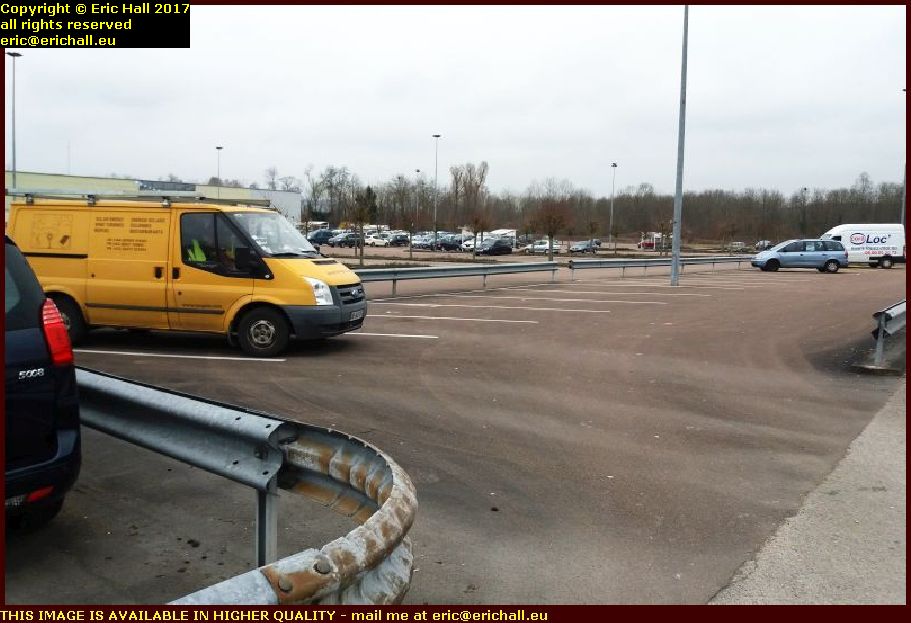
cora supermarket auxerre yonne franceFirst stop was the Cora supermarket around the corner. And here was a thing.

Those of you with long memories will remember back many years ago about the Morrisons supermarket at Reading where the car park had a height barrier “to stop travellers entering the car park”, but also keeping out anyone with a high vehicle.

Here, they seem to have the same issues, but nevertheless they have managed to make a parking space for high vehicles and here’s a rather dirty Caliburn to prove it.

I’ve hit on a new plan for eating out in hotels, which I’ll explain later. It involves a visit to the shops and the purchase of certain items. But while the supermarket was good and objects at a reasonable price, the woman on the check-outs was useless. Far too busy talking to her friends in the queue to concentrate on what she was doing and as a result she was making mistake after mistake. Not a very good advertisement at all for the store.
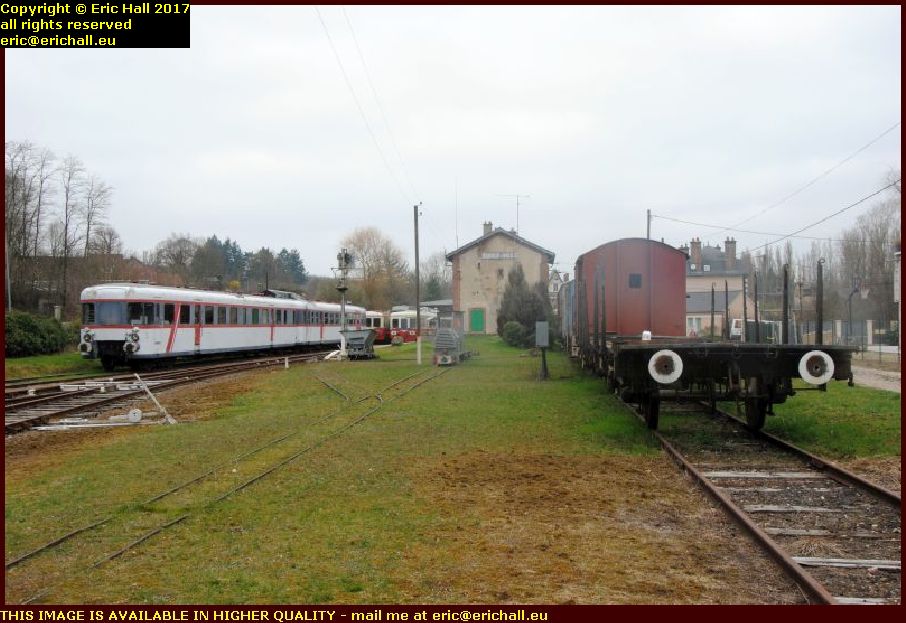
railway museum toucy yonne franceHaving given Caliburn a really good wash, I had a slow drive through the countryside towards the south-west and into the watershed of the River Loire.

Destination was the town of Toucy, still in the département of the Yonne. I’d driven through here on several occasions 9 or 10 years ago and I’d noticed the old railway artefacts here in the town. Today was the day that I had decided to come to see what was going on

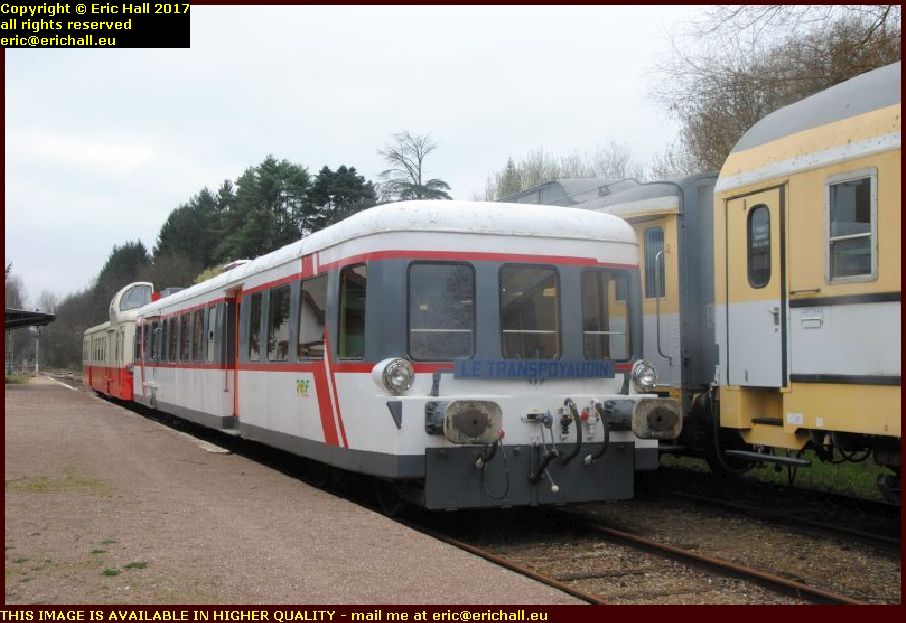
railway museum toucy yonne franceThe place was all locked up, and looked as if it had been that way for 10 years. Everything was rusting and decayed, including these beautiful diesel multiple-unit panorama cars.

The driver’s cabin is very interesting, isn’t it? But that kind of thing would never work in the UK with the restricted loading gauge on British railways.

The only British railway network with anything resembling a Continental loading gauge, the Great Central, was closed down in the 1960s.
railway museum toucy yonne franceThis was probably the most short-sighted of all of the short-sighted railway “economy” measures of the Beeching era, and replacing it today for the HS2 network is costing the UK billions and billions of Pounds.

That’s the trouble with the UK of course – it’s all down to short-term economies and there isn’t an ounce of long-term vision in anything that the country does.

And they are going to find out that for themselves once Brexit begins to bite.

railway museum toucy yonne franceBut leaving aside yet another good rant for a while, I carried on with my wandering around the railway … errr … museum.

As you can see, the exhibits, such as they are, have clearly seen better days and there doesn’t look as if there is anything going on here. There doesn’t seem to be anything in the way of restoration or renovation taking place on the … errr … exhibits here. They are just parked up and abandoned.

railway museum toucy yonne franceThis is probably one of the saddest exhibits here on the site.

I don’t know anything very much about French railway locomotives and the like, but this looks as if it’s something quite unusual and interesting – far too interesting to be just stuck here in a siding and left to rot away.

It’s all quite depressing, wandering around here and seeing all of this.

yard shunters baudet donon roussel railway museum toucy yonne franceThese little locomotives were quite interesting. Yard shunters, I reckon, and made by Baudet Donon and Roussel in the early 1950s.

It’s a little-known fact that this company is actually the successor of the company founded by Gustave Eiffel, he of the tower fame. The company branched out into the construction of railway locomotives and multiple-units, and quite a lot of the company’s equipment found its way onto the French railway network during the period of modernisation after World War II.

yard shunters baudet donon roussel railway museum toucy yonne franceThese little machines weigh a mere 14 tonnes, are just under 6 metres in length and flat-out, they will travel at all of 16kph.

Mind you, with a Renault 60 horse-power PETROL engine, 8-speed gearbox and chain drive, you aren’t going to get much more out of her.

They were the first locomotives to come of the new SNCF standardisation process after the War and replaced all kinds of assorted yard shunters, including horses and, in at least one case, oxen.

They were essentially a temporary measure and withdrawal of the class started in 1979.

railway tourism bicycles museum toucy yonne franceRailway tourism seems to be the up-and-coming thing these days, and this can be accomplished in many different ways.

You might also remember when we were in New Brunswick, Canada, back in October last year, that we saw that old railway bicycle that I admired so much. Combine the two together, and you’ll end up with something like this.

Mind you, it would be really exciting meeting another similar vehicle coming the other way on a single-track line. “Survival of the fittest” is what springs immediately to mind.

narrow gauge railway museum toucy yonne franceThere’s a pile of narrow-gauge railway equipment here too, and they have laid some kind of track to accommodate it.

It looks very much like mining or quarrying equipment to me, although there doesn’t seem to be much in the way of mining around here and I’ve no idea where there might be a quarry.

But like everything else around here, it’s all lying around abandoned and there’s no signage or anything to indicate what all of it might be

One thing is quite clear though.

In the past, I’ve been totally scathing of what passes for “preservation” of railway and other historical artefacts in North America. Having seen what is (or isn’t) going on here, I’m going to have to keep my mouth closed, or else start eating some rather large helpings of humble pie.
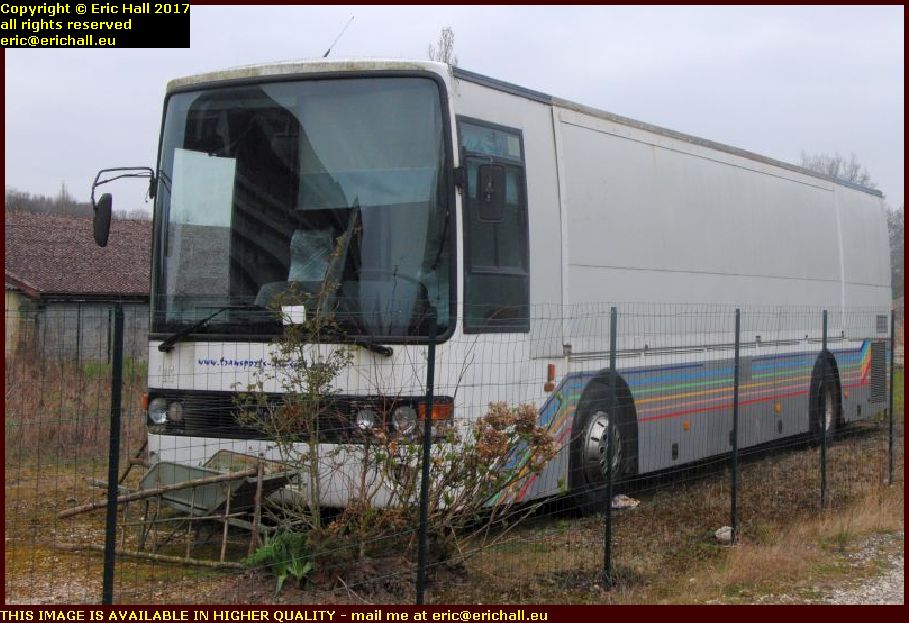
MAN van hool alizée toucy yonne franceI couldn’t leave the site though without taking a photo of this sorry machine.

It’s a Van Hool Alizée of the mid-1980s, lying here abandoned in the yard, and it brings back many happy memories for me. 25-30 years ago, I was earning my living travelling around Europe in one of these with piles of tourists when I worked for Shearings Holidays.

Beautiful machines, especially when built on a Volvo chassis, but this one is rear-engined so at first I thought that it might be a Scania. However,it turns out to be a MAN and I never had the opportunity to drive one of these.

Ohhh happy days!

medieval castle guedelon yonne franceAs you may (or may not) know, I have a degree in Historical Technology and just down the road from Toucy is Guedelon.

Guedelon is an extremely interesting place and very high on my list of places to visit because what they are actually doing is building a Medieval castle from scratch.

Not only that, they are using nothing but construction techniques of the period, including man-powered cranes and the like.

medieval castle guedelon yonne franceYou can imagine therefore that this was a place that was also very high on my list of places to visit, and so I set off chaud-pied, as they might say around here, to see what I could see.

But regular readers of this rubbish will know exactly what I discovered when I arrived here.

That’s right. The place is closed “for the season” and despite all of the people wandering around the site pretending to work, it wasn’t possible for me to gain admittance, even just for the purpose of taking a few photos.

That was something that I found extremely miserable.
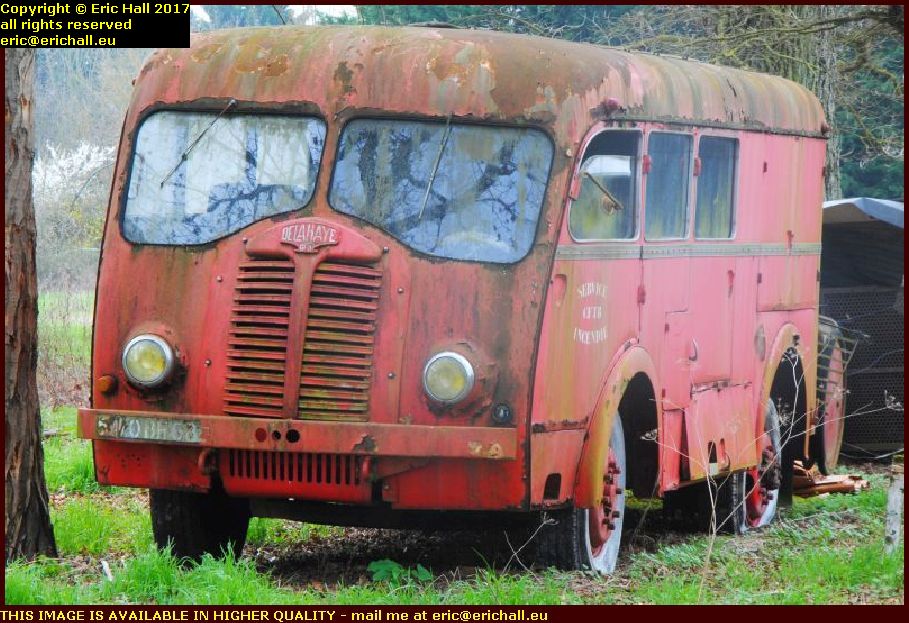
fourgon incendie delahaye B163 cosne cours sur loire nievre franceHowever, it’s not all doom and gloom because as I arrived at Cosne-Cours sur Loire, I encountered this magnificent beast, and it’s another sad and sorry machine having been abandoned to the elements, despite its rarity value.

It’s a Delahaye fourgonette – I reckon a type B163 – and it’s the type of chassis preferred by the French fire brigades in the early 1950s for the building of specialist vehicles.

But it’s rather a shame to see it sitting here out in the open in a field like this. As I said – I’ll have to stop criticising the North Americans.
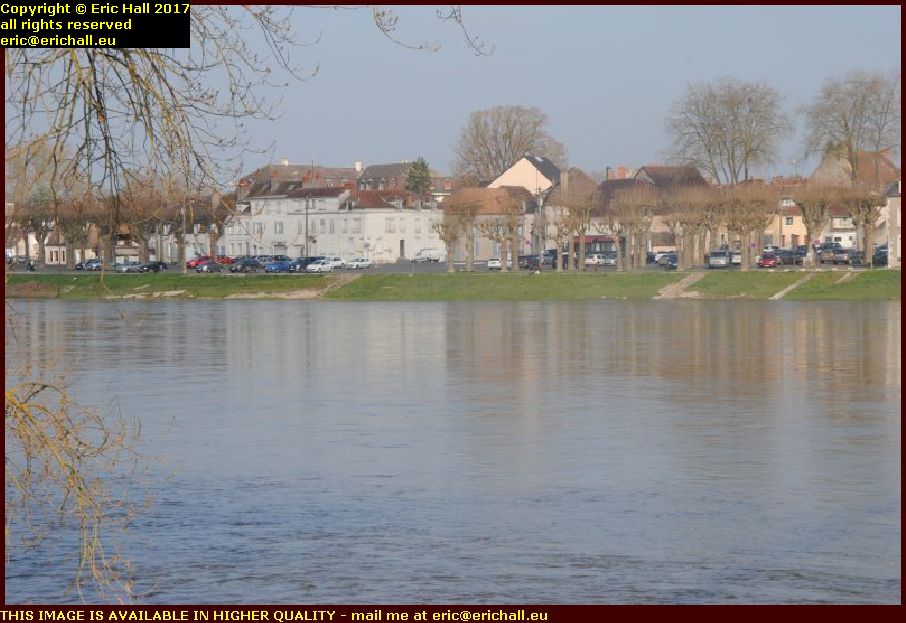
river loire cosne cours sur loire nievre franceBy now, it’s time for (a very late) lunch and so I head into the town. The River Loire passes by here in all its magnificence and there’s a nice park across the river from the town that’s a very suitable place to stop.

And, as you have probably noticed, the clouds have gone, the sun is out and there’s a beautiful blue sky to sit and watch me as I eat. It’s a marvellous afternoon and I intend to make the most of it.

cosne cours sur loire nievre franceThe town itself is another one of these beautiful, cramped Medieval cities that has unfortunately seen better days.

There seems to have been a settlement here in Prehistoric times and there was certainly a … errr .. Gallo-Roman settlement called Condate here.

With its comparatively easy crossing of the Loire here, it was the centre of several confrontations throughout history. As far as the British are concerned, its claim to fame was that during the Hundred Years War, Henry V was marching here to meet the Burgundian Army in 1422 when he caught dysentery and died.

His premature death effectively marked the end of any serious hopes that the English might have had of making a permanent conquest of France.

By the 17th Century there was a thriving metallurgical industry here and this was the basis of the wealth of the town. It manufactured fittings for the French naval industry and these were shipped out down the Loire to the naval shipyards downriver.

rivier loire cosne cours sur loire nievre franceHowever the French railway network caused a decline in navigation on the Loire and the metallurgical industry closed down in the 1870s. Some vestiges of the industry lingered on for a while but it all eventually petered out and led to the slow decline of the town.

Today though, it’s the second-largest town in the département of the Nievre after Nevers and as a result it’s become something of an important regional administrative centre.

suspension bridge river loire cosne cours sur loire nievre franceThere’s a beautiful suspension bridge here across the river and this is what had attracted me to the town. I’d never had the time to stop here before.

Unfortunately it’s not the original bridge here. That dated from 1833 but unfortunately that was destroyed during the Second World War. The bridge that’s here today dates from the 1950s but nevertheless, it’s still a magnificent structure and the setting here is tremendous.

US Army 1944 Dodge lorry hotel des gatines cosne cours sur loire nievre franceHaving had a nice walk and a good relax to read my book, I headed off to my hotel. It’s a little place right out of the way in the countryside about 2 miles from the river.

But I’m not alone here- not at all. There’s a 1944 Dodge Lorry – a veteran of the US Army parked here in the barn by the side of my room. It’s certainly the right hotel for me, isn’t it?

And my room is nice and cosy too. This was a good choice.

Tea tonight was something so simple that I’m really surprised that I have never ever considered it before. It’s so easy too, especially in a hotel bedroom and I shall be doing this kind of thing more often.

Half a tin of potatoes, half a tin of mixed vegetables, half a tin of mushrooms and some lettuce all mixed up in salad dressing. Followed by a soya dessert and a chocolate soya drink, with one of these packets of fruit-and-nut mix.

Simple, effective and healthy. You can’t say fairer than that.

And I’ve had a shower, washed my undies and now I’m settling down for the night. See you in the morning.

Monday 21st November 2016 – TODAY IS THE DAY …

… that I celebrate – if that is the correct word to use – the first anniversary of my last night at home.

And what a tumultuous year it has been too. I’ve spent nights sleeping at friends, in hotels in France, Belgium and the Netherlands, in hostels, on floors, in hospitals, in student houses, but never again at home and how I am depressed as the seriousness of my position dawns on me.

Am I destined to spend the last years of my life living out of a suitcase and ambling aimlessly around around North-West Europe? What a horrible thought.

But one thing that I have learnt as I’ve been travelling around is that there’s no place like home. I have accordingly for the next three months and maybe even more, negotiated a good place in the hostel back at Leuven. It might not be much, and nothing like what I was hoping to have, but it’s the nearest place to home that I have right now. I have negotiated a good price with the option of a renewal, and in exchange I’ll be expected to do a little work, but I’m as happy as I could be with that.

I had a really late night last night and as a result was in no fit state at all when the alarm went off. It was a struggle to go down to breakfast (I was third, and yet there before the staff was) and then I crashed out again afterwards for a while.

The internet was, well, working something-like and so I found another pile of stuff about Labrador. And that took me ages too. For lunch, I finished off the bread that I had bought in Sedan at the LeClerc on Friday, so after lunch I nipped into Alle to the boulanger for a big loaf and across the road to the Spar for a lettuce.

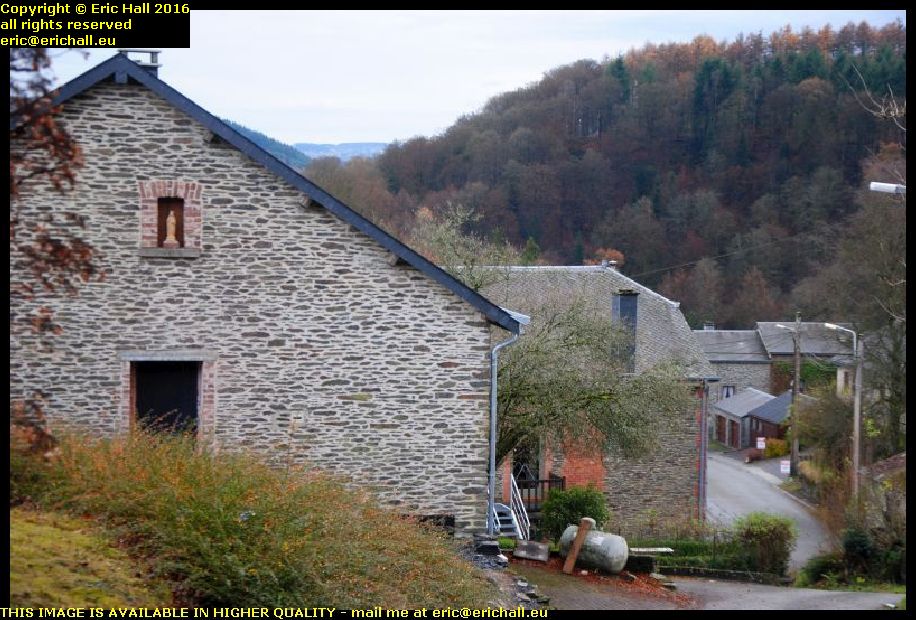
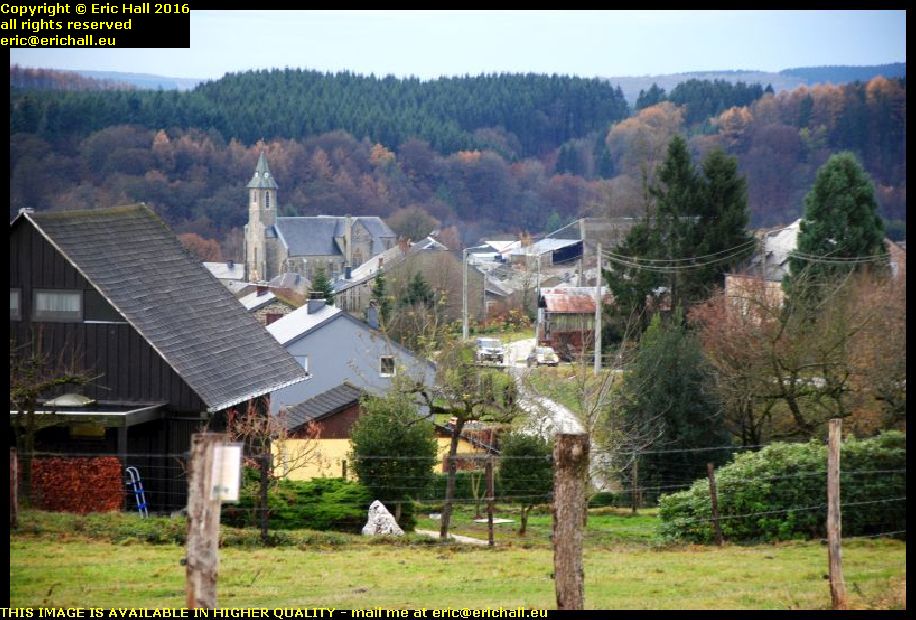
orchimont vresse sur semois belgium october octobre 2016On the way back, I took a diversion and climbed high into the Ardennes to visit Orchimont.

I don’t know whether to call it a town or a hamlet or what because these days it’s been absorbed into the commune of Vresse sur Semois, and ohhhh! What a come-down that must be for the place because 800 years or so ago it was by far the biggest town in the area.

orchimont vresse sur semois belgium october octobre 2016Perched up here in its steep escarpment, it was at one time the capital of this region and had a fortified castle and city walls to defend itself and the region.

All of tha changed in 1635 when Louis XIII of France laid siege to the town, which was part of the Spanish Netherlands at that time.

fortification orchimont vresse sur semois belgium october octobre 2016

He brought 35,000 soldiers with him apparently, and no town can withstand that kind of siege for long. It fell on 11th May of that year and was burnt, with all of the fortifications destroyed.

When the road was brought here in 1878, it went straight through whatever remained of the remains of the fortifications. All that is left is this, and I’m not even sure if these are original.

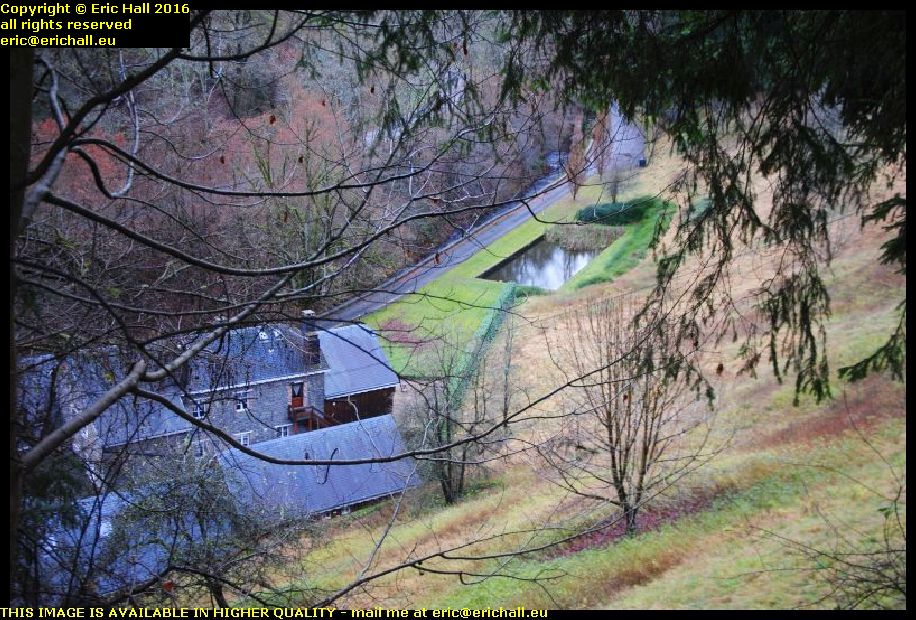
orchimont vresse sur semois belgium october octobre 2016But you can see what a stunning defensive site the place occupies. This is the road in from the south.

The roads from the west and east are equally impressive – in fact the road in from the north – which you might have noticed in the first photograph, is the only one that is reasonably accessible.

The spur of the rock overlooking the road that we can see just here was crying out for a castle to be built on it, if you ask me. Any Medieval lord bent on increasing his power in the region, and some of these medieval lords were as bent as they come, would have been proud to have had his castle here.

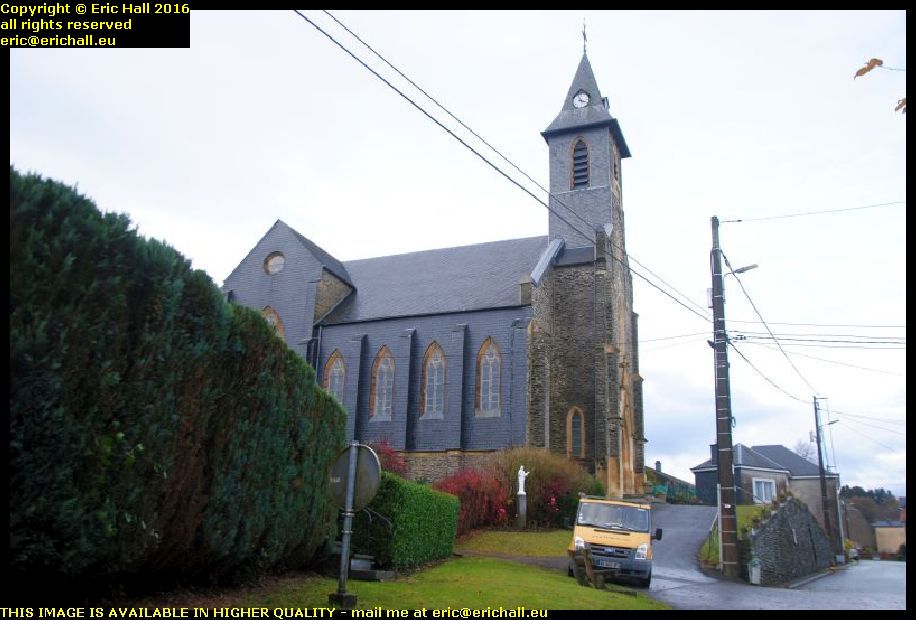
eglise st martin orchimont vresse sur semois belgium october octobre 2016There’s a church here too, and I asked a local yokel who was taking a most extraordinary interest in me, to whom it was dedicated.

But he wasn’t much of a vocal local yokel and told me to go and enquire in Vresse sur Semois. Miserable ghit!

But seeing as how everything at Orchimont is St Martin this, St Martin that, I shall have a wild guess.

What I do know is that it’s far from being the original church. It dates from 1863 apparently, although I imagine that there has been a church here for 1500 years before that.

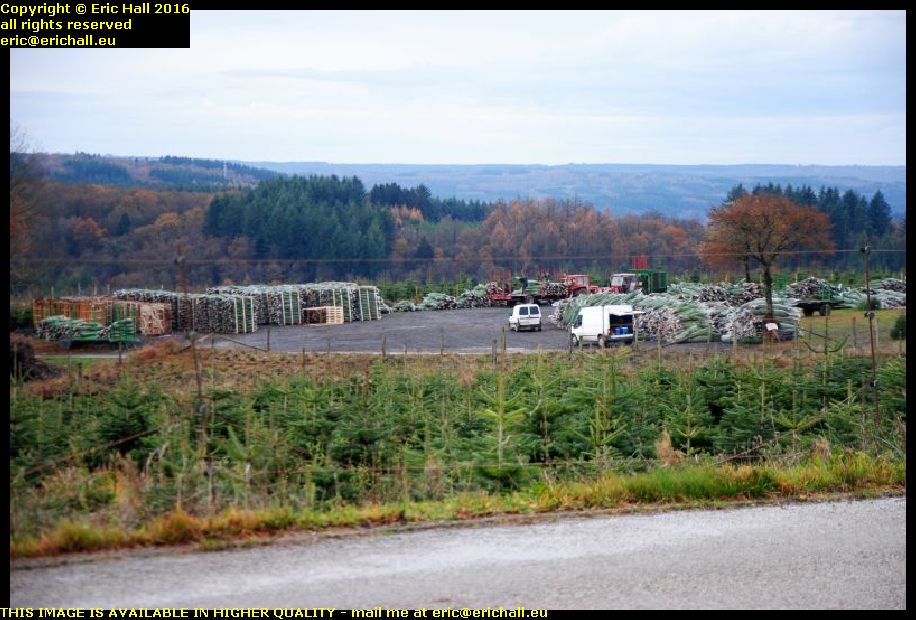
christmas trees sapin de noel orchimont vresse sur semois belgium october octobre 2016One thing that I have noticed since I’ve been out here has been an endless stream of farm tractors with trailers fully-laden with Christmas trees disappearing into the mists.

What I hadn’t realised is that Orchimont is the Christmas Tree capital of Belgium and North-East France. There must be 5,000 here all parcelled up ready for shipping.

That’ll keep them out of mischief.

With the laptop being a bit flaky just now, I’ve done a major back-up this evening just in case, and now having done some more research I’m off to bed.

I’ve had nothing to eat tonight so I’ll make a butty quickly and that will be that. I’m not up to much else.

Saturday 15th June 2013 – MY PEAR TART …

… was something of a wash-out, I’m afraid, and quite literally too.

It tasted very nice with its layers of pear slices and nutmeg, with powdered chocolate and soya cream all over the top but unfortunately, for reasons that I haven’t yet understood, it ended up swimming in liquid.

The cooking in the oven didn’t dry it out at all, so the base was far too wet. I have a lot to learn about baking, that’s for sure.

Another disappointment was the Charity Shop. It did indeed sell books, all of about 50 of them, and there was only one that might have been of interest to me – Fly for Your Life: The Story of R.R. Stanford Tuck.

But as fortune would have it, and as you might expect, it’s a book that I already own.

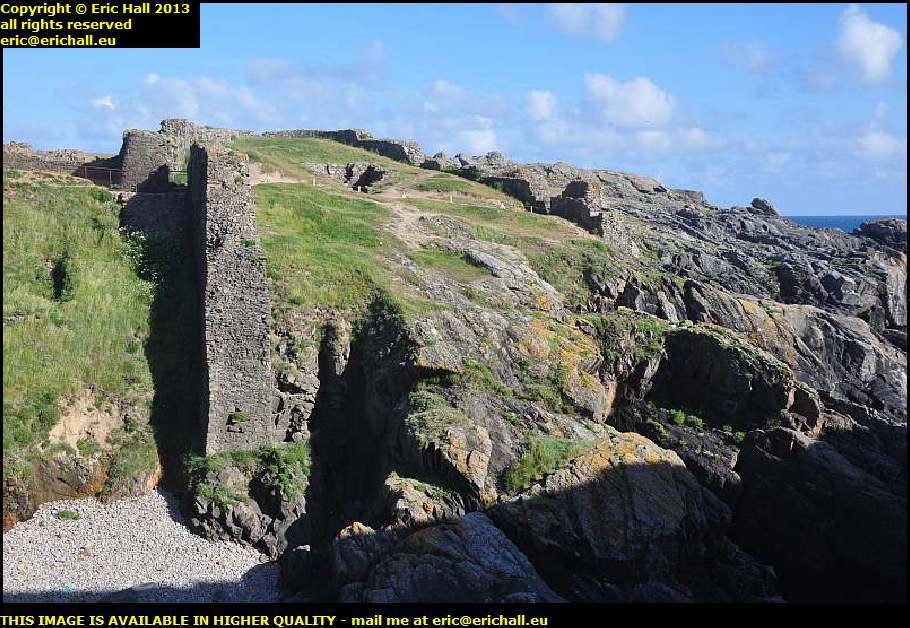
vieux chateau fort ile d'yeu franceA third disappointment today was the old castle of the Ile D’Yeu. it’s situated on a large rock about 20 metres off the coast of the island, reached by a sort of suspension bridge.

Not the castle itself, I hasten to add. I’d seen that from a distance the first afternoon that I arrived here and I was quite impressed by it.

I was quite looking forward to seeing it and I certainly wasn’t disappointed on that score.

vieux chateau fort ile d'yeu franceThe walk from here out to it is really beautiful and the setting is stunning.

However, due to the considerable amount of coastal erosion that has taken place over the centuries, there is only one way to approach the castle, and only one direction from which to view it.

And again as fortune would have it, in the early evening the sun streams right into the lens of the camera from that particular viewpoint.

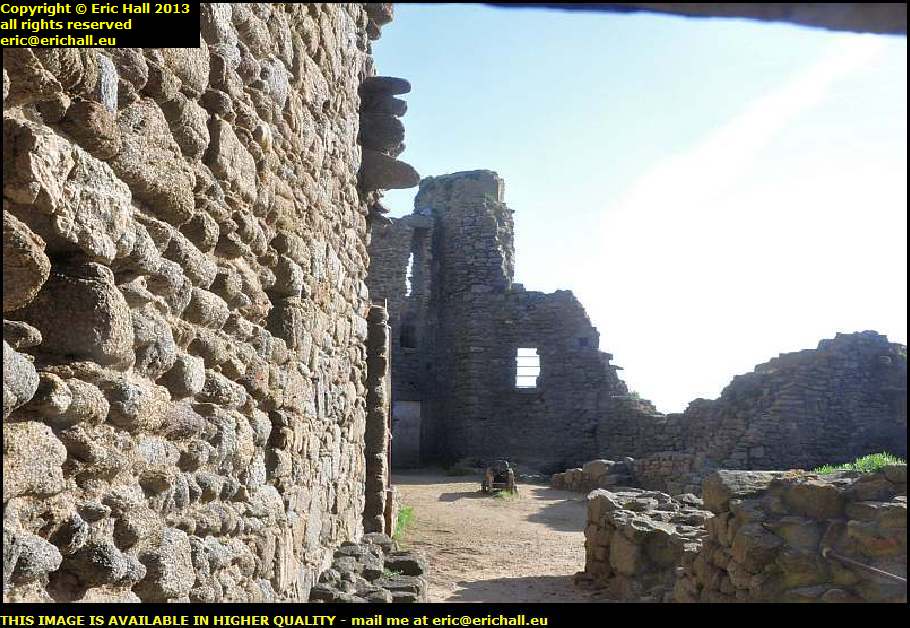
vieux chateau fort ile d'yeu franceIt’s a late medieval fortification dating to the Hundred Years War, Built on the orders of Olivier IV de Clisson.

He was one of the Lieutenants of the King of France during the first half of the 14th Century but fell into disgrace after being captured by the English in December 1342 at the 4th Siege of Vannes.

The manner of his capture and subsequent release (in a prisoner-exchange) led to allegations of treachery which were believed by King Philippe VI and, being tricked into visiting Paris after his release, he was summarily executed on 2nd August 1343

vieux chateau fort ile d'yeu franceThe castle was captured in 1355 by the English under Robert Knolles, born in Cheshire and one of the most able – and probably the most ruthless – of the English commanders of the period in France.

His reputation for devastation of the territories that he captured is still a subject of considerable discussion today, and the burnt-out shells of French stone houses are often referred to as Knolles’ Mitres.

It was recaptured by the French in 1392 under none other than Olivier V de Clisson, son of the Oilvier IV de Clisson who had ordered its building.

vieux chateau fort ile d'yeu franceIt declined in importance in the 16th Century and the dismantling began towards the end of the 17th Century following an edict by Louis XIV – the Roi Soleil.

He was concerned that it might serve as a strategic base for the enemies who might attack France.

But the castle does have a most unexpected claim to fame. The castle in L’Ile Noire, Hergé’s 7th adventure of Tintin, is said to have been based upon the Vieux Chateau de l’Ile d’Yeu

But it isn’t all doom and gloom (or doom and sunlight).

The guard-rail that I’ve built for Cécile’s mother for the steps from her front door down to the street level seems to have worked fine, and has been admired by all of the neighbours.

I dug out a hole at the side of the steps (pulling up mostly rocks, I have to say) and sank a length of downspout into it.

hen I sealed off the bottom end with cement to stop the water getting into it, and them tamped a load of soil and gravel around the downspout to hold it well into the ground.

After that, I fitted a mounting bracket (in fact a flooring joist bracket) to the wall and with two of the lengths of scrap wood that we picked up at the builder’s yard, I made a mortice joint with the primitive tools that are on offer here.

I assembled the joint, stuck the upright in the tube and cemented it in, and the horizontal sloping rail into the wall bracket and screwed it in, and there you have an ad-hoc handrail.

Like I say, I could have done it better but there aren’t really any tools here to work with.

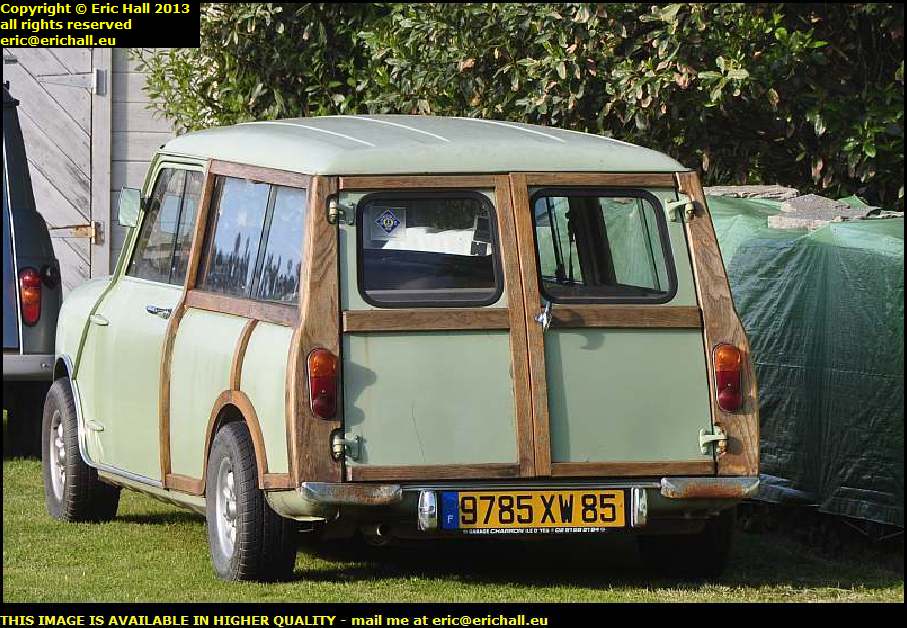
old cars mini traveller ile d'yeu franceYou may remember me saying when I arrived here something along the lines of isolated islands and old cars.

And so when was the last time that you saw a Mini Traveller? I cant even think when it might have been that I last saw one.

So here’s one for you to reminisce over.

But there’s something that doesn’t look quite right about the way this car looks (and I don’t mean the wide wheels either) if you ask me and I can’t think what it might be.

Anyway, tomorrow is Sunday and so it’s a lie-in (I hope). I might even have a day off if I’m lucky.

Sunday 3rd July 2011 – Remember yesterday …

rainwater harvesting home made water filter les guis virlet puy de dome france… when I said that today I would be working on the guttering and the water filter system? Well in fact that was what I did this afternoon and you can see the results just here in the photo. We now have full-sized guttering and a full-sized downpipe with a decent-sized sump that is angled down to where the drain is.

The tube down to the settling pipe is 80mm like the rest of the guttering, and from there on, nothing else has changed.

I’ve been trying to fit a covering over the top but I can’t get it to fasten down. In the end I’ll be having to resort to cable ties I reckon. Now where did I put my cable ties then?

I also said that I would be doing some bread baking, but the less said about that the better. Apart from dropping some of my mix on the floor, I ended up with a couple of soggy lumps of I’m not quite sure what – and that after spending I don’t know how long looking for a third shelf for the oven. I reckon that the “best before” date of April 2010 might have something to do with this, and so I’ll have another go with some fresh stuff and see what happens. But I really need a decent flat tray for the oven.

fete touristique roche d'agoux puy de dome franceMarianne the local journalist from the newspaper La Montagne rang me up this morning to invite me to Roche D’Agoux for her presentation at the tourism morning. She drove in her car and I went as passenger.

This was not really such a sound move as I get bored with this kind of thing after about half an hour. I’m not really much of a socialite as you all know and 2 hours and more is more than enough for me.

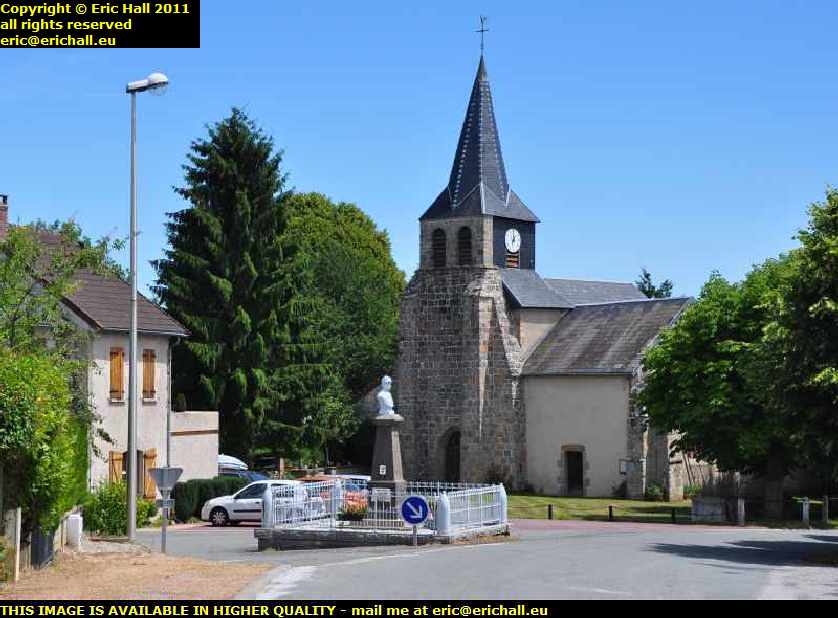
eglise village church roche d'agoux puy de dome franceAnd so after a while I slipped away and went for a little walk around the village. Only a little walk of course because there isn’t too much of a village to see.It’s only a small place.

Centre of every village in France is the church, and generally speaking, they are well-worth seeing. The one here at Roche d’Agoux is no exception and is, for a change, in an exceptionally-good state of preservation for such a small village.

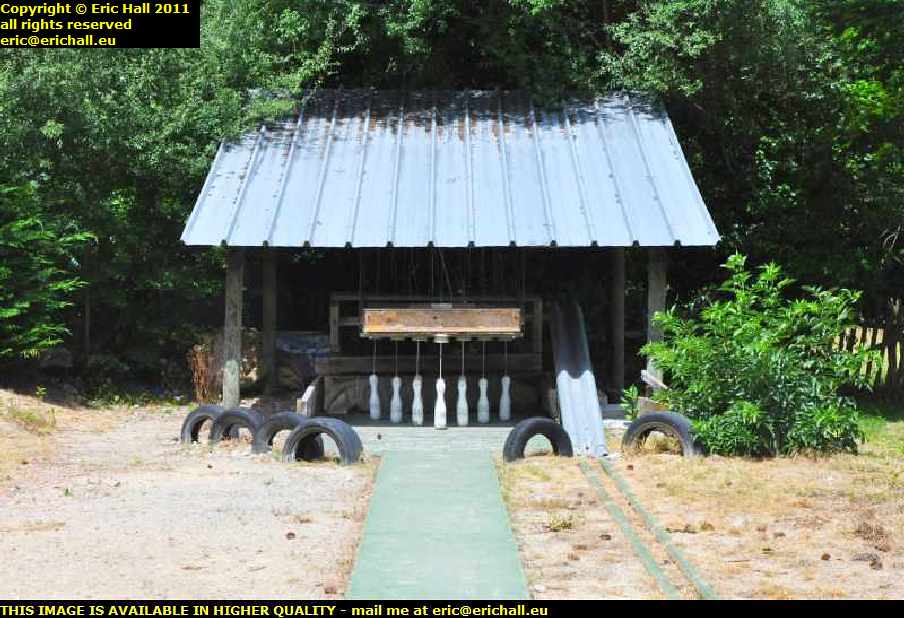
jeux de quilles ten pin bowling alley roche d'agoux puy de dome franceOne thing for which Roche d’Agoux is famous (because it has several claims to fame which we shall discuss in early course) is that it has a public 10-pin bowling alley – a jeux de quilles in the open air.

It actually works too, so I was told later, and I would have loved to have had a go. But I think that you have to bring your own bowling balls. But anyway, it’s not what you would expect to find in a village like this.

Back at the tourism exhibition, I discovered that the organisers were the people who organise the vintage fete at St Maurice pres Pionsat where they have all of the old cars. I had a good chat with one of the organisers about the Minerva – so much so that I’ve been invited to exhibit it there on August 14th. I need to get a move on and get it running.

leper window church roche d'agoux puy de dome franceWhen the do was over, I told Marianne about my little wander around the village and the visit to the church. She told me that the church is quite famous – one of the several things for which Roche d’Agoux is famous – and that we should visit the inside of it.

She went off on a voyage somewhere and came back brandishing the keys to the front door. She knew who held them and had gone off for a little negotiation on my behalf

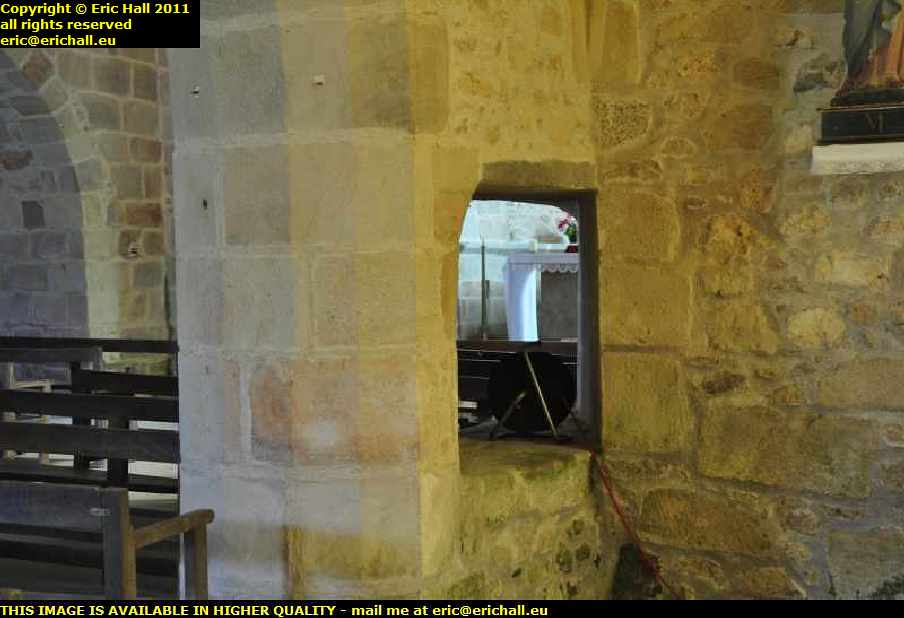
leper window church roche d'agoux puy de dome franceIn the immediate vicinity of Roche d’Agoux in the Middle Ages was a very large leper colony and they were isolated from the general community, as you might have expected in those days.

However, the lepers were obliged to attend Mass just the same as everyone else and so special provisions were made for them in the church. They had their own alcove away from the mainstream congregation and could witness the mass through a special leper window

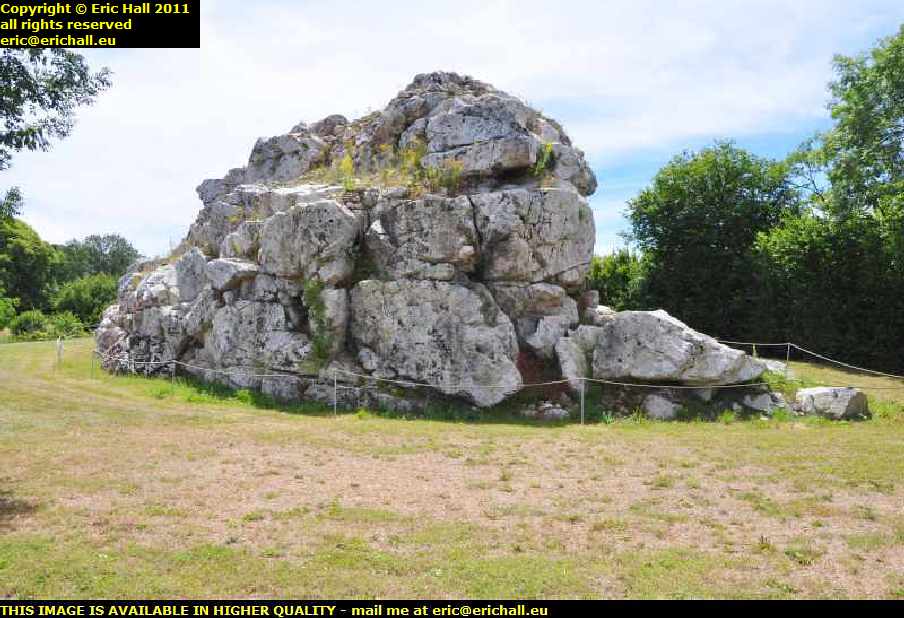
roche d'agoux puy de dome franceAnother claim to fame for Roche d’Agoux is that the village is built on an bed of quartz that runs for maybe 20 kilometres across the north-western Combrailles.

The village takes its name from one of the most important outcrops of this bed, It is full of quartz and semi-precious stones and has been exploited for its precious stones in the past as well as having been quarried for building material.

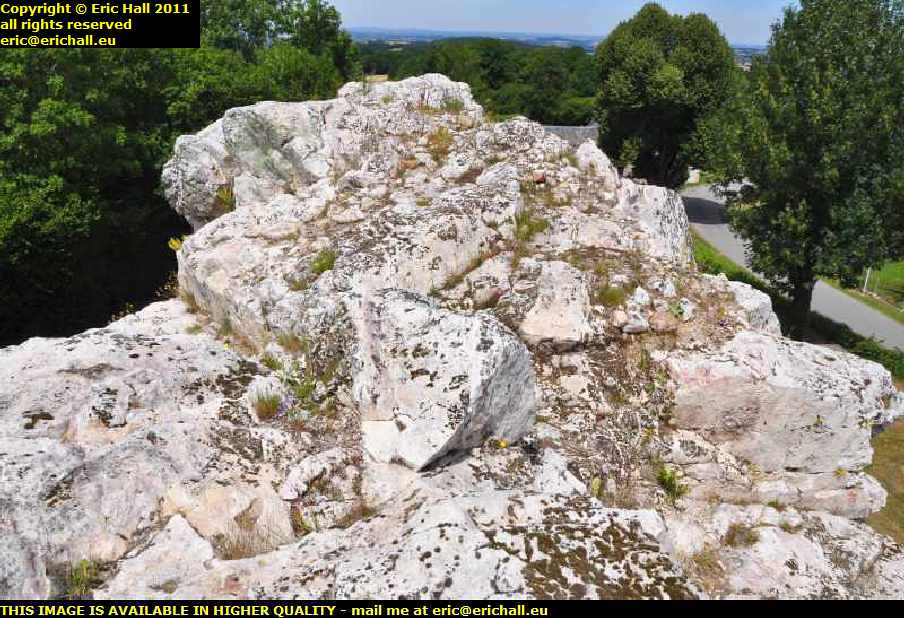
roche d'agoux puy de dome franceNow, it’s a viewpoint for the village and the surrounding area. There are steps around the side and you can climb up to the top for a look.

It’s often been said that the rock that we have just seen is part of a Medieval castle that was situated here in the village but that’s not correct. This was something that was written in a guide book in the 1880s and has simply been copied out liberally without anyone having actually come here to visit the site.

chateau de Guillaume de Rochedagoux roche d'agoux puy de dome franceThere was indeed a medieval castle chateau fort here in Roche d’Agoux, but that was over there on that eminence – the small hill over there about a quarter of a mile away from the rock.

Unfortunately we cannot go to visit it as it’s on private property and the owner doesn’t encourage tourists which is a shame. But apparently there are quite a few remains that can be seen, according to someone who went there many years ago.

town walls roche d'agoux puy de dome franceThere are some ruins visible here and it doesn’t take much imagination for them to be pictured as remains of the castle or even remains of a wall around the village, but that is pure speculation.

But anyway, all of this area was the fiefdom of Guillaume de Rochedagoux in the mid-13th Century. He was famous for having gone on one of the Crusades to the Holy Land. He passed through the land of the Armenians (you have to remember that back in those days the territory of Armenia was much bigger than it is in modern times), noticed the skilled weavers there, and brought some of them back.

This accounts for the history that this region had as a flax-weaving area in the past, and accounts for names of places in the area (for example the Moulin des Armenièns) and the surname Desarmenièn that you encounter around here.

Anyway the hospitality had been freely flowing at the fete de tourisme, so much so that I had to drive back.

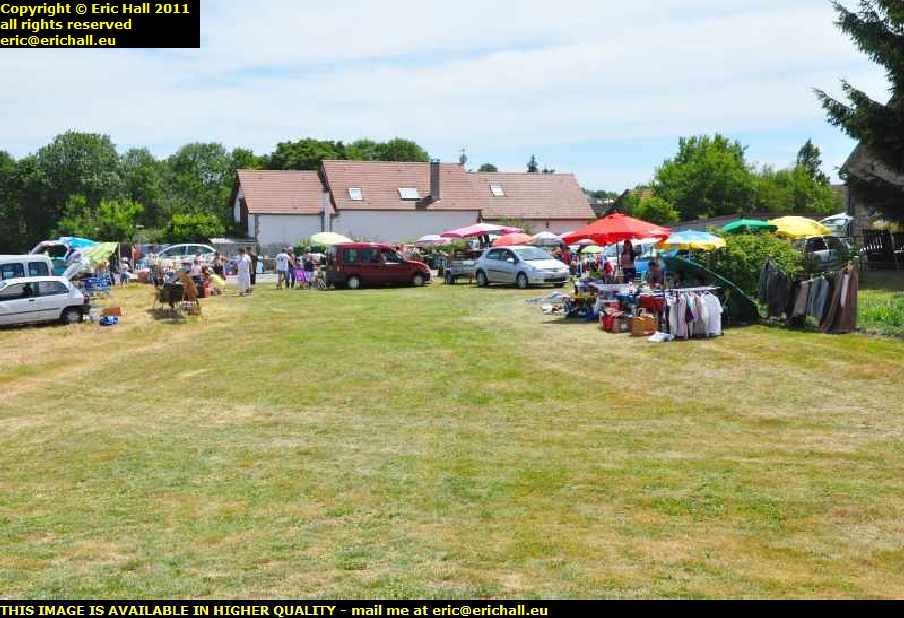
brocante arpheuilles st priest allier franceAnd I still had time, after playing for a while with the rainfall harvesting equipment to go off to Arpheuilles St Priest and the brocante that they were having today.

There weren’t many stalls there – despite the glorious weather – by the time that I arrived and I wasn’t able to go mad. but “spend, spend, spend” it was indeed and I was out by as much as €4:00 by the time that I left.

But the brocante was not my only reason for going to Arpheuilles St Priest. We’ve talked … "at great length" – ed … about the tacot or ligne economique, the narrow-gauge line that meandered through this area of the Allier between Marcillat en Combraille.

ligne economique gare de chemin de fer arpheuilles st pierre allier franceIt actually passed through (and that’s a rare thing – that the tacot actually passed through anywhere) Arpheuilles St Priest and so I reckoned that I would go and see if I can find any trace of the line.

And having waded through a couple of hedges and a pile of weeds (and someone’s nicely-mown lawn) this is, what I reckon might have been the track-bed of the line. It’s very much like the width that an abandoned railway line might be and it’s heading in the general direction of Commentry

ligne economique gare de chemin de fer arpheuilles st pierre allier franceAnd now that I know what a tacot railway station looks like, having identified the one at Marcillat en Combraille the other day, I could go off and look for a building that corresponds.

And here we are – following my track-bed backwards across the road I ended up peering through the trees at this building, and this is what my money is on. This looks like a tacot railway station to me if ever I saw one.

So wasn’t this a busy day then? It kept me well out of mischief and I learnt a lot too.

And so have you now.