Tag Archives: ligne metrique

Tuesday 25th February 2014 – I’M NOT HERE

Well, not ALL here anyway. But you knew that already, didn’t you?

viaduc des rochers noirs de la roche taillende lapleau correze franceI’m not there either – although I was earlier this evening. This is the Viaduc de la Roche-Taillende, colloquially known as the Viaduc des Rochers Noirs, and it’s near the town of Lapleau in the Corrèze.

You may not think it looking at that tight curve to enter the viaduct, but I’m actually standing on the bed of a disaffected railway line. It’s another one of these metre-gauge tacots, or “rattletraps”, a narrow-gauge railway line similar to the one that we’ve seen at Marcillat-en-Combraille in the Allier, but this one ran between Ussel and Tulle in the Corrèze.

There was a speed limit of 15kph on the line which is hardly surprising given the tightness of the curve, and also the fact that we have a suspension bridge which is quite a rare type of construction for a railway bridge.

viaduc des rochers noirs de la roche taillende lapleau correze franceJust like chez Liz and Terry, the railway disappears off into a tunnel on the other side of the river, but that is all fenced off.

Until 2006 you could actually drive through there in a car but unfortunately the Conseil Départementale has put a stop to all of that.

I merely contented myself with taking a few pictures – there wasn’t anything more that I could do unfortunately.

viaduc des rochers noirs de la roche taillende lapleau correze franceI did however go for a little bit of a climb and I was glad that I did, because the view from up on a rocky outcrop towering a couple of hundred feet above the viaduct was stunning, to say the least, even if it did wear me out climbing up to here.

This photo does show you the lengths that they had to go in order to build the viaduct and it’s hard to think that this line didn’t open until 1913, by which time it had effectively already outlived its effectiveness with the coming of the motor-bus but nevertheless it struggled on until as recently as 1960, which is quite an achievement for a metre-gauge tacot.
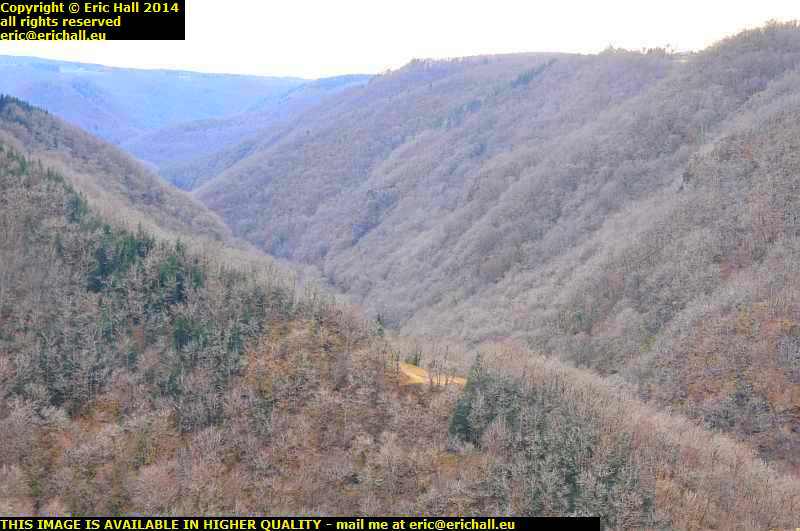
 les gorges de la Luzège lapleau correze franceWhile I was up here I took a few photos of the stunning scenery.

The viaduct spans the Gorge de la Luzège at a height of 92 metres, or 126 metres if you count the pylons, so I’m quite high up and the view of the gorge is amazing.

It’s a shame that the weather was so dreadful though – it’s been raining non-stop and I’ve forgotten to bring a raincoat with me.

Serves me right.
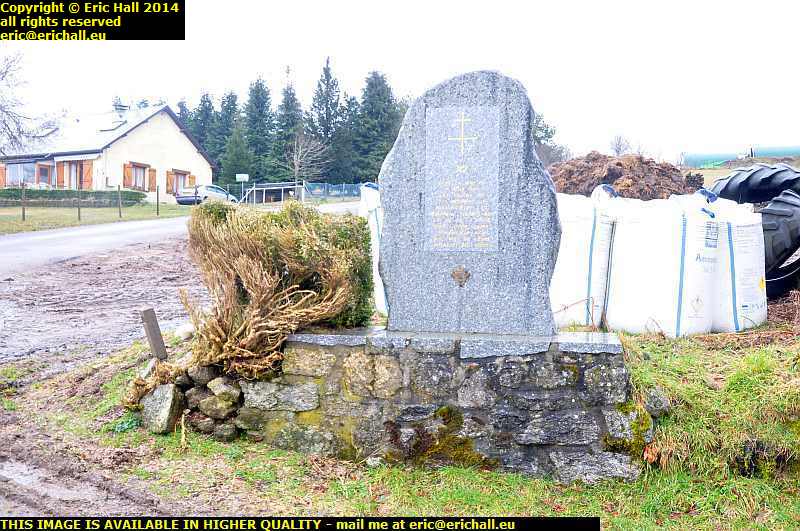
plateau de Millevaches memorial 3rd Regiment SAS french resistance france 1944Coming here brought me (via the Pionsat Post Office to post Cécile’s letters) over the Plateau de Millevaches on the border between the Creuze and Corrèze.

Apart from the snow that I encountered, the plateau is famous in that it was effectively a “Free French” area during World War II. There is a great deal of resistance souvenirs in the area, including this plaque to commemorate the parachuting-in of members of the 3rd Regiment SAS who organised the French Resistance in the turbulent times after D-Day.

There are poignant souvenirs too – memorials to victims of the occasional sweeps by the Gestapo and also the town of Tulle itself just a short drive away, where the Das Reich Panzer Division of the SS strung up almost 100 locals from lamp-posts in the centre of the town as a form of reprisal for terrorist attacks.
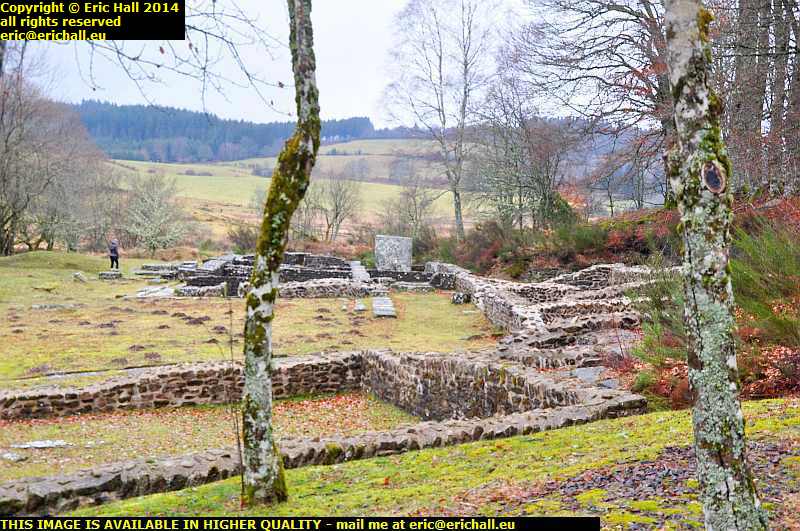
roman ruins villa temple ruines les cars plateau de millevaches corrèze franceAnd that’s not all either.

I saw a sign that said Ruines les Cars and with Cars being French for the kind of coaches that I drove when I worked for Shearings, I went for a look to see what it was all about, but instead I found myself in the middle of a Roman villa and huge Temple from the 2nd Century AD.

Of course, you are not allowed to say “Roman Remains” here in France. Everything has to be “Gallo-Roman” because the French don’t accept (rightly or wrongly, I dunno) that the French civilisation of the turn of the Common Era was any less inferior than the Roman civilisation, and I’ve seen some healthy fights at some of these archaeological meetings that I sometimes go to.

remains of old car plateau de millevaches corrèze france Talking of ruins of cars, another thing that caught my eye was this. The remains of an old car abandoned in a forest.

No maker’s plate or anything like that on it, so no idea what it might be, but it has a wooden chassis sheathed in steel, and it’s clearly the type of car that had real wings and a lift-off body. With its steel wheels, all of that dates it to the early 1930s I reckon.

If you have any ideas what it might be, let me know. But there isn’t much to go on, I know.

From here I headed off down the hill and towards civilisation. I ended up in the town of Tulle where I planned to find a hotel but was singularly unsuccessful.

And to my own surprise, I didn’t take a single photo of the place and I ought to have done, because Tulle is one of the saddest places in French modern history.

Following the Normandy Landings, the local Resistance troops had risen up and seized control of the town from the Germans. Just as they were preparing to deal with the final German holdouts, the 2nd Waffen-SS Panzer Division Das Reich appeared on the scene on its way north.

The result was that 99 civilians, many of whom had no connection with the armed uprising, were strung up from lamp-posts in the main street and a considerable number of others were brutally tortured

So with no hotel that I could find in Tulle, I’ve moved on to Brive la Gaillard where I’ll be spending the night.. I’ve no idea where I’ll be tomorrow.

Sunday 3rd July 2011 – Remember yesterday …

rainwater harvesting home made water filter les guis virlet puy de dome france… when I said that today I would be working on the guttering and the water filter system? Well in fact that was what I did this afternoon and you can see the results just here in the photo. We now have full-sized guttering and a full-sized downpipe with a decent-sized sump that is angled down to where the drain is.

The tube down to the settling pipe is 80mm like the rest of the guttering, and from there on, nothing else has changed.

I’ve been trying to fit a covering over the top but I can’t get it to fasten down. In the end I’ll be having to resort to cable ties I reckon. Now where did I put my cable ties then?

I also said that I would be doing some bread baking, but the less said about that the better. Apart from dropping some of my mix on the floor, I ended up with a couple of soggy lumps of I’m not quite sure what – and that after spending I don’t know how long looking for a third shelf for the oven. I reckon that the “best before” date of April 2010 might have something to do with this, and so I’ll have another go with some fresh stuff and see what happens. But I really need a decent flat tray for the oven.

fete touristique roche d'agoux puy de dome franceMarianne the local journalist from the newspaper La Montagne rang me up this morning to invite me to Roche D’Agoux for her presentation at the tourism morning. She drove in her car and I went as passenger.

This was not really such a sound move as I get bored with this kind of thing after about half an hour. I’m not really much of a socialite as you all know and 2 hours and more is more than enough for me.

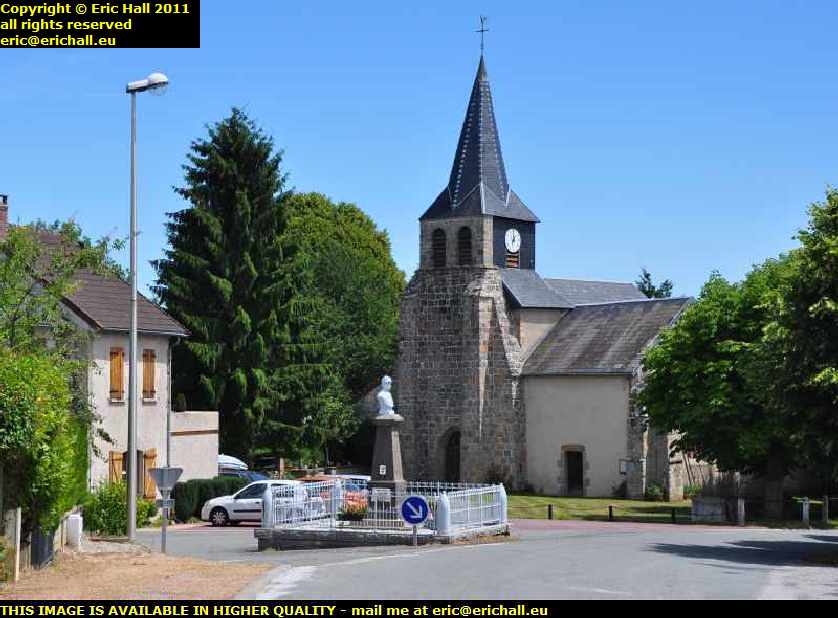
eglise village church roche d'agoux puy de dome franceAnd so after a while I slipped away and went for a little walk around the village. Only a little walk of course because there isn’t too much of a village to see.It’s only a small place.

Centre of every village in France is the church, and generally speaking, they are well-worth seeing. The one here at Roche d’Agoux is no exception and is, for a change, in an exceptionally-good state of preservation for such a small village.

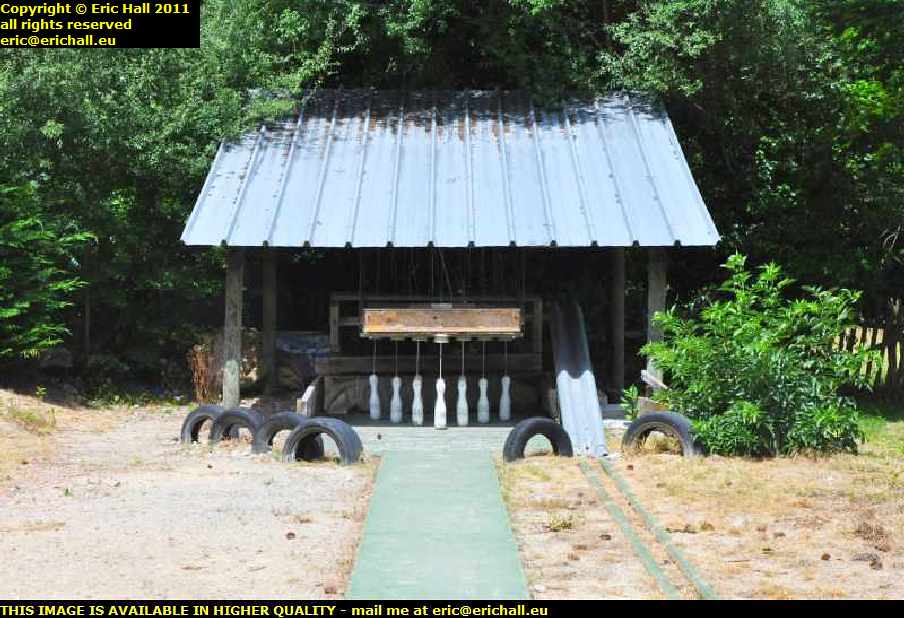
jeux de quilles ten pin bowling alley roche d'agoux puy de dome franceOne thing for which Roche d’Agoux is famous (because it has several claims to fame which we shall discuss in early course) is that it has a public 10-pin bowling alley – a jeux de quilles in the open air.

It actually works too, so I was told later, and I would have loved to have had a go. But I think that you have to bring your own bowling balls. But anyway, it’s not what you would expect to find in a village like this.

Back at the tourism exhibition, I discovered that the organisers were the people who organise the vintage fete at St Maurice pres Pionsat where they have all of the old cars. I had a good chat with one of the organisers about the Minerva – so much so that I’ve been invited to exhibit it there on August 14th. I need to get a move on and get it running.

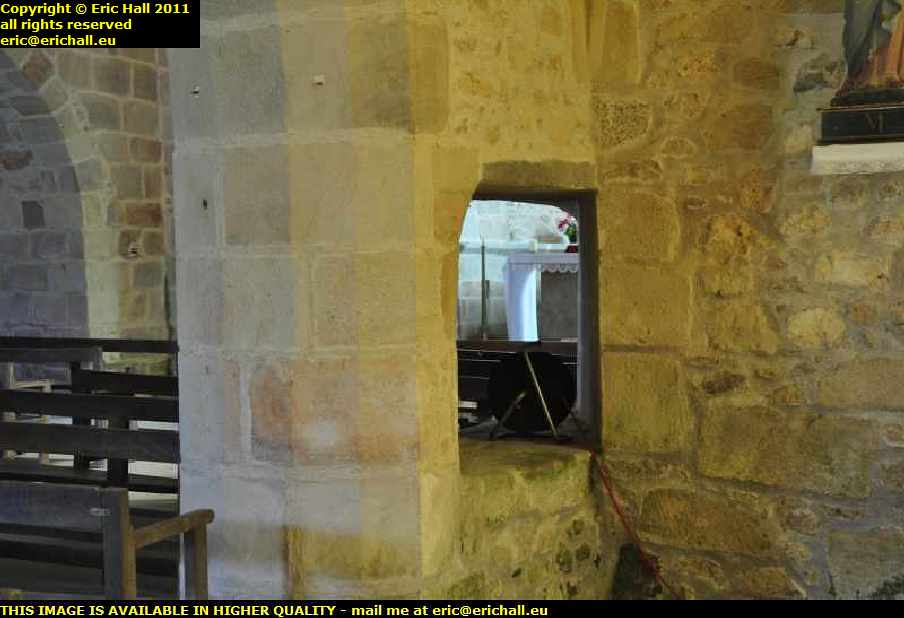
leper window church roche d'agoux puy de dome franceWhen the do was over, I told Marianne about my little wander around the village and the visit to the church. She told me that the church is quite famous – one of the several things for which Roche d’Agoux is famous – and that we should visit the inside of it.

She went off on a voyage somewhere and came back brandishing the keys to the front door. She knew who held them and had gone off for a little negotiation on my behalf

leper window church roche d'agoux puy de dome franceIn the immediate vicinity of Roche d’Agoux in the Middle Ages was a very large leper colony and they were isolated from the general community, as you might have expected in those days.

However, the lepers were obliged to attend Mass just the same as everyone else and so special provisions were made for them in the church. They had their own alcove away from the mainstream congregation and could witness the mass through a special leper window

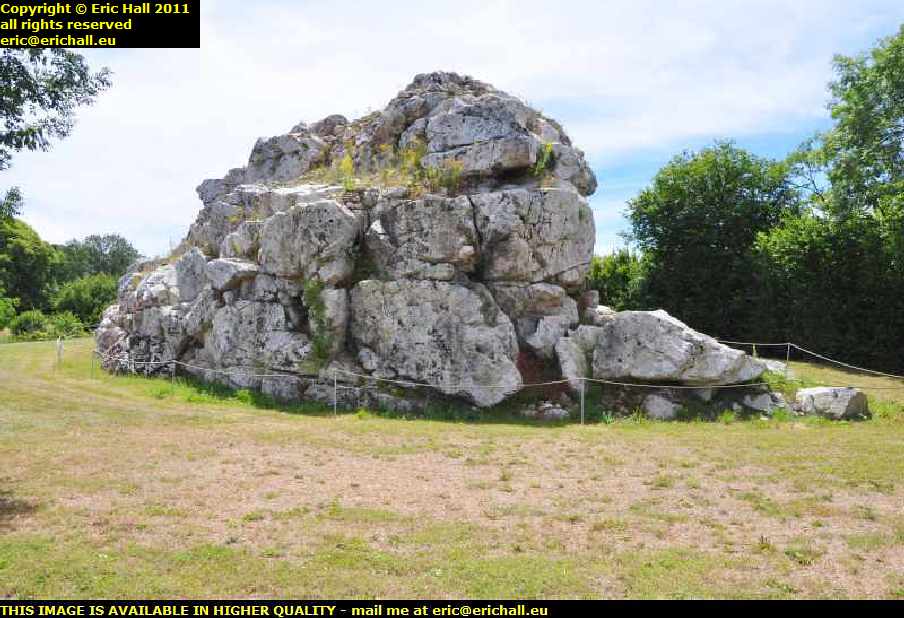
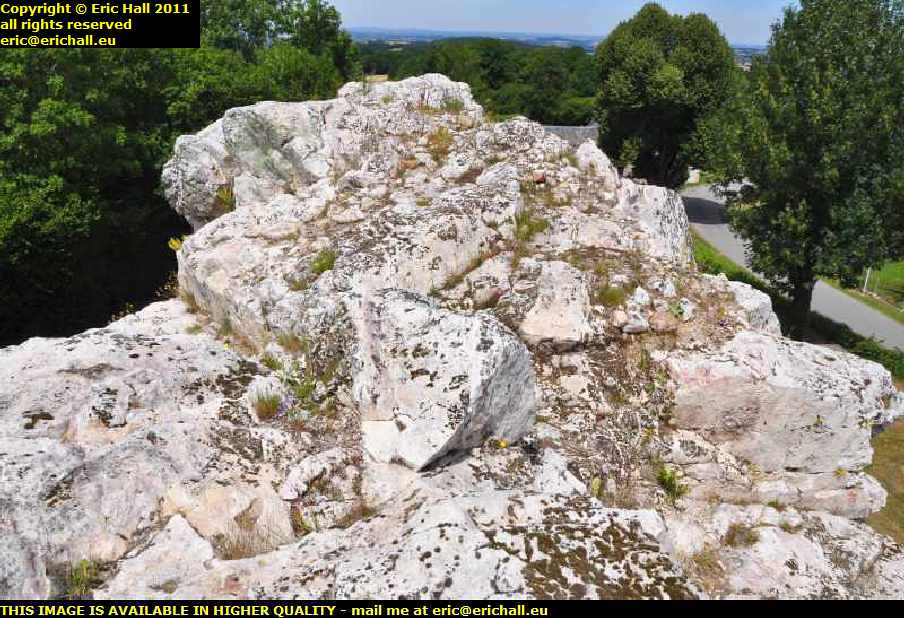
roche d'agoux puy de dome franceAnother claim to fame for Roche d’Agoux is that the village is built on an bed of quartz that runs for maybe 20 kilometres across the north-western Combrailles.

The village takes its name from one of the most important outcrops of this bed, It is full of quartz and semi-precious stones and has been exploited for its precious stones in the past as well as having been quarried for building material.

roche d'agoux puy de dome franceNow, it’s a viewpoint for the village and the surrounding area. There are steps around the side and you can climb up to the top for a look.

It’s often been said that the rock that we have just seen is part of a Medieval castle that was situated here in the village but that’s not correct. This was something that was written in a guide book in the 1880s and has simply been copied out liberally without anyone having actually come here to visit the site.

chateau de Guillaume de Rochedagoux roche d'agoux puy de dome franceThere was indeed a medieval castle chateau fort here in Roche d’Agoux, but that was over there on that eminence – the small hill over there about a quarter of a mile away from the rock.

Unfortunately we cannot go to visit it as it’s on private property and the owner doesn’t encourage tourists which is a shame. But apparently there are quite a few remains that can be seen, according to someone who went there many years ago.

town walls roche d'agoux puy de dome franceThere are some ruins visible here and it doesn’t take much imagination for them to be pictured as remains of the castle or even remains of a wall around the village, but that is pure speculation.

But anyway, all of this area was the fiefdom of Guillaume de Rochedagoux in the mid-13th Century. He was famous for having gone on one of the Crusades to the Holy Land. He passed through the land of the Armenians (you have to remember that back in those days the territory of Armenia was much bigger than it is in modern times), noticed the skilled weavers there, and brought some of them back.

This accounts for the history that this region had as a flax-weaving area in the past, and accounts for names of places in the area (for example the Moulin des Armenièns) and the surname Desarmenièn that you encounter around here.

Anyway the hospitality had been freely flowing at the fete de tourisme, so much so that I had to drive back.

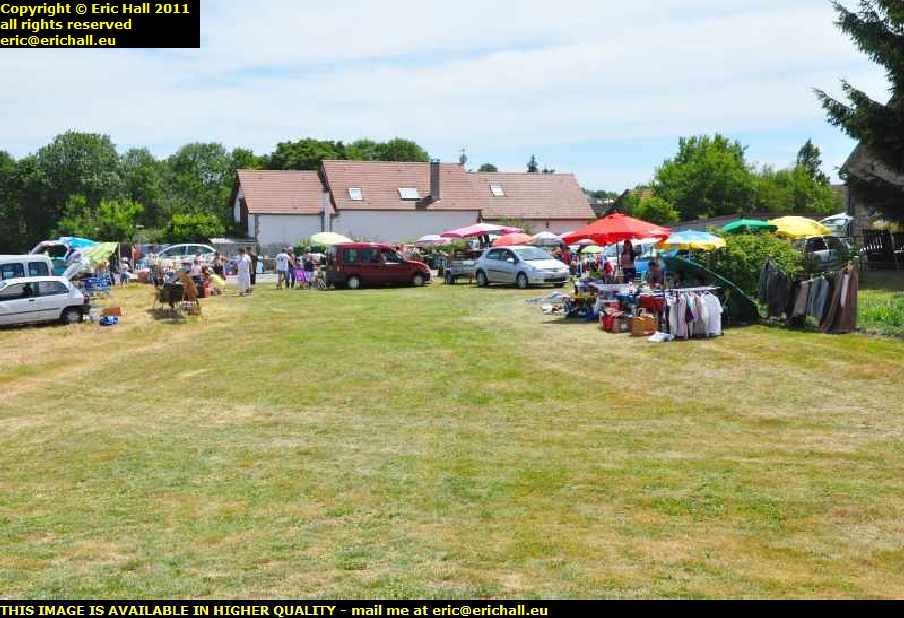
brocante arpheuilles st priest allier franceAnd I still had time, after playing for a while with the rainfall harvesting equipment to go off to Arpheuilles St Priest and the brocante that they were having today.

There weren’t many stalls there – despite the glorious weather – by the time that I arrived and I wasn’t able to go mad. but “spend, spend, spend” it was indeed and I was out by as much as €4:00 by the time that I left.

But the brocante was not my only reason for going to Arpheuilles St Priest. We’ve talked … "at great length" – ed … about the tacot or ligne economique, the narrow-gauge line that meandered through this area of the Allier between Marcillat en Combraille.

ligne economique gare de chemin de fer arpheuilles st pierre allier franceIt actually passed through (and that’s a rare thing – that the tacot actually passed through anywhere) Arpheuilles St Priest and so I reckoned that I would go and see if I can find any trace of the line.

And having waded through a couple of hedges and a pile of weeds (and someone’s nicely-mown lawn) this is, what I reckon might have been the track-bed of the line. It’s very much like the width that an abandoned railway line might be and it’s heading in the general direction of Commentry

ligne economique gare de chemin de fer arpheuilles st pierre allier franceAnd now that I know what a tacot railway station looks like, having identified the one at Marcillat en Combraille the other day, I could go off and look for a building that corresponds.

And here we are – following my track-bed backwards across the road I ended up peering through the trees at this building, and this is what my money is on. This looks like a tacot railway station to me if ever I saw one.

So wasn’t this a busy day then? It kept me well out of mischief and I learnt a lot too.

And so have you now.

Thursday 26th May 2011 – I’ve been gardening today

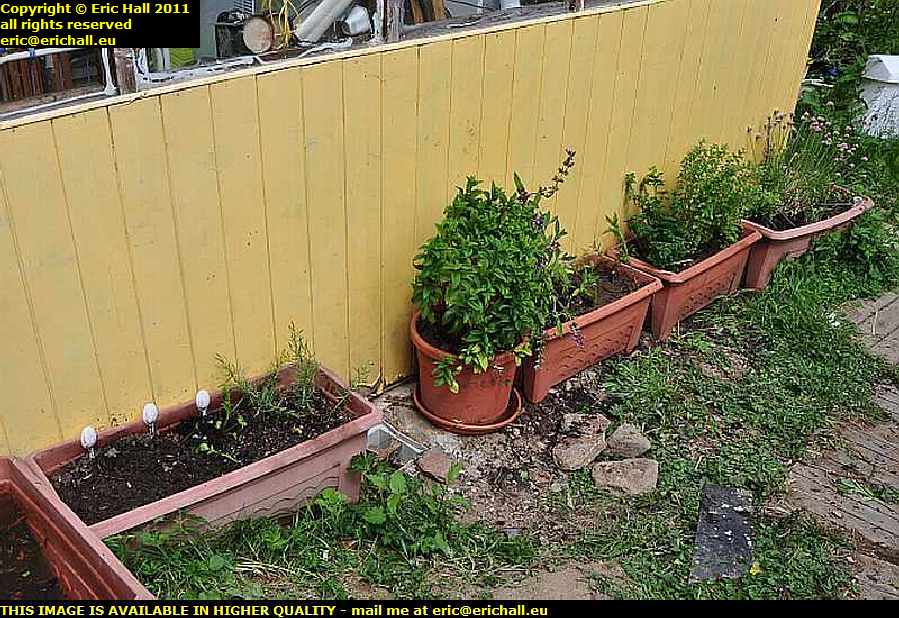
herb garden trough les guis virlet puy de dome franceI need to as well as I have so many plants lying around that need to be planted before I go away.

I started on the herbs and they’ve now all been properly put in place. The troughs that I used at my apartment in Brussels for my hedge on the balcony – they are just the job for this. I’ve had to put the mint into a pot all on its own as it was going berserk and overwhelming everything else in the trough where it was.

There are just a few herbs remaining but they are in small pots in the cloche and aren’t really up to being planted out as yet.

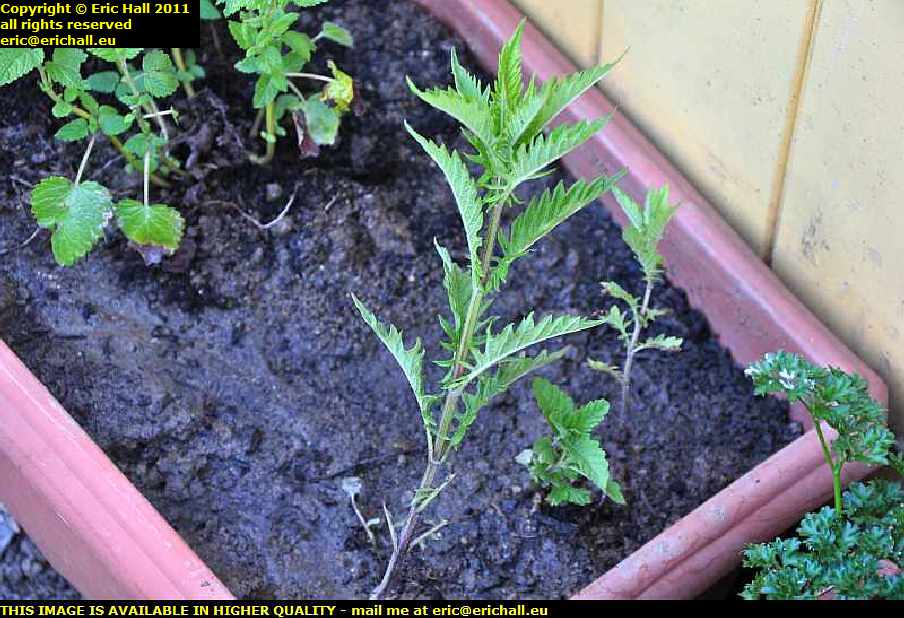
unknown herb potager les guis virlet puy de dome franceBut I did find a plant that I didn’t recognise in the herb troughs. That, together with a couple of others that I can’t recognise, I’ve put on my Facebook page to see if anyone can identify them – you can see the link on the right-hand side.

If anyone has an idea as to what it (and the others) might be, let me know because I would love to find out what they are.

This afternoon I planted everything that I bought from the sale at St Gervais d’Auvergne, and there was tons of that too, and then made a start on the stuff growing in the cloche.

And so what with this morning on the computer again, this evening I went round to Marianne’s for a discussion and a perusal of the railway stuff that I received from Henri at Radio Tartasse about the tacot, the narrow-gauge railway that threaded its way through the Allier as far as Marcillat. And all of that is impressive too.

But basically Marianne and I have to go a-breaking and entering again, and we’ll do that when I come back from the UK.

Saturday 23rd April 2011 – I haven’t done much more today either…

tacot ligne economique gare durdat larequille puy de dome france… although I have made an important discovery. Acting on information received (from Henri at Radio Tartasse as it happens) I managed to track down the railway station for the ligne economique, otherwise known as the tacot, at Durdat – Larequille about eight or so miles from where I live.

And here it is, with grateful thanks to the owner who gave me permission to photograph it.

For those of you who haven’t been following my blog for all that long, you probably won’t know that back at the turn of the 20th Century the Département of the Allier was honeycombed with railway tracks belong to the Lignes Economiques, a system of metre-gauge railways that ran all over the place.

I say that they “ran all over the place” and that isn’t an exaggeration because they very rarely ran anywhere near the villages that they were supposed to serve and the one here at Durdat is well over a mile from the village. In fact one early commentator described the railway stations as “seeming to have the purpose of just adding decoration to the countryside“. The engines wheezed and coughed and spluttered around the countryside, gaining the nickname Tacot, which is French for an “old banger” or “rattletrap” and by 1950 or so they had been all swept away by road transport.

tacot ligne economique gare durdat larequille puy de dome franceYou can see, if you look carefully, the outline of the railway trackbed just in front of the station building.

The line, which ran from the lime kilns at Marcillat to the steel mill at Commentry, was the first to go – being abandoned in 1932 when the standard gauge line from Montlucon to Gouttieres arrived at Marcillat.

And, ironically, the main line was closed in 1939 due to wartime circumstances and never reopened for passengers, meaning that Marcillat was isolated as far as passengers were concerned long before the rest of the ligne economique system was abandoned.

I’ve found most of the stations and some traces of the line but the station at Durdat-Larequille was always elusive, until Henri told me where it was.


All of this came about because I was in Montlucon shopping today. I’ve stocked up with food and all kinds of things, as well as almost everything to finish the water butts (Brico Depot is hopeless) including the nylon stockings for making my sand filters. Why ever didn’t I think of Noz before?

A swim at Neris on the way back, fit the new tap onto the water butts, and that was me, done. But there I am saying tat Brico Depot is hopeless – here they are after all this time of me harassing them and here they are now stocking BULKHEAD FITTINGS – the hollow threaded tube that you pass through the sides of water tanks. I’ve been nagging them about these for ages and now they finally carry them. This will make my life so much easier.

But in Montlucon I had two interesting encounters. A guy at LIDL stopped me and asked me “is that your van outside?” and so we had a long chat about wind turbines and solar panels and he’s coming to see me next week.

There has been a lot of discussion just recently about advertising and people have different opinions about different things, but for me, having corporate colours and a corporate logo, and having clothes that match the van for the colours and the logo – that seems to work for me.

And then on the Brico Depot car park, Julie and Rob came over for a chat and to tell me that they want me to go over and chat to a friend about solar panels. Having a vehicle that is a distinctive shape, a distinctive size and a distinctive colour – that seems to work too.

People can see me coming a long way off, and at the very least it gives them plenty of time to hide.

Tuesday 19th April 2011 – I’ve been in the garden again this afternoon.

This time though it’s the heavy engineering stuff.

You may remember that between the greenhouse and the mega-cloche was a patch of land covered by a tarpaulin – where I was going to erect the aluminium greenhouse. But following a donation by Simon of the old windows from his workshop, I changed my plans.

I promised the aluminium greenhouse to Liz and Terry and I was planning to build a balloon-framed structure that I could fit the windows into.

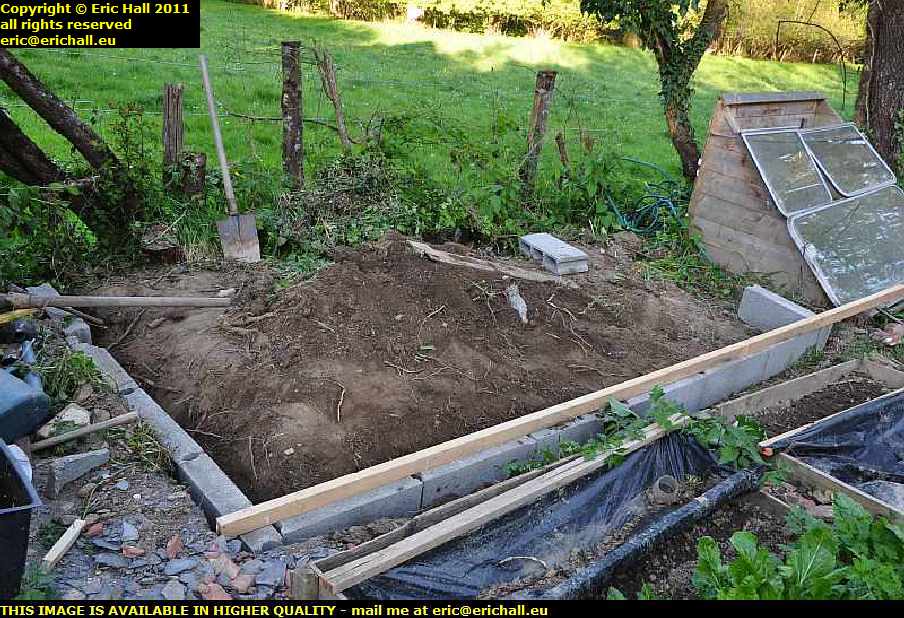
digging base for greenhouse les guis virlet puy de dome franceAnyway, to cut a long story short, this afternoon I cleaned up all of the rubbish that had accumulated there, removed the bits of aluminium greenhouse, rolled up the tarp and set to digging out a square trench.

With the land sloping downhill quite steeply there, I’ve had to dig out so that the square trench is more-or-less level, and I’m setting a row of breeze blocks into the soil there – the purpose of those being to make some kind of horizontal level and keep the wooden frame of the greenhouse out of the damp soil.

Once I’ve finished the breeze blocks I can make a start on building the framework for the greenhouse. The back wall will be covered in the cheap tongue and grooving that is on sale at Brico Depot – I’ve tons of that. The roof will be plastic corrugated sheeting like the verandah, although I’ll invent a system of roof openings to allow the air to circulate, and I’ll build a door for the uphill side. Everything else will be Simon’s windows.

This morning though Liz and I were in the recording studio at Radio Tartasse doing our programmes for the month of May. And Henri, the old guy who helps out there, had a chat with me about the Tacot – the old narrow-gauge railway that used to run from the lime kilns at Marcillat to the steelworks at Commentry. He showed me on the map the traces of the old line, and said that next month he would bring me all of the paperwork that he has on it, including a book on the subject.

Won’t that be exciting?

Tuesday 21st September 2010 – I’ve been really busy today ….

… and I couldn’t really afford to spend the time as I have so much to do.

This morning we had to go to this radio station in Marcillat en Combraille to discuss the arrangements for the programme they want us to do. And what we discussed was almost exactly the same and no different from the last time we were there. Mind you, the guy we talked to was as interested in the Ligne Economique as I am and he told me that he has ridden on it to Durdat Larequille. And seeing as the line closed in 1932 and he has ridden on it, then he probably has a good excuse for forgetting things.

He was minded by a woman who may well have been his wife, and while she was much more purposeful about things and helped to keep her husband on track, she had hearing issues. So as you might expect, this meeting was a bundle of laughs. But nevertheless we did fit in a good chat about solar panels, the Anglo-French group and Terry’s little business.

Then it was off to the Mairie to give them copies of the photos from Saturday.They are “internet” quality so if they want them at proper press quality (350dpi and all that) they can tell me which ones.

Then off to Marianne’s where I stayed for ages talking about Pionsat-Patrimoine, the Anglo-French group, the newspaper, the Foreign library and all that kind of thing. Things are moving around here, although you wouldn’t believe it.

The next people to have the pleasure of my company were the people at the bank. I warned them that I would be going to Canada shortly and so not to be surprised at my “extraordinary expenditure” and not to cancel my bank card – not like 2002.  I suppose I ought to do that for a couple of other cards too.

I also bumped into Damien from the football club while I was in Pionsat.

Rob and Nicolette were out so I couldn’t give them their photographs (they were out later too) and so after lunch I wrote a few important letters (it’s great having a printer that works!) and carried on with my researches. And I might just be onto something. A company called Tiger Rentals might let me have a Toyota Yaris for just about $1500 CAN – about €1100. It’s said that this figure includes the collision damage waiver and all taxes, allows unlimited mileage and permits travel to the USA and the rest of Canada. Now this sounds too good to be true so I’ve sent them a mail for confirmation.

Watch this space.

Of course I need to pay for the accommodation on top but a Yaris does just about 50mpg whereas a motorhome will do just about 18 to the gallon if you are very lucky before you even think about the extra rental charges and whatever charges you might have to pay for camping.

Thursday 16th September 2010 – You’ve probably noticed …

… that a photo has miraculously appeared for yesterday’s image. That’s because I took it this morning first thing before I did anything else.

If you take a photo in the evening just after you have finished the cement is never dry and so you can’t really see the pointing so well.

So after that, and after breakfast, I started on my notes for the tacot. And I bet you are wondering what the tacot is. Look in any idiomatic French dictionary and you’ll see that it means “old banger”, as in some kind of disreputable car. But if you translated it to “rattletrap” or “jalopy” then you’ll understand that it refers to the Lignes Economique – the narrow-gauge light railways that littered the Allier at the turn of the 20th Century.

Marianne, the local history expert, found a book on them and has lent it to me, but she wants it back before I go to Canada at the end of the month. And so I only have 10 days or so to make notes.

It’s an exciting book – not because of its style and the way that it’s written – but more the fact that it’s written in some kind of reporter-style sensationalist account. It recounts the history of the duel between a politician and the railway manager and a few other exciting bits (life is not all boring around here, you know) but it’s strangely short on a good deal of technical information that you would have in a British book on the subject. Clearly they are more interested in the social side of events rather than the technical side.

The line at Marcillat en Combraille is featured in it, as you might expect, and it’s a monument to the shortsightedness and pigheadedness of local politicians. The line was proposed to run from the mines at Villefranche through the steelworks at Commentry, down to the limestone at Marcillat en Combraille (my guess about that was a good one) and then on to the main line into the wilderness of South-western France at Evaux-les-Bains. But when they had the quote they decided that it was too expensive and so they would shorten it. They relied upon a standard-gauge railway line frm another company to bring the coal from the mines down a branch line to where the ligne metrique would now start (involving a needless trans-shipment that would cost money and cause delays of course), and then stop the line at Marcillat en Combraille. With Evaux being in a different Departement (the Creuse) it was a case of “if they want it they can pay for it”.

Once the line was opened however, the standard gauge company closed down the branch line and ran their own line down to Commentry instead. Thus, with no through traffic to and from Commentry to the south-west of France, as provided for in the original estimations, the line quietly stagnated

But if you remember the famous bridge that I investigated several weeks ago, I’ve ruled it out as the bridge for the tacot. In the book that Marianne lent me, there’s a diary by a traveller from Paris who took his week’s annual holiday to ride all of the lines of the tacot d’Allier, all 272 kms of them.

He quite clearly describes the route from Commentry and he says that it follows a river valley well to the south (not the north, where my bridge is) of Durdat-Larequille, and makes the point that the village is “away to the north” of the station. Ahh well.

This afternoon I’ve been pointing again and harvesting veg, and tonight I’ve been cooking tea – the same as last night as it happens – and making some damson jam-type of stuff to flavour my plain soya desserts.

I’m enjoying life in the countryside like this.

Friday 3rd September 2010 – In a change to the advertised programme ….

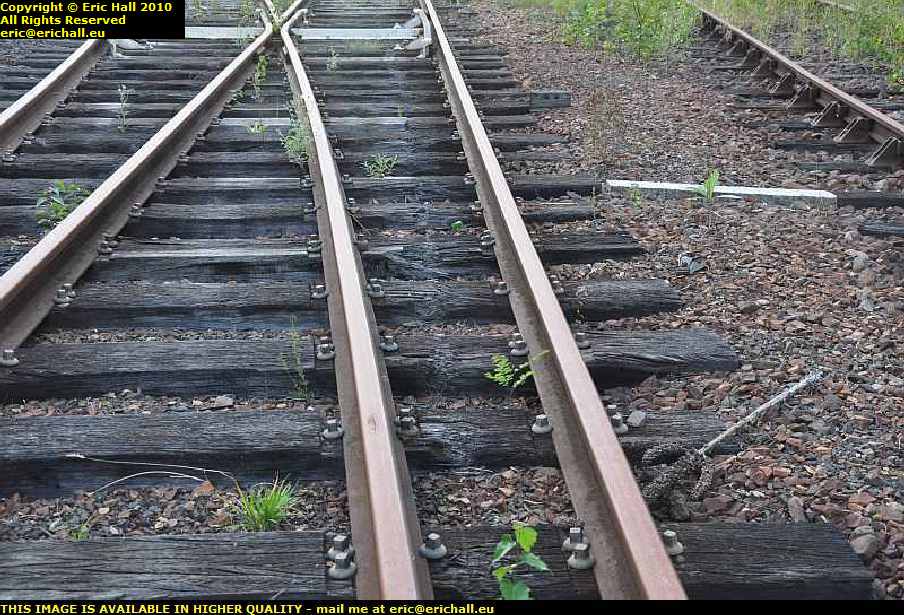
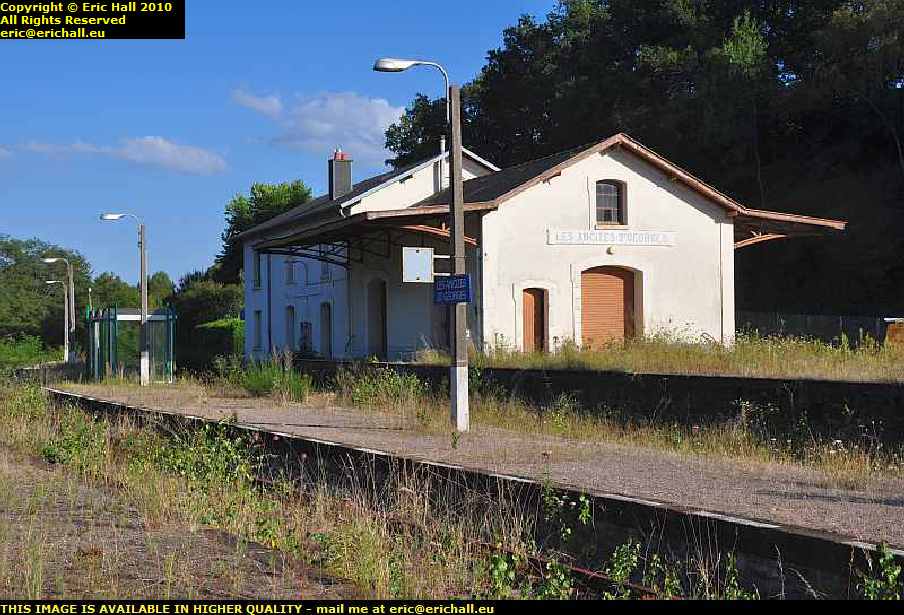
abandoned railway station les ancizes st georges de mons puy de dome france…. I had a day off today. Totally unplanned but somehow things just seem to work out that way. But first, just have a look at this picture. And what do you make of it? You might need to enlarge it first.

The giveaway clues are in between the two rails in centre pic and also in the top left corner.

What has happened is that at some time or other some kind of railway conveyance has come off the rails at the points just here and ridden along the sleepers for a long way. And no-one has bothered to repair the damage.

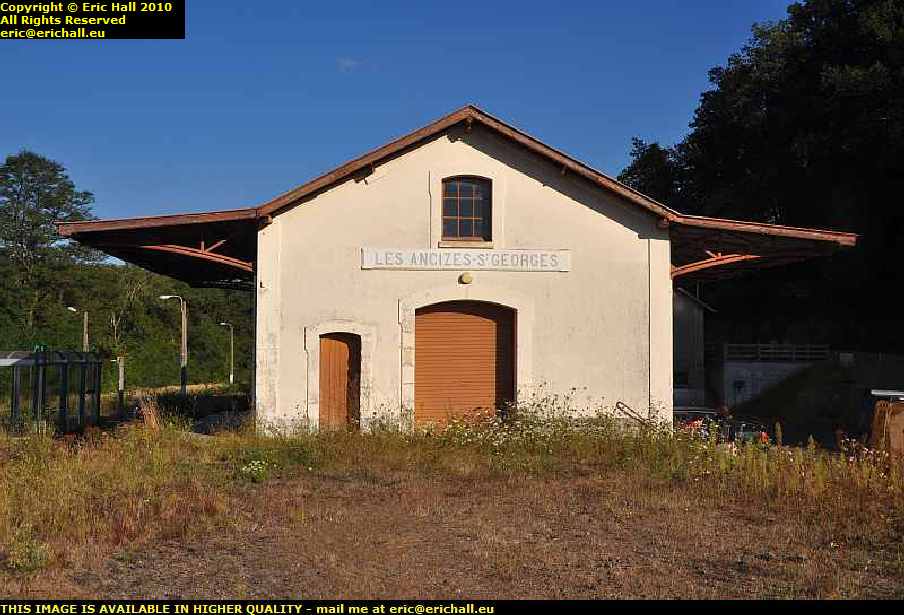
abandoned railway station les ancizes st georges de mons puy de dome franceWhere I am in fact is at the old Les Ancizes-St Georges de Mons railway station, where I have been for a prowl around this evening. This is on the abandoned railway line between Lapeyrouse and Volvic – the one that crosses over the Viaduc des Fades and which was closed in dramatic fashion a couple of years ago when they “suddenly discovered” that the viaduct was unsafe. But you know me and my conspiracy theories – I reckon that the closure was planned for years and the lack of maintenance along the line merely proves it. And not replacing these clearly-badly-damaged sleepers just adds more fuel to the fire.

So how come I had a day off when it wasn’t planned?

This morning I went to the doctor’s to have my football medical signed off – if I want to play I need a certificate. As it happened, it cost me nothing as all my details of the medical I had for my referee’s test were on file.

So that was good.

Then I decided that seeing as I was in St Eloy I would do my shopping. and LIDL was good too.

I needed some more identity photos so I went to Carrefour where I planned to finish my shopping. But no photo booth!
“We don’t have one” they said.
“So where do people go for their identity photos?”
“The professional photographer” she said – and watched me splutter.
“Anyway” she added “he’s closed until 15:00”
Sod this for a game of soldiers – a 50-mile round trip where I drove to the Intermarche at Commentry – I know that they have one. Mind you, I half-expected it to be closed for lunch or the machine out of order but no – it worked, and that must be a first.

They aren’t have having their money’s worth out of me, running around to collect all this paperwork.

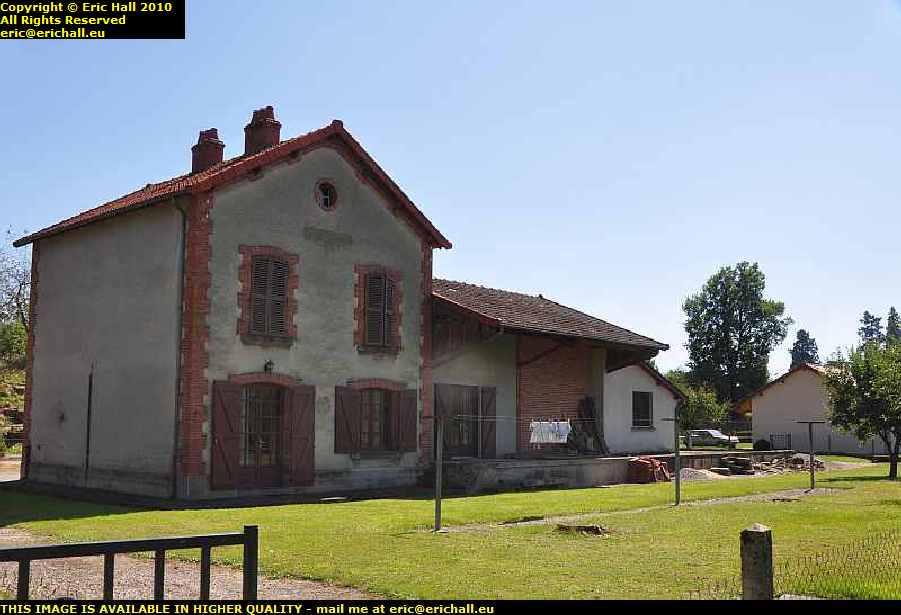
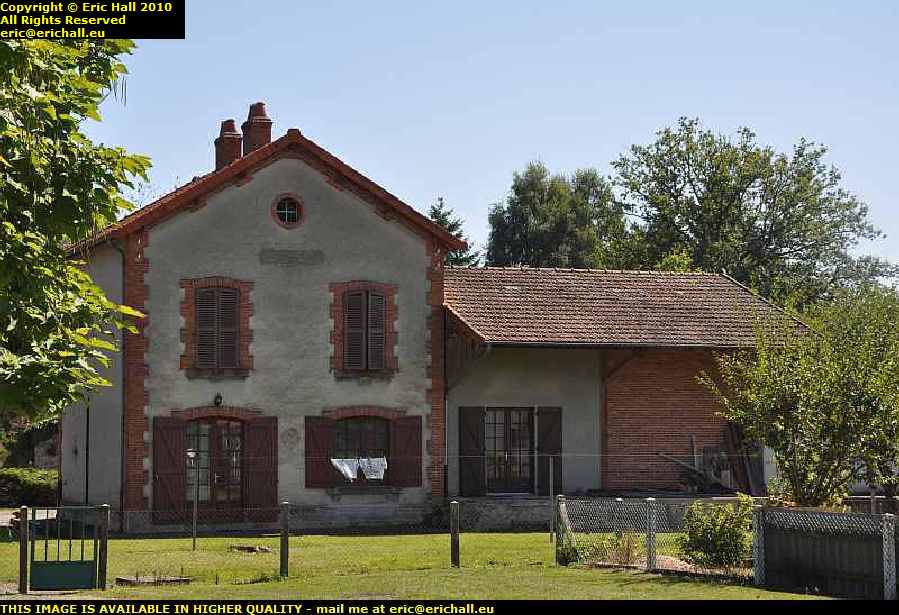
narrow gauge abandoned railway station ligne economique tacot marcillat en combraille allier franceOn the way back and passing through Marcillat en Combraille I went to look at a building that I noticed when I was with Liz the other evening. Now is this a former railway station or is it a former railway station? You can even see the platform.

In fact what we here was the terminus of the Ligne Economique, – the narrow-gauge railway that ran between Marcillat en Combraille and Commentry.

narrow gauge abandoned railway station ligne economique tacot marcillat en combraille allier franceCommentry is a steel-making town and there was a huge lime furnace just a mile or so away from here, so it’s no surprise that there was a railway line between the two towns. The station building here is in a direct line with the old lime furnaces, but modern building has obscured whatever track there might have been in between the two.

The narrow gauge track was ploughed up in 1930 when they built the standard gauge line over its track bed, so when the main line service was suspended in 1939, Marcillat en Combraille lost its passenger service completely, even though the rest of the tacot system staggered on into the 1950s

So while I was here in Marcillat en Combraille I went to the local Mairie and the secretary agreed to talk to the people who know, to see what help might be given for my proposed research

At Pionsat I dropped off my forms at the Football Club, only to find that I can’t find the receipt for the referee’s stuff, and I’ll need that if I want the club to pay it. I remember seeing it floating around the van so I picked it up to put somewhere safe. That says it all really.

So after a solar shower I went to St George for my HGV medical, and here’s another doctor who tells me that there is nothing dropping off quite yet. Mind you, he had me doing some funny things like standing on one leg with my eyes closed and all of that. And as I’m after a change of licence and an International licence he gave me my file back and told me to take it myself to Clermont Ferrand on Monday.

abandoned railway station les ancizes st georges de mons puy de dome franceOn the way back I went for a prowl around the deserted and abandoned railway station at Les Ancizes and took a pile of photos, a couple of of which you have seen above. In his book First and Last Loves” John Betjeman wrote that “Nothing is more empty than a deserted fairground”. But that was because in his day there weren’t any deserted railway stations. He’d change his tune if he were alive today.

And after coffee at Liz and Terry’s I came home just in time for tea at 21:00. And now you see what I mean. Tomorrow I shall have to work to catch up.

Saturday 14th August 2010 – A good few weeks ago ….

… I went to a talk about the history and one of the items that was discussed was the local railway network. With this area being situated on a coal seam and the existence of coal mines all over the place there was at one time a railway network around here that was much more comprehensive than you would think at first.

And most people immediately think of railways as being standard-gauge – 4’8.5″ with substantial earthworks and the like, and there is a great deal of evidence for that, especially for our famous railway down the hill here that was opened to traffic in 1932 and did’t even last 25 years.

I drive regularly (or I used to when I used to go to Brussels) along a certain road that runs into Montmarault from the Montaigut direction and I’ve been convinced that I’ve seen traces that correspond to what the Ordnance Survey would call “dismantled railway” along the side of the road, although there is nothing on any map that I have ever seen that would confirm anything.

But at this talk one of the items discussed was the railway line that ran from Marcillat en Combraille to Commentry. Now Commentry was a major ironworking centre and Marcillat has the remains of a few huge limekilns and so a line bringing the lime from the fields to the blast furnaces seems like a likely proposition. But the only line here as far as I am aware is the old standard gauge line that used to pass down here and which doesn’t go directly to Commentry.

But further enquiry revealed the existence of the “lignes economiques” – a whole series of narrow-gauge lines that ran on light railway principles with the minimum of earthworks, and the border area between the Allier and the Puy-de-Dome was littered with these lines. Anyone who has seen the the Father Brown film will recall what a “ligne economique” looks like.
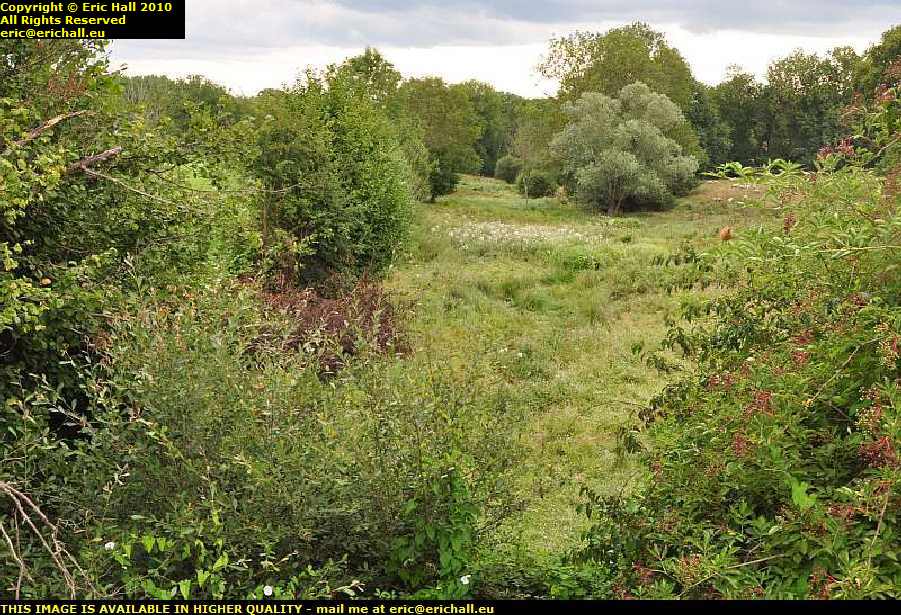
The relics that I have seen not too far from Montmarault are in fact part of this light railway system but my attention for the moment has been seized by a narrow-gauge line that used to run from Marcillat to Commentry – and points beyond, as I have discovered. I’ve tracked down a list of the names of stations along the route but a casual look on an Internet satellite viewing program hasn’t come up with anything. That’s a shame – long-time readers will remember that we tracked down a bridge of James Brunlees by spotting it on a satellite viewer.

culvert underneath D2144 RN144 durdat larequille allier franceOne place however has crossed my mind as I have crossed it on many occasions. The railway passed through the village of Durdat Larequille somewhere and not too far from there is what looks like a hollow fold in the ground with what might be a bridge over it. And so on my way back from Neris les Bains I stopped for a look.

I’m right about it being an overbridge but if it’s for a narrow-gauge locomotive and train then it would have to be flaming narrow. I couldn’t stand upright in that tunnel under there

culvert underneath D2144 RN144 durdat larequille allier franceThere’s no evidence to suggest that the bridge has been infilled to any extent, suggesting that at one time it might have been of larger size, and I can’t see what might have been a track bed of a railway running to and fro underneath it.

I’m reluctantly coming to the conclusion that this may well not be a railway bridge after all, and that’s a disappointment – I had high hopes for this.

Yes – I was in Neris today. The weather is becoming colder and colder and there was no chance of a solar shower and so after shopping in Commentry (which was boring, I have to say) I went off there. 29°C in the water and only 20°C in the baths itself – but that’s because some person had for reasons best known to him-or herself decided to open up the side of the pool. It used to be an open-air pool complete with poolside cafe but it’s now covered with a balloon-type of marquee. And who on earth would want to open it up today in this weather?

But now I’m nice and clean so I’m going to change the bedding and have a good night’s sleep. And I need it too. I didn’t have the alarms on this morning and when the phone rang I crawled over to it and answered “ok Terry – see you in a bit” only to hear a French voice on the other end. Yes, I was totally out of it this morning. I’ll have to do better tomorrow.