Tag Archives: gestapo

Saturday 16th March 2019 – I’VE SPENT …

gestapo headquarters LD house appellhofplatz koln cologne germany… the afternoon in Gestapo headquarters in Koln. And all that I can say is that these 17.4 million racist xenophobes who voted to kick out the foreigners from their country ought to go along and visit it too.

We’ve seen the Biffers and UKRAP and Nigel Garbage doing things like refusing to shop in places run by Muslems, boycotting shops selling halal food, defacing mosques and the like, and no-one bats an eyelid.

You only have to compare what’s going on in the Fascist Paradise that is the UK today and compare it with what happened in Germany 1933-1945 to see some alarming similarities.

Everyone stood by and watched back then, and we had stupid, naive politicians waving pieces of paper about. And look how it all ended up because of this inaction. It’s getting to the stage where the ordinary citizens need to rise up and take matters into their own hands otherwise we’ll all be back here again.

Who will ever forget Martin Niemoller’s famous words?

First they came for the socialists, and I did not speak out—because I was not a socialist.
Then they came for the trade unionists, and I did not speak out— because I was not a trade unionist.
Then they came for the Jews, and I did not speak out—because I was not a Jew.
Then they came for me—and there was no one left to speak for me.

Last night I had, for a change, a reasonably good sleep last night. From about 22:45 to the alarm at 06:00 with a brief awakening at 03:45.

I’d been on my travels too, with a couple of people making their debuts. What we were doing was cutting up an onion into very fine particles whilesomeone else was preparing hot dogs or hamburgers. We had to remove all of the skin and everything else from the onion and that wasn’t easy although mine seemed to disappear quite quickly. And then wait.And I noticed that my onion was starting to congeal so I pointed this out to one of the women who was there. The conversation moved on and some guy joined in the discussion. He was a guy with whom I’d played guitar a couple of times in the Auvergne but with blond hair and this chat developed into some kind of problematic discussion about how he was going to join the Good Ship Ve… errr … Ocean Endeavour somewhere out between the Faroe islands and Iceland given the really poor weather. he then started to talk about his period in the Swedish Army which might explain his blond hair and strange accent. Mantime someone came down the corridor between the office desks shouting for someone – someone I knew on the Wirral. A girl piped up that “he sits here next to me, but he’s not at his desk right now. You can tell that it’s his desk because of the stuff on it.”.
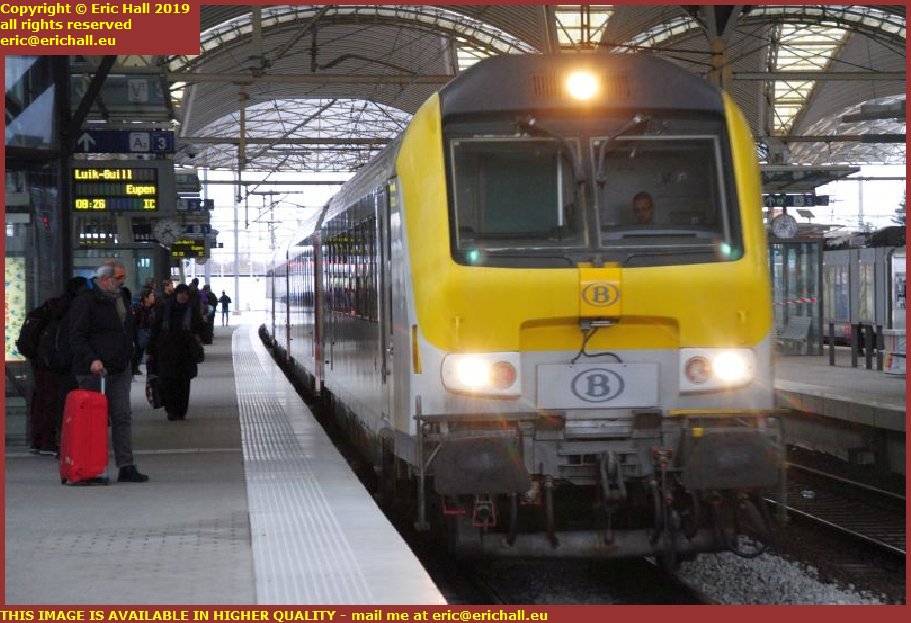
push me pull you sncb class 18 railway locomotive leuven belgiumThere was the usual medication and breakfast and then I headed off to the station. Alison was already there so we headed off together to our platform for the train.

It was the 08:28 to Eupen, but we were only going as far as Liège.

There at Liège Guillemins railway station we alighted and waited for the German Inter-City Express to come in from Brussels.
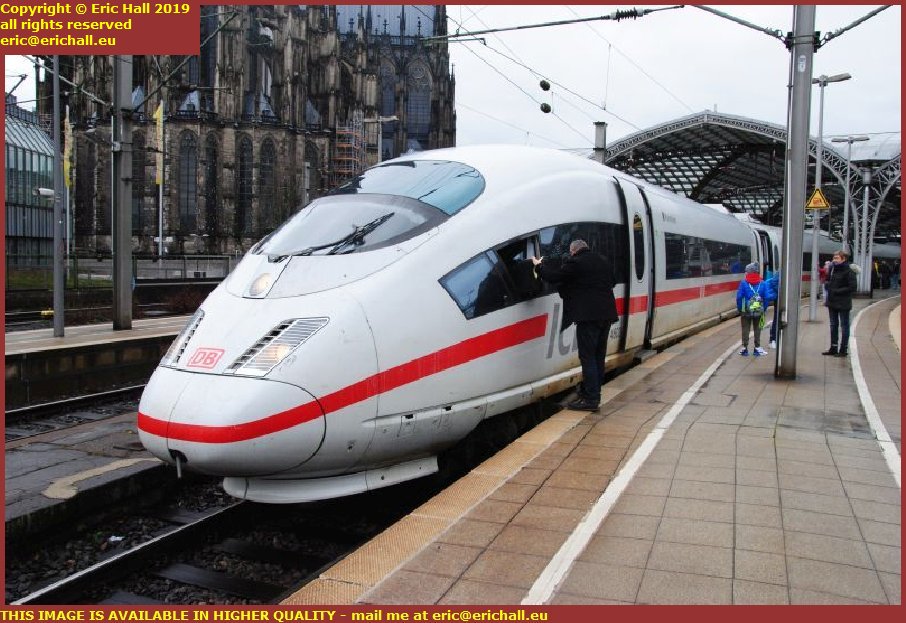
ice express hauptbahnhof koln cologne germanyAnd we made a slight miscalculation in that the train was a lot shorted than the one from which we had alighted.

We had to run (and you’ve no idea how difficult it is for me to run these days, but at least I managed it) half-way down the platform to leap aboard it.

We were 10 minutes late arriving in Köln, so I imagine that there’s a few more railway employees sent off to the Ostfront. But it didn’t really matter because the train was just so comfortable – even compared to the best of the TGVs.
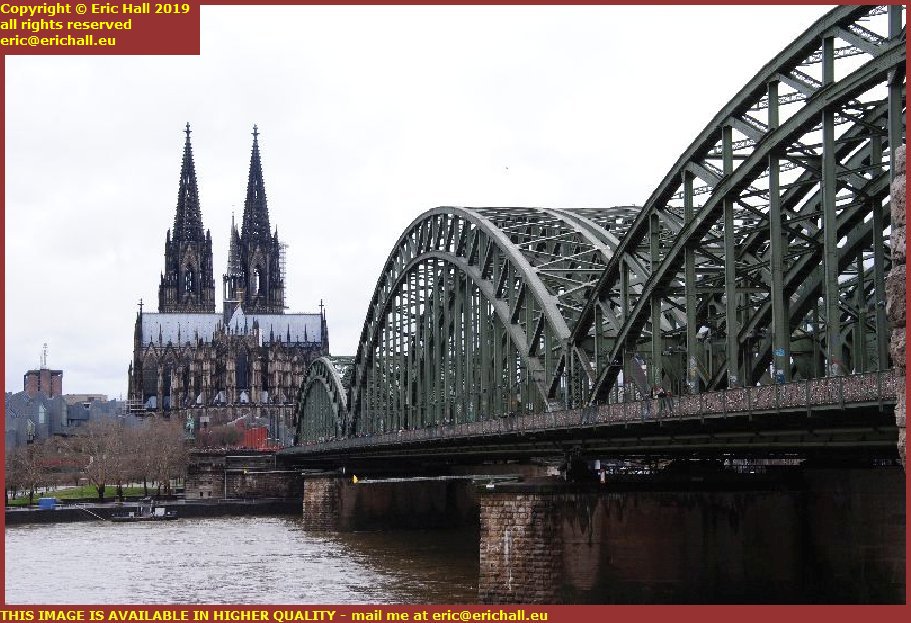
hohenzollernbrucke cathedral koln cologne germanyAlison and I went for a coffee and then walked round the cathedral to check on the Roman paving that I had seen last time that I was here. We then continued up to the Hohenzollernbrucke.

By now the rain had stopped so we stood on the bridge to admire the barges passing by underneath.

And then up-river on the eastern bank to see a few things that I had noticed last time.
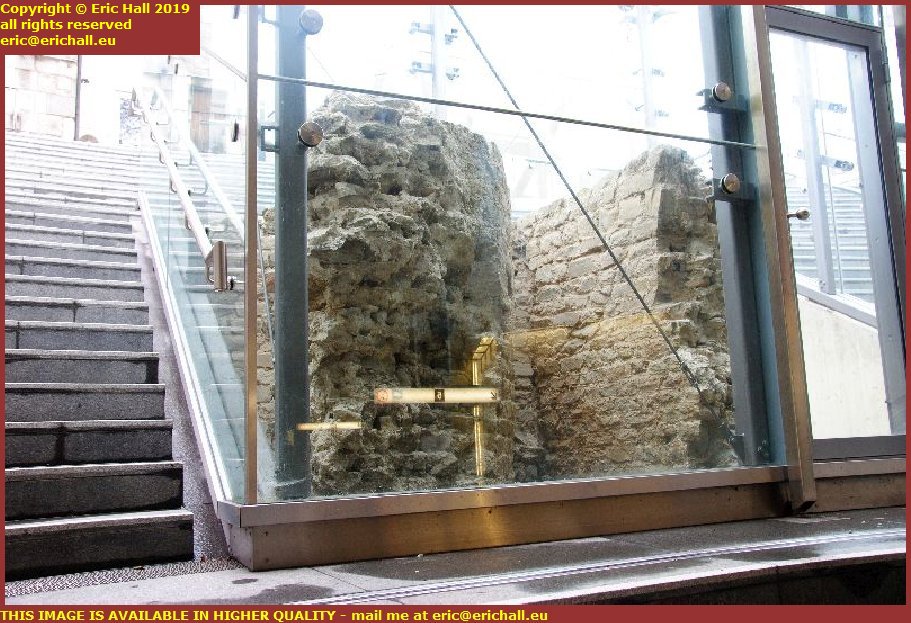
roman temple heumarkt metro station koln cologne germanyBack across the river on the Deutzerbrucke, stopping to take a few more photos of a few more barges, then Alison went for a wander around a few shops while I disappeared into the bowels of the Heumarkt metro station to look at the church tower that I saw last time.

While I was down there I stumbled over the ruins of a Roman temple from round about 100BC. This was uncovered during the construction of the Metro here

Unfortunately they haven’t been able to discover to which god the temple was dedicated

A couple more shops and then back to the Hauptbahnhof to meet Jackie.

We ended up at Mama’s Trattoria, an Italian restaurant that I had found on the internet. It advertised vegan and gluten-free meals. And what an inspired choice it was because there was plenty of choice and my penne al arrabiata was totally delicious.
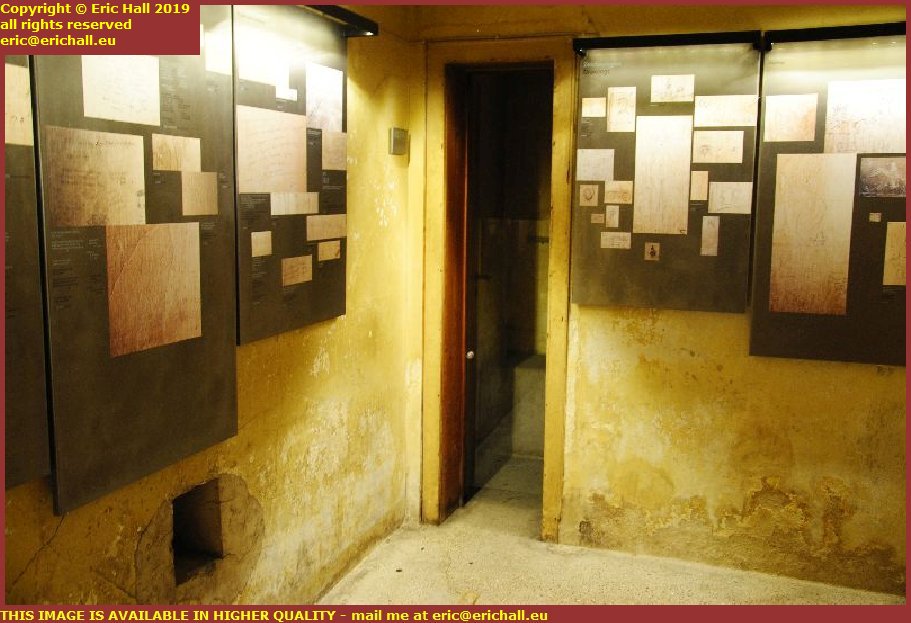
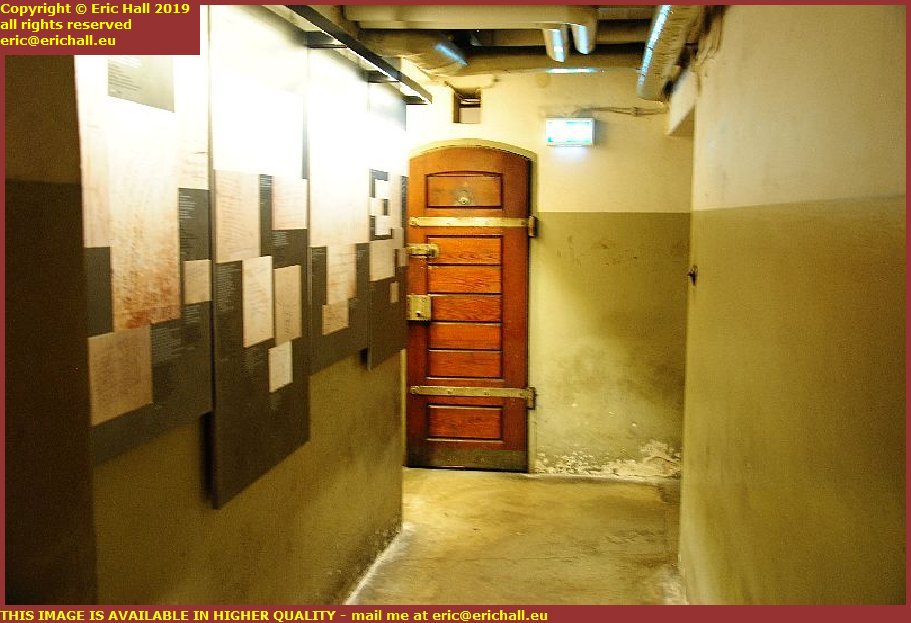
gestapo headquarters LD house appellhofplatz koln cologne germanyFrom there, round to the Gestapo museum, and what a frightful place that was. It’s hard to imagine a series of prison cells about 1.5 metres by 3 metres and 30 people at a time crammed in each one there for a couple of weeks on end.

The only time they would ever be allowed out would be for a good round of torture and, eventually, being hanged or beheaded in the courtyard.

As I said, the idea that 17.4 million people have voted for a return to those unspeakable times is something that fills me full of dread.

A nice walk, another coffee and a few more shops saw us back at the railway station in time for another drink and then our trains home.
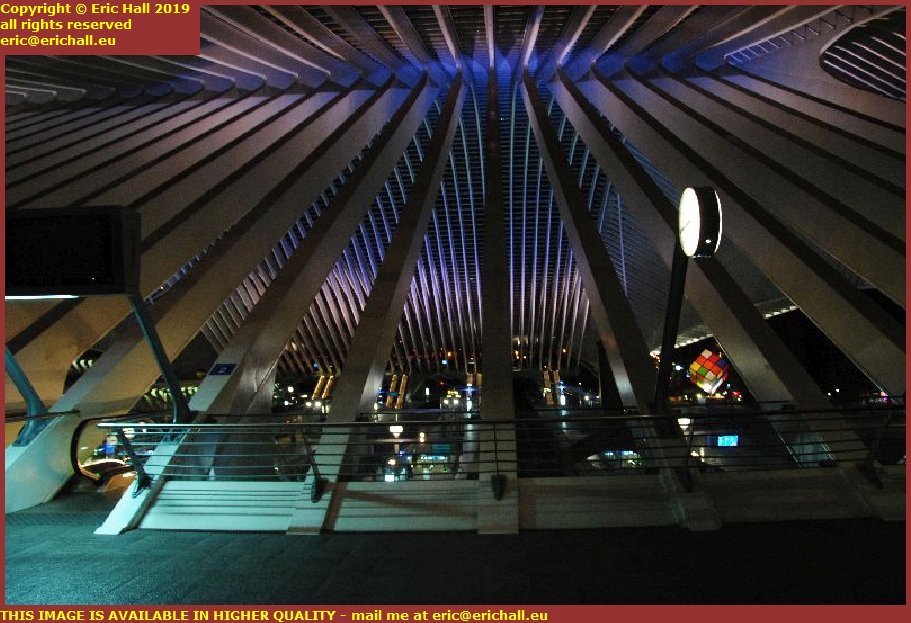
gare leige guillemins belgiumWe had to change trains at Liège Guillemins station again for our train back to Leuven.

There was a 10-minute wait for our train and so that gave me plenty of opportunity to have a look round and take a few photographs.

The station is certainly out-of-the-ordinary and looks even better at night when it’s all illiminated.

Back finally at leuven Alison caught the bus home and I grabbed a falafel durum to eat on the way home.

167% of my daily activity and it feels like it too. So I’m off to bed where I intend to sleep until I wake up.

Friday 8th May 2015 – HERE …

caliburn overnight sleep stop heverlee leuven louvain belgium.. is where I spent last night – at a motorway service area at Heverlee, near Leuven. And I slept the sleep of the dead too – totally painless it was. Didn’t feel a thing.

And even better, there was a nice hot shower available too. And didn’t I enjoy that? I haven’t felt so good in ages.

Mind you, I forgot to buy a bottle of water and so my morning coffee, in a roadside rest area while they cleared away an accident down the road, and coffee made with sparkling water is certainly different, that’s for sure.

I wasted the morning not doing very much at all, and then met up with Alison for lunch. Alison and I worked together for an American company for almost a year, and we both walked out at more-or-less the same time. And for the same reasons – basically that American companies have no idea of the notion of cultivating staff loyalty, and rule their employees by fear. There’s no place in my environment, nor in Alison’s environment either, for an attitude such as that, and we can’t understand why it is that other people allow themselves to be pushed around.

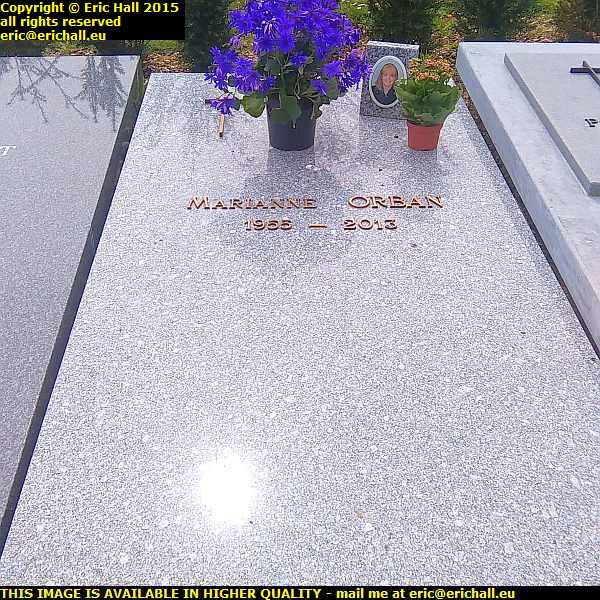
marianne orban grave ixelles brussels belgiumAfterwards, I went to check up on Marianne and to have a chat. It’s hard to believe that it’s two years since she passed away, but then at this sort of age time passes quickly.

It seems that I wasn’t the only person to go to visit her either, for there were a couple of other pots of flowers that had been left on her grave. I’m glad that she hasn’t been forgotten and that she is being looked after by people locally. It’s not feasible for me to come to Brussels to tend to her as often as I like.

civilian victims of the gestapo ixelles brussels belgiumIt’s also VE day today – the end of the War in Europe, so it’s only right to go to pay a visit to the interred in another part of the cemetery here at Ixelles. There are some military graves here, but there are also some graves of civilian victims of the Gestapo.

There are many people, one or two of my acquaintances amongst them unfortunately, who criticise the French and the Belgians, and a few other people too, for what they see as a lack of resolution by the population of those countries when it came to resisting the German invaders.

But if you have a look at these gravestones, you’ll see fusillé – “shot”, or executé – executed, or decapité – decapitated. These were the risks that people were running every day for four and a half years of the Occupation, so it’s hard to be as resolute as some might like when you are risking all of this.

And, of course, it’s very easy to beat the drum when there’s an ocean between you and the invader. I’d be interested to see just how brave these critics would have been had they been over here amongst the Gestapo during the Occupation.

I braved the rush-hour traffic and set out for Germany. I’d forgotten just how busy the roads could be on a Friday afternoon and I’m glad that I’m no longer involved in any of this.
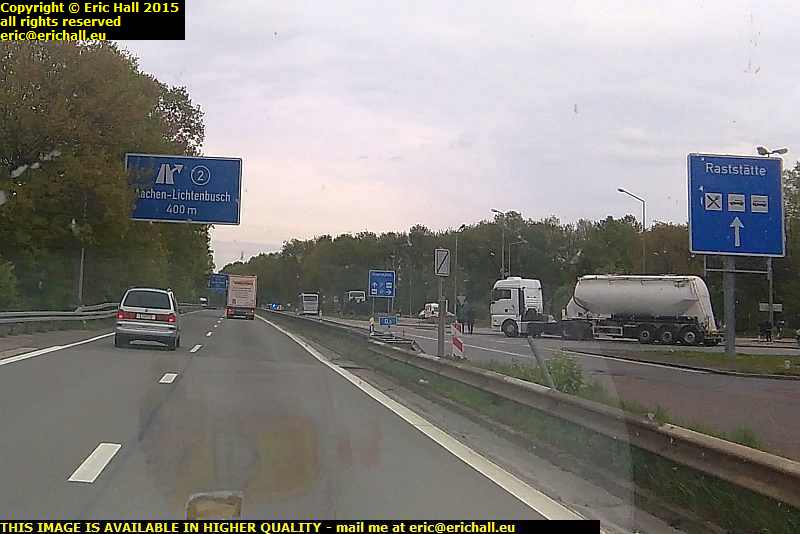
crossing the border Belgium Liege Aachen GermanyAnd here I am crossing the border into Germany not too far from Aachen at the back of Liege.

The camera on my new phone has quite a high resolution and isn’t far off what the Nikon D5000 can come up with on a good day. It’s also easy to use on the move so moving pictures are back with us again.

However, I needed to be careful. Can you make out the blue flashing lights just down the road? I wouldn’t have been surprised if they had been waiting for me.

It seems that I have entered my destinations into the Satnav in the wrong order and it’s doing the route backwards. That’s clearly no good so I need to change it all. At a rest area at the side of the Autobahn I pulled up to reprogramme it, but then I thought “what they heck” and it’s here where I’m going to be bedding down, German police permitting.

And talking of the Police, I’ve managed this year to avoid having a run-in with the Belgian police this year. Either my luck was in or else they must have been all asleep.

Tuesday 25th February 2014 – I’M NOT HERE

Well, not ALL here anyway. But you knew that already, didn’t you?

viaduc des rochers noirs de la roche taillende lapleau correze franceI’m not there either – although I was earlier this evening. This is the Viaduc de la Roche-Taillende, colloquially known as the Viaduc des Rochers Noirs, and it’s near the town of Lapleau in the Corrèze.

You may not think it looking at that tight curve to enter the viaduct, but I’m actually standing on the bed of a disaffected railway line. It’s another one of these metre-gauge tacots, or “rattletraps”, a narrow-gauge railway line similar to the one that we’ve seen at Marcillat-en-Combraille in the Allier, but this one ran between Ussel and Tulle in the Corrèze.

There was a speed limit of 15kph on the line which is hardly surprising given the tightness of the curve, and also the fact that we have a suspension bridge which is quite a rare type of construction for a railway bridge.

viaduc des rochers noirs de la roche taillende lapleau correze franceJust like chez Liz and Terry, the railway disappears off into a tunnel on the other side of the river, but that is all fenced off.

Until 2006 you could actually drive through there in a car but unfortunately the Conseil Départementale has put a stop to all of that.

I merely contented myself with taking a few pictures – there wasn’t anything more that I could do unfortunately.

viaduc des rochers noirs de la roche taillende lapleau correze franceI did however go for a little bit of a climb and I was glad that I did, because the view from up on a rocky outcrop towering a couple of hundred feet above the viaduct was stunning, to say the least, even if it did wear me out climbing up to here.

This photo does show you the lengths that they had to go in order to build the viaduct and it’s hard to think that this line didn’t open until 1913, by which time it had effectively already outlived its effectiveness with the coming of the motor-bus but nevertheless it struggled on until as recently as 1960, which is quite an achievement for a metre-gauge tacot.

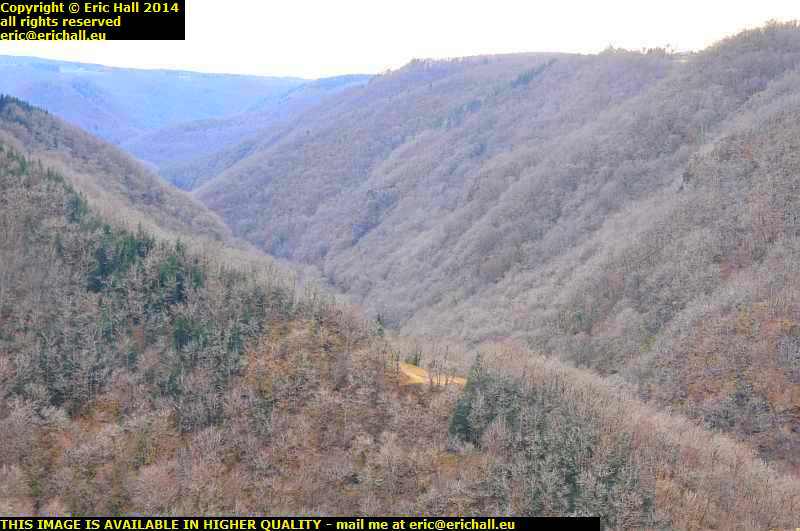
 les gorges de la Luzège lapleau correze franceWhile I was up here I took a few photos of the stunning scenery.

The viaduct spans the Gorge de la Luzège at a height of 92 metres, or 126 metres if you count the pylons, so I’m quite high up and the view of the gorge is amazing.

It’s a shame that the weather was so dreadful though – it’s been raining non-stop and I’ve forgotten to bring a raincoat with me.

Serves me right.

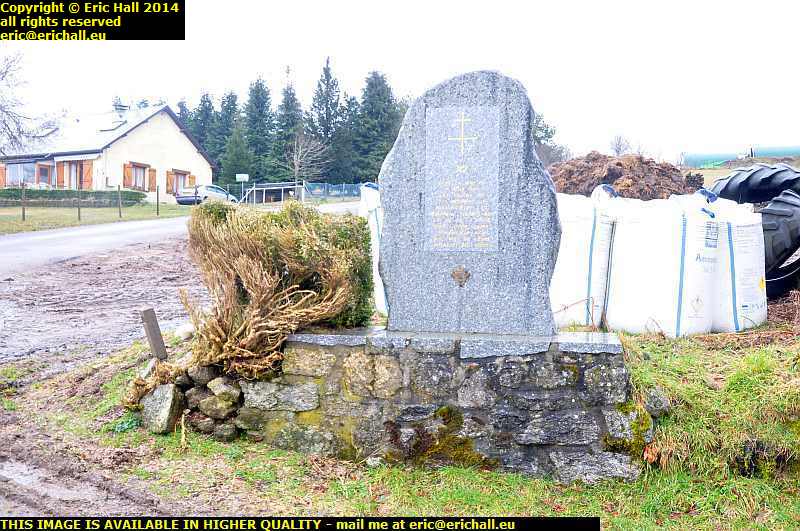
plateau de Millevaches memorial 3rd Regiment SAS french resistance france 1944Coming here brought me (via the Pionsat Post Office to post Cécile’s letters) over the Plateau de Millevaches on the border between the Creuze and Corrèze.

Apart from the snow that I encountered, the plateau is famous in that it was effectively a “Free French” area during World War II. There is a great deal of resistance souvenirs in the area, including this plaque to commemorate the parachuting-in of members of the 3rd Regiment SAS who organised the French Resistance in the turbulent times after D-Day.

There are poignant souvenirs too – memorials to victims of the occasional sweeps by the Gestapo and also the town of Tulle itself just a short drive away, where the Das Reich Panzer Division of the SS strung up almost 100 locals from lamp-posts in the centre of the town as a form of reprisal for terrorist attacks.

roman ruins villa temple ruines les cars plateau de millevaches corrèze franceAnd that’s not all either.

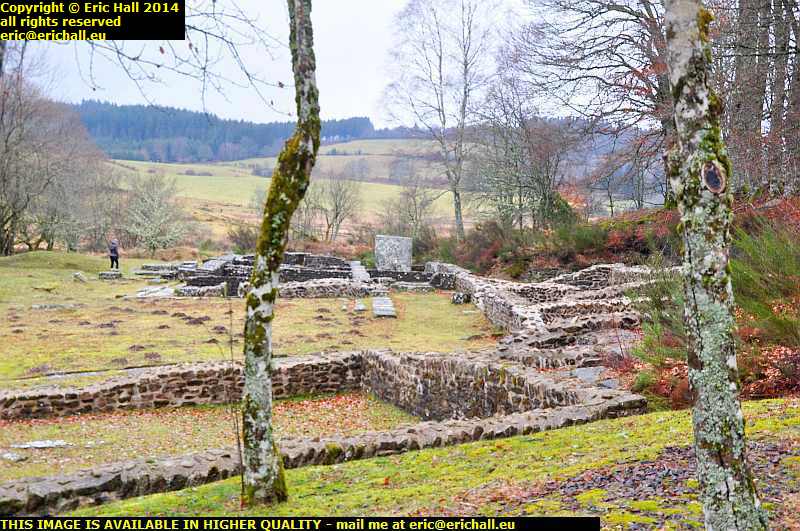
I saw a sign that said Ruines les Cars and with Cars being French for the kind of coaches that I drove when I worked for Shearings, I went for a look to see what it was all about, but instead I found myself in the middle of a Roman villa and huge Temple from the 2nd Century AD.

Of course, you are not allowed to say “Roman Remains” here in France. Everything has to be “Gallo-Roman” because the French don’t accept (rightly or wrongly, I dunno) that the French civilisation of the turn of the Common Era was any less inferior than the Roman civilisation, and I’ve seen some healthy fights at some of these archaeological meetings that I sometimes go to.

remains of old car plateau de millevaches corrèze france Talking of ruins of cars, another thing that caught my eye was this. The remains of an old car abandoned in a forest.

No maker’s plate or anything like that on it, so no idea what it might be, but it has a wooden chassis sheathed in steel, and it’s clearly the type of car that had real wings and a lift-off body. With its steel wheels, all of that dates it to the early 1930s I reckon.

If you have any ideas what it might be, let me know. But there isn’t much to go on, I know.

From here I headed off down the hill and towards civilisation. I ended up in the town of Tulle where I planned to find a hotel but was singularly unsuccessful.

And to my own surprise, I didn’t take a single photo of the place and I ought to have done, because Tulle is one of the saddest places in French modern history.

Following the Normandy Landings, the local Resistance troops had risen up and seized control of the town from the Germans. Just as they were preparing to deal with the final German holdouts, the 2nd Waffen-SS Panzer Division Das Reich appeared on the scene on its way north.

The result was that 99 civilians, many of whom had no connection with the armed uprising, were strung up from lamp-posts in the main street and a considerable number of others were brutally tortured

So with no hotel that I could find in Tulle, I’ve moved on to Brive la Gaillard where I’ll be spending the night.. I’ve no idea where I’ll be tomorrow.

Sunday 4th August 2013 – YOU’VE BEEN SPARED …

… another discussion and more photos of the parking around here – not because of the fact that there was nothing to report (there was in fact even more than in the last few days) but because I’ve had other things to do.

I told you last night that I would go and visit Marianne today and give her a progress report, which I duly did. Her grave has been restored from the last time I was there, and it’s grown a basket of flowers – obviously someone else has been to visit her.

Her headstone hasn’t arrived yet though, but then again what I have ordered for her will not be the work of 5 minutes.

On my way to her grave I pass by the military section of the cemetery, where soldiers who died during the defence of the city in August 1914 and May 1940 are buried.

There’s also a section that deals with the civilian victims of the two World Wars and I went for a wander around that part of the cemetery today.

Many people, mostly British and Americans, tend to criticise, sometimes vehemently, the citizens of many occupied countries for what they see as their collaboration with the occupying powers during the wars.

They also criticise those in Syria, Iraq and Afghanistan who are standing their ground and fighting the occupying powers, but that is by the way of course.

But these British and American critics of the civilians in these occupied countries are being extremely naive. They simply have no conception of what was going on and what it must have been like to live in these countries.

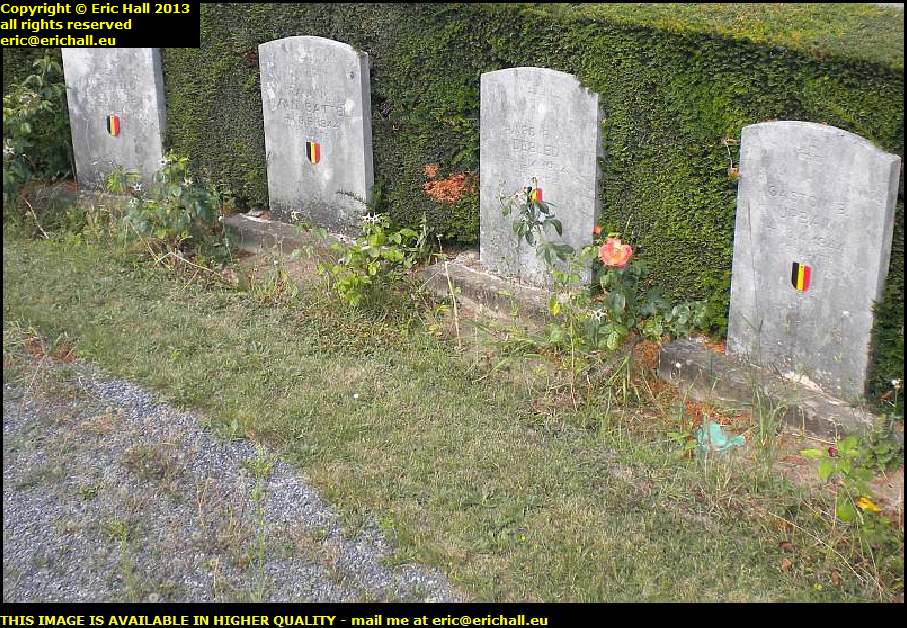
Nazi execution victims Ixelles cemetery Brussels belgium august aout 2013Here are a handful of the hundreds of graves in this part of the cemetery – people who died after falling into the hands of the occupying powers.

If you enlarge the photo you will notice the legends thereupon – “FUSILLE” (shot), “EXECUTE” (executed), “DECAPITE” (decapitated) and all of the hundreds of graves here, of both men and women, bear similar legends.

And none of these legends tells you anything about the sufferings that they must have undergone at the hands of the Gestapo before the Gestapo tired of amusing itself with them and sent them on their way.

Yes, it’s easy to criticise people for collaborating with the enemy when there’s a whole ocean or a sea between you and the enemy. The British and Americans would think twice then.

I don’t seem to recall the British inhabitants of the Channel Islands putting up too much of a fight when they were occupied by the Nazis – in fact they even sat on their hands for 10 months, slowly starving to death, after the war had passed them by.

They couldn’t even seize the initiative then when the Germans no longer had anything to fight for.

civilian victims world war 1 Ixelles cemetery Brussels belgium august aout 2013There’s also a section for civilian casualties of the Germans in World War I.

Back then in those days the Germans made no secret whatsoever of their policy of “frighfulness” towards the civilian population. All kinds of atrocities were committed upon the civilian population.

All kinds of people were caught up in the dragnet during World War I and in this photo you’ll see graves of a couple of British civilians and a couple of French civilians, as well as some Belgian civilian graves.

The flat at Boulevard Reyers where I lived for a few years, that backed onto the Tir National – the National Firing Range – and that was where people who were singled out for “special attention” by the German occupying forces were executed, and subsequently buried.

Edith Cavell was shot there, and many famous people from World War I and II, and many SOE operatives who were running escape lines across occupied Europe and who fell into the hands of the Gestapo are buried in there.

Even more poignant are the graves of the “unknown” – no-one knows who they were and why they attracted the special attention of the Gestapo. From the one or two survivors of this kind of treatment, the suffering was appalling and death was often a merciful release.

Leaving Marianne’s grave, I heard a familiar sound in the distance – yes, a referee’s whistle. The football season has restarted here in Belgium and it seems that there’s a football club here in Ixelles – the Royal Ixelles Sporting Club.

They play at the sports ground down the hill from the cemetery and today, they were at home to La Hulpe in Division 3b of the Provincial League of Brabant, so I was informed.

Royal Ixelles Sporting Club de football La Hulpe belgium august aout 2013And so I went for a nosey around, like you do … "like SOME of you do" – ed

The standard was pretty dire, I have to say. FC Pionsat St Hilaire could have defeated both these teams without drawing too much breath, but at least it was football and so that cheered me up considerably.

I was wondering what I was going to do for my weekly football fix while I’m living here, and now I know. It’s played on artificial turf, but I don’t suppose you can have everything.

Reminds me of that gridiron player asked by a television reporter if he preferred grass or astroturf, replying “hey man, I ain’t ever smoked astroturf”

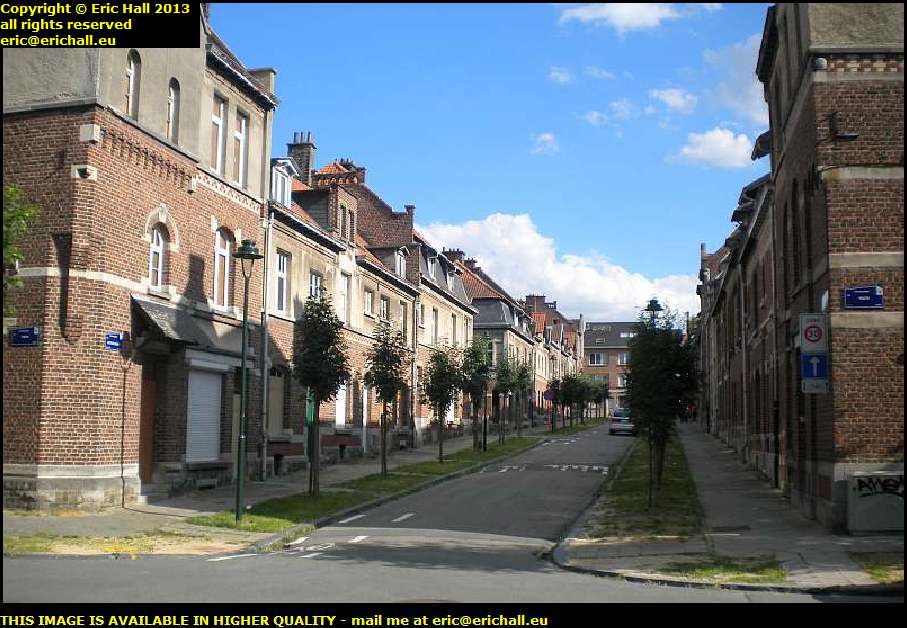
local authority social housing Ixelles Brussels belgium august aout 2013But never mind the stadium itself. That’s quite a modern edifice, but it’s surrounded by Council Houses and Council Flats and not just any old council houses either.

If you’ve seen my page onthe houses built by the Peabody Trust in London, you might recognise the influence.

Brussels was also a slum-ridden city at the turn of the 20th Century and a great deal of effort was put into rehousing some of the inhabitants of the worst areas.

The earliest social housing was in the centre of the city but by the 1920s the city was building out in the suburbs and I reckon that this might be one of those

So there you are – 4 photographs and 1002 words. You really ARE having your money’s worth today, and on my day of rest too.

Still, back to work tomorrow.