Tag Archives: paris orleans railway montlucon gouttieres

Monday 28th November 2016 – I WAS RIGHT …

delhaize closed monday bohan belgium october octobre 2016… when I said the other day that I would probably find the Delhaize at Bohan closed if I were to come here today.

Well – I was half-right anyway. Had I come here this morning I would have found it open. But I didn’t – I didn’t arrive here until this afternoon and by then the supermarket here was well-closed.

It wasn’t much of a guess though really, was it? Knowing how things pan out when I’m involved, you should have had the mortgage on it.
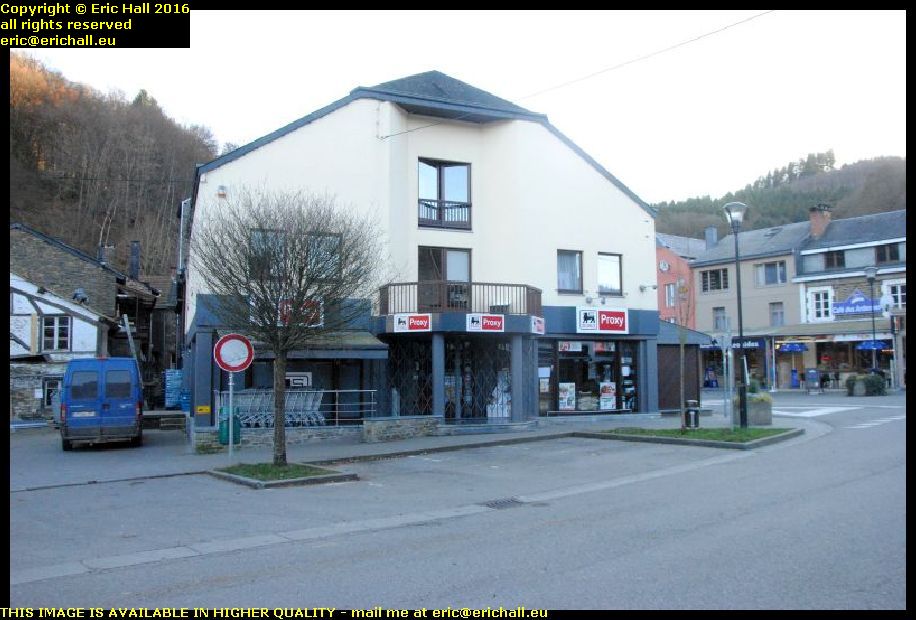
delhaize bohan belgium october octobre 2016It wouldn’t be so bad if it were an out-of-town retail outlet but here it is, in pride of place right in the town centre, on a site that’s been used for retail purposes for maybe at least 90 years if an old postcard that I saw had anything to do with it.

But as luck would have it, and quite surprisingly if you are a regular reader of this rubbish, there was a boulangerie open up the side street to the right,and I was able to grab a loaf of bread.

I’d had yet another bad night – this one probably the worst that I’d had so far. and I was awake long before the alarm went off. I’d been travelling too – round Labrador as it happens and I’d been promoting some complicated and difficult projects that I found very hard to explain.

First down for breakfast, even before the staff yet again, and then back to my room and carrying on with my work on Labrador and the Happy Valley-Goose Bay web pages that I’m writing. And I’m stuck. I’ve forgotten the name of a ship that I saw in the harbour and I can’t identify it from the photo. All I know is that it’s the Woodwards oil tanker that takes the fuel out to the outports and isolated islands in the Labrador Sea.

After my butties I set off to Bohan. And it was cold too – the ice warning was going off which was no surprise as the temperature had dropped well below zero during the night and there had been frost everywhere this morning. I sorted out the woolly hat to go on my woolly head.

riviere semois pont cassé bohan belgium october octobre 2016There was a really good reason for wanting to go to Bohan, because it’s another place that has a lot that I would find interesting.

Amongst them is what is called the Pont Cassé – the broken bridge. And if you really need to know who it was who broke it, the answer was that it was the French Army. They blew it up on 11th May 1940 in order to prevent the German Army and its tanks from using it to cross over the river

riviere semois pont cassé bohan belgium october octobre 2016And when they blew it up, they did a really good job of it too.

It was “repaired”, if that’s the right word, with a temporary wooden structure but during the German retreat they set it alight on 6th September 1944 and it burnt down.

And after the war, the decision was made in 1947 not to replace it.

rivere semois pont cassé bohan belgium october octobre 2016It’s possible to walk onto the bridge these days – it’s not fenced off – and so I did.

And you can tell from this photograph exactly what kind of bridge it is can’t you? It’s a railway bridge of course if you need to be told, and more than that, it’s another tacot or “rattletrap” – one of the
chemins de fer vicinaux or local tramway-type railways that littered Belgium just as well as they littered France and which we had near us in Marcillat en Combraille.

riviere semois pont cassé bohan belgium october octobre 2016And talking of my home area in the Combrailles, if you think that the railway line from Pionsat to Gouttieres with its 9 years of existence was quite ephemeral, you haven’t seen anything yet.

This railway line had a lifespan of just about 5 years. It was opened on 5th May 1935 and came to a rather sudden end on 11th May 1940 as I mentioned just now when the French army blew up the bridge.
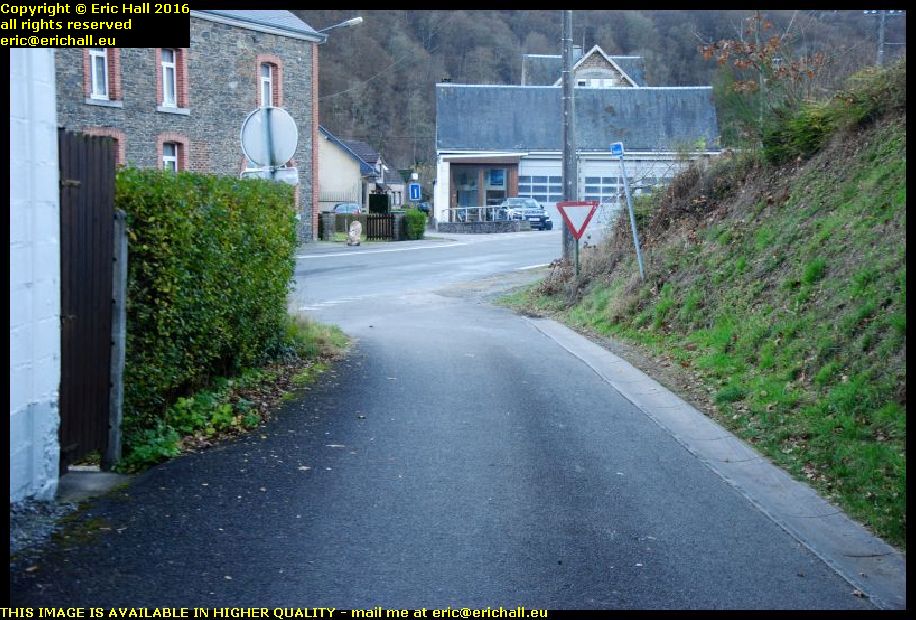
chemin de fer vicinal bohan belgium october octobre 2016But even that pales into insignificance when we talk about the extension of the line.

Just over there is the railway station. The line came to a full stop over there in 1935 but the decision had been taken to extend the line into France. Just down beyond the railway station is the French border and beyond there is the town of Sorendal.

This was the terminus of the Ardennes tacot – the metre-gauge rural railway network of the French, and on 17th October 1938 an extension was built to join them together.

chemin de fer vicinal gare bohan belgium october octobre 2016While we admire the back of the railway station and what might be a signal cabin to control a set of points that might have worked a siding that looks as if it might have gone to the left just there, I’ll tell you an even more tragic story about the line.

And that is that despite only being opened in October 1938, the French closed the border at the outbreak of war and this part of the line didn’t even manage a whole year of working.
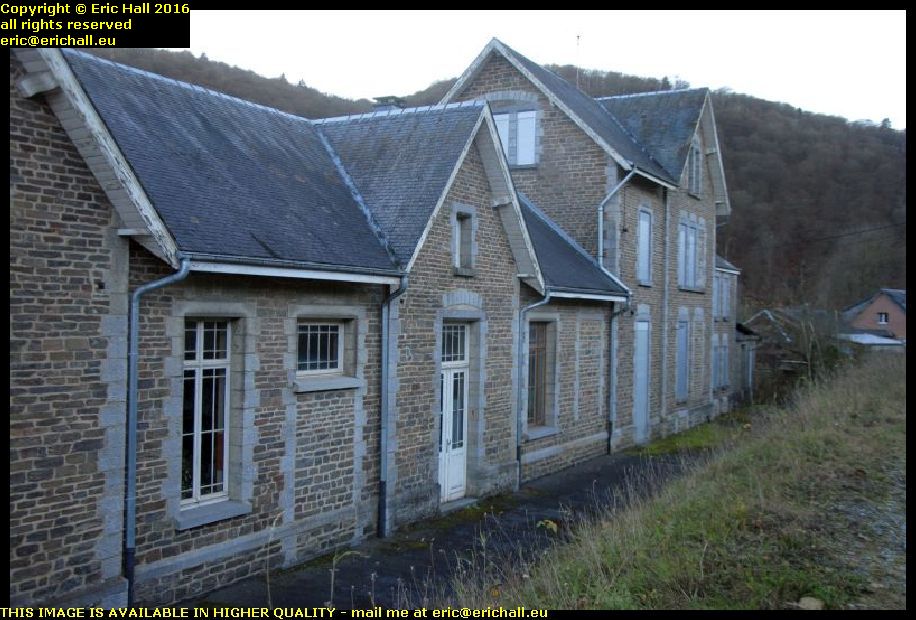

chemin de fer vicinal gare bohan belgium october octobre 2016There wasn’t any doubt in my mind that this was the old railway station. There wasn’t anything carved on the stone or any old sign that might have given me a clue – it just looks exactly as anyone might expect.

Thoroughly magnificent and thoroughly over-the-top, which was a feature of these rural railway stations. No wonder that the lines didn’t last all that long with this kind of expense.
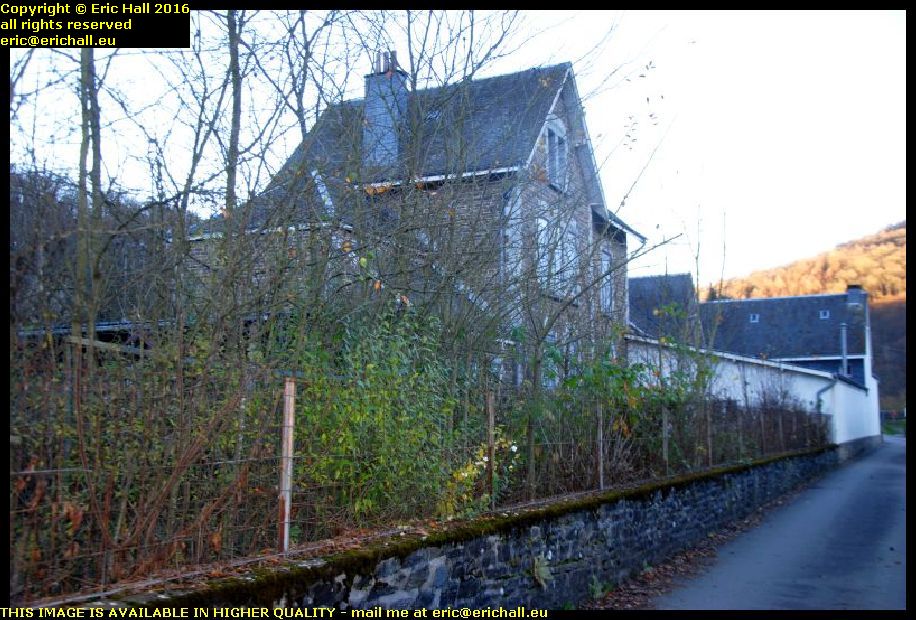
chemin de fer vicinal gare bohan belgium october octobre 2016This is the line-side of the station – the roadway today is the track-bed and there is a pile of waste-land in front of the building that might easily have been the platform.

It looks as if it’s derelict now – all closed down and with damp rising up the stone walls. But it was at one time a garage and then later became a dwelling-house. But there’s no land with it unfortunately, and it’s far too big for me, as well as needing far too much work.
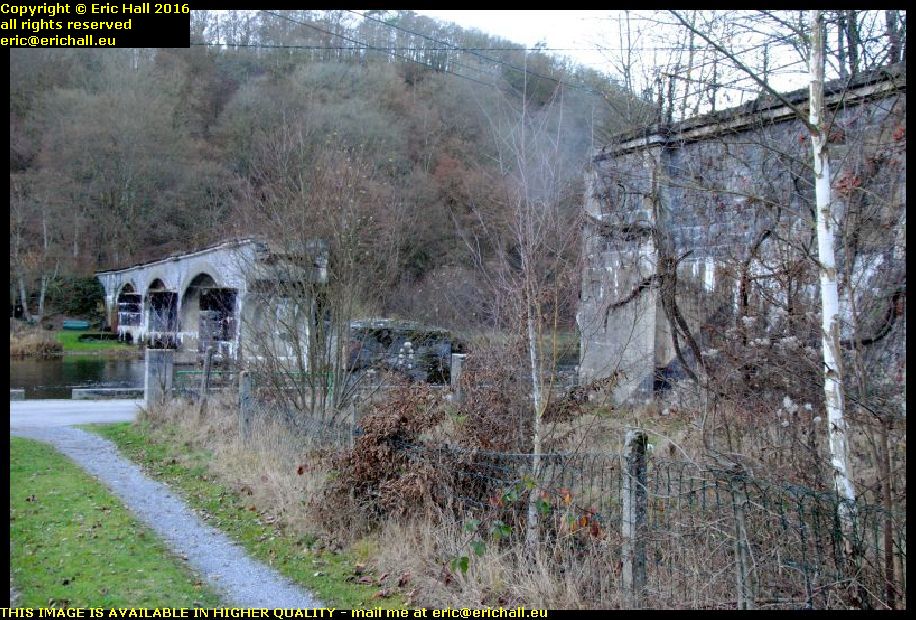
pont cassé chemin defervicinal bohan belgium october octobre 2016But before we leave the Pont Cassé, all 90 metres of it, let me just explain to you why it took until 1935 for the railway line to reach here.

It actually reached Membre in 1913, construction from Gedinne having begun in 1909. But then we had the war of course and afterwards, we had to wait for the Belgian economy to restart. And then we had the decision as to how actually to reach here because it’s a horrendous civil engineering problem.

In the end, they dug a tunnel through the rock, a tunnel of 22O metres in length and which was one of the marvels of Belgian engineering. Unfortunately, the portal at this end is on private property and overgrown so it’s not accessible.

road bridge bohan belgium october octobre 2016While we are on the subject of bridges, this is the road bridge over the Semois.

Of course, it’s not the original. There’s no need for me to tell you what happened to that – and on the same day that the Pont Cassé went up too. They didn’t do things by halves.

We had another temporary type of bridge subsequently, so I was told, but this one here is built of concrete and dates from 1957

maison de marichau bohan belgium october octobre 2016So back in the town again, I went to have a look at one of the oldest houses in the town.

It’s called the Maison de Marichau and it’s said to be one of the very few remaining examples of traditional Ardennais architecture that’s remaining.

Although in dreadful condition, it was classed as an ancient monument in May 1973 and is currently undergoing renovation – and not before time either if you ask me.

bohan belgium october octobre 2016Not a lot seems to be known about the history of Bohan.

It first seems to be mentioned as a fief of Orchimont, where we were the other afternoon, in 1205 when the Lord Of Orchimont, Badouin passed it over to his younger brother Rigaud.

However, you only have to examine its situation here on an easy crossing of the Semois with several valleys feeding in from all points of the compass to consider that it must have been quite an important ford here, and subsequently a settlement, for hundreds of years prior to that.
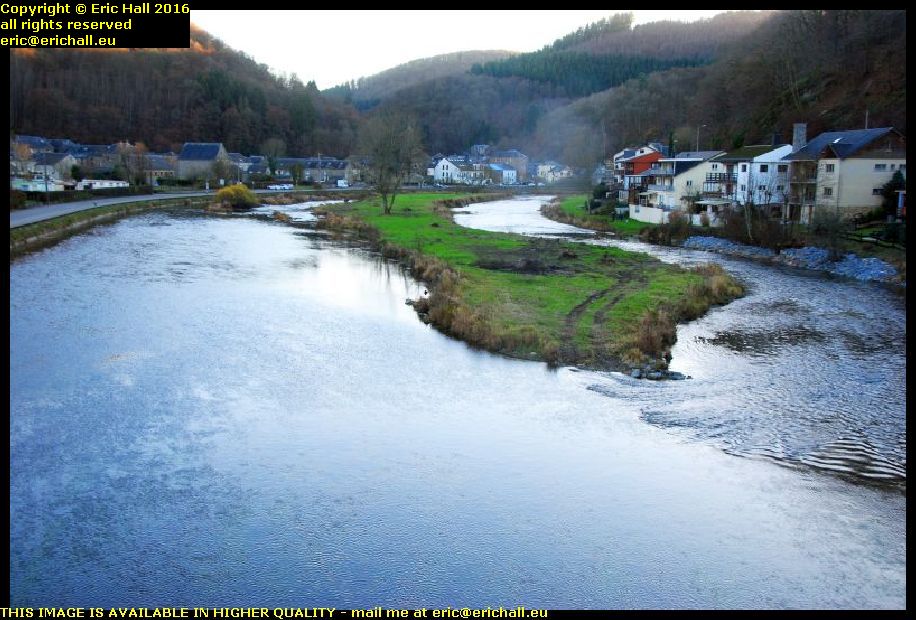
river semois bohan belgium october octobre 2016
The river here by the way looks as if it has all the air of a natural border or frontier, and that was indeed the case in the early Middle Ages.

Long before the emergence of national states here in north-western Europe, it was the church, with its various bishoprics, that divided up the country amongst themselves, and when we were in Bouillon the other day we noted that the Bishops of Liège managed to hang on to their independent provinces until as late as 1795.

river semois bohan belgium october octobre 2016
But the River Semois was the frontier between the Bishops of Liege and the Bishop of Reims. The southern side of the river was part of the Bishopric of Reims and in 1190 came under the control of the Abbey Church of Mézières, where it surprisingly stayed until 1802 when it passed into the hands of the Bishops of Namur.

All of this makes me so surprised to have seen nothing mentioned whatever about a fortress. Obviously the Lord of the Manor would have to live somewhere impressive and in view of the town’s strategic importance right on some kind of border I would have expected the town to have been fortified and some kind of fortress built.

river semois bohan belgium october octobre 2016
In fact we are told that by 1287 it had become the seat of a feudal nobility and villages on both sides of the river depended upon it. But if there had been fortifications and a fortress here, mention of them has escaped me.

Bohan is next in the news in 1559 when the territory is willed to the two daughters of Gerlache de Bohan. And in 1605 it passes into the hands of one Jan Baptiste van den Bosch. He’s of the family “du Bois de Fiennes” and Lord of Drogenbos in the Province of Brabant, and it stays more-or-less in the hands of his family until maybe 200 or so years ago.

river semois bohan belgium october octobre 2016
And this is probably the reason why it’s part of Belgium and not, as you might expect, part of France, even though the Semois would make a wonderful natural boundary.

I said “more-or-less” just now because we all know that this area is the “cockpit of Europe”, with marauding armies passing back and forth through here continually even as late as 1944.

We’ve seen how the French went on the rampage all around here in 1635, recaptured by the Spanish in 1652, the French again in 1657 and finally back to the Spanish by the Treaty of Rijswijk in 1697. And then we had the Wars of the Spanish Succession, the Wars of the Austrian Succession, the Napoleonic Wars and so on.
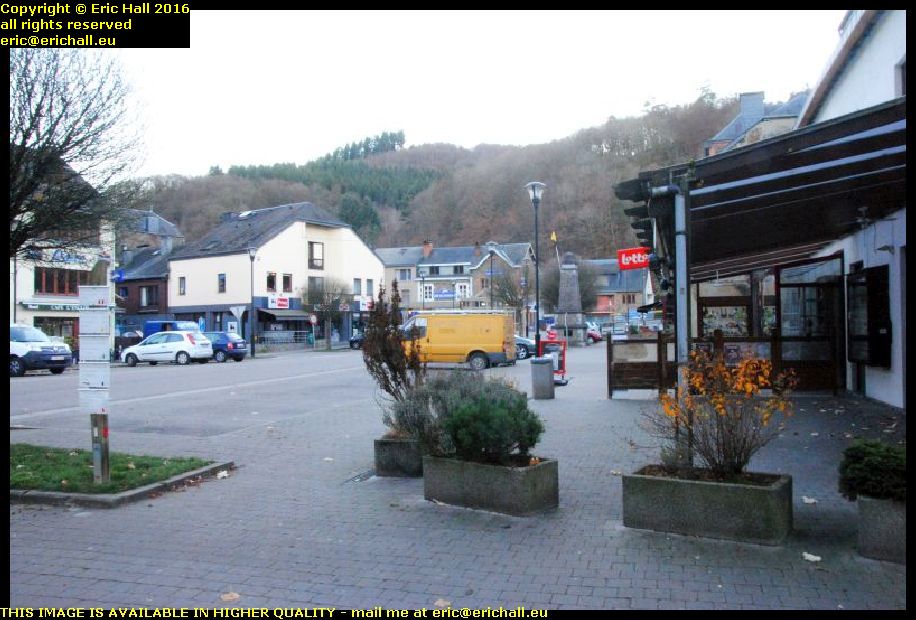
river semois bohan belgium october octobre 2016
But by 1830 and Belgian independence, things had settled down and there were 130 houses counted here. Forestry products were important, as was agriculture, especially as the area seems to have a microclimate that makes it a couple of degrees warmer than one would expect here. There are excellent alluvial soils due to regular periodic flooding of the river and it’s sheltered from the winds.

There was also quite a substantial cottage industry here, making nails.

tobacco drying shed river semois bohan belgium october octobre 2016But surprisingly, 100 or so years ago, this area was quite famous for tobacco growing and all around us are open barn-like buildings that were actually the drying sheds for the leaves.

It seems that in 1876 someone brought some tobacco plants back from Kentucky and to everyone’s surprise, they flourished here and grew like wildfire. But all of that has been abandoned now – not that I would know a tobacco plant if I were to see one.

eglise st leger church bohan belgium october octobre 2016As for the church, this was built in 1760 and seems to be dedicated to St Leger. Its construction was financed one-third by the commune, one-third by the Lord of the Manor and one-third by the Monks of the Abbey of Laval Dieu in Monthermé.

It’s certainly not the first church on this site. There’s a reference in a will of 1235 in which a “Clarisse de Gedinne” leaves a sum of money for the “repair” of the church at Bohan, and a ducument of 1190 seems to imply a church here too. We don’t know what that one looks like, or why it was replaced.

This church is built of stone brought from a quarry at Don-le-Mesnil, near Charleville-Mézières.

Its tower is 30 metres high and formerly contained two bells. The larger one, cast in 1860, was taken away by the Germans in 1943 to be melted down. It was replaced in 1949 and a third bell was added in that year too. The second bell is apparently called Marie and was cast in 1839 and repaired in 1909.
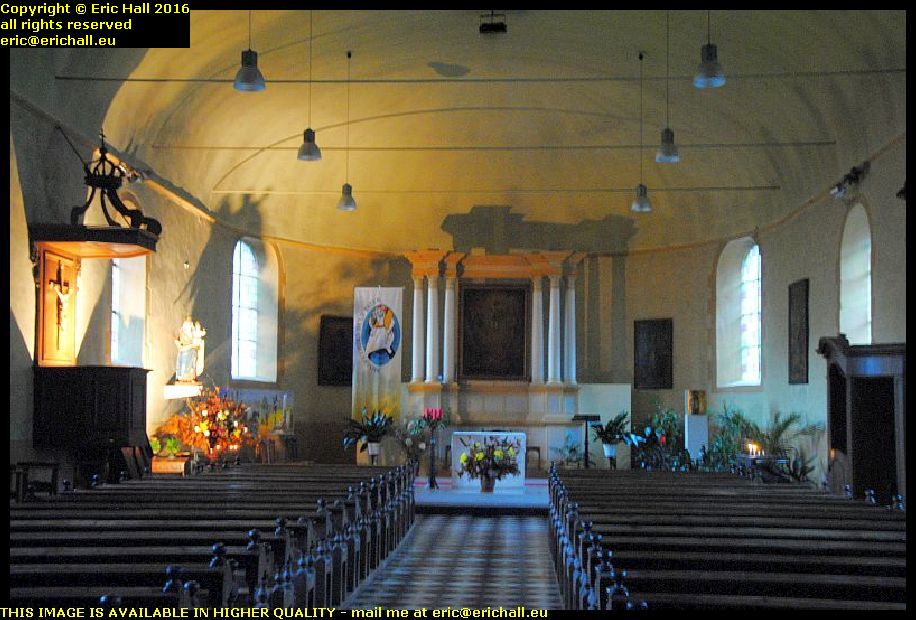
eglise st leger church bohan belgium october octobre 2016The interior is quite basic. We have the typical paintings of the “Chemin de la Croix” which date apparently from the very early 20th Century and the painter is unkown. There’s the principal altars and two side altars are also present, one dedicated to Mary and the other to Joseph.

There are several statues too, including ones of St Antony of Padua, St. Theresa and St Hubert, and several paintings that are signed “Renon Letellier de Charleville, 1827”, as well as a painting of Mary that seems to be older than that.
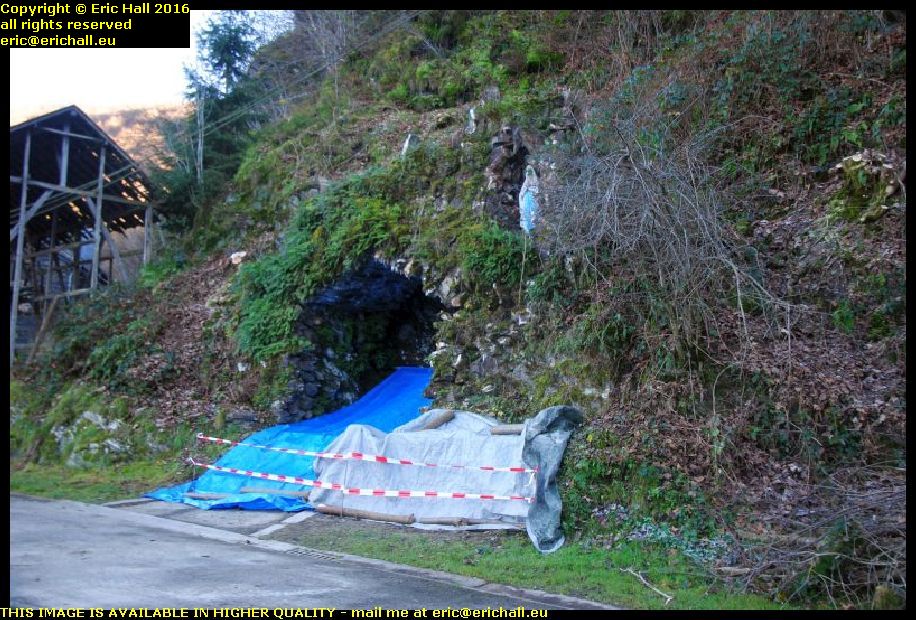
calvaire bohan belgium october octobre 2016As well as the church, there are a couple of other places of religious significance in the town.

This is a calvaire, a calvary, and seems to be dedicated to Mary as far as I can tell. I think that that’s a statue of her over there in her grotto. It must be some kind of spring too because I could see water cascading out under the road opposite this spot and discharging into the river.

I wonder if that is what is covered up by the tarpaulin.

And this does remind me of the story that I heard about the Quebecois painter who was asked to paint a picture of the Calvary. He came back with a drawing of John Wayne and several United States troopers on their horses.

As for the wooden construction on the left of the photo, I wonder if that’s an old tobacco-drying shed.

marriage stone bohan belgium october octobre 2016Here by the side of the river we have a very peculiar couple of stones. They are called the “Marriage Stones” because some kind of weird ritual is performed here by newly-weds after the church service.

The purpose of this ritual is apparently to symbolise the difficulties that married couples face during their life together. And I suppose that seeing as this is Belgium, the greatest difficulty that they might encounter is to deal with this ritual in the pouring rain.

hotel bohan belgium october octobre 2016There’s a hotel over there, the white building down at the end of the road. And I missed out on an opportunity there because it advertises long stays with breakfast for just €30:00 per night, which would have done me just fine.

I decided to make a note of that for future reference, which I duly did. But would you believe that Brain of Britain forgot to make a note of the name of the place.

Ahh well! I suppose that I shall have to carry out some further research.

And now I’m done. I had a coffee and went off home for my butty and another early night.

After all, I’m off in the morning.

You can stay here and read all of this – all … errr … 2554 words of it.

Saturday 28th December 2013 – REGULAR READERS OF THIS RUBBISH …

… will recall that ages ago I commented on some bizarre weather conditions that we were experiencing here – to whit the phenomenon that at night we were having beautiful clear skies with millions of stars visible to the naked eye, and then as dawn broke, we would immediately cloud over and have buckets of rain all day until late evening, when the skies would miraculously clear again.

This is exactly the weather that we have been experiencing here over the last few days, and each morning I’ve been woken up by a torrential downpour despite the beauty of the night.

This morning it was 05:30 that we had the downpour but I wasn’t going to be fooled by that. i’m still on holiday so I stayed in bed until 10:30 and I don’t care.

I worked on the radio programme for a while and then just after midday I actually left the premises! Yes, shopping in St Eloy where I spent almost nothing at all, and quite right too seeing as I didn’t need much and there was nothing on sale to tempt me.

On the way back home I went via Cécile’s to see if she had received any post, but her box was empty and her house hadn’t been affected by the violent winds that we’ve had. But on the way back, I noticed that the abandoned railway line from Les Racauds up to the tunnel at Les Bouchards seemed to be clear of weeds. That’s one part of the old Paris-Orleans railway line that I want to walk so it seems that I’ll be doing that sooner rather than later, once the weather dries out.

I did another radio programme this afternoon and then Marianne phoned me up for a very long chat. It seems that there’s a disturbing development with regard to the situation at Bill’s old place at Les Crouzons, and all hands will be required at the pumps for a couple of days as a matter of urgency. It’s to my advantage to be there, but that’s another few days away from here that I can well do without.

But I took the opportunity of mentioning the old railway line to Marianne and she’s going to draw up a plan of action for the next three months. We have a lot to do and we need to make the most of any decent weather than we might get. So far, apart from those few days in November, winter has been holding off. I’ve a feeling that when it dfinally does come, it will come in spades.

Friday 10th August 2012 – I DIDN’T DO …

… anything like as much as I wanted to do today, which was something of a disappointment.

We started off on the wrong foot when I telephoned Nikon to see how they were progressing with the repairs to the Nikon D5000. Seems that they didn’t receive the authority to do the work, so they say, despite my having posting it off a month ago.

So I now have to do all of that again.

GRRRRRRRRR!

So after a couple of hours on the computer I went outside to start to cut the wood to make the window frames but although I managed to cut all of the pieces, that was about that for the phone rang.

Marianne was in need of a lift to St Hilaire to plan her walk for 10 days time.

st hilaire puy de dome france St Hilaire is another village a little like Chateau-sur-Cher in that the church is situated on a mound on a promontory with an excellent view of the surrounding area.

And while the history of Chateau-sur-Cher is quite well-known, almost nothing is known of the history of St Hilaire.

Nevertheless, the mound and the strategic position are very suggestive of a Dark-Age fortress of some kind.

It’s a well-known phenomenon in many similar villages that the church on the mound started off as a tiny chapel somewhere within the fortress and the church expanded as the fortress declined.

Marianne didn’t have much information on the village but we went for a good prowl around.

st hilaire puy de dome franceIn the end, we had come up with tons of interesting stuff that we had discovered, as well as having a few interesting chats with the locals.

One of the aforementioned was not in the least pleased to see a couple of people wandering around looking at his house, and he freely gave vent to his displeasure.

However, not all of the locals were so ungracious.

At another house we were invited in for a drink and we had a guided tour of the old lady’s biscuit tin with all the photos, press cuttings and the like, including a newspaper from 1921 with the obituary of her grandfather.

He had a considerable claim to fame, being one of just seven survivors of the legendary Charge de Reichshoffen in 1870.

And so going from knowing very little to knowing quite a lot was the work of just an hour and a half.

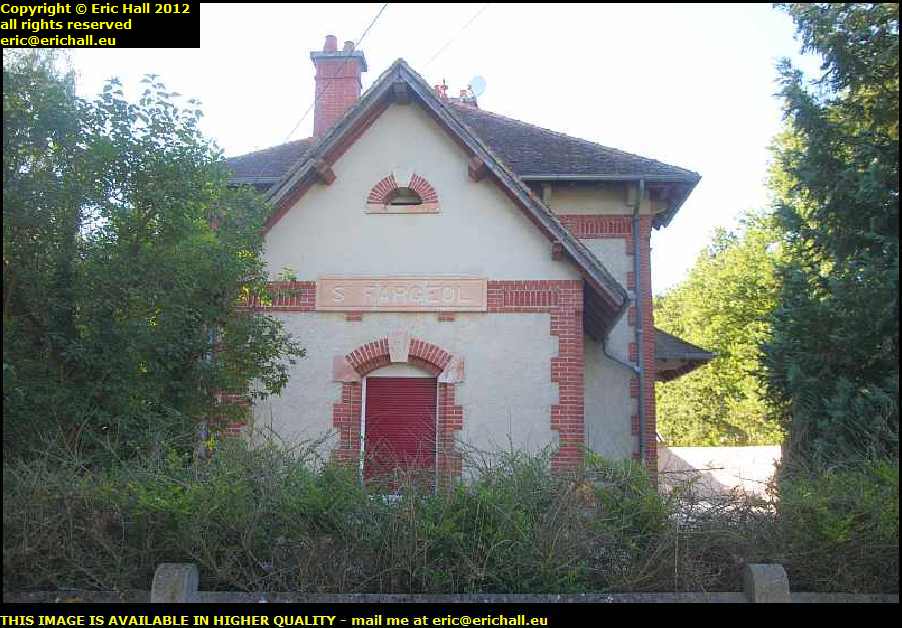
paris orleans railway montlucon gouttieres st fargeol railway station allier franceOur day wasn’t over yet.

Regular readers of this rubbish will recall that I have been talking … "quite considerably" – ed … about the ephemeral Montlucon-Pionsat-Gouttières railway line.

A few weeks ago on one of my ramblings I’d stumbled across the St Fargeol railway station and as Marianne didn’t know where it was, we went the long way round on the way home in order to visit it.

paris orleans railway montlucon gouttieres st fargeol railway station allier franceI’m not sure why they called it “St Fargeol” because the station is so far away from the village – a good couple of kilometres if you ask me.

That kind of thing wasn’t important in the 1850s and 1860s because there was no other choice – if you wanted to travel, rail was the only sensible option and so you had no option other than to walk – or catch a hay-ride – to the nearest railway station wherever it might be.

But by the time that this line was opened in the 1930s, road transport was well in the ascendency and the death-knell was already sounding for many rural railway lines.

paris orleans railway montlucon gouttieres st fargeol railway station allier franceNot even railway lines and railway stations in built-up urban areas could withstand the pressure from other forms of road-based passenger transport.

These little rural railway lines stood no chance whatever and were soon all swept away. The tacots – the little narrow-gauge railway lines that infested the French rural countryside – disappeared in the blinklng of an eye and the rural branch-lines quickly followed.

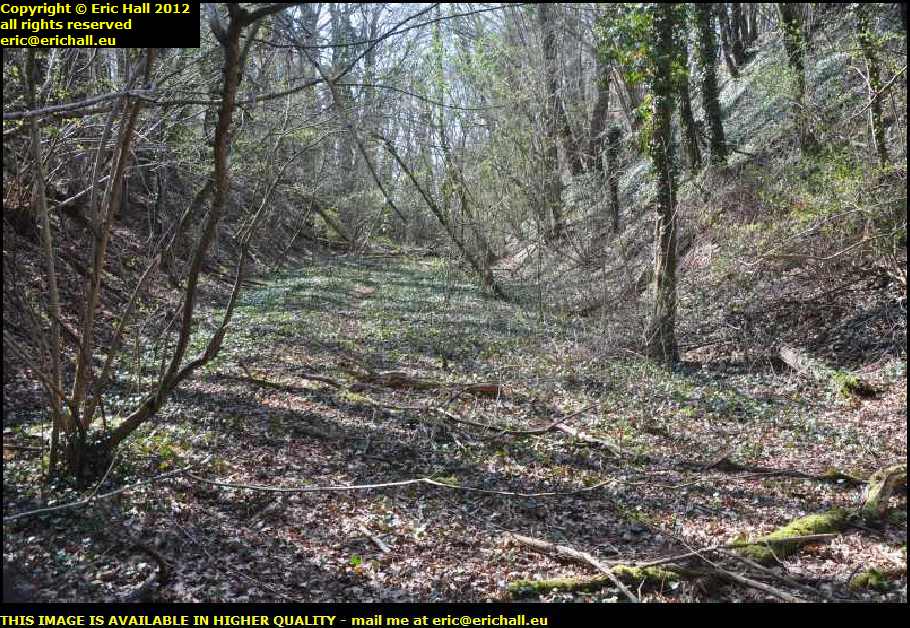
All you can see now – if you look long and hard – are the indentations in the soil where the railway used to pass.

So abandoning another good rant … "for the moment " – ed … tomorrow is Saturday and I’ll be off to Commentry shopping, I hope.

But I’m going to have to do better than this for working if I’m going to treat myself to the little autumn break that I promised myself a little later on this year.

Wednesday 8th August 2012 – I HOPE THAT YOU ALL …

… liked the photos of the wall as it stands right now – the ones that I went back and posted for yesterday.

la cellette puy de dome franceAnyway, here’s another photo for today, especially for Marianne in Brussels who has passed comment to the effect that I seem to spend most of my time in rural France photographing churches.

This one is the church of La Cellette, for La Cellette is the destination of this week’s Wednesday walk around the communes of the Canton of Pionsat with our friend Marianne.

And didn’t we have a nice day for it too?

la cellette puy de dome franceThis is actually the third church to have been built in La Cellette and dates from 1883.

The previous one was far too small apparently, and because of its constrained situation and site, (and on our travels around, we’ve seen quite a few churches in the Auvergne that have been in constrained situations and sites) it was not possible to enlarge or alter it.

Consequently it was demolished.

paris orleans railway viaduct la cellette puy de dome franceThe claim to fame of the village lies actually a kilometre or so outside, down a dirt track.

And this is the viaduct of the Paris-Orleans railway on its branch Montlucon-Pionsat-Gouttières.

I’ve talked … "at great length" – ed … about this railway line in the past – how it was designated as “a line of national importance” long before the turn of the 20th Century.

But it was dogged by delay after delay, construction held up by World War I, and when it was finally, after many vicissitudes, opened in 1932 its utility had passed with the collapse of the coal-mining projects in the Gouttieres region.

railway sleepers la cellette puy de dome franceIt was closed “as a war economy measure” in 1939 after just 7 years of operation and the section south of Pionsat was never reopened.

There are still a few traces of the former track if you hunt around long enough to find them though.

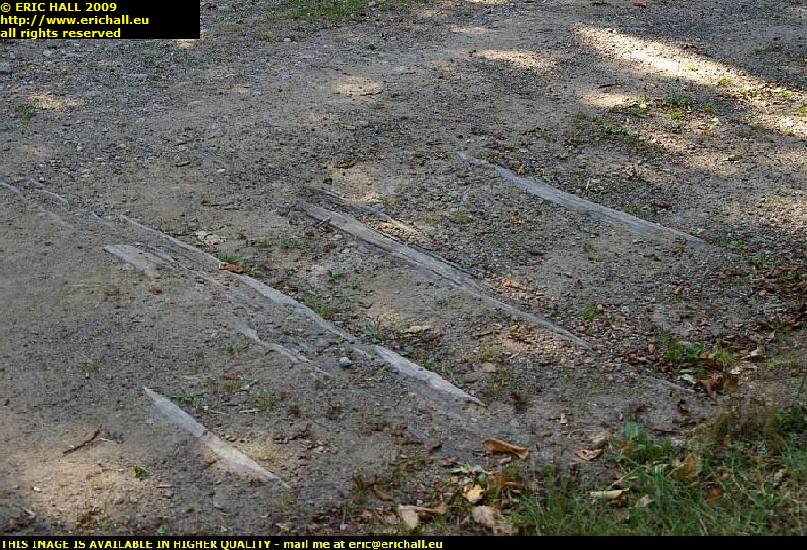
At what was once a level crossing for a country lane, there are still the railway sleepers embedded on the roadway. This actually is a good indication of how much maintenance has been undertaken on the lane since the closure of the line.

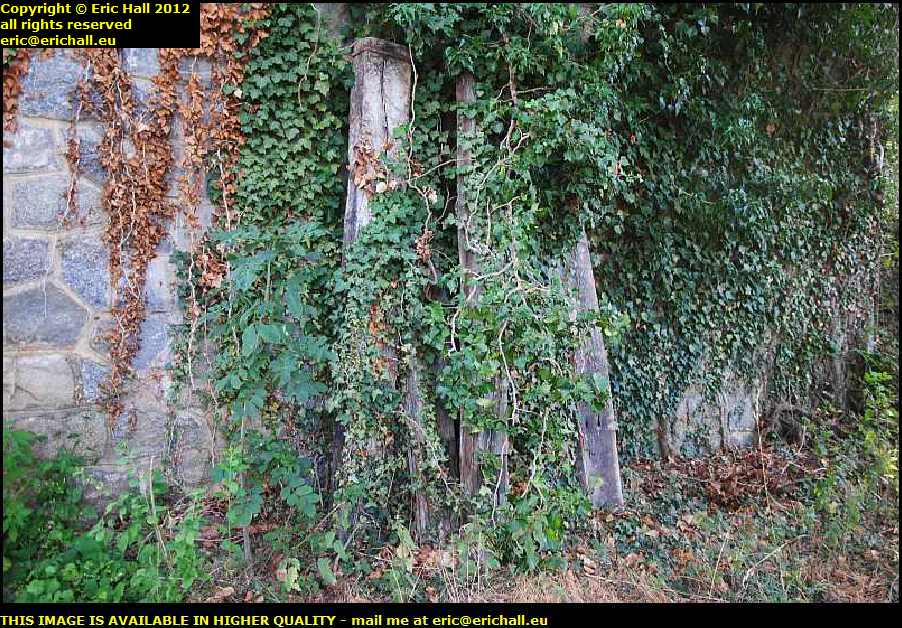
la cellette puy de dome franceWhile you admire yet more railway sleepers, propped up against the viaduct where they have stood for probably 50 years or more ,let me tell you about the biggest irony of all.

And that is the fact that that the Paris-Orleans Railway Company, which built the railway line, was GIVEN the land free of charge by the commune, but under certain conditions.

The stipulation was that the railway company had to build a railway station for the village – it had been dithering about whether it would or not and the gift of the land was meant to sway the decision.

And so the railway company took the land, built the line – and then dropped all plans for the station, which was never built.

la cellette puy de dome franceBut the viaduct still remains, and it’s well-worth the effort to clamber up to the top because the view to the north is stunning

In the foreground we have the village of La Cellette and poking out above the trees to the right of centre is the spire of the church that we have just visited.

Away in centre-left is the spire of the church of the town of Pionsat, and disappearing into ths simmering heat-haze are the rolling hills that lead on up to Marcillat-en-Combraille

There were only a few of us today, which was a pity, but we had a lovely time wandering around the countryside, and then we all repaired to the village café – one of the only two village cafés still surviving in the whole of the Pionsat canton – for a nice cold drink.

And this is where the excitement begins.

A woman who lives in an old house in the village is in charge of the church and we went to thank her for opening it for us. I know her husband – he’s something to do with the FC Pionsat St Hilaire football club – and so we all ended up having quite a lengthy chat.

Now I mentioned earlier that the present church is the third, and I told you a little about the second. And so what about the first one?

We know that it existed because it’s mentioned in a Papal Bull of 1118, being described as a tiny chapel. While its location is the subject of … errr … much debate, one particular theory has been adopted by those who might know a thing or two about it.

Accordingly, Marianne has been trying to visit the cellar of this particular house for half a century.

Anyway, to cut a long story short … "hooray" – ed … the owner of this house, by now in an expansive mood, gave us a guided tour of the cellar on condition that we don’t photograph it and we don’t describe its location.

So there we were – perfect primitive vaulted ceiling, pre-medieval beaten earth floor, a bricked-up external door that wasn’t much more than 5 feet tall.

Marianne was in heaven of course, and I was well-impressed. We had probably at least 1200 years at least underneath our feet.

It really was the climax of an excellent day.

Sunday 8th April 2012 – Well, apart from the fact …

… that I have a splitting headache and I’ll be off to bed in an instant, I had another afternoon out. If I’m not careful I’ll be making a habit of it.

But with it being Easter I had a day off and did absolutely nothing at all. Highlight was watching a DVD of a Nosby Stills and Crash concert that has been hanging around here for years. I’m going to have to find a good program on the internet to rip the sound-track to use on the radio programme.

But before anyone says anything, because it has been mentioned in the past, there are no issues with doing this – ripping sound tracks and the like – because with it being a bona fide radio station (in fact, all of those for whom we contract are) they pay a licence to the Performing Rights Society or whatever the French equivalent of that, and so whatever they broadcast (which includes our programmes and the contents thereof) is covered. Just so that you know.

In fact it rather reminds me of the time back in the 1980s when I was driving a tour bus for Shearings Holidays and showing a copied video-cassette of Carry On Camping to the passengers. This passenger came up to me and said “I’m going to report you”
“Why?” I asked
“Isn’t that a pirated video you are showing?”
“Well, as a matter of fact it is”
“Well I’m going to prosecute you!”
“No you aren’t” I told him
“Why not?”
“Because what you do is that you report me to the copyright holder and the copyright holder sues the owner of the coach – as they have the vicarious liability of the actions of their employees”
“So who owns the copyright of the ‘Carry-on’ films?” asked my passenger
“The Rank Organisation” I replied
“And who owns this coach?”
“The Rank Organisation”
Mr know-it-all then went and sat back down again, suitably deflated.

I hate doing this kind of thing to people, but sometimes, it does have to be said that anyone who sticks his head above the parapet deserves to catch all of the flak.
maison ducros maymat rue de la poste pionsat puy de dome franceThis afternoon, Marianne rang me up. If you remember from last year, the town of Pionsat has bought a derelict art-deco maison de maître in the town with the aim of demolishing it and building a new salle de fêtes. We went round to have a good look at it at the time.

It seems that they have now started to dismantle it and Marianne noticed that the rear door had gone so that people could now enter into it without the key to have a good look around. Was I doing anything?

la cellette paris orleans railway viaduct maison ducros maymat rue de la poste pionsat puy de dome franceNeedless to say, I don’t need to be asked twice, so off I shot into town and we went for a prowl around.

I took loads more photos to add to the huge stack that I took the last time I was here, including this splendid one of the village of La Cellette right across the valley with the magnificent La Cellette viaduct on the long-abandoned Montlucon-Gouttieres branch of the Paris-Orleans railway in the background

marianne contet old abandoned mill race pionsat puy de dome franceAfter our little clandestine wandering we then went for a wander around the outskirts of the town looking for the traces of the ditch that brought the water from the river down to the old water-mill as the owners of the mill want to restart the water wheel.

After much protracted searching we managed to trace the entire track all the way back to the river. It’s been fairly well damaged and needs quite some expense to bring it back to a decent state.

As well as that, Marianne also gave me a pile of press cuttings from the local paper – all stuff that I had contributed over the last year or so. I keep a file of that kind of stuff – you never know when it might come in handy.

Sunday 1st April 2012 – Well, I dunno …

… what happened to the footy this afternoon at Pionsat’s ground. After something of a considerable thrash (and I mean “thrash” as well) through the delightful Combrailles countryside, I arrive at the Pionsat ground at 15:10 – 10 minutes after kick-off -to find the place all locked up and deserted.

Someone has been playing an April Fool’s Joke on me, I reckon.

st priest des champs fc pionsat st hilaire fcpsh puy de dome football league franceSo why the thrash through the countryside? Well, that was because at 13:00 Pionsat’s 1st XI was playing at St Priest and I’d gone down there first.

This was a match that swung like a pendulum – Pionsat were all over St Priest for the first half an hour and were 1-0 to the good. Then we had half an hour of St Priest to take the match to 2-1 for them, and finally another 30 minutes of Pionsat with the score ending 3-2 in their favour. And I reckoned on the balance of play that they deserved it.

But there is always a little contention between these two teams and today was no exception. A fair amount of unnecessariness, including an excellent left hook from a St Priest defender that put Gaëtan on his back for a full five minutes (and for which a card of the colour … errrr … yellow was produced). It must be me, I think. I seem to be the only one making any kind of remark about things like this.

paris orleans abandoned railway line montlucon gouttieres pionsat puy de dome franceAnyway, back at Pionsat, I went round to see if Marianne was in and we ended up going for a walk along the old railway line. 

It looks quite good in that photo just here, but it isn’t. Along much of its length we could have done with a machete or two, and something to help us with the barbed wire would have come in useful too. And we did find (quite by accident) a place where there was an astonishing view right across the valley over to La Cellette in the distance with the viaduct in the background.

And if the view was so good, how come it isn’t reproduced here? Well that’s because bird-brain of Britain here ran out of SIM card, so after all of these exertions we’ll have to go back and do most of it again.

One thing I forgot to mention yesterday. That is that going out in the early afternoon I happened to glance out of the window and I noticed nothing special about the trees. Going out to the football several hours later I happened to glance out of the window again and they were all covered in blossom. That’s how quickly spring has arrived here – all of five hours. It really is astonishing.

Saturday 7th May 2011 – Well, I’ve been a busy little bee today.

Yes, and I don’t normally do all that much on a Saturday either.

We started off at this meeting at the Maison Ducros-Maymat that is threatened with demolition. The mayor turned up to meet us as promised, but only 50 minutes late. He told us about the reasons for its demolition, which was sound logic as far as it went, but once we began to push back the barriers, his logic became more and more shaky. What was so funny about this was that one of my arguments is that all of the civic and social functions of the town ought to be regrouped around a focal point, like the town square. Dispersing them is really dispersing the soul of the town. Just at that moment two people, clearly out of breath, came up to us and asked “where is this restaurant – the Queue de Milan?” And so we explained that it was another 500 metres outside the town opposite the old railway station. It rather proved my point.

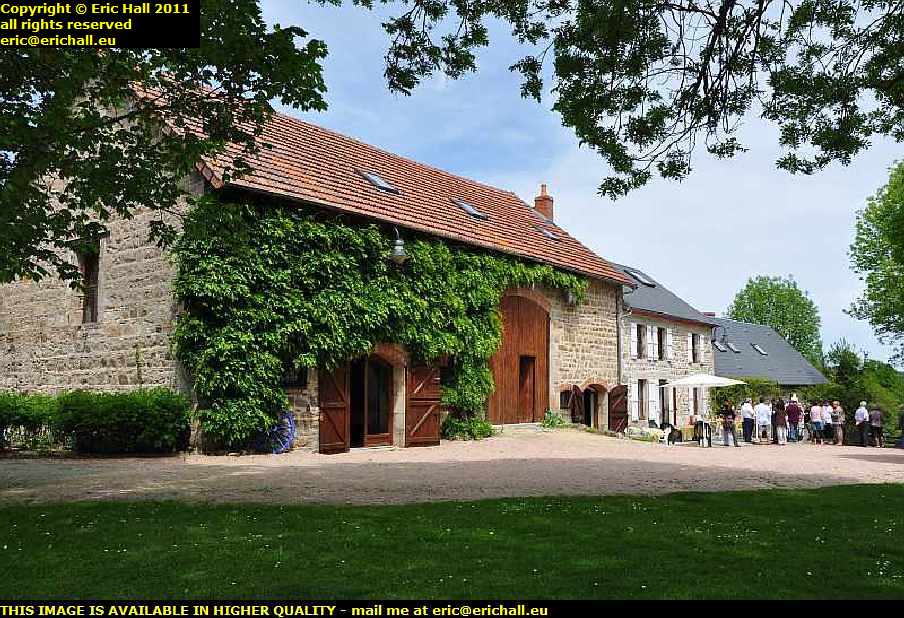
gite communale st julien la geneste puy de dome franceAfter that I headed out to St Julien la Geneste to the formal opening of this Gite. It was an old house that the Commune bought and has modernised into holiday accommodation.

It’s been excellently done, that’s for sure. And I was talking to the manager of the place and he was telling me that they need a web-site doing. So I’ll give him a quote and see what happens.

eglise de notre dame des bles gouttieres puy de dome franceOn the way back, Marianne and I went for a good drive around.

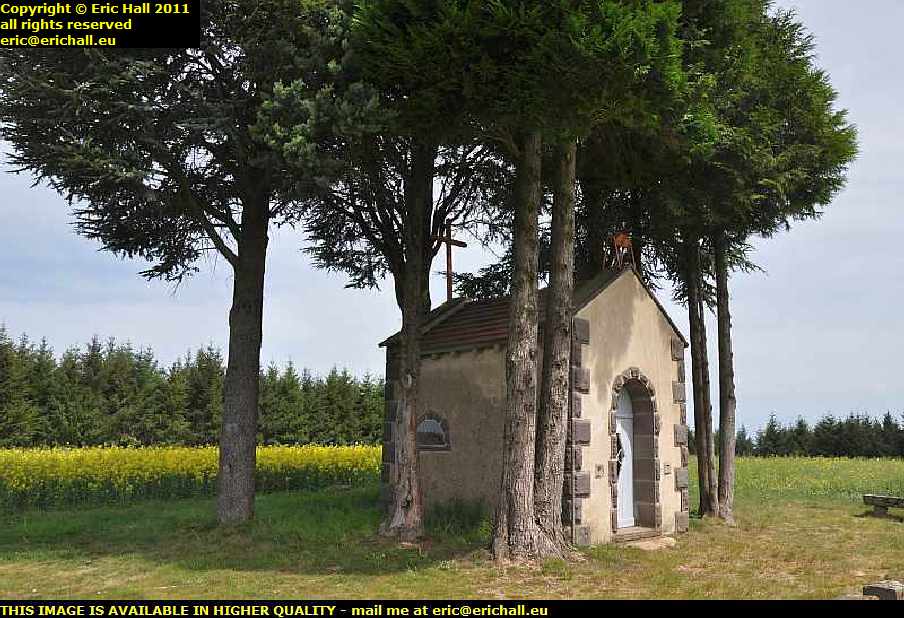
The first place that we visited was a little chapel situated on one of the highest points in the area. It’s the Eglise de Notre Dame des Blés – the Church of Our Lady of the Meadows and it was built as recently as 1959 as a site of pilgrimage.

There is, apparently a religious procession up here once a year, although I’ve not been able to tag along quite yet – I’ll add it onto my list of things to do.

view puy de sancy eglise de notre dame des bles gouttieres puy de dome franceBut never mind the chapel for a moment – just look at the view!

It’s a shame that the weather wasn’t clearer because had there not been all of this haze the view right across to the Puy de Sancy would have been stunning. It’s not too bad as it is.

This is certainly one of the most spectacular viewpoints in the whole area without a doubt and I’ll have to come back another time.

abandoned railway line paris orleans montlucon gouttieres les bouchards puy de dome franceYou’ll know that I have an interest in abandoned railway lines and I’ve featured on these pages quite a bit about the abandoned Paris-Orleans railway extension between Montlucon and Gouttieres that opened as late as 1932 and closed as early as 1939.

We’d walked up to the Tunnel des Bouchards from the Pionsat direction a while ago, and so today we went to try to find our way up to the tunnel from the other direction.

That wasn’t at all possible given the time and the conditions. We need much more time to do this and to come back in February or March when there is no vegetation.

Back home again, Marianne and I had an informal meeting to plan our next line of attack about the Maison Ducros, and then went out to one of the other members of the Pionsat Patrimoine who was having internet issues – for which I diagnosed a new cable (which now works).

I managed 10 minutes to do a quick bit of shopping at the Intermarche and then it was off to Marcillat to watch their 1st XI take on Breuil, 2nd in the division. And much to my surprise, and that of everyone else in the crowd, Marcillat wom 3-1 even though they were under the cosh for much of the game. Mind you, this was a game at level 6 of the French pyramid – 1 level higher than Pionsat (although in a different part of the pyramid) but believe me, Pionsat’s 1st XI could have played both these teams at the same time and won the match with some to spare. The level of football in the Allier is way below that in the Puy-de-Dome.

Tomorrow, still no footy at Pionsat (what a waste of a weekend this is!) but according to Franck, the Pionsat trainer who was at the match this evening, there’s a match at St Marcel, about 5 miles from Pionsat (but in the Allier), kick-off at 15:00. I don’t recall ever having been to St Marcel 😉

Saturday 23rd April 2011 – I haven’t done much more today either…

tacot ligne economique gare durdat larequille puy de dome france… although I have made an important discovery. Acting on information received (from Henri at Radio Tartasse as it happens) I managed to track down the railway station for the ligne economique, otherwise known as the tacot, at Durdat – Larequille about eight or so miles from where I live.

And here it is, with grateful thanks to the owner who gave me permission to photograph it.

For those of you who haven’t been following my blog for all that long, you probably won’t know that back at the turn of the 20th Century the Département of the Allier was honeycombed with railway tracks belong to the Lignes Economiques, a system of metre-gauge railways that ran all over the place.

I say that they “ran all over the place” and that isn’t an exaggeration because they very rarely ran anywhere near the villages that they were supposed to serve and the one here at Durdat is well over a mile from the village. In fact one early commentator described the railway stations as “seeming to have the purpose of just adding decoration to the countryside“. The engines wheezed and coughed and spluttered around the countryside, gaining the nickname Tacot, which is French for an “old banger” or “rattletrap” and by 1950 or so they had been all swept away by road transport.

tacot ligne economique gare durdat larequille puy de dome franceYou can see, if you look carefully, the outline of the railway trackbed just in front of the station building.

The line, which ran from the lime kilns at Marcillat to the steel mill at Commentry, was the first to go – being abandoned in 1932 when the standard gauge line from Montlucon to Gouttieres arrived at Marcillat.

And, ironically, the main line was closed in 1939 due to wartime circumstances and never reopened for passengers, meaning that Marcillat was isolated as far as passengers were concerned long before the rest of the ligne economique system was abandoned.

I’ve found most of the stations and some traces of the line but the station at Durdat-Larequille was always elusive, until Henri told me where it was.


All of this came about because I was in Montlucon shopping today. I’ve stocked up with food and all kinds of things, as well as almost everything to finish the water butts (Brico Depot is hopeless) including the nylon stockings for making my sand filters. Why ever didn’t I think of Noz before?

A swim at Neris on the way back, fit the new tap onto the water butts, and that was me, done. But there I am saying tat Brico Depot is hopeless – here they are after all this time of me harassing them and here they are now stocking BULKHEAD FITTINGS – the hollow threaded tube that you pass through the sides of water tanks. I’ve been nagging them about these for ages and now they finally carry them. This will make my life so much easier.

But in Montlucon I had two interesting encounters. A guy at LIDL stopped me and asked me “is that your van outside?” and so we had a long chat about wind turbines and solar panels and he’s coming to see me next week.

There has been a lot of discussion just recently about advertising and people have different opinions about different things, but for me, having corporate colours and a corporate logo, and having clothes that match the van for the colours and the logo – that seems to work for me.

And then on the Brico Depot car park, Julie and Rob came over for a chat and to tell me that they want me to go over and chat to a friend about solar panels. Having a vehicle that is a distinctive shape, a distinctive size and a distinctive colour – that seems to work too.

People can see me coming a long way off, and at the very least it gives them plenty of time to hide.

Wednesday 1st September2010 – A couple of things have happened today …

… that have been well-worth recording.

Firstly, an event that happens so rarely that a note needs to be made of it so that it can silence my critics, and that is that I was up, washed and breakfasted this morning before the alarm went off. And how often does that happen? It must be my guilty conscience pricking me, or else I wet the bed or something.

Mind you, this back trouble that I have, with it sticking to the sheets, is something of a recent phenomenon. When I lived in Crewe, you know I was quite an early riser. For example, there were 37 magistrates that sat on the bench of the Crewe Petty Sessions and I was up before them on a regular basis.

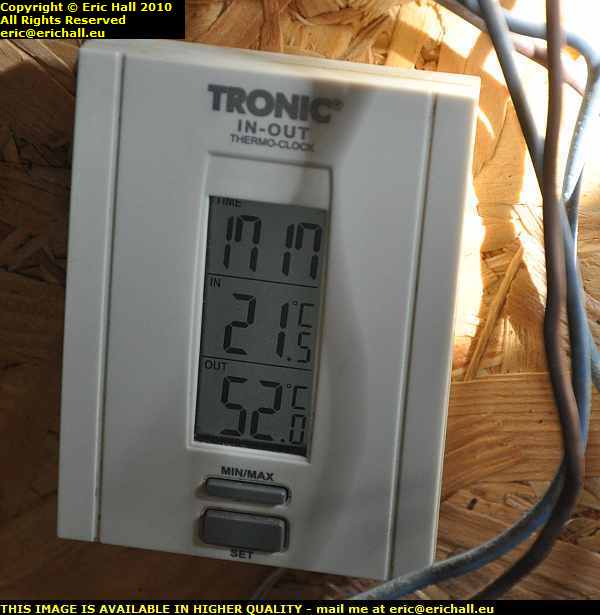
home made immersion heater temperature les guis virlet puy de dome franceSecond thing that happened to day was that the home-made immersion heater that has been ticking along quite nicely, burst into frenzied activity today.

52 degrees it made, with an ambient temperature of  just 21.5. And by the time the water had finished doing its stuff it had reached 53.5. A load of insulation wrapped round that will see that fine, I reckon.

But the sun has gone down from the solar water and it struggled up to 31 degrees, even though it was bright sunshine outside. However a bucket of water out of the small boiler settled that and I had a nice shower this evening. I’d already sampled some of the hot water for a wash and shave as I was going out. I like this boiler!

There were two reasons why I had to look pretty. Firstly I’ve been appointed to this referee’s whatsit. I’ve had my letter today, so it was off to Montlucon to buy some kit. A nice shirt, shorts, socks, whistle and red and yellow cards. What else does a man need?

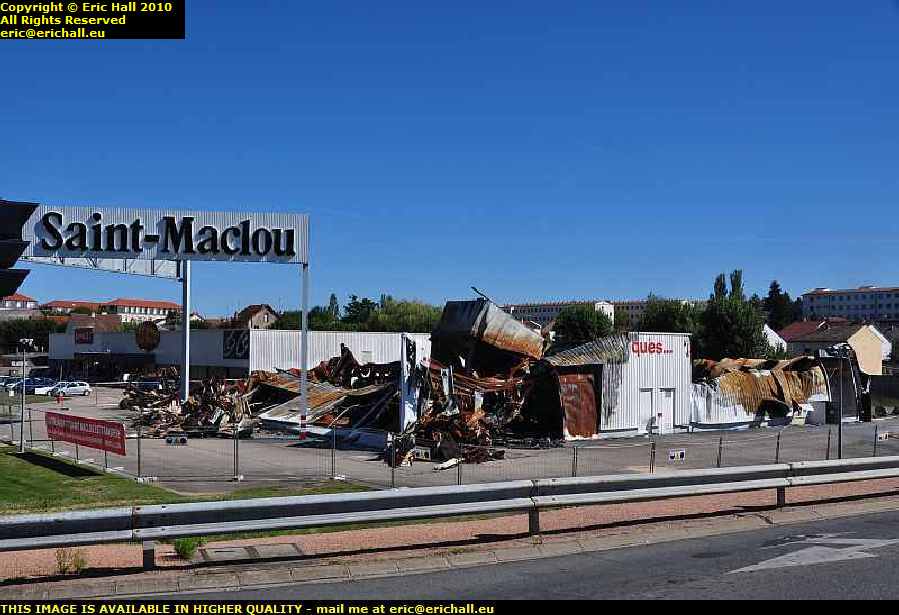
saint maclou burnt down montlucon allier franceThe sports shop where I had to go for my kit is opposite the Auchan and so I have to go past the big traffic lights at the top of the hill. And this was the site that caught my eye this morning.

The big Saint Maclou home decoration place seems to have suffered a major catastrophe since the last time that I passed this way. This is a bit of a mess, isn’t it? I wonder what happened here.

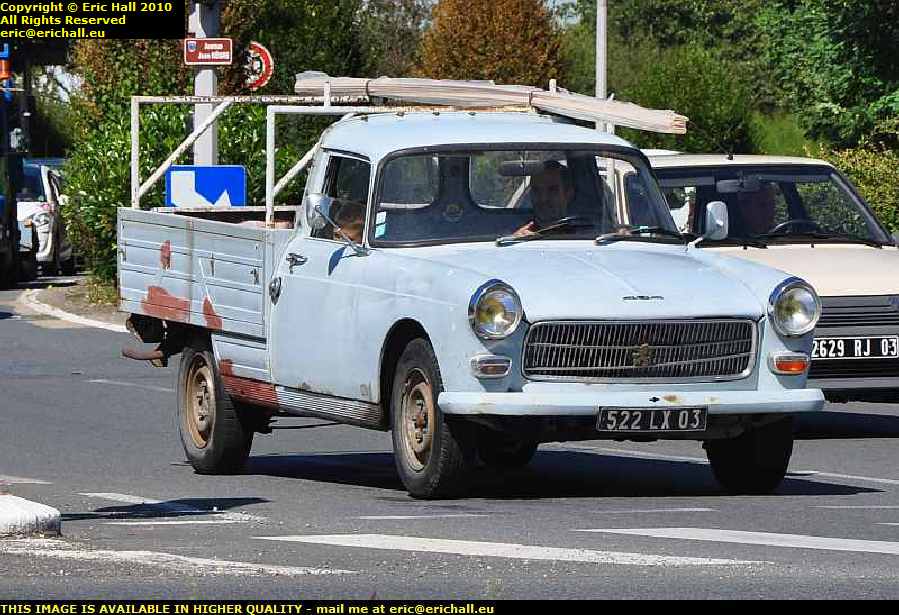
old cars peugeot 404 pickup montlucon allier franceAnd that’s not all that was interesting either. An ancient Peugeot 404 pick-up caught my eye while I was waiting at the traffic lights.

Back 20 years ago you would see thousands of these with their huge canvas tilts on French roads and they were the arch-typical French motor vehicle. Every farmer or rural dweller was the owner of one of these. However, today, you are very lucky if you actually see one. They are a dying breed and that’s so sad.

One thing that I learnt when I was talking to Franck in the Sports Shop is that have to go to Clermont Ferrand on Saturday 11th September for a referees’ induction meeting. It starts at 08:45 – heck, I can’t even normally make my kitchen for then!

But the second reason for going out was that Liz and I had been summoned to Marcillat en Combraille – the offices of Radio Tartasse, a small local radio station that broadcasts to the south of the Allier and the eastern Creuze as far as Gueret. They want to franchise “Radio Anglais” too. Yes our fame is spreading.

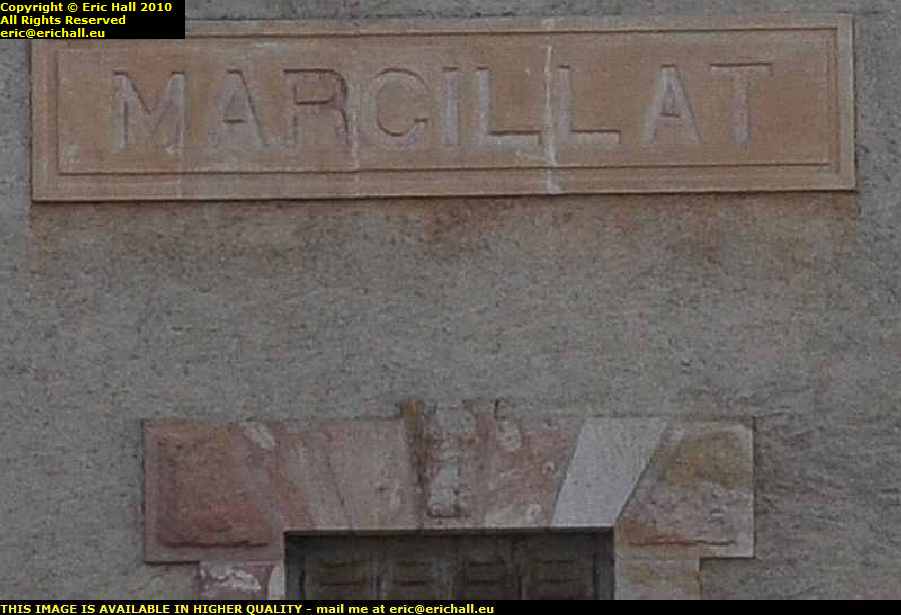
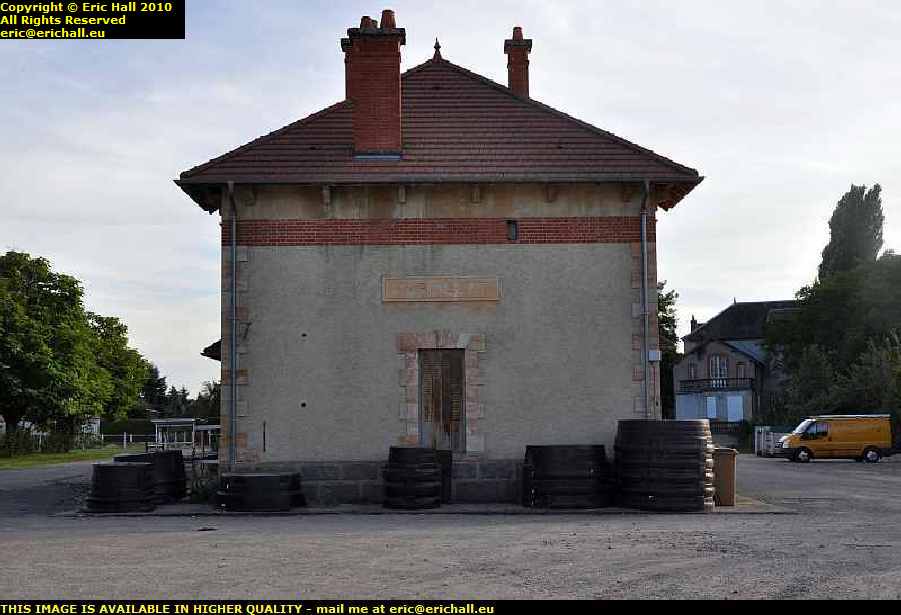
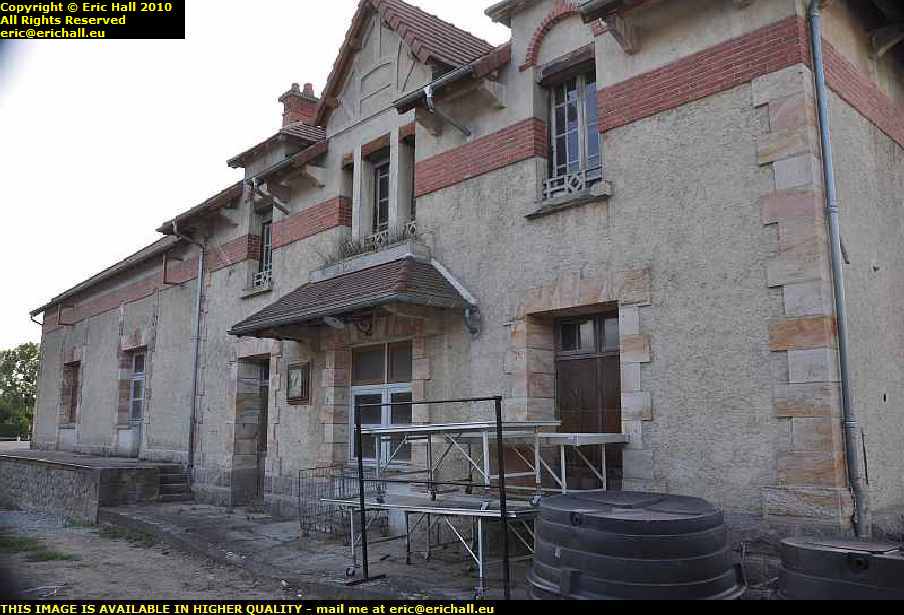
gare de marcillat en combraille railway station paris orleans montlucon gouttieres allier franceAnd after going to a cafe in Marcillat en Combraille, where the waiter forgot to bring us out coffees, Liz and I went for a nosey around the old station site there, now that I have been able to work out where it is.

This is the railway station of the very, very ephemeral railway line built by the Paris-Orleans railway company between Montlucon and Gouttieres

gare de marcillat en combraille railway station paris orleans montlucon gouttieres allier franceI say “ephemeral” because it really was. Although the line was agreed back in the 1880s to be of public utility, it was the “discovery” of coal at Gouttieres (about which we talked a good few weeks ago) at the turn of the 20th Century that provided the impetus for the building of the line to start.

1912 was when construction started and was stopped at the start of World War I, before any kind of real progress had been made.

gare de marcillat en combraille railway station paris orleans montlucon gouttieres allier franceBy the time the War was over, it had been discovered that the Gouttieres coal seam was uneconomic and its exploitation had been abandoned, so further progress on the line was very half-hearted indeed.

It wasn’t until 1932 that the line was finally opened, and the passenger service lasted just 7 years. At the outbreak of World War II it was suspended “for the duration” and was never seriously restarted – certainly this far down the line.

gare de marcillat en combraille railway station paris orleans montlucon gouttieres allier franceAlthough a goods service continued on the line as far as Pionsat until the 1960s, the last passenger train on any part of the line was a weekly service between Paris and Neris-les-Bains which ceased operation in 1957.

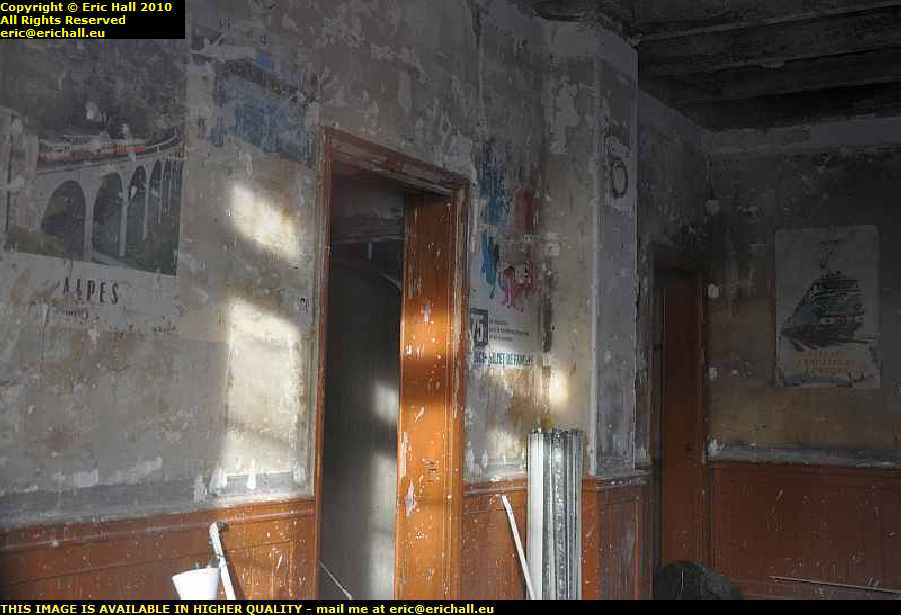
Sticking our heads to the window of the railway station though, we could see in what was the public waiting room some really wonderful railway posters from the 1930s advertising all kinds of railway excursions.

So there you are then – wasn’t that an exciting day out?

Phew!

Wednesday 25th August 2010 – Just by way of a change …

local history meeting st hilaire pres pionsat puy de dome france… I went to another one of these local history afternoons – this time at St Hilaire. It was more-or-less the same as the one that we went to a few months ago at La Cellette, but there were a few additions.

And just for me they had done some more research into the railway network. Still only the line between Montlucon and Gouttieres, though. No mention of the “Ligne Economique” between Marcillat en Combraille and Commentry. I can see that there is a book waiting to be written  about that, and muggins here will have to be the one to write it.

Still, I suppose it could be worse.

But one thing that came out of it is that they are to finally form this Local History Organisation and register it as some kind of charity. The first meeting of the new committee is to take place on Saturday afternoon in Pionsat, and the presenter reckons that it would be a good idea if someone from a foreign background was co-opted onto the committee to liaise with the non-French speakers and to bring a different viewpoint on to the group – someone nevertheless with an interest in local history and history in general. And do you ever get that funny burning sensation when thirty pairs of eyes all turn round and focus on you?

Serve me right too, and I was looking forward to going for a swim on Saturday afternoon too!

This morning I carried on with updating my website and then I did some washing seeing as it was such a nice day. I’ve sorted out everything I need for my water heater and I cut the top off this 30-litre container too. This thing might take shape tomorrow if I am not careful.