Tag Archives: bomber command

Saturday 16th May 2015 – IN SWITZERLAND

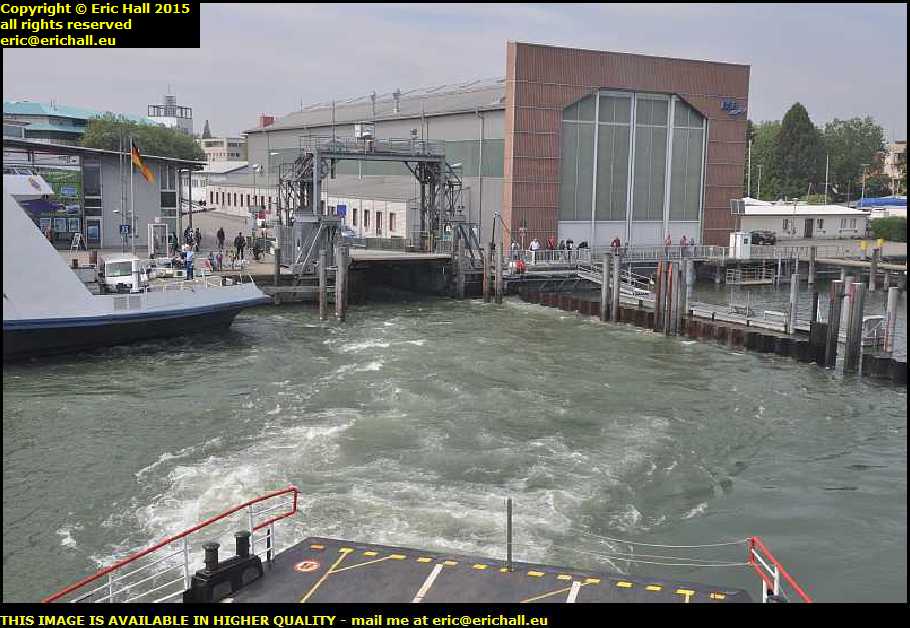
ferry bodensee friedrichshafen germany romanshorn switzerland may 2015It’s taken me long enough to find a ferry on this journey, but nevertheless here I am.

This is the ferry across the Bodensee, or Lake Constance for the English-speakers amongst you and it sails from Friedrichshafen in Germany to Romanshorn in Switzerland and I am about to make my triumphal entry therein – the first time on this journey.
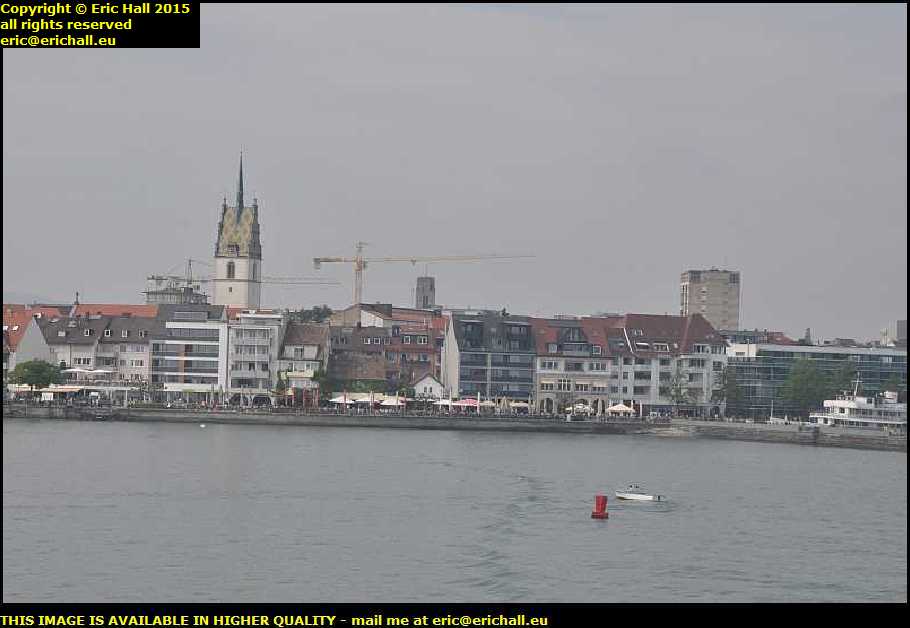
waterfront bodensee friedrichshafen germany may 2015The waterfront is quite modern too, and unashamedly so. and not the result of wanton vandalism on behalf of the civic authorities but wanton vandalism on behalf of RAF Bomber Command in World War II.

Not that too many people can have too many complaints about that for once (although they might protest at the lack of accuracy) because there are at least two good reasons why the town of Friedrichshafen was a legitimate military target in World War II.

modern waterfront friedrichshafen bodensee germany may 2015And indeed not to mention World War I because the first ever bombing raid in World War I took place here just a matter of a couple of weeks after the start of the war took place here and given the primitive state of the equipment and navigation, was a stunning success that matches anything that the Dambusters could come up with in World War II.

We’ll be going for an inspection of these two legitimate targets in due course.

suspension bridge river argen germany may 2015But it took me ages to arrive at the Bodensee as I was being continually interrupted.

This is a suspension bridge over the River Argen. according to a sign at the bridge, it was built in 1896/97 under Kaiser Wilhelm, and that shows you just what a really big man he must have been because the bridge really is quite impressive.

Today it’s flanked by a railway bridge and a modern pre-stressed concrete road bridge, but this one outshines them all.
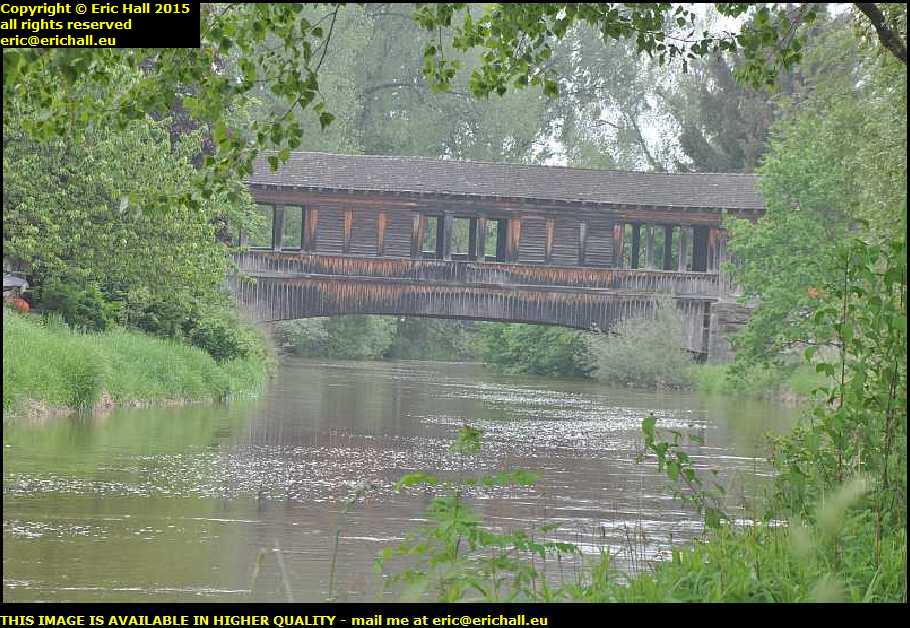
covered bridge eriskirch germany may 2015The village of Eriskirch a little farther along the roa was full of surprises, and this is just one of them.

It’s one of our old friends a wooden covered bridge. We encounter dozens, if not hundreds of these on our journeys around North America, but Europe has its fair share to offer as we have seen in the past, and as we shall indeed see again before we are much older. I would have gone for a wander through here, but it was closed for repair.

ford taunus eriskirch germany may 2015And that’s not all. Eriskirck also came up with a Ford Cortina Mk V too, excet that this is a mainland European version called the Taunus.

This was parked in a yard with half a dozen other noteworthy cars. I gave it a good going-over and I reckon that a good weekend’s work would have this back on the road. There didn’t seem to be much wrong with it and it was solid in all the suspect places

zeppelin friedrchshafen germany may 2015It’s amazing the things that you encounter on your travels but seeing this flying over me as I travelled further west reminded me of what I was doing down here in the first place.

And that’s just a baby too. could you imagine something maybe five or six times as big flying over your head, because that’s what used to happen in World War I when these monsters were legendary.

zeppelin headquarters friedrichshafen germany may 2015Yes, well done that man. It is indeed a Zeppelin and here on the outskirts of the town of Friedrichshafen are the headquarters of the company.

On a Bank Holiday weekend it was expecting too much for me to be able to go for a trip around, much as I tried, but I had a nosey about instead.

And my hat went off to the intrepid pilots of November 1914 who flew here in rickety string and canvas biplanes who managed to fly here from France and hurl a bomb into a Zeppelin shed, even if they didn’t manage to accomplish very much
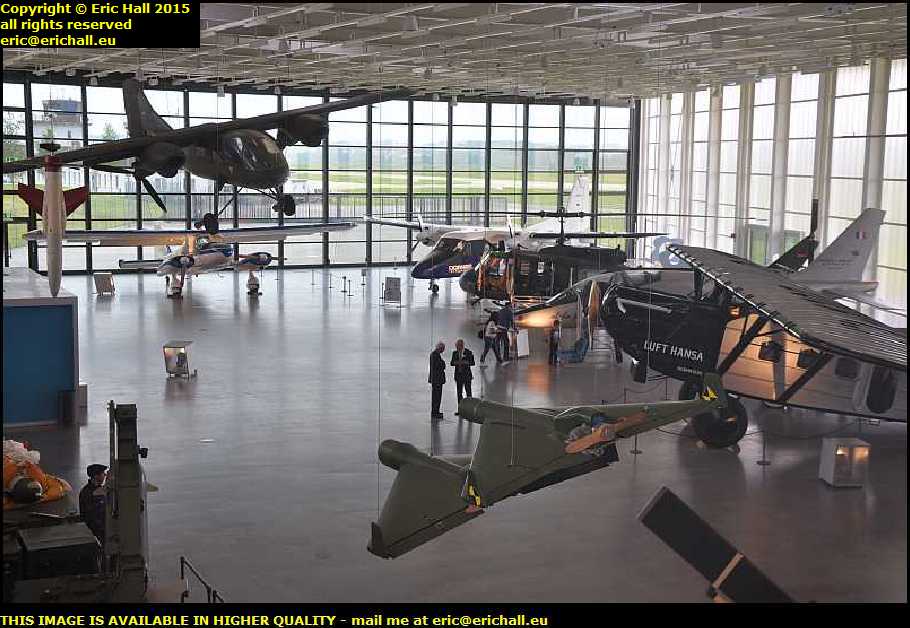
dornier museum friedrichshafen germany may 2015I did say that there were a couple of legitimate military targets here in Friedrichshafen. The second one was the Dornier aircraft factory here.

Dorniers were known mainly for their seaplanes and they were built and tested down on the waterfront, hence the bombing raids down there. They also made bombers, the Do-17 and Do-217 but manufacture of those was dispersed throughout Germany

dornier museum friedrichshafen germany may 2015The only aircraft here from before the war are those that have come from elsewhere, such as the flying boat which, if we are to believe the registration number on it, is that flown on the Amundsen expedition to the North Pole in 1925 but which I strongly suspect is a replica.

No Do-17 though – not even a replica and I found that very disappointing. I can understand there not being a real one, although if they made an effort they could certainly find some bits, but no replica is a shame.
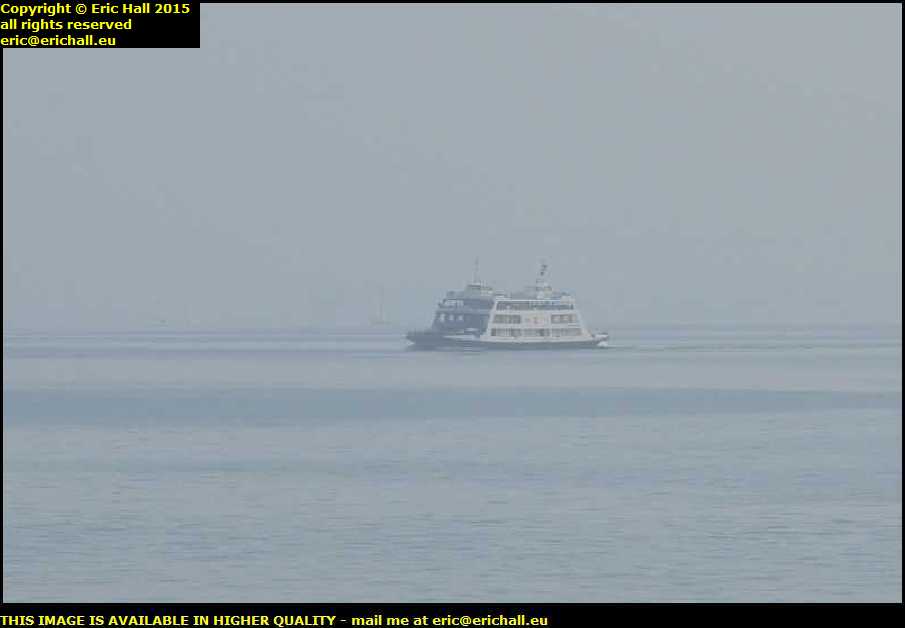
ferry boat bodensee friedrichshafen germany romanshorn switzerland may 2015Back on the ferry now and I forgot to take any details of the boat upon which I was sailing, which isn’t like me at all.

Anyway, it was a boat that looks very much like this one. This is sailing in the opposite direction to us and while they might not look very big, they are ten times bigger than the Hatteras Ferry boats that sail across the Hurricane belt in the Carolinas.
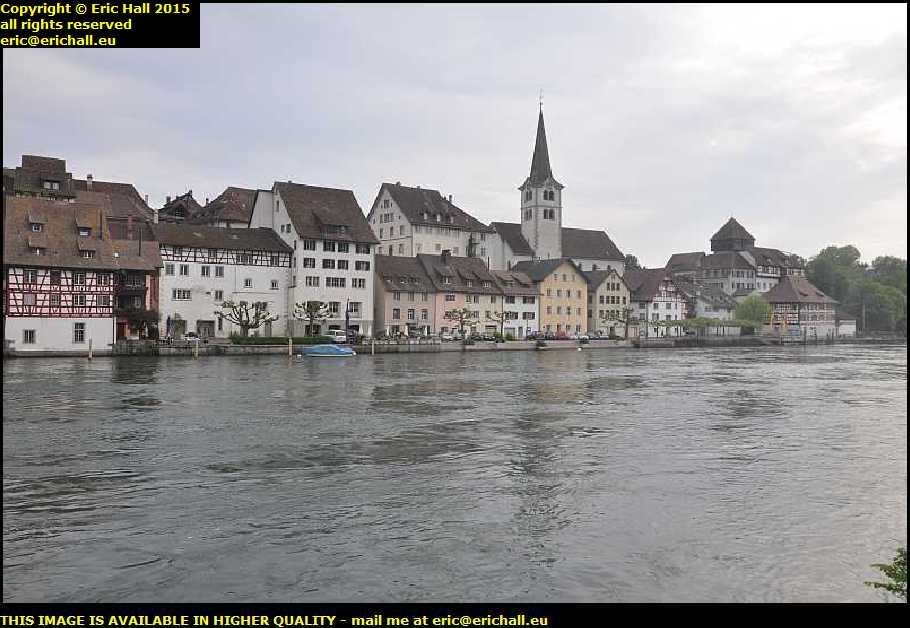
diessenhofen switzerland germany may 2015I’m back in Germany again and that’s the River Rhine just there.

The town in the background is called Diessenhofen, a beautiful little walled town that is first recorded in 757, although there are considerable remains from much earlier than this, even as far back as the Stone Age, and a substantial Roman hoard was discovered here.

covered bridge river rhine germany diessenhofen switzerland may 2015To cross the Rhine is a substantial covered bridge, and this was part of the secret of the wealth of the town – the tolls that were generated by people wishing to cross the river.

Today though, there are no tolls, and not even a border post, despite Switzerland not being in the EU. I simply wandered across unchallenged.
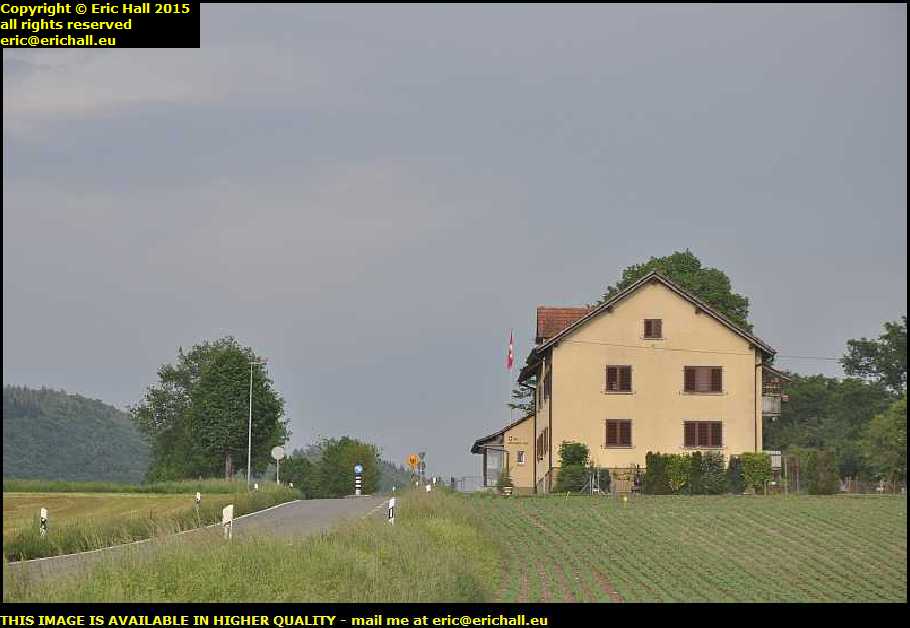
border crossing germany ramsen switzerland may 2015But why I crossed over back there was so that I could cross back here. That’s the border and the Rhine is behind me. Theres a little finger of Switzerland that is north of the Rhine, near the village of Ramsen and this was the favourite spot for escaping prisoners of war to cross the border from Germany, where they didn’t have to contend with the Rhine.

On the German side of the border here, the guard was asleep and in the Swiss hut, the place was deserted. And the border was so unguarded (well, relatively, anyway) during the war that one escapee passed through and out the other side where he was recaptured, without even realising that he had been in Switzerland.

rhine falls schaffhausen switzerland germany may 2015Ive come here to see the Rhine falls at Schaffhausen. This was somewhere else where I came on my honeymoon with Nerina and with it being mid October, the river was fairly low.

This time of year is the peak time to see the falls as the last of the snow melt roars through and it certainly was impressive from up here.
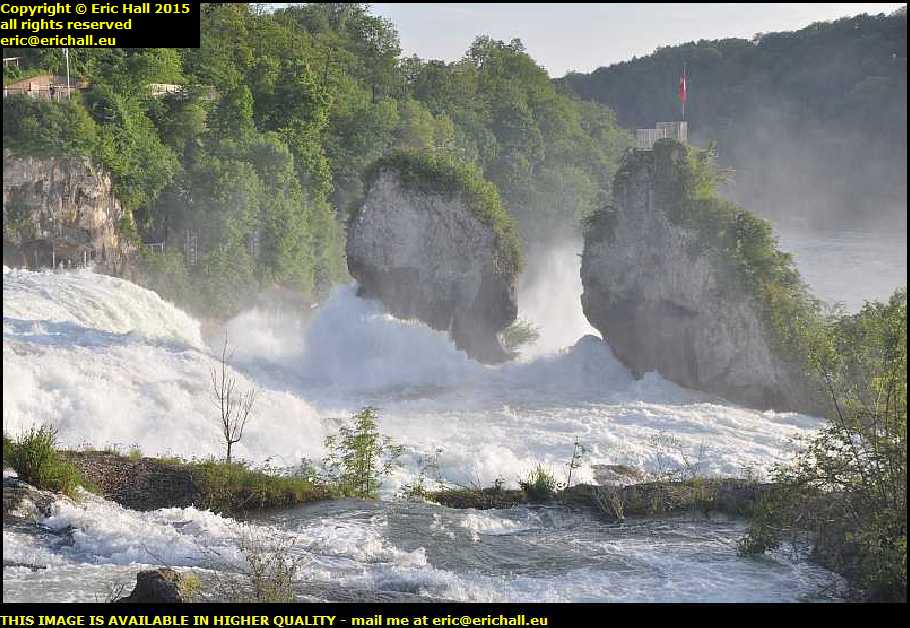
rhine falls schaffhausen switzerland germany may 2015From close to, while they may not be as impressive as the Niagara Falls, they are certainly as good as anything else that Europe has to offer and it’s well worth the trip to come to see them, even if you do have to fight your way through the participants of a bus trip from the local mosque.

But be warned – it’s quite a hike back to the top again so I was glad that it was late evening when I passed by here.
old renault van 1920s Switzerland germany may 2015I now try to find some accommodation for the night and I’m not very successful. I forgot about the Bank Holiday weekend and everywhere is either full or closed.

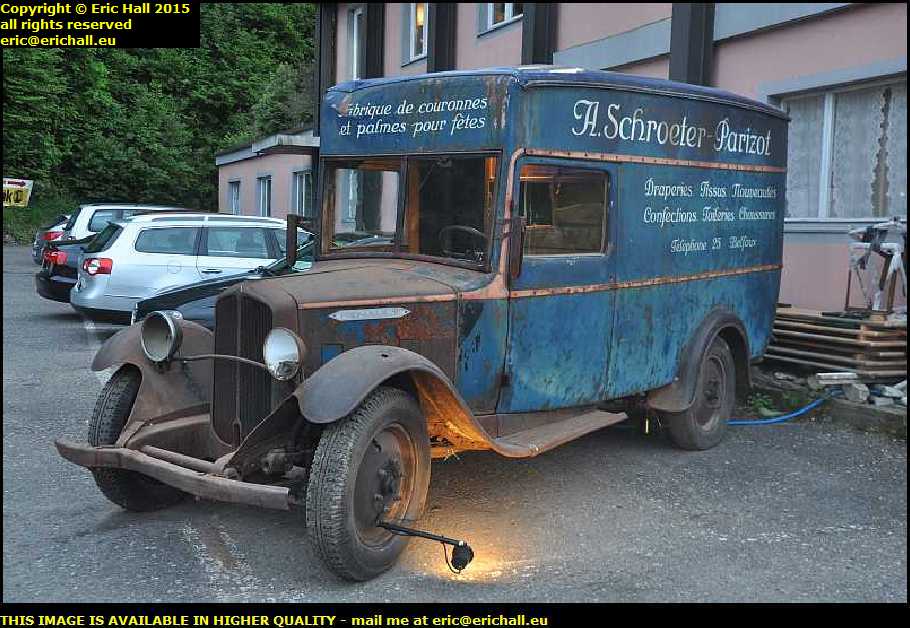
I do manage to find an old Renault van from the 1920s, in a very sorry state, so it isn’t all doom and gloom, despite the fast-approaching night.

In the end, I give up and head for the autoroute. There will be a rest area there and I’ll sleep in Ccaliburn tonight.

Friday 15th May 2015 – I’M BACK ON THE ROAD …

… but I didn’t get too far. And when I sort myself out a little better, I’ll show you why.

But those of you who follow this rubbish on a regular basis will recall that I have been having kitchen and bathroom worktop issues. I mentioned this to Hans because Germany is the place to be if you want high-quality but affordable products, and so he had taken me on Wednesday evening to several furniture and DiY places.

So to cut a long story short, for which you will all be grateful, on my way out of eching I went and picked up 5 planks of 28mm light-oak, 60cms by 240cms. Cost? Just €375 – for the lot, not just for one. If that’s not going to do the job that I want, then nothing will.

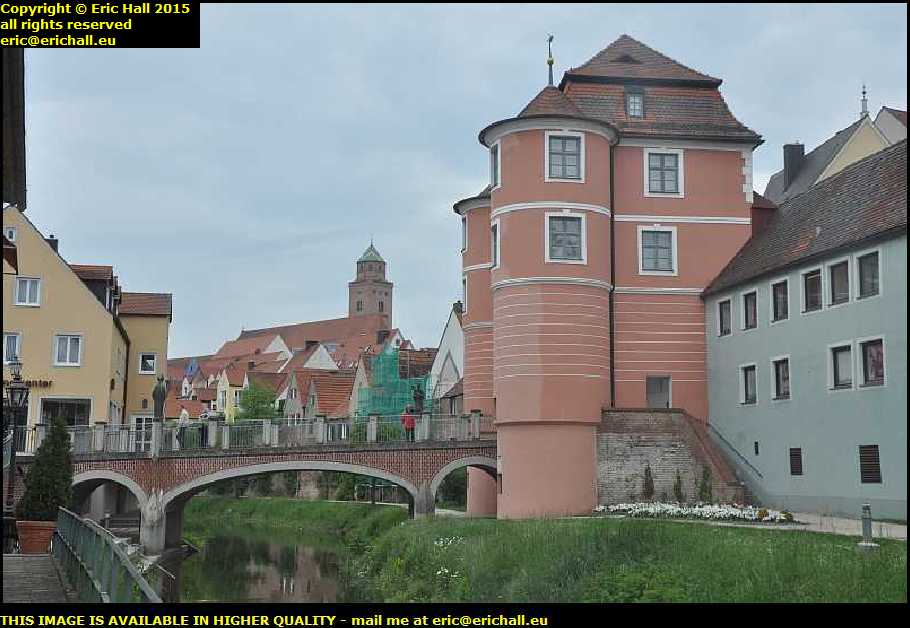
donauwurth germany may 2015From here I went to a town called Donauwurth, situated on the banks of the River Danube at its confluence with another river, the name of which I have forgotten.

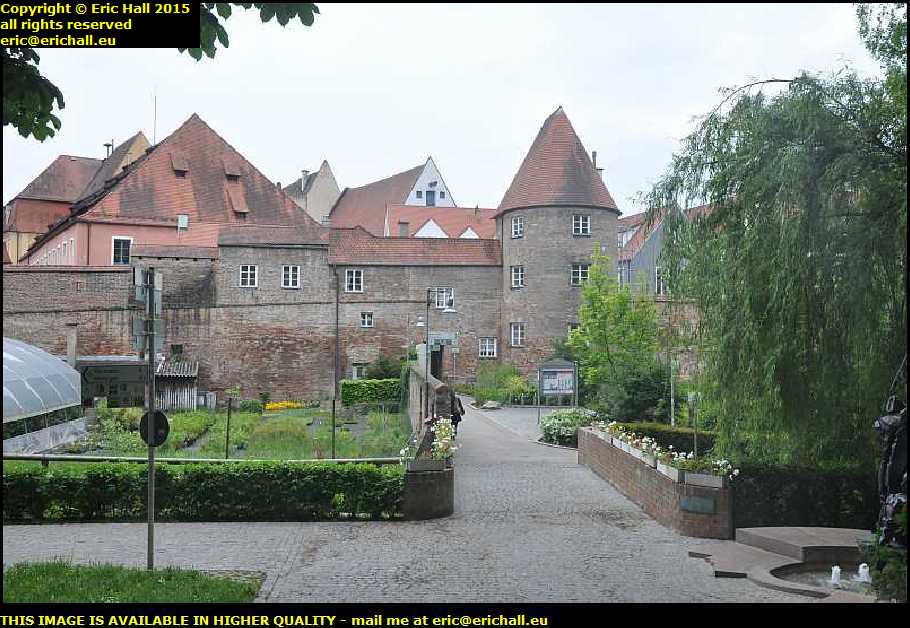
It’s yet another walled city, of which there is an enormous number in Germany, and if you look very hard, you’ll see a pedestrian gate down there at the end of the path. That’s the way in. We are actually looking at the old moat right now.

centre of donauwurth germany may 2015It’s quite a beautiful little town, calm, quiet and peaceful with some beautiful buildings that look quite old.

But don’t allow yourself to be misled by appearances because it isn’t all what it seems. These buildings may indeed look old but you will be hard-pressed to find anything in the centre dating from before 1945. That’s because despite it being calm, quiet and peaceful, it was selected for the target of the British Bomber Command in April 1945, when the war was all but over and when whatever there was that went on (or didn’t go on, whichever is the case) here had long-since ceased to be of any military significance.

entrance gate donauwurth germany may 2015Not that that had ever bothered anyone in Bomber Command. Lord Cherwell’s infamous “de-housing” report had made it quite clear that the German civilian population was to be the target of the bombers, and Bomber Command carried out these perverse attacks to the extreme degree, long after they had ceased to have any point (if they ever had any point in the first place).

As the American Strategic Bombing Survey, that visited Bombed-out Germany so succinctly put it in its report, all it did was to divert post-war Allied resources to repair the damage and to house and feed the destitute when these resources could have been better-used elsewhere.

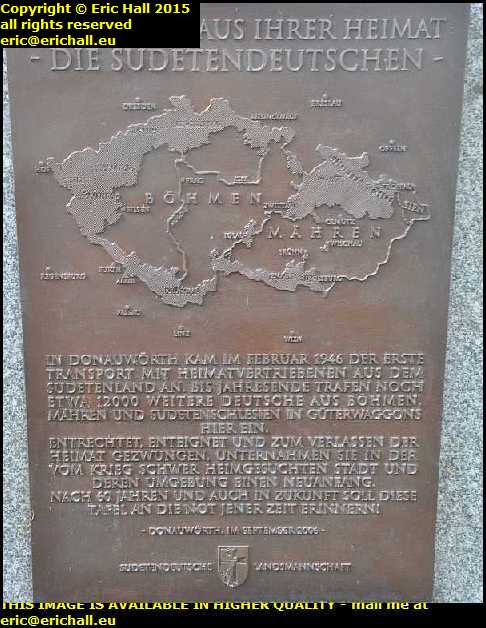
plaque for sudeten germans donauwurth germany may 2015I’ve talked in a few previous posts about the problem of the Sudeten Germans, and this was something that took me quite by surprise.

I didn’t expect to see anything like this here a memorial plaque in honour of the Germans of the Sudetenland, and in particular the first batch of 12,000 who arived here in February 1946 and dumped out of the goods wagons in which they were travelling.

They were of course the lucky ones. Most of them arrrived much later, having undertaken the journey on foot, through the savage Central-European winter and having faced all kinds of horrors on the way, death being the least of them.

old city walls germany may 2015There are still some old structures remaining here in Donauwurth despite the devastation of 1945.

These are the old city walls and if my Latin is up to much after all of these years, the plaque tells me that they were built in 1091 and destroyed in 1818, with a few bits added on and knocked down in between.

low energy fridge media markt donauwurth germany may 2015Donauwurth hadn’t finished with me yet.

At the local branch of Media Markt was this nice under-the-counter fridge with small freezer compartment. What was interesting about this was not the price (a mere €199) but the energy consumption – just a claimed 89kW per annum.

If it really does all of that then it’s the most economical of its type that I have ever seen. 89000 watts is about 250 watts per day and I could run that quite happily all year without worrying. You’ve no idea just how much I was tempted.

June wasn’t at home so I pushed on to the Bodensee. My aim of spending a night in Austria came to naught as everywhere in Bregenz was either closed or full. Not only that, at one place I had a most unusual experience anyway, in that someone actually asked “what do you want?” when I rang the bell. Of course I couldn’t contain myself and relied “what do you think that people usually want when they call at a hotel?” and I was impressed that I could say that right off the cuff in German.

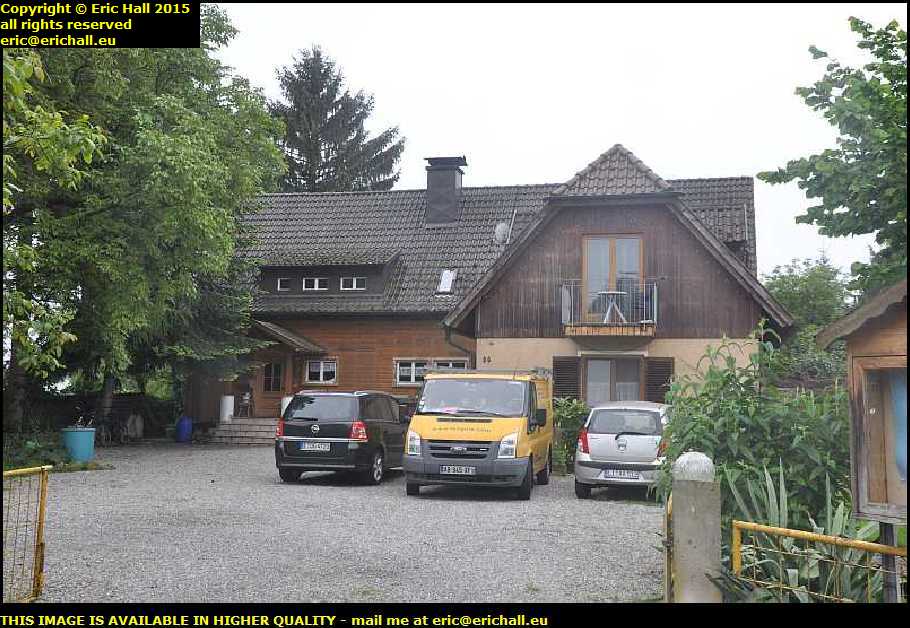
guest house lindau germany may 2015Lindau was full too and parking in the old town had passed beyond the expensive into the absurd. I headed out, looking for a quiet layby to lay my weary head when, having taken a wrong turn somewhere, I encountered a guest house, at just €38:00, miles from anywhere.

Primitive and very 1950s it might have been, but I wasn’t arguing at €38 for the night.
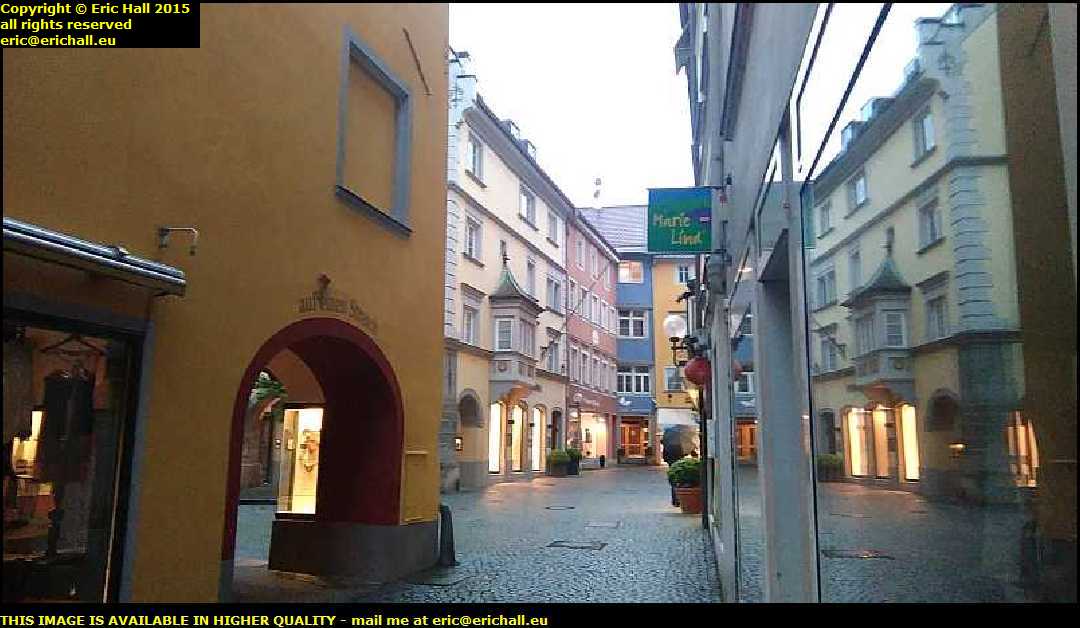
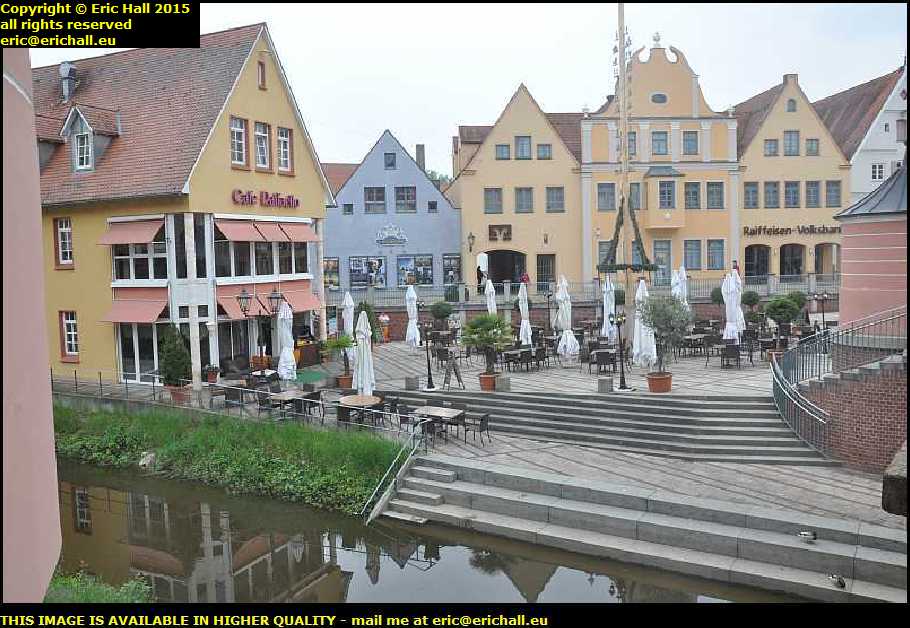
medieval buildings lindau germany may 2015I’ve been to Lindau a few times in the past, but it’s been a good few years since I’ve been here. The last time was on my honeymoon with Nerina back in 1988, and I was itching to return as it really is a beautiful city and I cared not a jot about the driving rain.

Very medieval as you can see, and a favourite spot of the Royal house of Bavaria who had a chalet nearby for the summer.

medieval houses lindau germany may 2015And in news that will startle just about everyone reading this, I had a Chinese takeaway for tea.

Its well-known that I don’t like Chinese food all that much but I didn’t have much choice here as the takeaway food outlets are not exactly thick on the ground here – I don’t suppose that Mad King Ludwig would have approved.

But €4.50 for a huge plate of tofu, vegetables and rice to eat in the comfort and privacy of my own bedroom is not to be sniffed at.

At least, something has gone right for me today.

Saturday 9th May 2015 – AND IF I THOUGHT …

autobahn rest area koln germany may 2015… that the other night’s sleep was something special, then I’m not sure what to say about last night’s. In bed by 22:30 after a nice meal of pasta, mushrooms and tinned veg, I remember nothing until about 06:30. Perhaps there was the odd lorry shunting around somewhere in the vicinity but I really didn’t care less.

Mind you, I was off on my travels during the night. I was a serial killer with bodies all over the place, including inside the doors of my car behind the door cards. And I remember having to move them and dispose of them properly, so extracting them from their hidey-holes was interesting, particularly as they now had the size and consistency of sausages.
After a nice leisurely breakfast of bread, jam, fruit juice and coffee, I hit the road and fahr’n fahr’n fahr’n-ed up the autobahn for my first dam.

I wasn’t on the autobahn for very long – the Lady Who Lived In The SatNav soon had me in the mountains.

german war memorial bilstein germany may 2015I came to a dead stop in the small town of Bilstein.

We saw some War memorials in Austria last year, but this is the first one that I ever recall seeing in Grmany. Interestingly, it contains names from the 1866 war against Austria and names from the 1870-71 war against France, but nothing from World War I or World War II.

Whilst World War II might in some circumstances and some quarters be considered controversial, I’m totally bewildered as to why the dead of World War I haven’t been honoured with a memorial.

As for World War II, my own opinion is that probably 99% of the German military were just as much victims of the war as anyone else and were no more guilty of war crimes than anyone else in any other army. Regardless of the cause that they fought for, their individual sacrifice should still be commemorated and I reckon that they deserve a memorial.

rohrenspring germany may 2015From there, the Lady Who Lives In The SatNav took me right into the mountains and over some stunning roads (some of which I was obliged to decline).

There were some beautiful things to see too, such as the village of Rohrenspring – just one of a thousand places that I could have stopped to photograph had there been anywhere convenient to park.

Still, I arrived at the Sorpe Dam soon enough and had a good drive round.

dambusters sorpe dam langscheid germany may 2015And it’s easy to see why it is that, despite the importance of the Sorpe Dam, the dambusters were unable to breach the dam.

They couldn’t fly along the length of the dam (although I’m not sure why as it’s a clear “in and out) but came in over the church steeple, dropped their bombs and then climbed up and out of the valley.

and you’ll notice the dam – on the right-hand edge of the photo about halfway up. There isn’t much to aim at, is there?

Only one of the bombs hit the dam and that did no more than damage the parapet. And there isn’t any evidence that I could see of the damage.

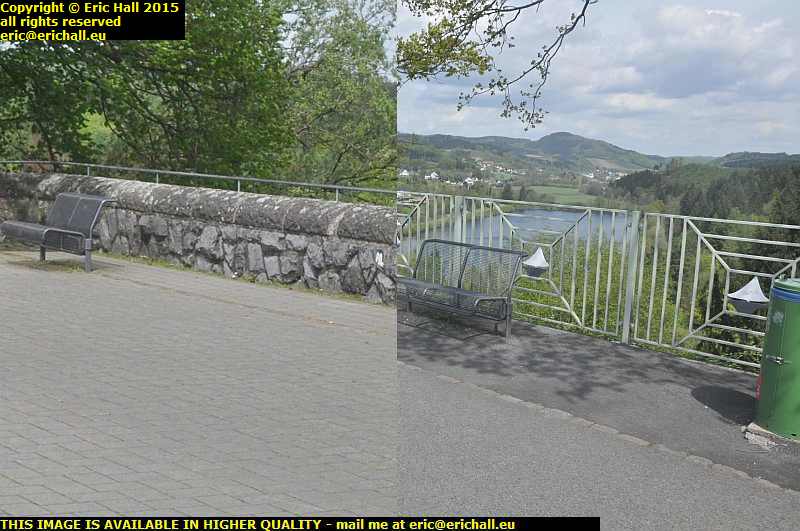
dambusters composite photo seating bays sorpe dam langscheid germany may 2015However if you notice the photo, it’s actually a composite photo. Some of the seating bays have stone walls and facings and are clearly the original onces. Some others have wrought iron railings.

It’s tempting to think that the wrought iron ones are the modern ones built as a cheap temporary measure to replace original ones destroyed in the blast.

dambusters sorpe dam barrage langscheid germany may 2015However, you can see how much water is in here judging by the height and the weight of the barrage here.

That really is an impressive structure and had the dambusters been able to let that lot go, there would have been a catastrophe. But they were always on a hiding to nothing with an earthen-banked dam. The earth would simply absorb the shock of the explosion.

dambusters mohne dam germany may 2015From there, I went to look at the Mohne Dam.

This was the classic dam, the one about which everone has heard and which collapsed in dramatic fashion after three direct hits. The planes had to fly at a height of about 60 feet at 240 mph right between the two towers, which were equipped with machine guns, and drop a bouncing bomb in a precise position.

dambusters mohne dam germany may 201530 years or so ago, you could still see where the stone from the new repair work differed from the original.

Today, however, I couldn’t see any difference at all, despite having a good luck around. But what did impress me was that within just a mere 4 months, this dam had been rebuilt of sorts and was back doing its job again.

And that’s the big issue with the British Bombing campaign. If it didn’t involve the gratuitous killing of defenceless civilians, “Bomber” Harris dismissed it as a “panacea target” and refused to carry it out, even when presented with a direct order.

Once the dams had been bombed, Harris abandoned them, when it was odds-on that they would be rebuilt. Anyone normal would have had high-level bombng raids every week to damage the rebuilding, and that was what most of the Germans expected.

Most except Alber Speer, that is. The German Minister of Economic Planning was well-aware that Harris would never come back to the dams (there was one further raid on the Sorpe Dam with the huge earthquake bombs, but they didn’t work and in any case it was far too late to influence the outcome of the war) and that they could be rebuilt in peace.

And now I’ve found a hotel right on the shore of the lake, with the water lapping at my feet, and this is where I’m staying the night.
Sunday 11th December 2011 – HAVING MADE …

… good time last night and covered a lot of ground, and being to cold to sleep for too long, I was up and about today in plenty of time.

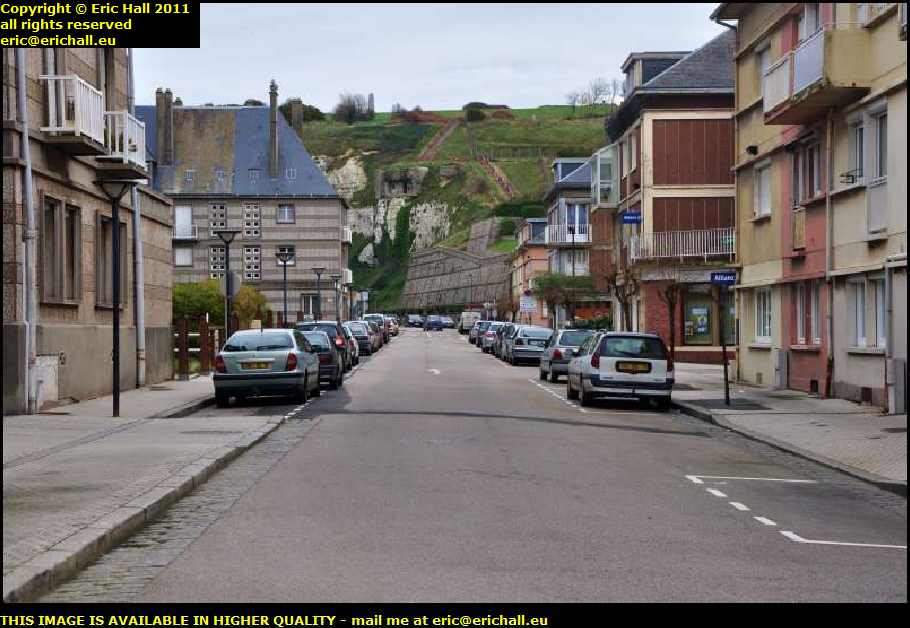
st valery en caux franceOf course, it goes without saying that I’m open to all kinds of sightseeing opportunities when I’m on my travels, so when I saw a sign for “St Valéry-en-Caux”, I was off.

St Valéry-en-Caux has something of a reputation dating from World War II and the Fall of France.

The town was the site of the “last stand” of the British Army on Mainland Europe in June 1940

st valery en caux franceThe British Army’s 51st Highland Division had been detached from the rest of the British Expeditionary Force in order to go to assist the French at the Maginot Line.

They had thus escaped being encircled and trapped in Dunkirk, and they retreated to the west.

The plan was to evacuate them from St Valéry-en-Caux – not the ideal place but the only place possible that had not been overwhelmed or threatened by the Germans’ rapid advance.

The navy duly arrived on 10th June, but the troops had not yet arrived. And having suffered an aerial attack, they pulled back offshore.

The soldiers arrived shortly afterwards and hastily threw together a defensive perimeter around the town to protect the evacuation, but the Germans were too quick.

The arrived hot on the heels of the Highlanders and overwhelmed the perimeter quite quickly.

By the time the ships returned next day, it was already too late. The fighting was all over and practically the entire 51st Highlander Division had been led off into captivity.

memorial 51st highland division st valery en caux franceIn 1950 a memorial stone to the 51st Highland Division was erected on the cliffs on an eminence that dominated the town.

That’s it up there on the skyline in the centre of the photograph.

The erection was, apparently, something of a ceremony, with the pipers of the Black Watch playing “The Last Post”.

st valery en caux franceI actually saw a photograph of the town on that occasion, and it didn’t half look a mess – even 5 years after the end of the War.

The town was fortified quite heavily by the Germans as part of “The Atlantic Wall” so it’s no surprise that heavy fighting took place around here later in the War.

The amount of destruction in the town, and the fact that the fortifications escaped so lightly, is some kind of testament to German thoroughness.

st valery en caux franceThat is of course one reason for visiting the town. There are plenty of others too.

It’s quite a historic place, being first mentioned in a Charter of 990, although legend has it that the town actually dates from the 7th Century when a religious institution was founded here as part of the plans to evangelise the coast.

Nothing has been seen to confirm this, and no trace of a likely building has ever been discovered.

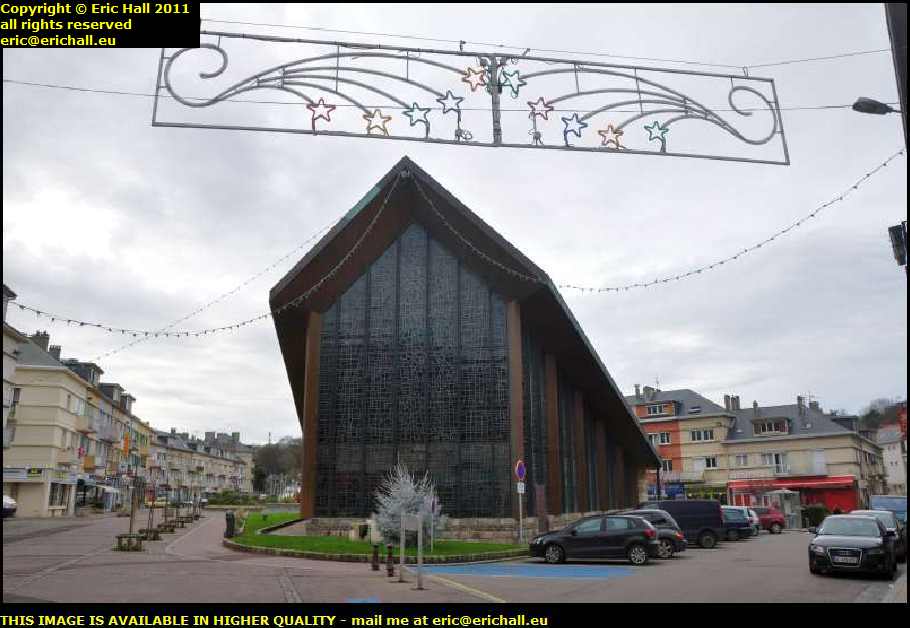
Chapelle Notre Dame du Bon Port st valery en caux franceFirst port … if you pardon the expression … of call in St Valery-en-Caux has to be the Chapelle Notre Dame du Bon Port – the Chapel of Our Lady of Bon Port – the “Good Port”.

This magnificent wooden structure, designed by Raymond Jules Lopez, and situated in the … errr … Place de la Chapelle.

It dates from 1963 and replaces a much older chapel that was destroyed during the war.

Chapelle Notre Dame du Bon Port st valery en caux franceAnd in an irony that seems to have gone right over everyone’s head, the stones from the original chapel – about which nothing much seems to be said – were used for a very secular purpose – to build the casino in Veulettes sur Mer.

Its stained-glass windows, designed by André-Louis Pierre, are said to be magnificent and are best viewed from inside, something which I was very keen to do.

And so in a situation that somehow only I seem to be able to manage to conjure up, the church is closed today and the doors are locked.

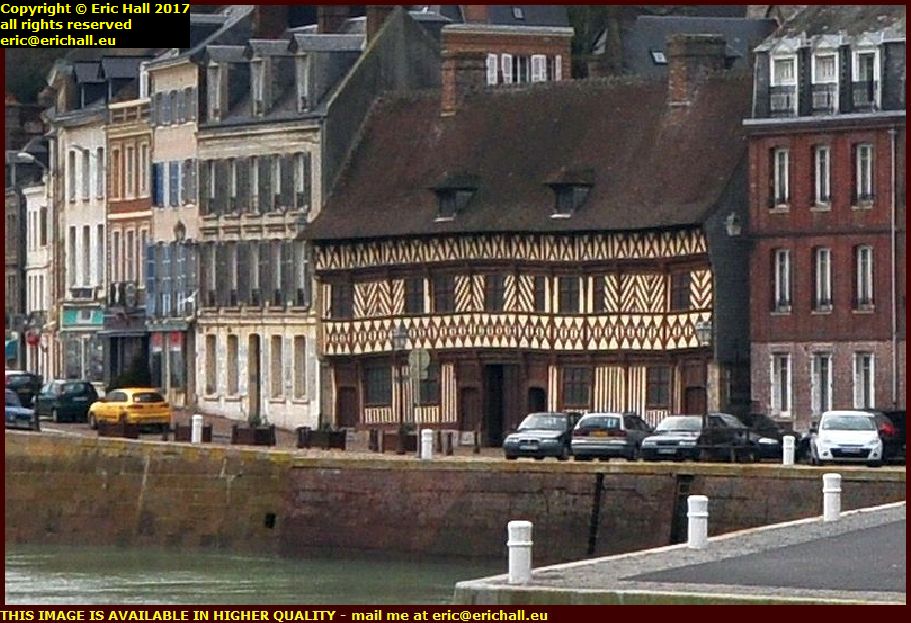
Maison Henri IV st valery en caux franceThe most magnificent building in the town is what it known as the “Maison Henri IV”.

Built in 1540 by the wealthy Guillaume Ladiré, it earns its name from a story that suggests that the French King Henri IV spent a night here in 1593.

It’s said by many to be the finest “Normandy-style” half-timbered house in the region and who am I to disagree?

Yet another claim to fame possessed by the town, and about which people are quite reticent, is the fact that a major rail crash took place here on 17th January 1945.

The fact that it happened in wartime and involved armed forces means that it never received the publicity that it might otherwise have done had a news blackout not been in force.

A train loaded with American soldiers was coming into town when a brake failure cause it to overrun the buffers at the station. 89 American soldiers were killed and 152 injured.

Finally, and most importantly, there’s a transatlantic telephone cable – the TAT 14 – between North America and Europe that runs out to sea here. According to the American Secret Service, this is a vital communications link and so the area is considered by the US military to be a “strategic point”.

We all know what that means. Iraq and Afghanistan were considered by the US military to be “strategic points” too.

Blimey! Is that the time?

My ferry leaves in 90 minutes and I have about 50 kms to travel. And to check in, and to board. And I’ve never been to le Havre so I don’t know where the port is!

I shall have to put my skates on!

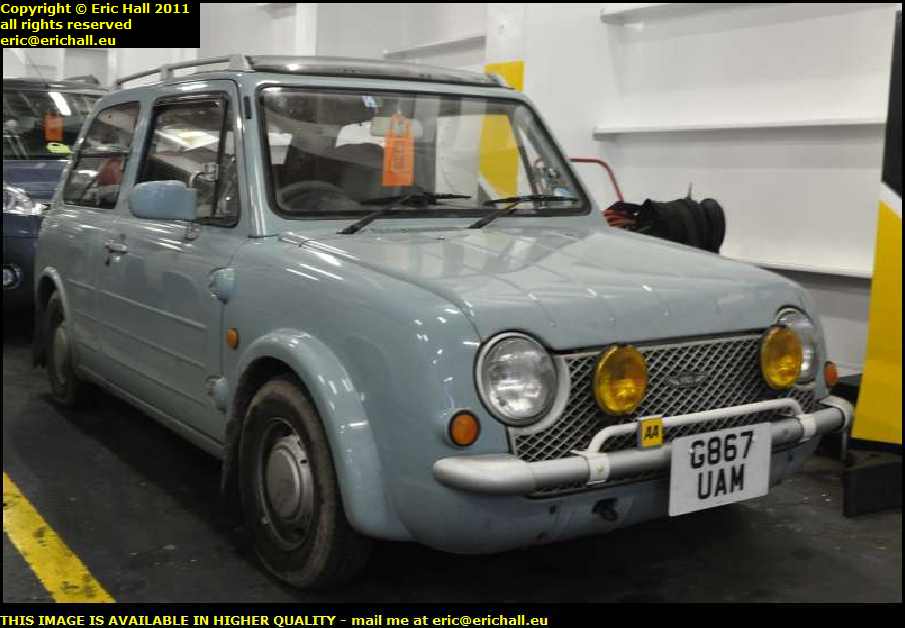
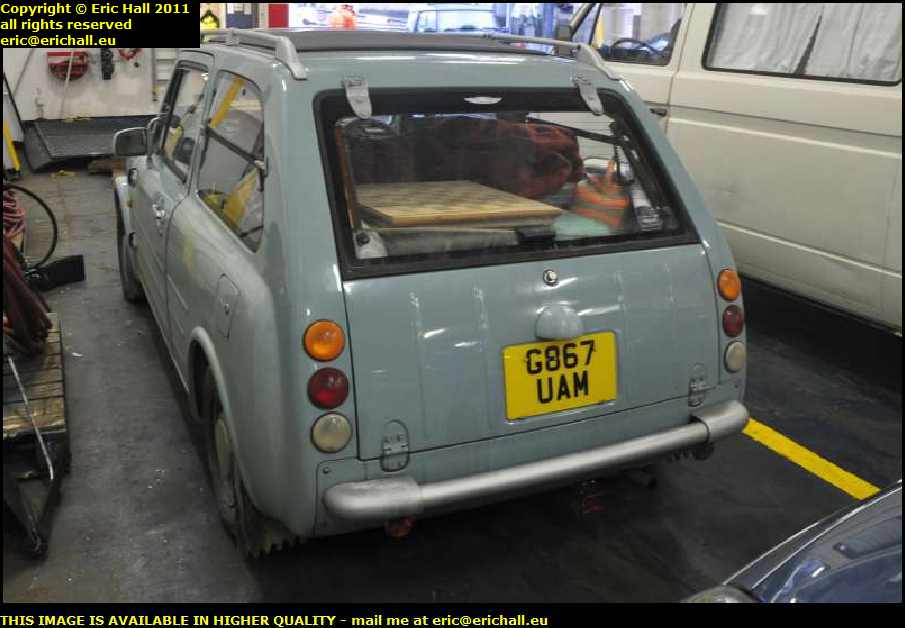
nissan pao grey import le havre franceMade it to the port and on the ship with half an hour to spare (good old Caliburn) and I’m glad that I did because just look at my travelling companion!

It’s one of these Nissan Pike-style retro cars made in Japan in the late 80s and early 90s. This one is the Pao – the estate-car version.

Rare as they come, I’ve never seen one before and I probably won’t ever see one again because these had a very limited production run – and that was for Asia only.

nissan pao grey import le havre franceThey don’t have a class type approval and so were never officially imported into the UK.

Only individual cars can be brought in – the so-called “grey imports” – and they need modifications before they can be used on British roads.

You’ll notice the add-on rear foglights underneath the rear bumper, for example. That’s a real give-away if you want to see if a car is an official mainstream import or a grey import like this.

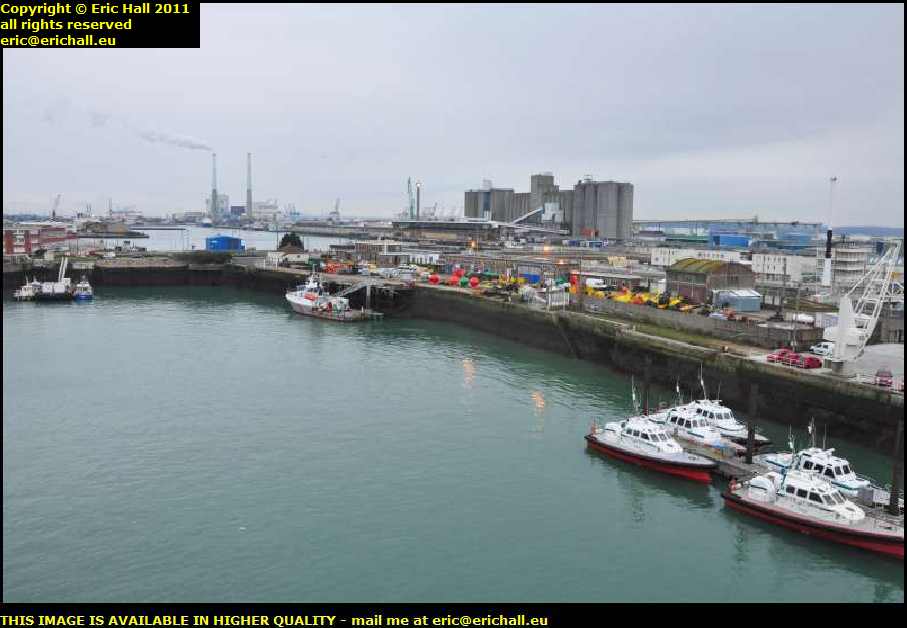
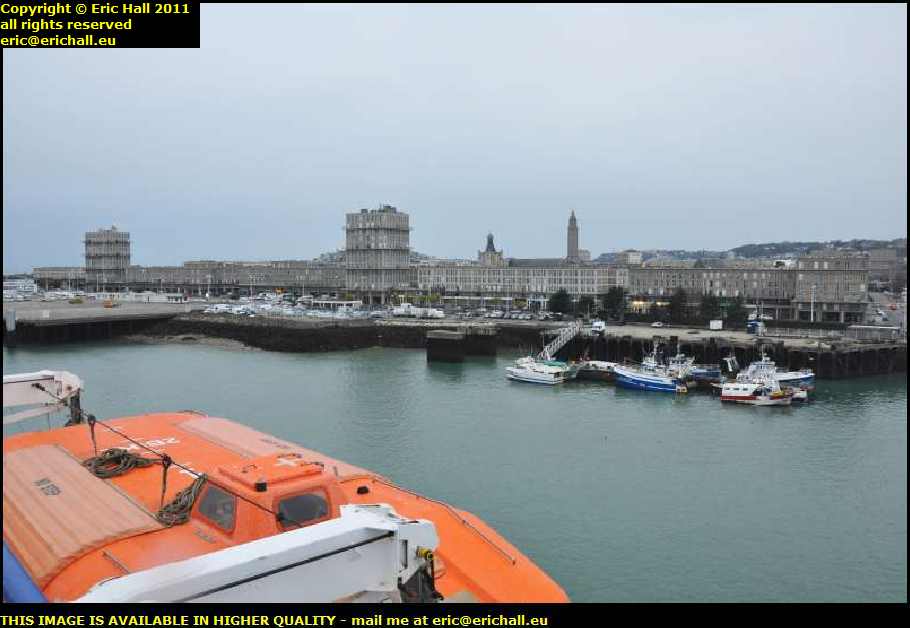
le havre franceAs for me, having parked up Caliburn and photographed the Pao I went hot-foot, or chaud pied as they say around here, up to the deck to see what I could see.

Having spent my early afternoon in St Valery-en-Caux rather than Le Havre, I hadn’t seen too much of the city, so I needed to see what I could see from on top.

First thing to see of course is the River Seine – the town is situated right at the mouth of the river.

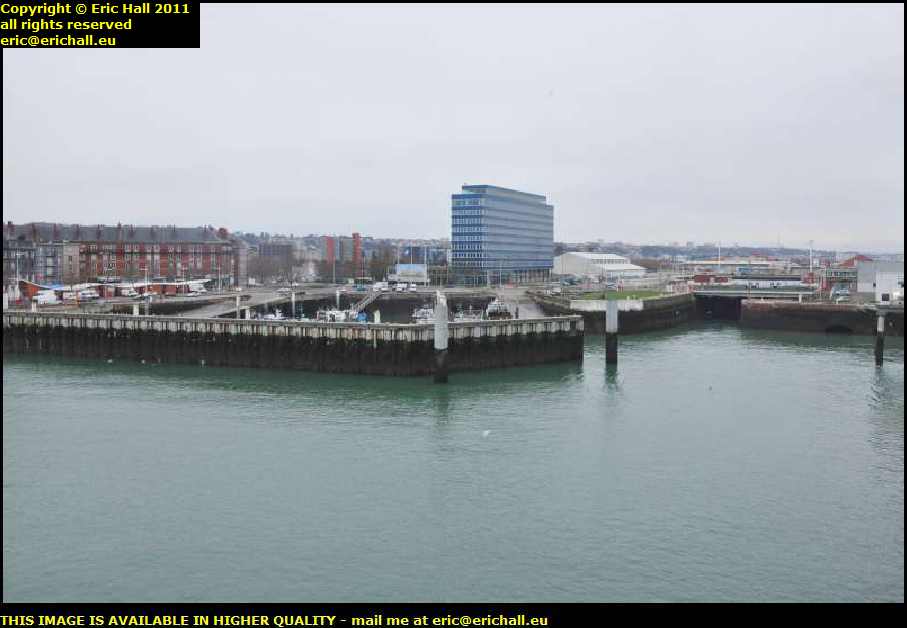
le havre franceIt’s not really a historic place as such, like many French towns and cities. It’s effectively a “planned town” built on the orders of King Francois 1st in 1517.

With the expansion of France’s maritime power in the 15th and 17th Century, the town was intended to take advantage of its ideal situation here.

As more and more ships were sailing, and the ships themselves grew in size, the port of Rouen was overwhelmed. Goods could be unloaded here and trans-shipped by barge up the Seine to Paris

le havre franceMind you, that’s not to say that there was never a setttlement here. Evidence has been uncovered suggesting settlement from the dawn of European humanity.

More-or-less continual occupation from Neolithic times is suggested.

There was an Abbey here in the immediate vicinity at the time of WIlliam the Conqueror and there were certainly a couple of small fishing villages here when Francois I became interested in the site.

le havre franceBut like most things, it was the era of the Industrial Revolution that saw the spectacular growth of the port.

Continual development has been taking place over the last 180 years, and it’s now one of the major ports of the country.

There’s a considerable amount of heavy industry as you might expect. Oil refineries, cement works and all of that, all based on the raw materials that are brought in.

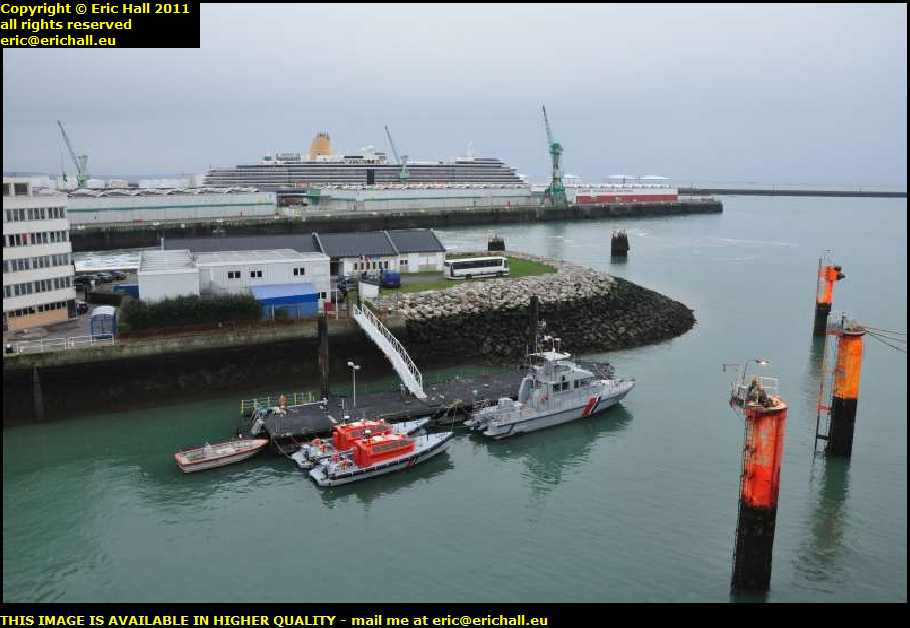
le havre franceMammoth cruise ships call here today as you can see.

But that’s just a sad reminder of the days when the great French transatlantic liners of the Compagnie Générale Transatlantique sailed from here.

And the huge ship-building works – the Ateliers et Chantiers du Havre – closed down in 1999. That was a major blow for the town.

le havre franceThe city was totally destroyed by the Allied air forces during the war – and the rebuilding has not been kind, as you can see.

The worst of the air raids took place on 5 an 6 September 1944 by the RAF Bomber Command.

They dropped a total of 10,000 tonnes of bombs on the city, destroyed 12,500 buildings and killed over 3,000 civilians. 350 boats and ships were sunk.

And all to no purpose either because the port had already been badly damaged and the German defenders were camped well outside the town.

The reason of this destruction has always for the French been a total mystery. Many conspiracy theories, such as the wish to damage French post-war maritime commerce, have abounded ever since.

In the lounge of the ship for five and a half hours of one of the most comfortable crossings of the English Channel, I was in Pompey – or Portsmouth to the uninitiated.

Out of the docks and round the back streets is one of the best chippies in the whole of the UK and I felt so much better once I’d wolfed down a helping of beans and chips liberally doused in malt vinegar.

The M27 and the M3 to Winchester took me to the A34 to Oxford, and then the A43 as far as the edge of Towcester where there’s a quiet lay-by for the night.

And guess who forgot to plug his heated seat in so that he could warm up his bed?

Tuesday 31st May 2011 – THE EVIL HAS LANDED!

And I’m now curled up in the back of Caliburn fast asleep in a cut-off of the A5 at Markyate.

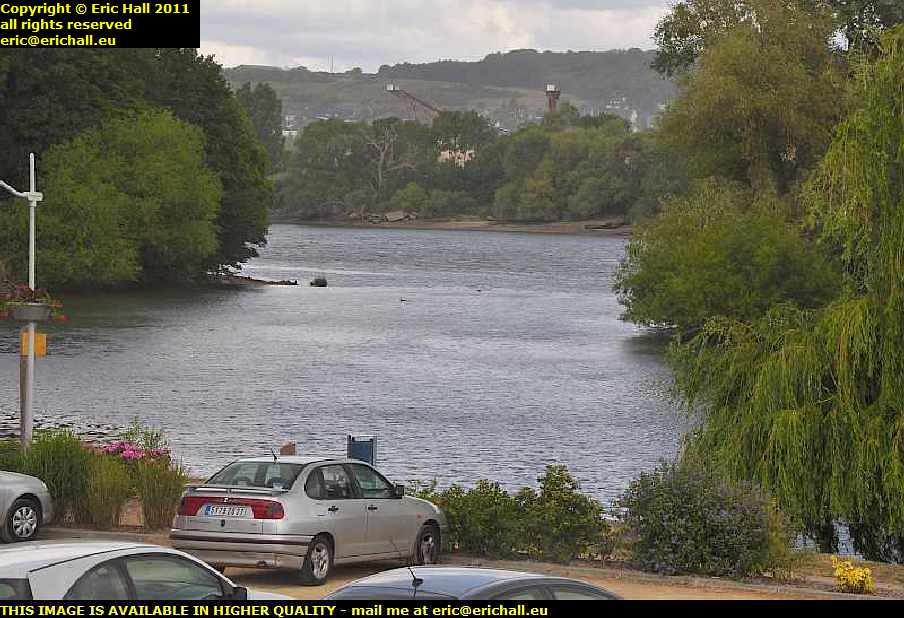
pont de l'arche franceThis morning though, I was curled up on a car park at Pont de l’Arche on the banks of the River Eure. Quite painless here, it was.

And where those cranes are in the distance, that’s the River Seine.

The two rivers are quite close together, separated by a low earthen bank and run parallel to each other for a considerable distance.

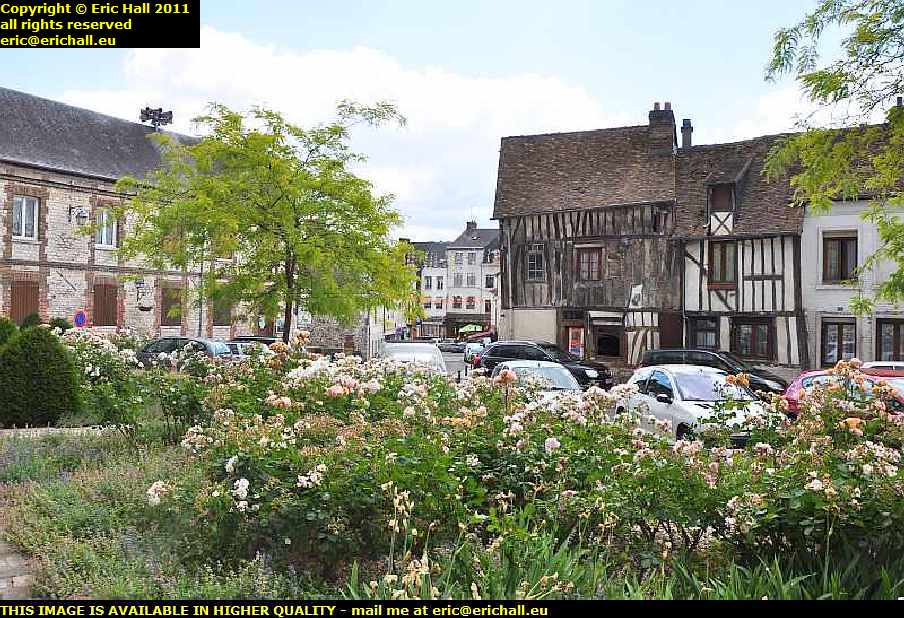
pont de l'arche franceThe town itself is quite beautiful and has quite a history.

There’s a Roman road that passes near here and with this being one of the easiest crossings of the rivers, there was a Roman camp not too far away.

It’s considered likely therefore that the origins of the town were in the civilian settlement that would have been here to service the Roman camp.

pont de l'arche franceIn the early Medieval period sometime in the 9th Century, the presence of a bridge across the rivers here was recorded.

This bridge was guarded by two fortresses, one at either end. It took the Vikings four months to reach Paris during their invasion of 885, much of which was due to the spirited defence of the forts.

The Viking encampment is just outside the town at Damps – which was the argot, or slang for “Danish”.

l'église Notre-Dame-des-Arts fortifications pont de l'arche franceLike most towns in strategic positions, it was fortified and in places, traces of the fortifications can still be seen.

But even where the fortifications no longer exist, it’s very easy to imagine just where they might have been and how they might have looked.

And remember my pet theory about churches and fortresses? That’s exactly the kind of place where you would have had an early Medieval fortress,
isn’t it?

l'église Notre-Dame-des-Arts pont de l'arche franceThe church itself, l’église Notre-Dame-des-Arts, dates from the 16th Century and is in what is said to be the “flamboyant gothic” style. I won’t argue with that.

The stalls are quite interesting – they are said to have come from Bonport Abbey when it was dismantled after the French Revolution.

The altar is a baroque creation of the 17th Century and there is also a magnificent organ donated by Henri IV.

pont de l'arche franceThe town is actually of some significance in British history.

It was a favourite haunt of Richard the Lion-Heart, who was of course Duke of Normandy, during his battles with King Philippe II of France and fighting took place in the vicinity.

And in World War I the Royal Flying Corps had a big depot here that reconditioned and repaired aeroplane engines for the front-line squadrons.

So now I’m moving on.

Rouen was not a problem (for a change) although I wish that they would build a by-pass around the town and I arrived in Boulogne for a late-ish lunch. The big LeClerc on the edge of town came up with some goodies, and then I went for a stroll around the town.

I wasn’t stopping though, I had other fish to fry.

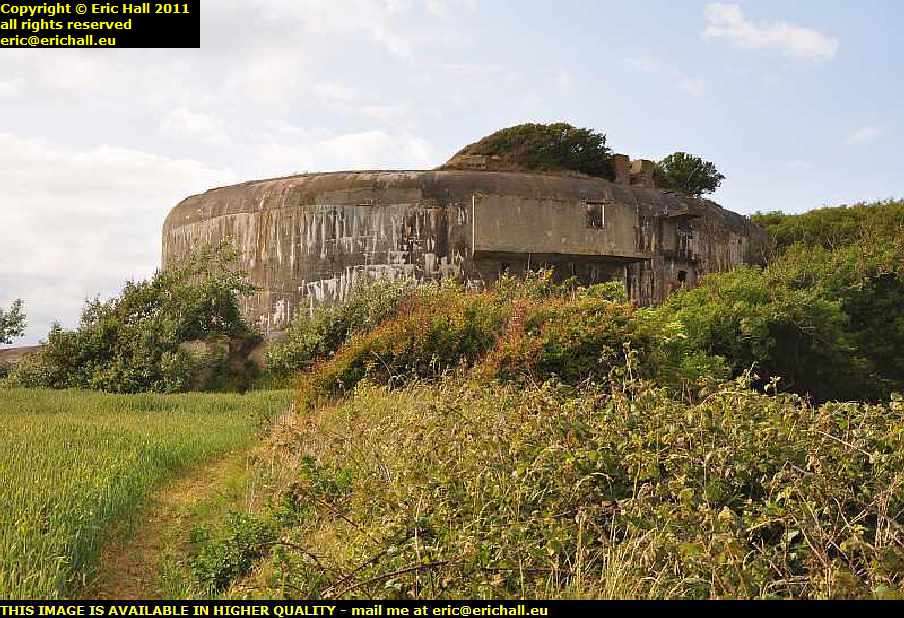
batterie todt battery audinghen pas de calais franceOn the coast between the two villages of Audresselles and Audinghem are what are known as the Batteries Todt – the “Todt Batteries”.

Fritz Todt was the German Minister for Armaments and Munitions in the early days of World War II prior to his death in 1942.

One of his tasks was the overseeing of the forced labour gangs, and another was the construction of the border fortifications.

batterie todt battery audinghen pas de calais franceHis “Todt Organisation” undertook construction of the Atlantic Wall – the system of fortifications that protected the French and Belgian coasts from invasion.

Part of the fortifications consisted of four massive concrete bunkers, each one of which contained a huge 380mm gun, the kind of which was fitted to some of the biggest battleships.

batterie todt battery audinghen pas de calais franceThese could fire shells well over 30 miles on a good day and so the Kent coast was well within range.

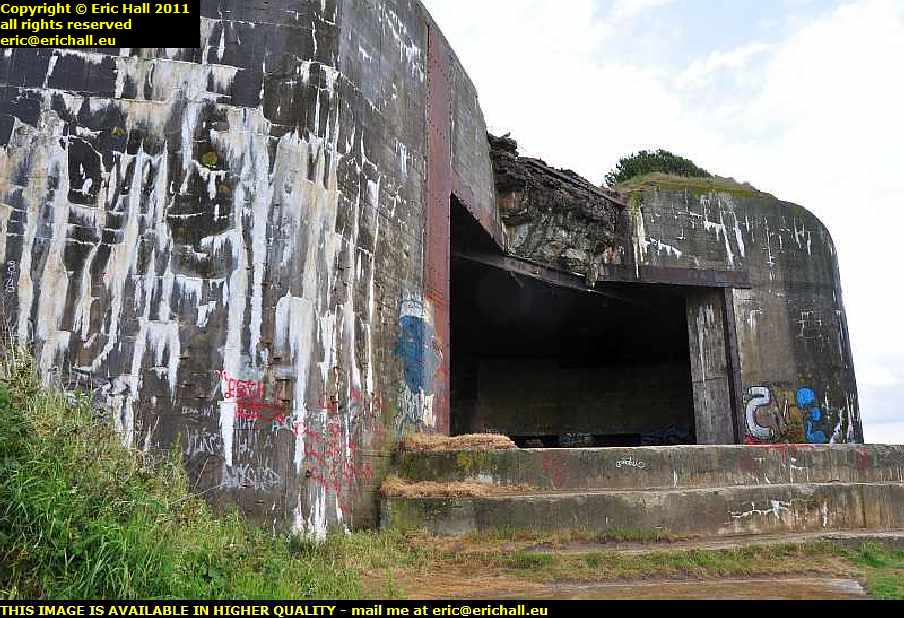
This would make them a natural target of RAF Bomber Command and so these gun emplacements were build with roofs and walls of reinforced concrete 3.5 metres thick, and were protected by 9 75mm anti-aircraft guns.

batterie todt battery audinghen pas de calais franceConstruction began in August 1940 and the first shell was fired on 20th January 1942, although the official opening was on 10th February.

There was a field of fire of 120° and so they had a pretty good control of the Channel and the Kent coast.

Nothing could move over there without the Germans seeing it and being able to fire at it.

batterie todt battery audinghen pas de calais franceEach gun required a crew of four officers and eighteen men, and with all of the tasks that had to be performed, a force of 600 men was involved.

It wasn’t until the 29th of September that the guns were finally silent, captured by the North Nova Scotia Highlanders from the 3rd Canadian Army during “Operation Undergo”

batterie todt battery audinghen pas de calais franceTheir attack was preceded on the 26th of September by 532 bombers which dropped a total of 855 tonnes of bombs. And you can see the damage that they caused here.

Although there is no record of any “Grand Slam” 5-tonne penetration bomb being dropped in this raid, they were being employed elsewhere in the vicinity against German “special artillery” and I can’t imagine anything else that would do this much damage.

english channel kent coast cap griz nez pas de calais franceIt was a beautiful late afternoon/early evening and so I wandered off to my little haunt on the top of Cap Griz Nez.

There’s a nice, quiet little car park where I have spent many a happy hour (and several comfortable nights).

And there’s also a stunning view from here right across the English Channel.

english channel kent coast cap griz nez pas de calais franceWith a really good telephoto lens you can see most things when there is nothing to obstruct your vision, like trees and the like.

Over there to the left of the ship you might be able to make out the Richborough Power Station between Sandwich and Ramsgate.

You’ll probably have to click on this photo to see a larger image in order to see it more clearly.

cap griz nez pas de calais franceSitting here with my binoculars ship-spotting, at one time I could count as many as 42 ships in sight.

Not for nothing is the English Channel described as being the busiest sea lane in the world.

It’s so busy that in fact that ships have to “drive on the right” when they are sailing through the Channel, just as they do when they enter the harbour at Halifax.

cap giz nez pas de calais franceMy train isn’t quite late and so I could sit here and cook myself a meal in the back of Caliburn. I did remember my gas stove for once.

Having eaten and washed up, I went back up to the scenic viewpoint to watch the sun set on the British Empire. I reckoned that that was rather symbolic.

At the appropriate time I drove up the coast to the Channel Tunnel terminal and we whizzed through on the train to Folkestone.

But we had some excitement at the Tunnel terminal.

A French Customs official came out of his hut, looking all official and the like, and flagged me down. I thought that this was going to be a search or some other interaction of some unpleasant sort, but far from it.

Caliburn, being fully-signwritten as you know, attracts a considerable amount of attention when he’s on his travels and this Customs Official had seen the signs.

He wanted to talk wind turbines and seeing as I was running a little early, we had a lengthy chat. The result is that he took a card and he’ll be in touch.

Even though I was starting to feel tired, I make it a rule never to stop until I’m around the M25 an heading north. Having to negotiate the M25 in daylight hours is a pointless exercise – I’ll be stuck there for a week.

03:00 is definitely the time to be round there, and by 04:00 (yet again) I was pulling into a little truncated road that I know where the A5 has been diverted.

Not the first time I’ve stayed here. We parked here the night in 1973 – a dozen of us in a hired Bedford CF van after watching the Speedway World Finals at Wembley.

Sunday 17th October 2010 – SUNDAY NIGHT FOUND ME IN ST. BRIDES

atlantica motel st brides newfoundland canadaAnd I bet you are wondering where this might be. It is in fact right down in the south-east of Newfoundland on the coast of Placentia Bay.

The motel was cold and damp at first, but then again I was the first visitor for 5 weeks and I did appear unexpectedly. But half an hour with the electric heater soon solved the problem.

And Argentia, and Placentia Bay is of some historical significance – it’s a huge deep bay on the south coast of Newfoundland and its historical claim to fame is that it was one of the assembly point of ships sailing from North America during World War II. They would arrive in the bay here and would be marshalled into their appropriate convoys – the Home Fast, the Home Slow, the Arctic Convoys and so on, be allocated a destroyer group to escort them on their voyage, and then they would be sent off into the cauldron that was the Battle of the Atlantic

plancentia bay argentia newfoundland canadaAnd not only that, an important wartime conference took place here between Churchill and Roosevelt in August 1941 – 5 months before the USA entered the war. The Atlantic Charter, as it became known, set out Churchill and Roosevelt’s vision for a postwar world.

And the one thing that rings any kind of bell about the Bay – the memoirs of Jack Broome or the biography of “Johnny” Walker for example, will be the mists and the fog and the persistent rain of this area. And do you know what? It’s absolutely pouring down – rain I don’t recall ever having seen before – and the fog is so thick you can cut it with a knife.

deer lake motel newfoundland canada And that is astonishing because for about 9/10ths of my journey across the south of Newfoundland from leaving my motel at Deer Lake until about Clarenville or whatever, the weather was absolutely gorgeous and I was in shirtsleeves.

The moment I crossed the final mountain range to the east coast, the change in the weather was dramatic.

gander airport newfoundland canadaI’ve also been to another historical site today – the airport at Gander. Before he became the officer in charge of Bomber Command, “Bomber” Harris was the chief of the Royal Air Force’s Purchasing Commission in the USA, charged with re-equipping Bomber Command with medium bombers after the Fairey Battles had been annihilated during the retreat to Dunkirk.

He bought a large amount of Lockheed Hudson bombers but hadn’t thought about how he would get them back to the UK.

A young BOAC pilot by the name of Donald Bennett, who had been seconded to his command, said “why don’t we fly them back?” and the Atlantic Ferry was born.

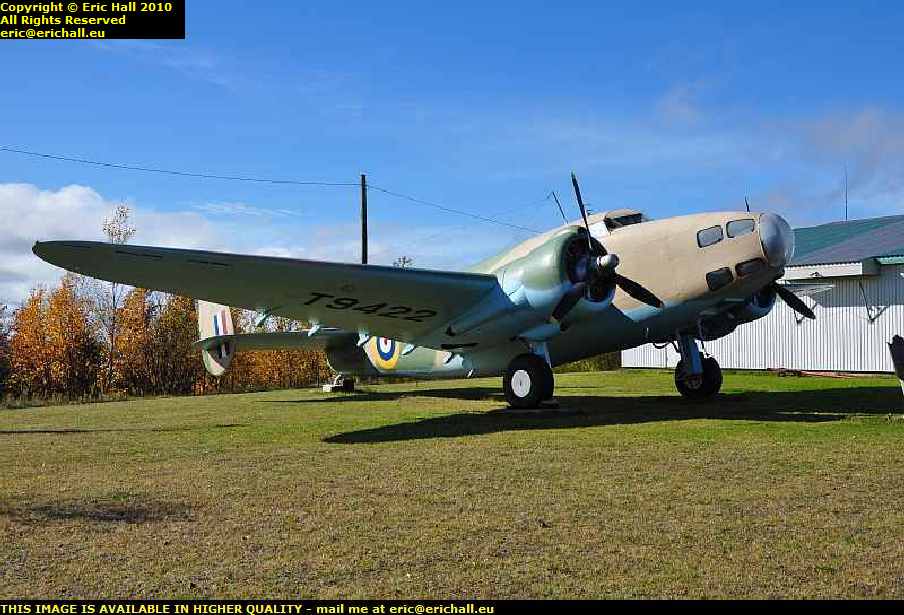
lockheed hudson bomber air museum gander newfoundland canadaBennett, officially a civilian who, in his BOAC days had flown passenger aircraft across the Atlantic in the 1930s, flew first one, from the USA to the civilian airfield at Gander where he refuelled.

On the night of 10th November 1940 as navigator, he led a squadron of Hudsons off for the 16-hour flight to Aldergrove in Northern Ireland, over 2000 miles across the Atlantic. Following the success of the flight, all kinds of planes subsequently flew from North America to Europe with the Atlantic Ferry, and the father of Liz (who reads this blog) was a navigator on some of the Halifaxes made in Canada that made the crossing.

war grave world war II military cemetery gander newfoundlandn those days, with primitive navigational aids and unknown climatic conditions the flights could be hazardous and many machines were lost.

Just outside Gander is a Commonwealth War Graves Cemetery with the remains of 100 aircrew who perished at Gander – either exhausted after the long flight from the USA to Gander and becoming disorientated in the fog, or else failing to leave the ground in the planes so heavily overloaded with petrol for the long flight across the Ocean.

But I saw something in the cemetery that absolutely disgusted me. A woman was there with a dog – off its lead – and it urinated on a grave.

The woman did nothing. I did something – I made the woman completely aware of what I thought about all of this and by the time I had finished she got back into her car with her dog and left the scene. It was a thoroughly shameful display.

car towing two trailers clarenville newfoundland canadaAnd so I finished my journey along the Trans Canada Highway down to the south-east of Newfoundland, admiring the scenery and the rather lax traffic laws that allow all kinds of bizarre combinations of vehicles and trailers to take to the road.

Long-gone are they days when this kind of thing would be tolerated in Europe, and if I could obtain a residence permit for Canada I’d be here like a shot.

Tuesday 17th November 2009 – Today I’ve been fighting …

lean to wood pile… my way into the lean-to at the other side of the house. It was full of bricks and wood that I threw in there when I had a tidy-up a couple of years ago. The plan is to put my plant-pot beichstuhl on the inside to the left of the door, put all my gardening tools to the right, and fill up the rest with wood that I’ll be cutting through the winter and of course all of the scrap wood from the roof that is too bad to reuse. There’s tons of that.

It’s not quite working out like this though as the best-laid plans of mice, men and yours truly have a habit of going gang awa’, but at least I’m making slow progress.

If you have been following my website over the years you will maybe remember that it was into here that I was planning to move when the idea of coming here full-time was first discussed. But a casual survey of the roof showed that two of the beams had rotted and when I came to replace them it turned out that seven needed to be replaced and while I was taking some of them out part of the wall collapsed. And it was just after having rebuilt the wall that I was taken ill, and that was that.

In other news, following the collapse of the English-language newspaper, the SMADC – the French Government body charged with regenerating the Combrailles – has been looking at other ways to communicate with the English-speaking community over here and one idea currently being batted around is to have a 15-minute English-speaking spot every Sunday on the local radio station. They are looking for a radio presenter for the programme (if it goes ahead) and it seems that someone has thrown my hat into the ring.

In other other news, it’s been announced that a 90 year-old German is to be tried for a war crime dating back over 60 years. This follows the trial of an 88 year-old the other day. Can you imagine the scene in the court …
How do you plead?”
Not Guilty
What evidence do you have to disprove the accusations?”
Well none, actually. The last of my defence witnesses died in 1972
So what chance of a fair trial are these people going to get? It’s like the case of Demianjuk – even the Zionists found him Not Guilty of war crimes but he’s being hawked around country after country until someone can find a crime to pin on him. It’s a total disgrace.

These two guys are being tried for a handful of civilian deaths, yet night after night after night members of Bomber Command of the British Royal Air Farce flew over Germany deliberately targeting innocent civilians and massacred them by their hundreds of thousands. When is someone going to round them up and put them on trial for the horrific war crimes that they committed? And how many Russian soldiers were prosecuted for the atrocious war crimes that they committed against the German civilian population as they overran the Eastern provinces of Germany?

History is indeed written by the victors and never by the victims. Bah! Humbug!