And I’m now curled up in the back of Caliburn fast asleep in a cut-off of the A5 at Markyate.
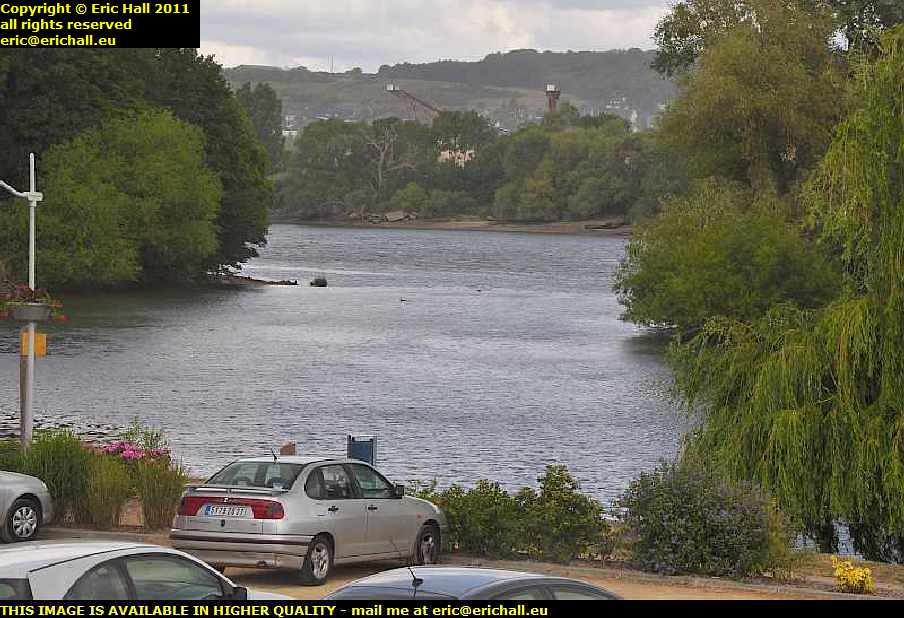 This morning though, I was curled up on a car park at Pont de l’Arche on the banks of the River Eure. Quite painless here, it was.
And where those cranes are in the distance, that’s the River Seine.
The two rivers are quite close together, separated by a low earthen bank and run parallel to each other for a considerable distance.
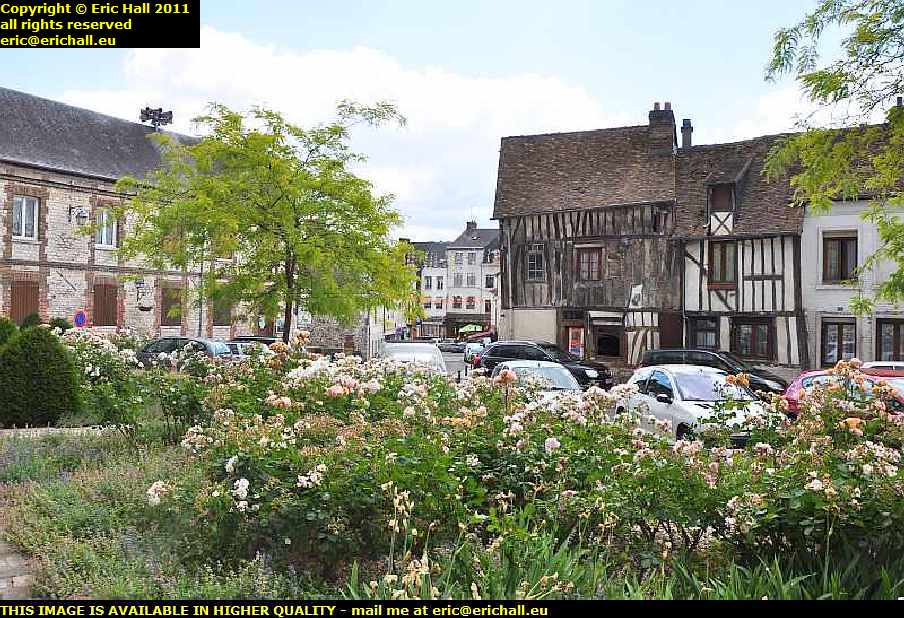 The town itself is quite beautiful and has quite a history.
There’s a Roman road that passes near here and with this being one of the easiest crossings of the rivers, there was a Roman camp not too far away.
It’s considered likely therefore that the origins of the town were in the civilian settlement that would have been here to service the Roman camp.
 In the early Medieval period sometime in the 9th Century, the presence of a bridge across the rivers here was recorded.
This bridge was guarded by two fortresses, one at either end. It took the Vikings four months to reach Paris during their invasion of 885, much of which was due to the spirited defence of the forts.
The Viking encampment is just outside the town at Damps – which was the argot, or slang for “Danish”.
 Like most towns in strategic positions, it was fortified and in places, traces of the fortifications can still be seen.
But even where the fortifications no longer exist, it’s very easy to imagine just where they might have been and how they might have looked.
And remember my pet theory about churches and fortresses? That’s exactly the kind of place where you would have had an early Medieval fortress,
isn’t it?
 The church itself, l’église Notre-Dame-des-Arts, dates from the 16th Century and is in what is said to be the “flamboyant gothic” style. I won’t argue with that.
The stalls are quite interesting – they are said to have come from Bonport Abbey when it was dismantled after the French Revolution.
The altar is a baroque creation of the 17th Century and there is also a magnificent organ donated by Henri IV.
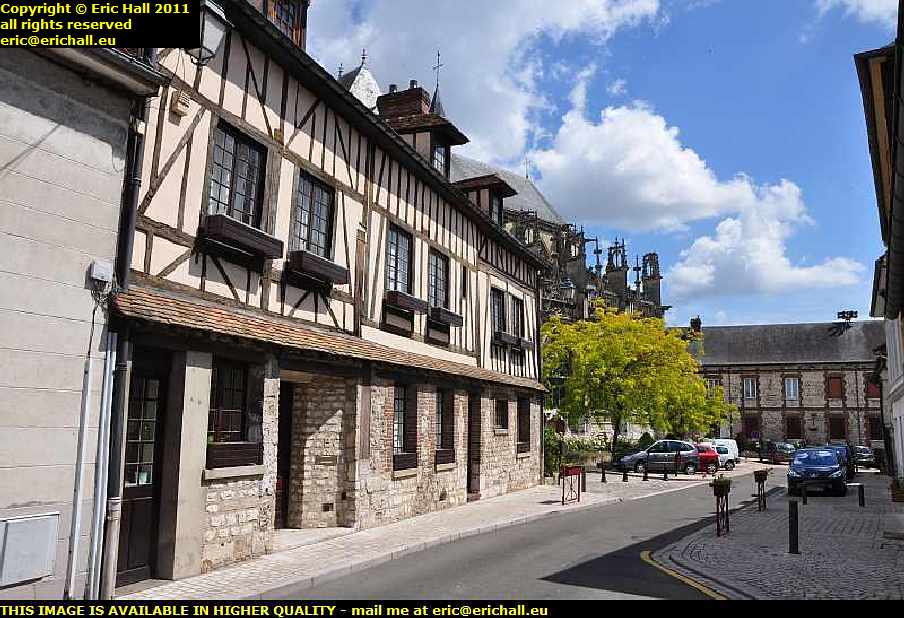 The town is actually of some significance in British history.
It was a favourite haunt of Richard the Lion-Heart, who was of course Duke of Normandy, during his battles with King Philippe II of France and fighting took place in the vicinity.
And in World War I the Royal Flying Corps had a big depot here that reconditioned and repaired aeroplane engines for the front-line squadrons.
So now I’m moving on.
Rouen was not a problem (for a change) although I wish that they would build a by-pass around the town and I arrived in Boulogne for a late-ish lunch. The big LeClerc on the edge of town came up with some goodies, and then I went for a stroll around the town.
I wasn’t stopping though, I had other fish to fry.
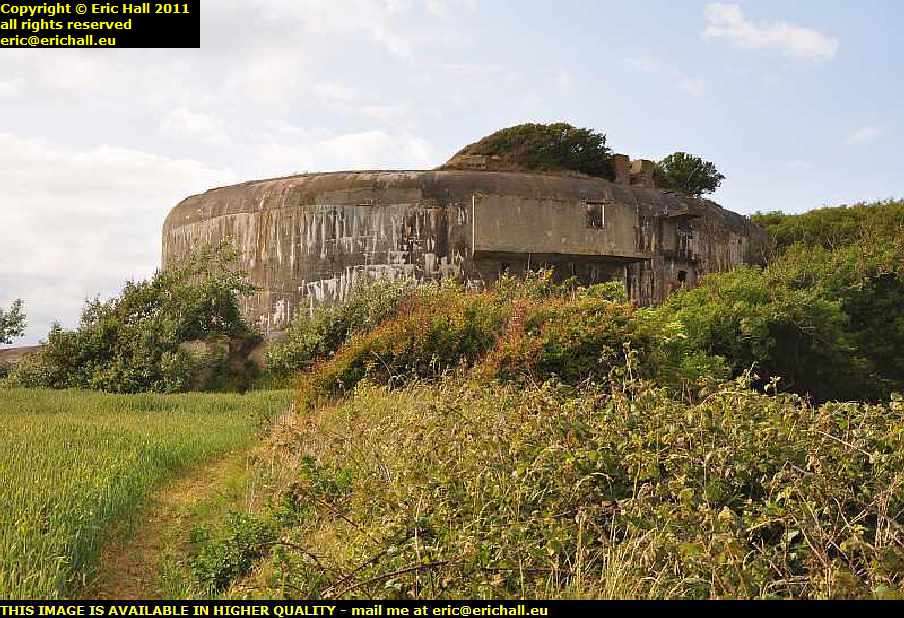 On the coast between the two villages of Audresselles and Audinghem are what are known as the Batteries Todt – the “Todt Batteries”.
Fritz Todt was the German Minister for Armaments and Munitions in the early days of World War II prior to his death in 1942.
One of his tasks was the overseeing of the forced labour gangs, and another was the construction of the border fortifications.
 His “Todt Organisation” undertook construction of the Atlantic Wall – the system of fortifications that protected the French and Belgian coasts from invasion.
Part of the fortifications consisted of four massive concrete bunkers, each one of which contained a huge 380mm gun, the kind of which was fitted to some of the biggest battleships.
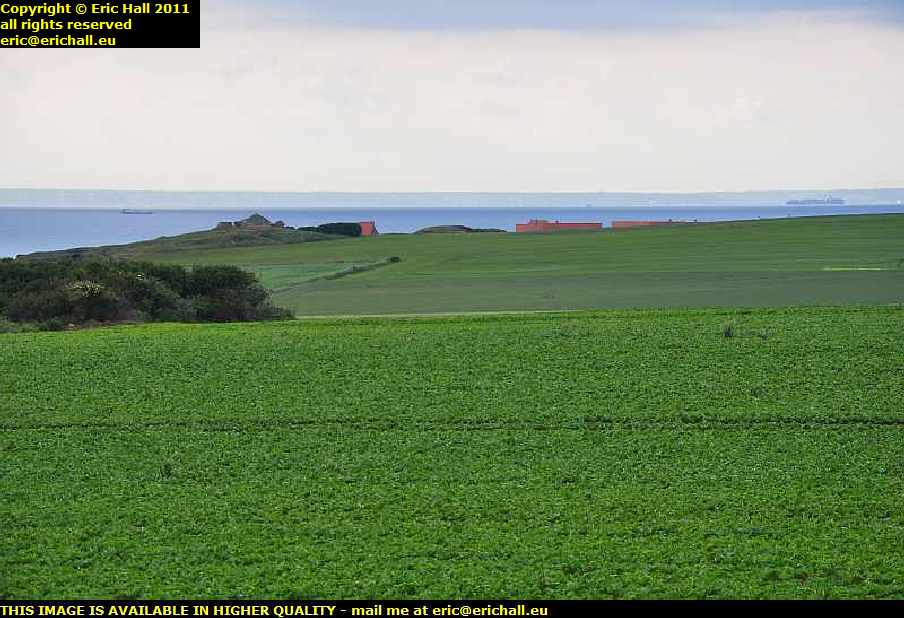 These could fire shells well over 30 miles on a good day and so the Kent coast was well within range.
This would make them a natural target of RAF Bomber Command and so these gun emplacements were build with roofs and walls of reinforced concrete 3.5 metres thick, and were protected by 9 75mm anti-aircraft guns.
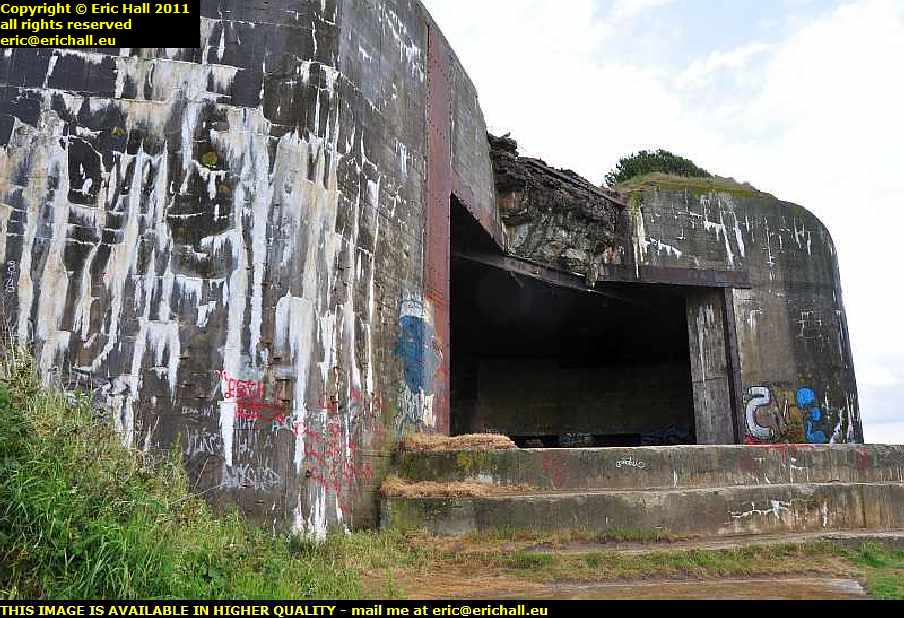 Construction began in August 1940 and the first shell was fired on 20th January 1942, although the official opening was on 10th February.
There was a field of fire of 120° and so they had a pretty good control of the Channel and the Kent coast.
Nothing could move over there without the Germans seeing it and being able to fire at it.
 Each gun required a crew of four officers and eighteen men, and with all of the tasks that had to be performed, a force of 600 men was involved.
It wasn’t until the 29th of September that the guns were finally silent, captured by the North Nova Scotia Highlanders from the 3rd Canadian Army during “Operation Undergo”
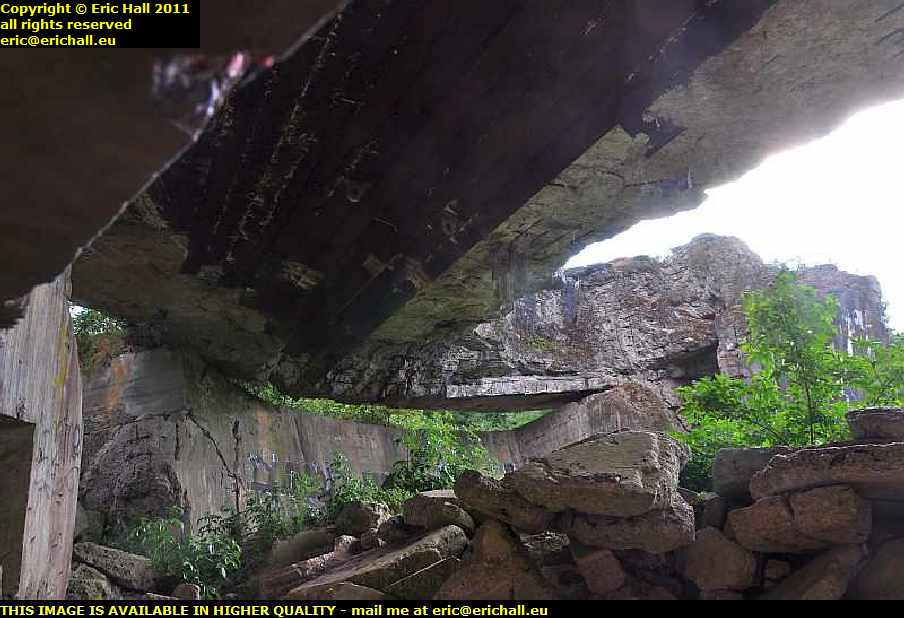 Their attack was preceded on the 26th of September by 532 bombers which dropped a total of 855 tonnes of bombs. And you can see the damage that they caused here.
Although there is no record of any “Grand Slam” 5-tonne penetration bomb being dropped in this raid, they were being employed elsewhere in the vicinity against German “special artillery” and I can’t imagine anything else that would do this much damage.
 It was a beautiful late afternoon/early evening and so I wandered off to my little haunt on the top of Cap Griz Nez.
There’s a nice, quiet little car park where I have spent many a happy hour (and several comfortable nights).
And there’s also a stunning view from here right across the English Channel.
 With a really good telephoto lens you can see most things when there is nothing to obstruct your vision, like trees and the like.
Over there to the left of the ship you might be able to make out the Richborough Power Station between Sandwich and Ramsgate.
You’ll probably have to click on this photo to see a larger image in order to see it more clearly.
 Sitting here with my binoculars ship-spotting, at one time I could count as many as 42 ships in sight.
Not for nothing is the English Channel described as being the busiest sea lane in the world.
It’s so busy that in fact that ships have to “drive on the right” when they are sailing through the Channel, just as they do when they enter the harbour at Halifax.
 My train isn’t quite late and so I could sit here and cook myself a meal in the back of Caliburn. I did remember my gas stove for once.
Having eaten and washed up, I went back up to the scenic viewpoint to watch the sun set on the British Empire. I reckoned that that was rather symbolic.
At the appropriate time I drove up the coast to the Channel Tunnel terminal and we whizzed through on the train to Folkestone.
But we had some excitement at the Tunnel terminal.
A French Customs official came out of his hut, looking all official and the like, and flagged me down. I thought that this was going to be a search or some other interaction of some unpleasant sort, but far from it.
Caliburn, being fully-signwritten as you know, attracts a considerable amount of attention when he’s on his travels and this Customs Official had seen the signs.
He wanted to talk wind turbines and seeing as I was running a little early, we had a lengthy chat. The result is that he took a card and he’ll be in touch.
Even though I was starting to feel tired, I make it a rule never to stop until I’m around the M25 an heading north. Having to negotiate the M25 in daylight hours is a pointless exercise – I’ll be stuck there for a week.
03:00 is definitely the time to be round there, and by 04:00 (yet again) I was pulling into a little truncated road that I know where the A5 has been diverted.
Not the first time I’ve stayed here. We parked here the night in 1973 – a dozen of us in a hired Bedford CF van after watching the Speedway World Finals at Wembley.
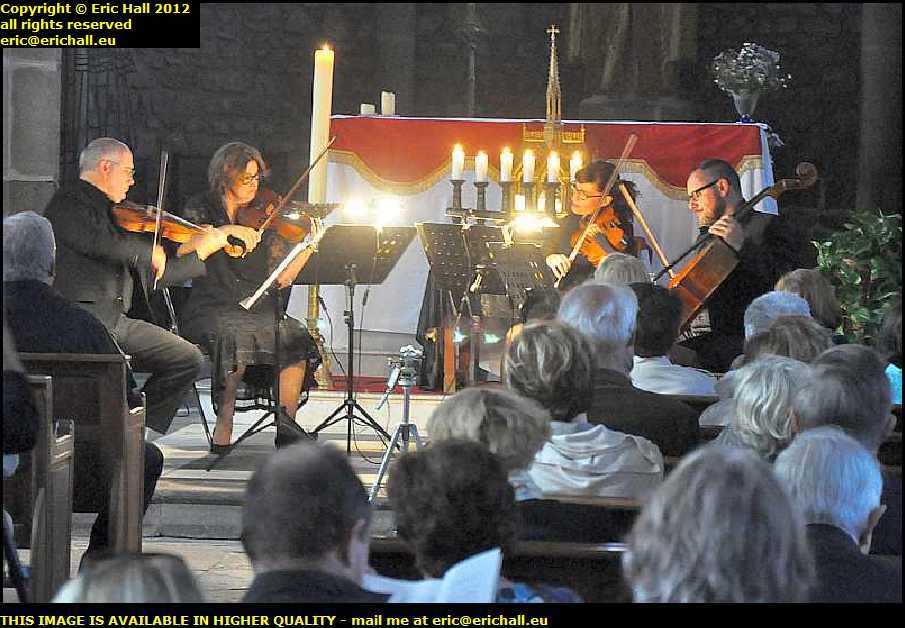 Setting up of the equipment didn’t take all that long and after the sound check we settled back to listen the music.
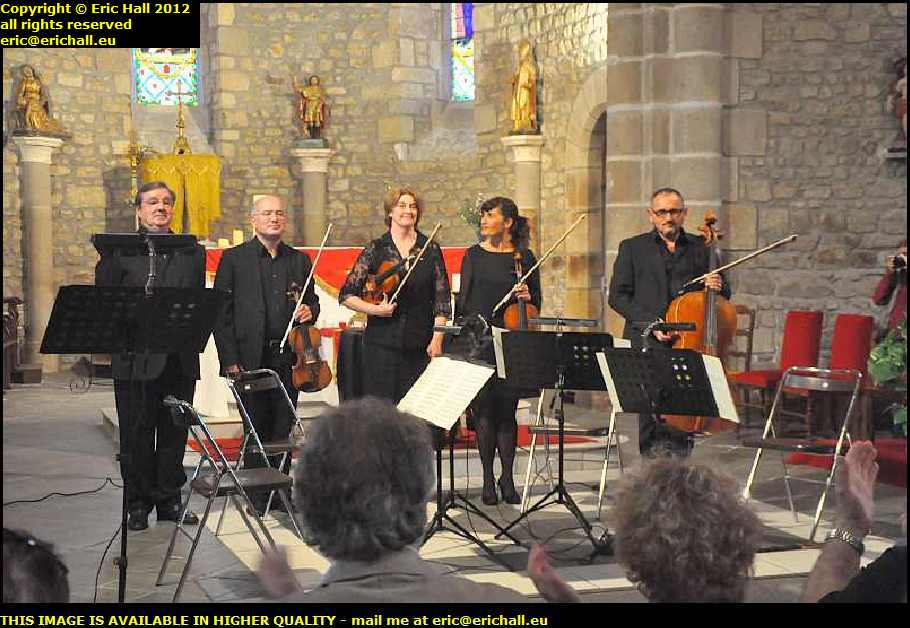 I would rather have a different kind of music as you know, but as I have said before … "and on many occasions too" – ed … around here, you have to take whatever entertainment that is offered, wherever, and whenever you can find it.
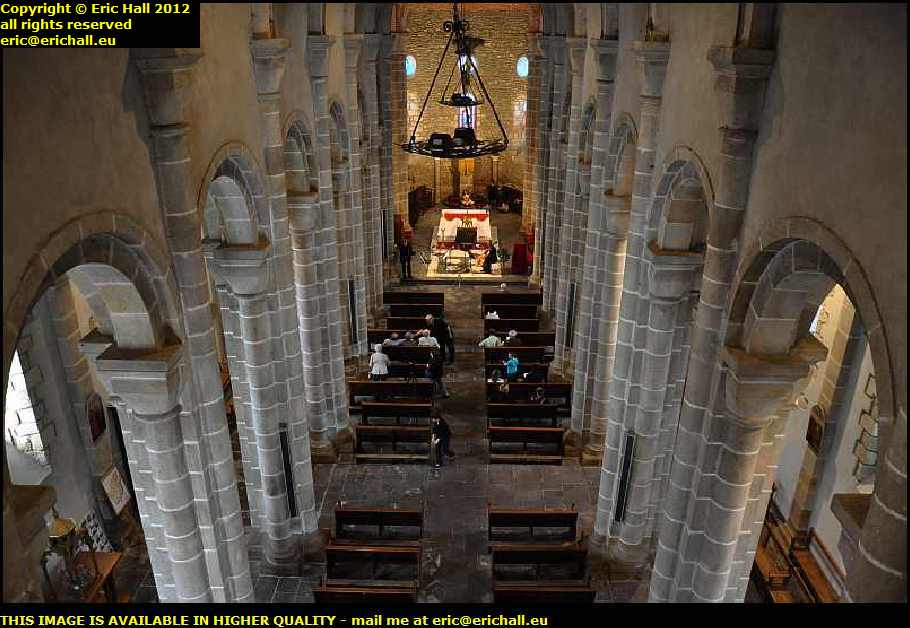 With having set up the sound quite quickly, it gave me a god opportunity to have a look around the church.
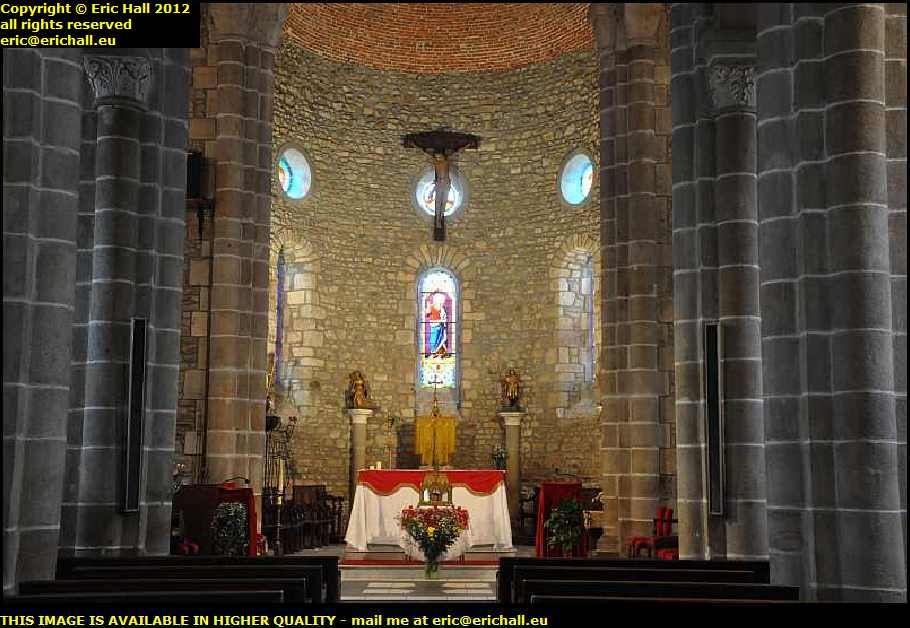 The thing that you’ll notice about this church is that it is not aligned in the more-traditional east-west direction. And there’s a reason for this.
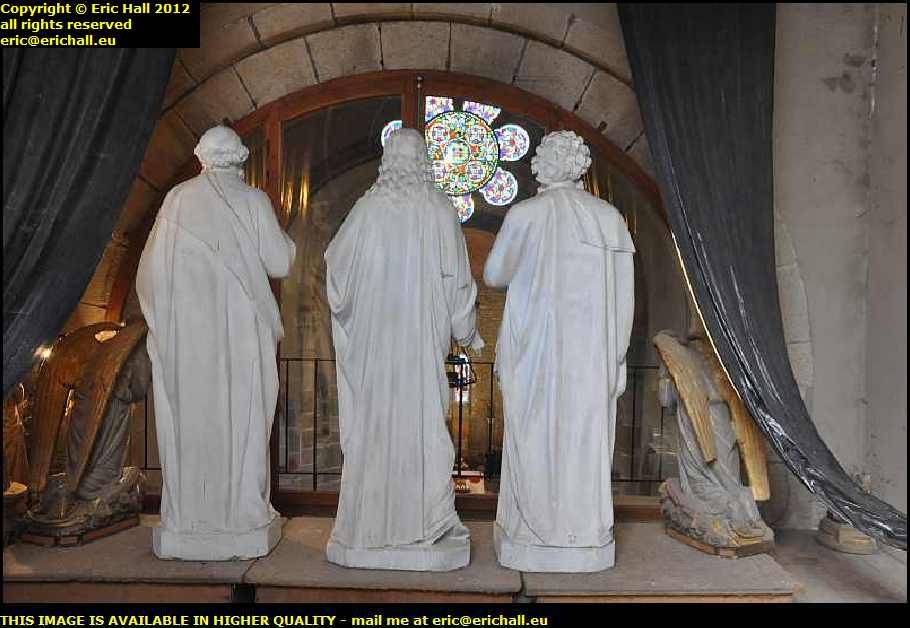 Saltpetre is however extremely corrosive and during a survey of the structural stability of the church some years later, they discovered that the saltpetre had eaten away all of the structure of the church and it was totally unsafe.
 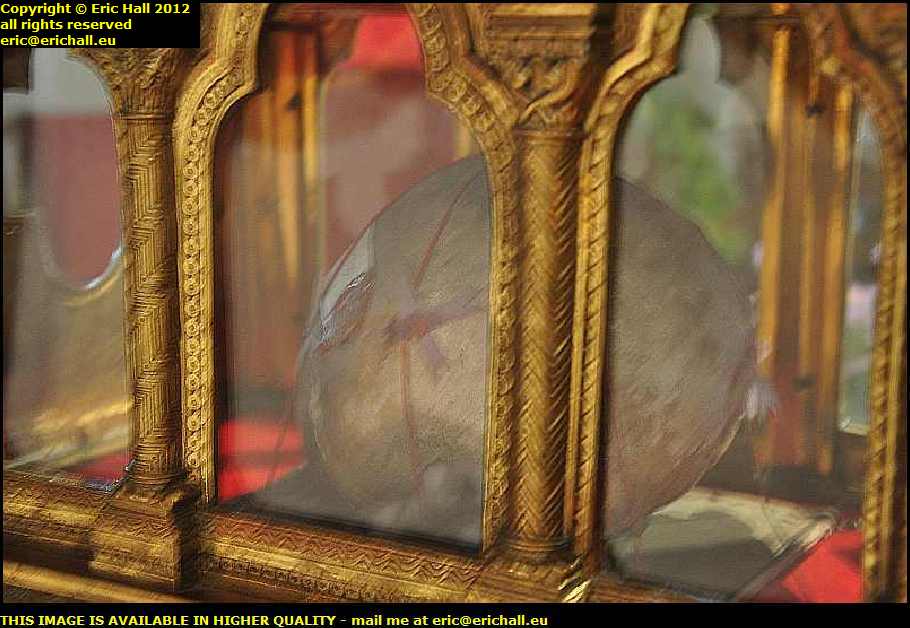 Even more interesting was the fact that it was the feast of St Bravy