Tag Archives: grand slam

Tuesday 31st May 2011 – THE EVIL HAS LANDED!

And I’m now curled up in the back of Caliburn fast asleep in a cut-off of the A5 at Markyate.
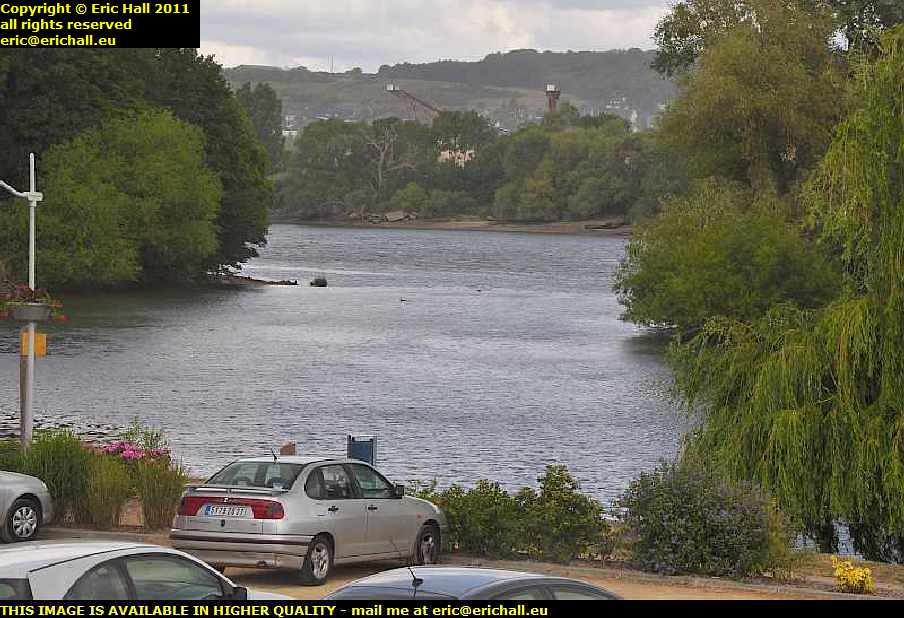
pont de l'arche franceThis morning though, I was curled up on a car park at Pont de l’Arche on the banks of the River Eure. Quite painless here, it was.

And where those cranes are in the distance, that’s the River Seine.

The two rivers are quite close together, separated by a low earthen bank and run parallel to each other for a considerable distance.
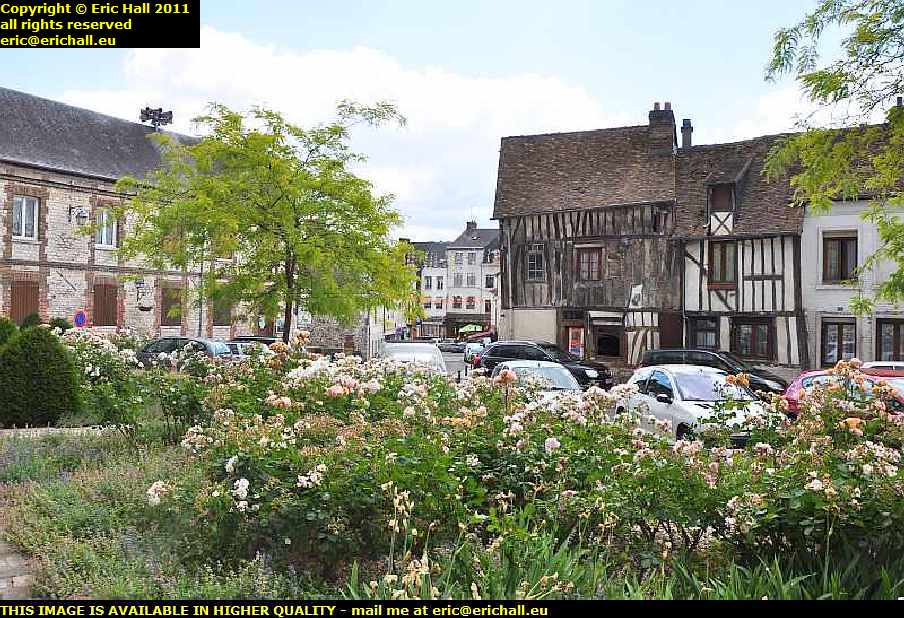
pont de l'arche franceThe town itself is quite beautiful and has quite a history.

There’s a Roman road that passes near here and with this being one of the easiest crossings of the rivers, there was a Roman camp not too far away.

It’s considered likely therefore that the origins of the town were in the civilian settlement that would have been here to service the Roman camp.

pont de l'arche franceIn the early Medieval period sometime in the 9th Century, the presence of a bridge across the rivers here was recorded.

This bridge was guarded by two fortresses, one at either end. It took the Vikings four months to reach Paris during their invasion of 885, much of which was due to the spirited defence of the forts.

The Viking encampment is just outside the town at Damps – which was the argot, or slang for “Danish”.

l'église Notre-Dame-des-Arts fortifications pont de l'arche franceLike most towns in strategic positions, it was fortified and in places, traces of the fortifications can still be seen.

But even where the fortifications no longer exist, it’s very easy to imagine just where they might have been and how they might have looked.

And remember my pet theory about churches and fortresses? That’s exactly the kind of place where you would have had an early Medieval fortress,
isn’t it?

l'église Notre-Dame-des-Arts pont de l'arche franceThe church itself, l’église Notre-Dame-des-Arts, dates from the 16th Century and is in what is said to be the “flamboyant gothic” style. I won’t argue with that.

The stalls are quite interesting – they are said to have come from Bonport Abbey when it was dismantled after the French Revolution.

The altar is a baroque creation of the 17th Century and there is also a magnificent organ donated by Henri IV.
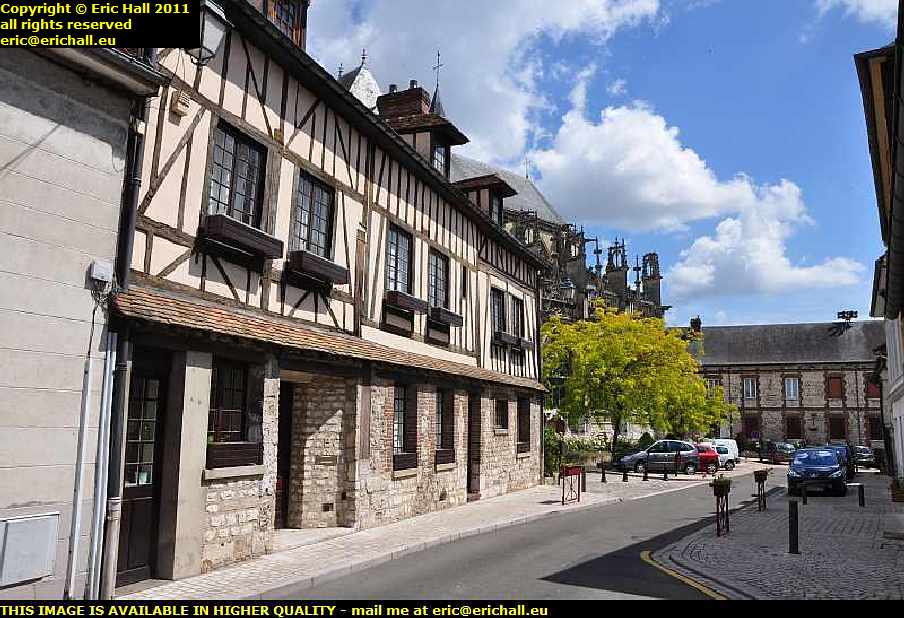
pont de l'arche franceThe town is actually of some significance in British history.

It was a favourite haunt of Richard the Lion-Heart, who was of course Duke of Normandy, during his battles with King Philippe II of France and fighting took place in the vicinity.

And in World War I the Royal Flying Corps had a big depot here that reconditioned and repaired aeroplane engines for the front-line squadrons.

So now I’m moving on.

Rouen was not a problem (for a change) although I wish that they would build a by-pass around the town and I arrived in Boulogne for a late-ish lunch. The big LeClerc on the edge of town came up with some goodies, and then I went for a stroll around the town.

I wasn’t stopping though, I had other fish to fry.
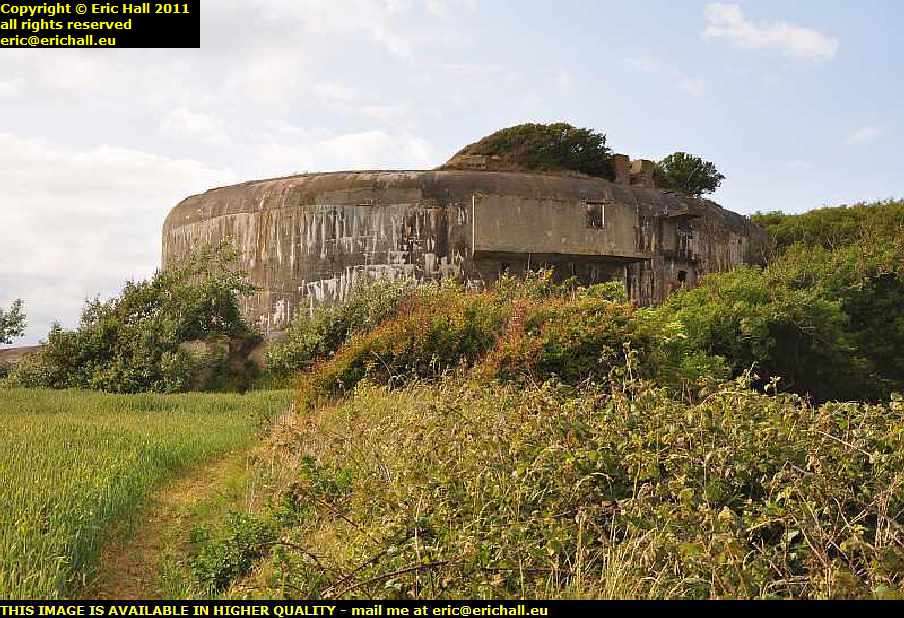
batterie todt battery audinghen pas de calais franceOn the coast between the two villages of Audresselles and Audinghem are what are known as the Batteries Todt – the “Todt Batteries”.

Fritz Todt was the German Minister for Armaments and Munitions in the early days of World War II prior to his death in 1942.

One of his tasks was the overseeing of the forced labour gangs, and another was the construction of the border fortifications.

batterie todt battery audinghen pas de calais franceHis “Todt Organisation” undertook construction of the Atlantic Wall – the system of fortifications that protected the French and Belgian coasts from invasion.

Part of the fortifications consisted of four massive concrete bunkers, each one of which contained a huge 380mm gun, the kind of which was fitted to some of the biggest battleships.
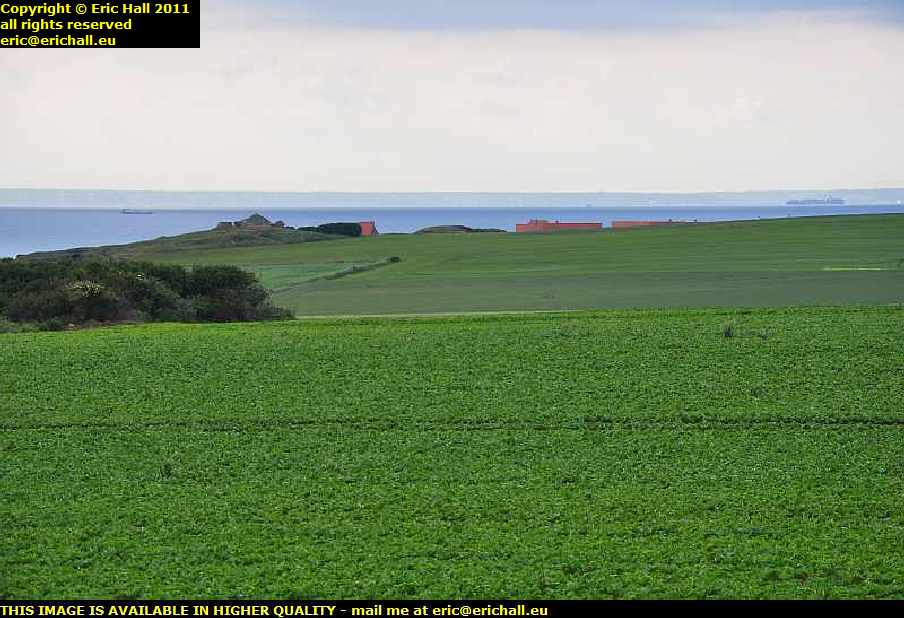
batterie todt battery audinghen pas de calais franceThese could fire shells well over 30 miles on a good day and so the Kent coast was well within range.

This would make them a natural target of RAF Bomber Command and so these gun emplacements were build with roofs and walls of reinforced concrete 3.5 metres thick, and were protected by 9 75mm anti-aircraft guns.
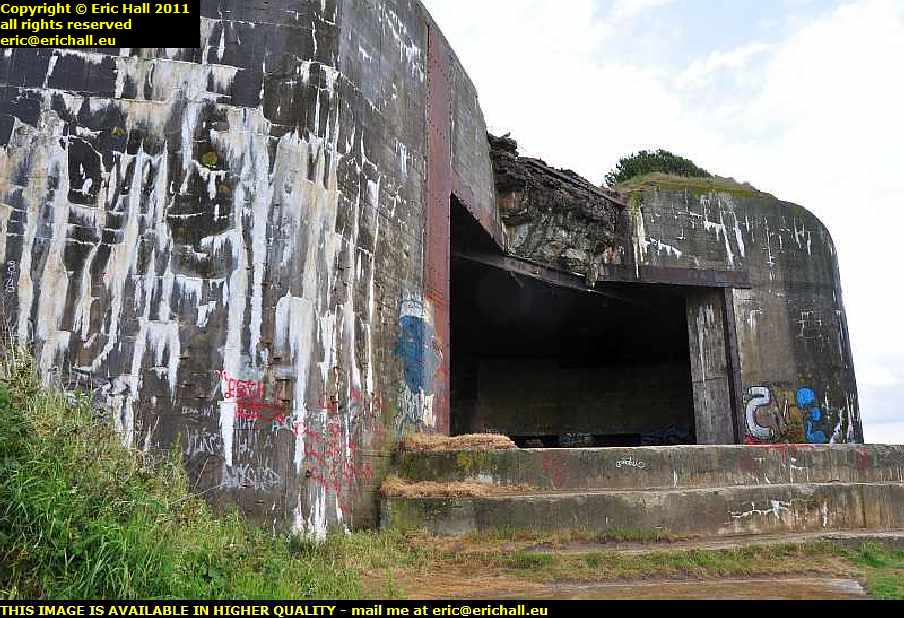
batterie todt battery audinghen pas de calais franceConstruction began in August 1940 and the first shell was fired on 20th January 1942, although the official opening was on 10th February.

There was a field of fire of 120° and so they had a pretty good control of the Channel and the Kent coast.

Nothing could move over there without the Germans seeing it and being able to fire at it.

batterie todt battery audinghen pas de calais franceEach gun required a crew of four officers and eighteen men, and with all of the tasks that had to be performed, a force of 600 men was involved.

It wasn’t until the 29th of September that the guns were finally silent, captured by the North Nova Scotia Highlanders from the 3rd Canadian Army during “Operation Undergo”
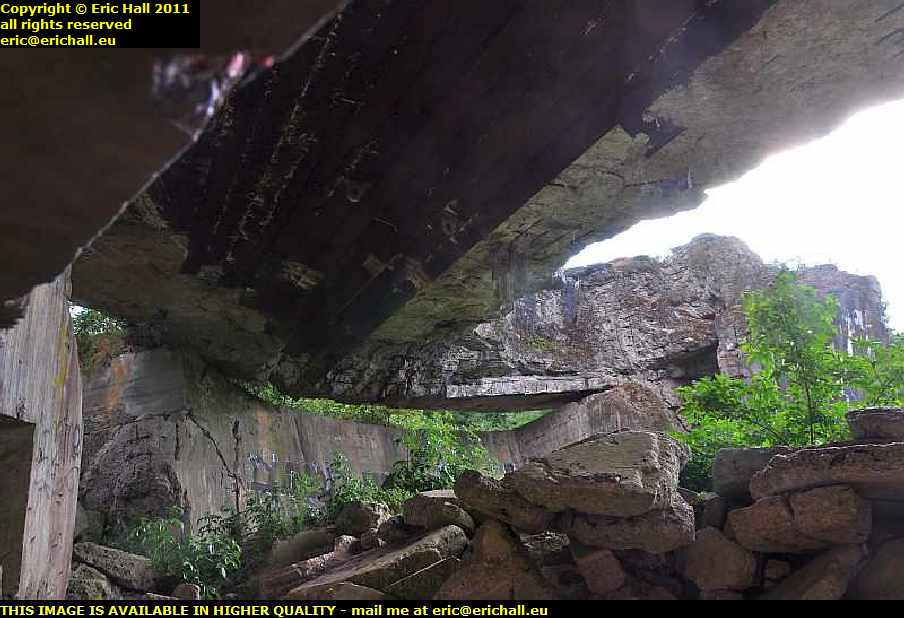
batterie todt battery audinghen pas de calais franceTheir attack was preceded on the 26th of September by 532 bombers which dropped a total of 855 tonnes of bombs. And you can see the damage that they caused here.

Although there is no record of any “Grand Slam” 5-tonne penetration bomb being dropped in this raid, they were being employed elsewhere in the vicinity against German “special artillery” and I can’t imagine anything else that would do this much damage.

english channel kent coast cap griz nez pas de calais franceIt was a beautiful late afternoon/early evening and so I wandered off to my little haunt on the top of Cap Griz Nez.

There’s a nice, quiet little car park where I have spent many a happy hour (and several comfortable nights).

And there’s also a stunning view from here right across the English Channel.

english channel kent coast cap griz nez pas de calais franceWith a really good telephoto lens you can see most things when there is nothing to obstruct your vision, like trees and the like.

Over there to the left of the ship you might be able to make out the Richborough Power Station between Sandwich and Ramsgate.

You’ll probably have to click on this photo to see a larger image in order to see it more clearly.

cap griz nez pas de calais franceSitting here with my binoculars ship-spotting, at one time I could count as many as 42 ships in sight.

Not for nothing is the English Channel described as being the busiest sea lane in the world.

It’s so busy that in fact that ships have to “drive on the right” when they are sailing through the Channel, just as they do when they enter the harbour at Halifax.

cap giz nez pas de calais franceMy train isn’t quite late and so I could sit here and cook myself a meal in the back of Caliburn. I did remember my gas stove for once.

Having eaten and washed up, I went back up to the scenic viewpoint to watch the sun set on the British Empire. I reckoned that that was rather symbolic.

At the appropriate time I drove up the coast to the Channel Tunnel terminal and we whizzed through on the train to Folkestone.

But we had some excitement at the Tunnel terminal.

A French Customs official came out of his hut, looking all official and the like, and flagged me down. I thought that this was going to be a search or some other interaction of some unpleasant sort, but far from it.

Caliburn, being fully-signwritten as you know, attracts a considerable amount of attention when he’s on his travels and this Customs Official had seen the signs.

He wanted to talk wind turbines and seeing as I was running a little early, we had a lengthy chat. The result is that he took a card and he’ll be in touch.

Even though I was starting to feel tired, I make it a rule never to stop until I’m around the M25 an heading north. Having to negotiate the M25 in daylight hours is a pointless exercise – I’ll be stuck there for a week.

03:00 is definitely the time to be round there, and by 04:00 (yet again) I was pulling into a little truncated road that I know where the A5 has been diverted.

Not the first time I’ve stayed here. We parked here the night in 1973 – a dozen of us in a hired Bedford CF van after watching the Speedway World Finals at Wembley.

Thursday 11th November 2010 – I’M BACK …

… on the road again and tonight will be my last night in North America.

This morning was rather confused though. According to Casey’s temperature gauge its 14°C outside – yet again!

This gives the lie to this idea about severe winters out here in Freezing Cold Canada doesn’t it? it’s flaming mid-November – what is the weather like in France … "it’s just as " – ed.

Mind you it’s below freezing and its snowing in Labrador.

I have just seen now on the other carriageway of this highway – heading in the direction of Windsor a vehicle that I am absolutely convinced is one of the big Fiat 125s.

If it is, and I cant think what else it could be, it gives a lie to the old story about “Fix It Again, Tony”, doesn’t it?

And quite a bit later somewhere on the road to Niagara Falls I saw an XKE – an E-type Jaguar – heading towards me. This was one of the late-model hard-top coupé version, and when was the last time that I ever saw one of those?

It wasn’t a convertible, though. And when was the last time I saw one of those?

And it was round about this point that I remembered that I had forgotten to take a photograph of the Ambassador Motel where I’ve been staying just now. I’m not doing so well, am I?

My road took me towards Hamilton and the airport there. And, more precisely, the Canadian Warplane Heritage Museum based at the airport.

bristol fairchild bolingbroke canadian warplane heritage museum hamilton ontario canadaThe Museum tells us that its mission is “To acquire, document, preserve and maintain, a complete collection of aircraft that were flown by Canadians and the Canadian military services from the beginning of World War II to the present …”

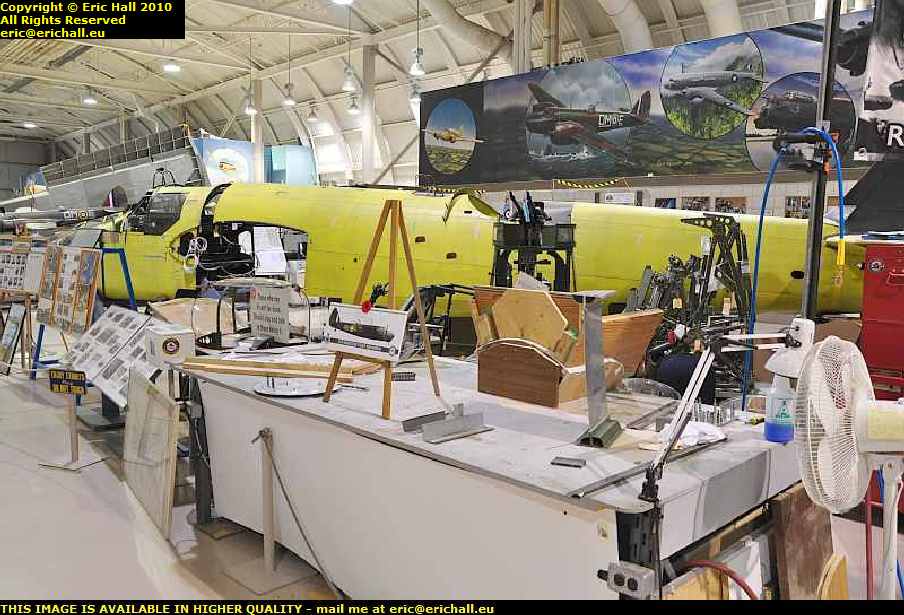
Such as this Bristol-Fairchild Bolingbroke, which we Europeans know much better as a Bristol Blenheim.

This is a reconnaissance version, as you can tell by its elongated snout.

bristol fairchild bolingbroke canadian warplane heritage museum hamilton ontario canadaWhen I say that this is “a” Bristol-Fairchild Bolingbroke, I’m being somewhat economical with the truth. It is in fact “many” Bristol Bolingbrokes.

When they were taken out of service they were sold off for scrap and the shells were very popular with farmers as chicken coops and the like.

Even today, you can still find them on farms and in scrapyards, and a total of eight of these “wrecks” have gone into assembling this one.

supermarine spitfire Mk 16 canadian warplane heritage museum hamilton ontario canadaNo prizes for guessing what this one is.

It is of course a Supermarine Spitfire, and the cockpit and a few other bits and pieces tell you that it’s a late-model one too.

As I suspected, it is indeed a late-model – a Mark XVI from April 1945 but which never saw actual combat.

douglas dakota dc3 canadian warplane heritage museum hamilton ontario canadaAnother aeroplane in here that never saw combat – although it certainly was old enough to do so, is this one.

Again, no prizes for guessing what this aeroplane is. It’s a Douglas DC3 – the legendary Dakota.

It’s always been a civilian aircraft – not a converted C47 “Skytrain” like so many were. She first flew in 1939 and spent the war years flying for Eastern Airlines.

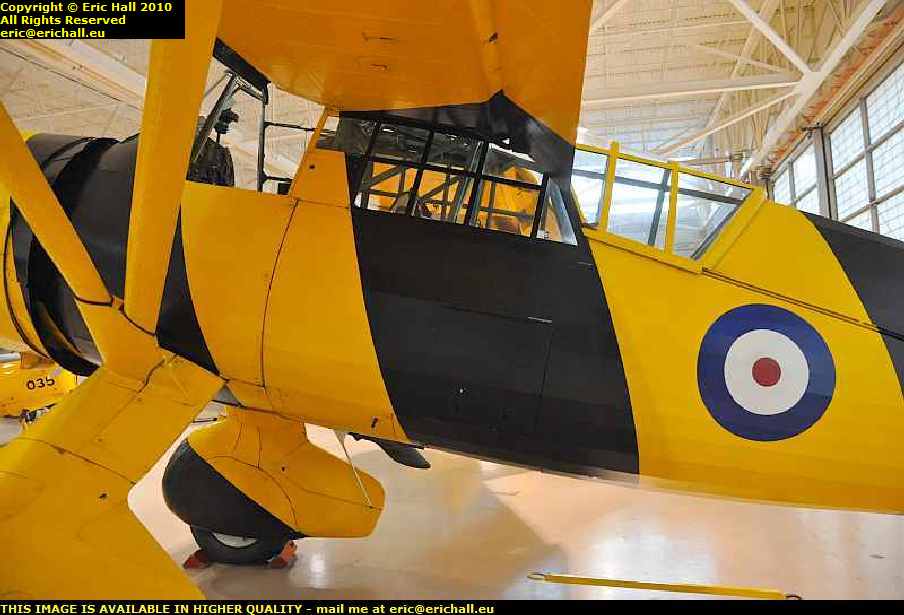
westland lysander canadian warplane heritage museum hamilton ontario canadaNow here’s an aeroplane that I’ve been looking forward to seeing.

It’s a Westland Lysander and you may be surprised to learn that I’ve never seen one of these “in the flesh” before.

Built for an Army Co-operation role, there was a mix-up over the specifications and it turned out to be totally unsuited to the task.

canadian warplane heritage museum hamilton ontario canadaHowever, its slow speed (stalling at only 65 mph), very short take-off and landing requirement and rather spacious interior soon found the aeroplane ideally suited for another role.

These were the planes that, painted black, used to fly out in the dead of night to land in lonely fields deep in Occupied Europe.

There, they would put down Resistance leaders, bring in supplies and pick up evading or escaping airmen and the like

north american mitchell b25 bomber canadian warplane heritage museum hamilton ontario canadaHere’s another fine example of military aviation – the very-much unsung B25 Mitchell Bomber.

Not very successful against front-line German fighter opposition, their deployment was much more common in the Pacific and Mitchells were the first Allied aeroplanes to drop bombs on mainland Japan.

This one didn’t though – it wasn’t built until 1945 and so missed the war. It was discovered on a airfield in Wilmington, Delaware, in 1975, patched up, and flew in to Hamilton under its own steam for a programme of restoration.

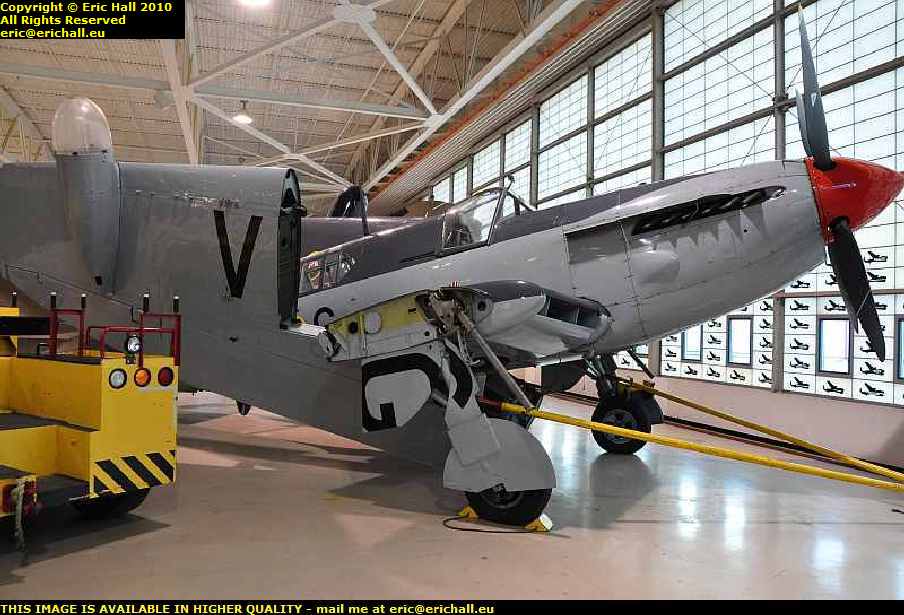
fairey firefly canadian warplane heritage museum hamilton ontario canadaI reckoned that this was a Fairey Fleet Air-Arm machine but wasnt sure quite what it was. Subsequent enquiries revealed that it’s a Fairey Firefly.

These were carrier-based fighters (hence the fold-up wings) and were two-seaters. They carried a navigator because it’s much more difficult to concentrate on navigation over the sea – with no reference points or landmarks that a pilot might immediately recognise.

Although dating from 1943, this one is a “peacetime” 1951 model and comes from Australia.

Loads of other aeroplanes here, but there was only really one that I was interested in seeing of course.

air museum hamilton ontario canada avro lancasterThe museum is the proud possessor of one of the very few remaining Avro Lancasters – and furthermore one of the only three that still flies.

My interest though was from another point of view entirely. I blagged my way in to see the assistant-director of the museum with the express purpose of talking to her about KB882.

Her response was frightening. “Ohhh – we could use it as spares for ours!”

air museum hamilton ontario canada avro lancasterThat is what I call sinister and that will be an even worse fate than that which it is currently experiencing. I rather wish that I hadn’t said anything now.

Don’t forget – KB882 flew over Germany on wartime missions – it has far more history than the one here.

I’m coming round more and more to the conclusion that the only hope for the future for KB882 is that if I put my money where my mouth is and buy it myself.

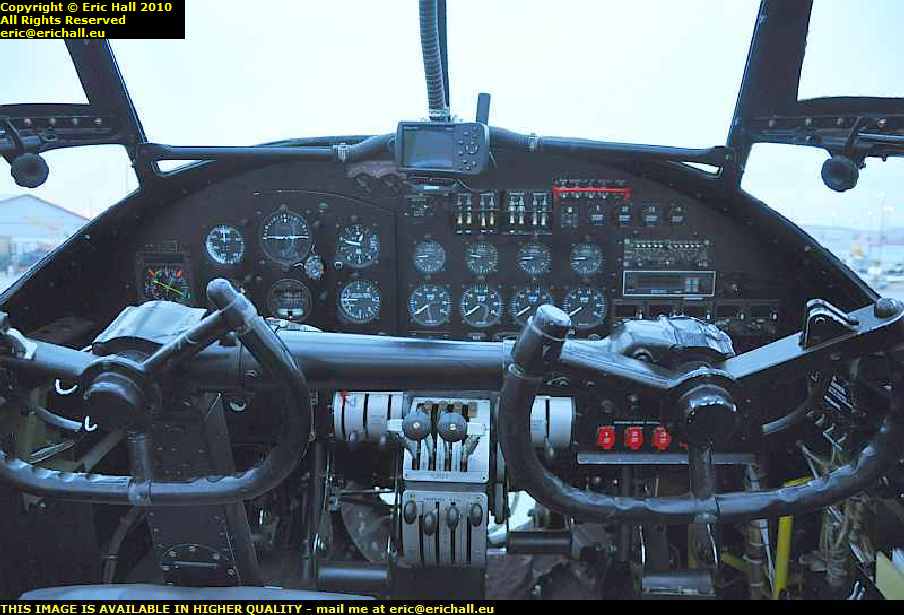
air museum hamilton ontario canada avro lancaster flight deck controlsI went off to seethe … "is this a typing error or a Freudian slip?" – ed … aeroplane and had a wander around inside it and a sit at the controls.

That has to be one of the highlights of the voyage.

It cheered me up a little – but only a little. I was definitely shocked to the core.

air museum hamilton ontario canada avro lancaster upper gunnerI actually felt quite sorry for the poor people who spent all of their air-time crouched over these guns.

It can’t have been very pleasant for anyone to have sat here behind your twin .303s watching someone with a couple of 0.5mm cannon and a barrage of 8x.303s coming swooping down towards you and knowing that you might as well just throw stones at them for all the good that your defensive armament will do.

air museum hamilton ontario canada avro lancaster tail gunnerbut the position which no-one wanted to occupy – unless he was a complete psycopath – was the rear gunner.

Night-fighters did most of their stalking from the rear and it’s inevitable that the rear of the Lancaster is going to be the first aiming point of the night fighter.

I don’t care what anyone says, the Mark I eyeball was never as good as the Lichtenstein radar carried by the nightfighters and the first warning that the rear gunner received was a fusillade of cannon shells and machine-gun bullets.

air museum hamilton ontario canada avro lancaster bomb bayThe museum was in a hurry to close (have I been here THAT long?) but I had just enough time to stick my head inside the bomb bay.

Just imagine one of Barnes Wallis’ Bouncing Bombs or 10-tonne “Grand Slams” stuck up there!

But I had to go. So much more that I wanted to see too but here they were, throwing me out.

But what a place it is, though. A museum curator who “knows the price of everything but the value of nothing” – that’s a harrowing thought.

Makes me wonder what else have they cut up at that museum that they are keeping quiet about?

And now for my last night in North America, which I’m at Fort Erie.

peace bridge buffalo new york usa fort erie canada Port Erie is just like Windsor – a Canadian city with a big American City just across the River Niagara there.

That’s Buffalo over there, and we’ve been there before – and it seems like 100 years ago now.

But here we have a railway museum, the start of the Welland Canal (that enables ships to by-pass the Niagara Falls) and a few other things too;

peace bridge buffalo new york usa fort erie canadaLike a big bridge – the Peace bridge of 1927 in fact.

Named to celebrate 100 years of peace between the USA and Canada, construction started in 1925 and was opened to the public on 1st June 1927.

At the time, it was the only bridge between Niagara Falls and Minnesota across the Canada-USA border that could take road-going vehicles.

peace bridge buffalo new york usa fort erie canadaAs you admire the colour changes, let me tell you that the bridge is built of 9800 tons of steel – of which 9,000 tons is in the structure and 800 tons as reinforcement in the concrete.

Altogether, it’s 5800 feet long, which is about 1.1 miles in real money and it spans a river where the average current is about 10 mph.

That’s actually quite a speed for a river.

canadian customs facilities peace bridge buffalo new york usa fort erie canadaSome of the most spectacular Canadian customs facilites are here too. That building down there never dates from 1927 – I promise you that!

It incorporates the toll plaza apparently and dates from 2005. There are 14 lanes for cars and special facilities for lorries, of which over 4,000 pass through every day.

As a result, the facilities are often overwhelmed and there is talk of some kind of pre-clearance facility similar to the European TIR idea.

I found a motel at a reasonable price and I put a tin of beans in the slow cooker before I went on my ramble.

On the way back I went to look for some chips to have with them but would you believe … in the whole of this town near where I’m staying where there are three or four fast-food places, there’s not a six of chips in sight.

And so I sulked off for an early night.

I’m off to Toronto where my aeroplane will await me at 20:50. And I’m already depressed about leaving Canada. I shall be inconsolable by the time I get back to Europe.