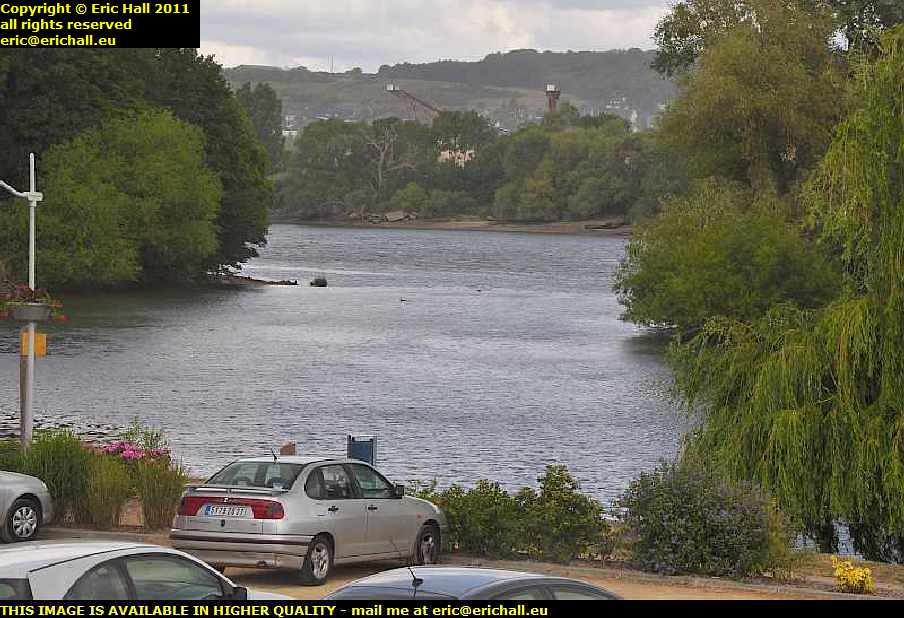
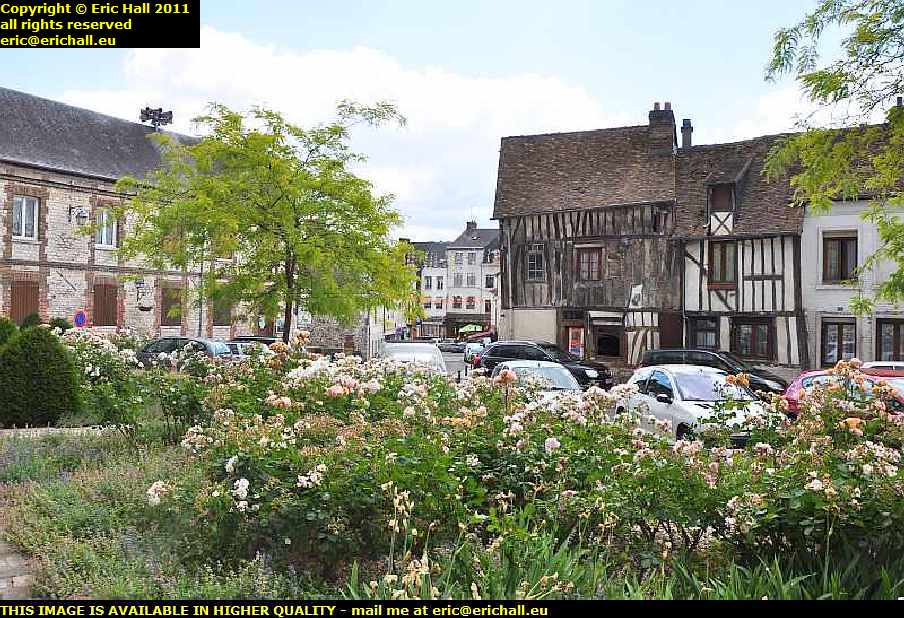
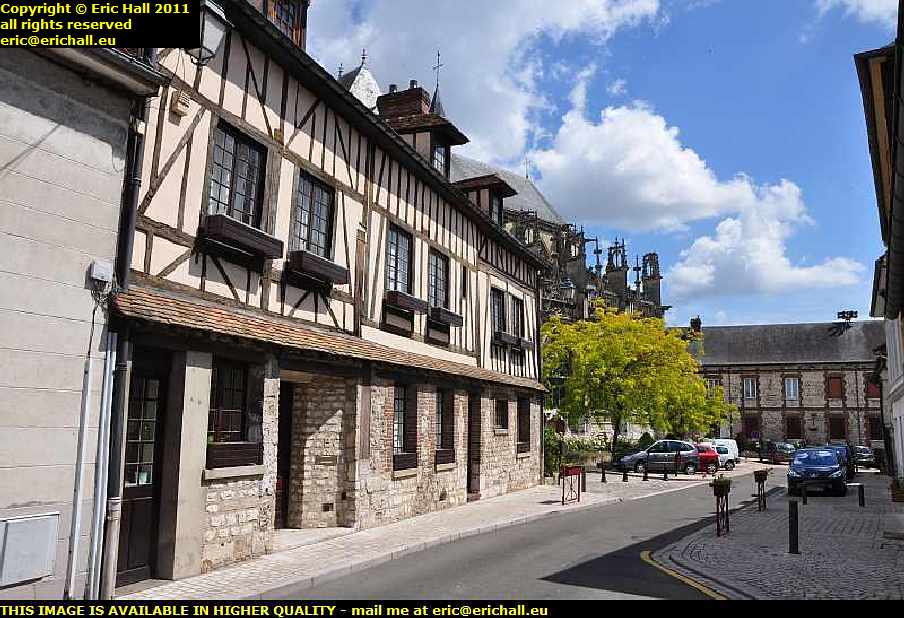
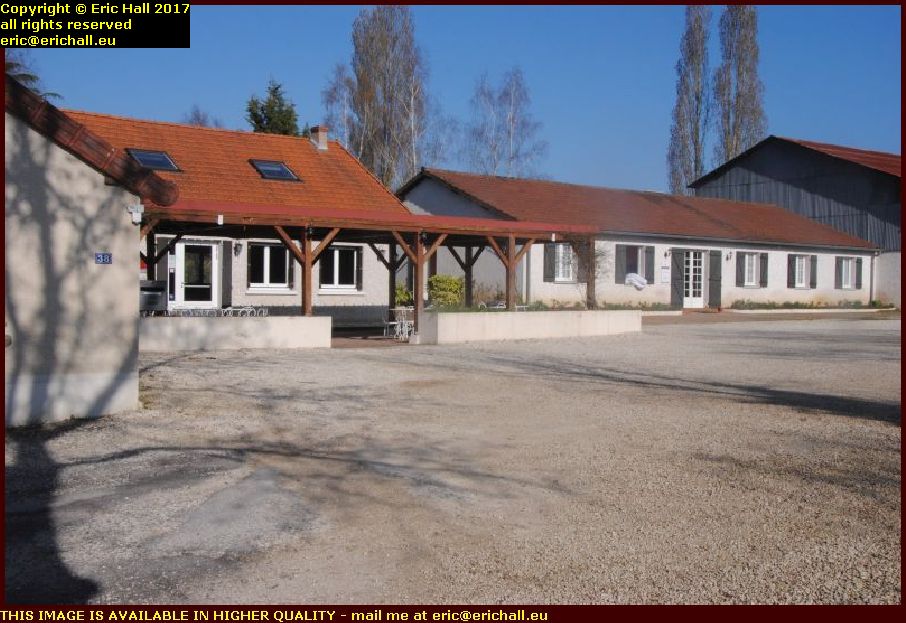
 … my hotel.
It might not look very much from the outside but I’ll tell you something – and that is that it’s the first time since about 1990 that I’ve made a conscious on-the-spot decision to stay over for a second night in a hotel.
The staff is extremely friendly, the breakfast is adequate, the room is clean and tidy and the bed is one of the most comfortable that I’ve ever tried. And being right out here in the countryside, I didn’t hear a thing during the night.
The one problem with going to bed early though is that one has a tendency to wake up early too, and by 06:00 I was wide awake. I had to wait for breakfast though, which I’d booked at 07:30, and so I had the pleasure of David Bowie reminding me that it was 07:00 with his “Wake up, little sleepy-head. Shake off your clothes, get out of bed!” followed at 07:15 by Billy Cotton going “Wakey waaaaaaa…. KAY!”. Ohh the joys of “Audacity” and the ability to customise my own sound clips.
After breakfast, I sat outside in the sunshine and attacked some work that had been building up. That gave me an opportunity to have a rest and relax for a few hours. And then I hit the streets.
First stop was through the town and out the other side to the Auchan supermarket to negotiate some food for lunch. I had a good look at what was going on in there too because I wanted to see what was on offer because, as you know, I have some cunning plans. Finding the entrance to the car park was quite the thing though – it wasn’t all that easy.
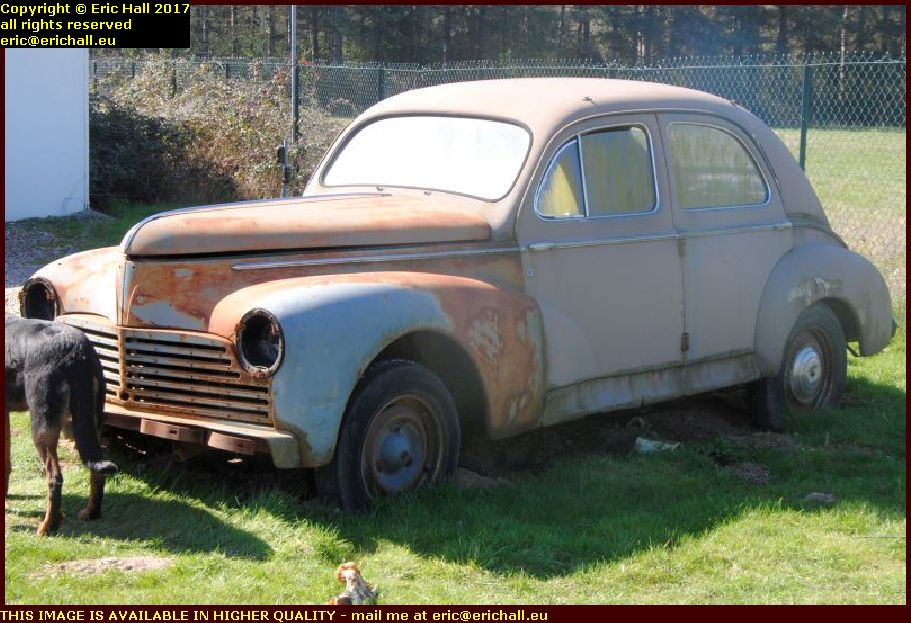 once I was back on the road, I didn’t get very far. Only just about into the département of Loiret, where I came to a shuddering halt.
Here on the side of the road, jealously guarded by Rover, was a Peugeot 203 sitting here dans son jus as the French say. My ideal kind of vehicle and had it been a pick-up or even a van, I would have gone straight home for my trailer to tow it away.
 It’s actually at the entrance to a car body repair shop, and it does serve a purpose just sitting here outside. That’s because inside, there are several other vehicles, including another Peugeot 203, that have been restored.
The garage proprietor explained to me (we had a very lengthy chat) that he has some excellent staff working for him and when times are slack he doesn’t want to lose them. So he picks up vehicles like this and his staff work on them whenever there’s a pause in the work.
It keeps them employed, and gives them an opportunity to demonstrate their skills by bringing something like this back to life.
 But before long, in the beautiful sunshine, I arrived in Briare – or to be more precise, Briare-le-Canal – which was my destination for today.
And I had good reason to be here too. Being a Pisces and at home whenever I’m close to water, there are not many places closer to the water than around here. I have one beautiful river – the Loire, of course, and no less than three canals.
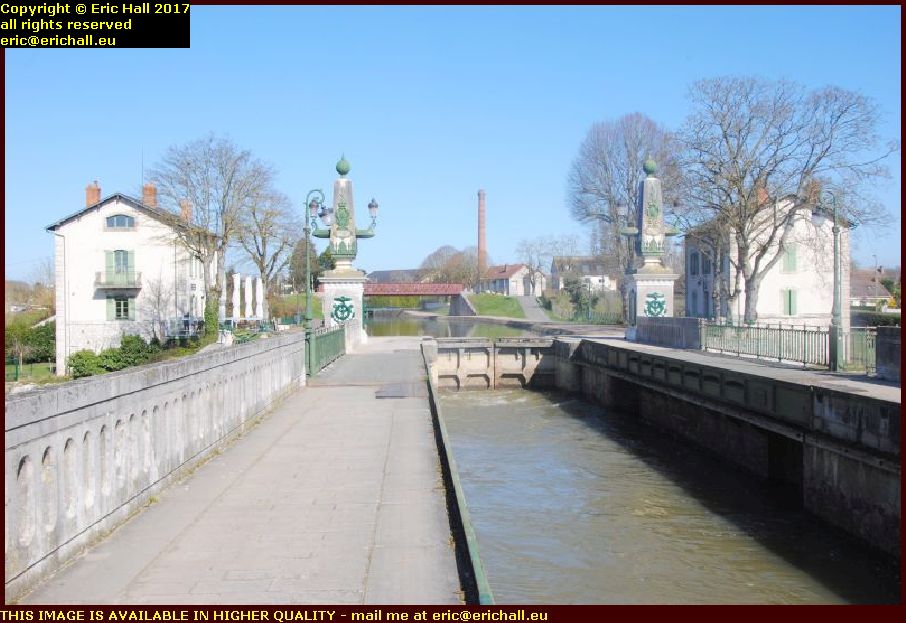
And not only that, a magnificent structure designed by Gustave Eiffel. The Pont-Canal (or aqueduct) de Briare, and it’s one of the most impressive of its type in the whole world.
 But first of all, it’s lunchtime and I attack my butty with gusto. And I’m not alone here either because I’m joined by a woman from Paris in an old Fiat Multiplas who seems to travel just as I used to in North America, with everything inside and even a place to sleep.
She reckons that she’s even been as far as the North Cape in Norway travelling like this.
I have to say that I was very impressed, because it’s rare to see someone travel like that these days, and a single woman even more so.
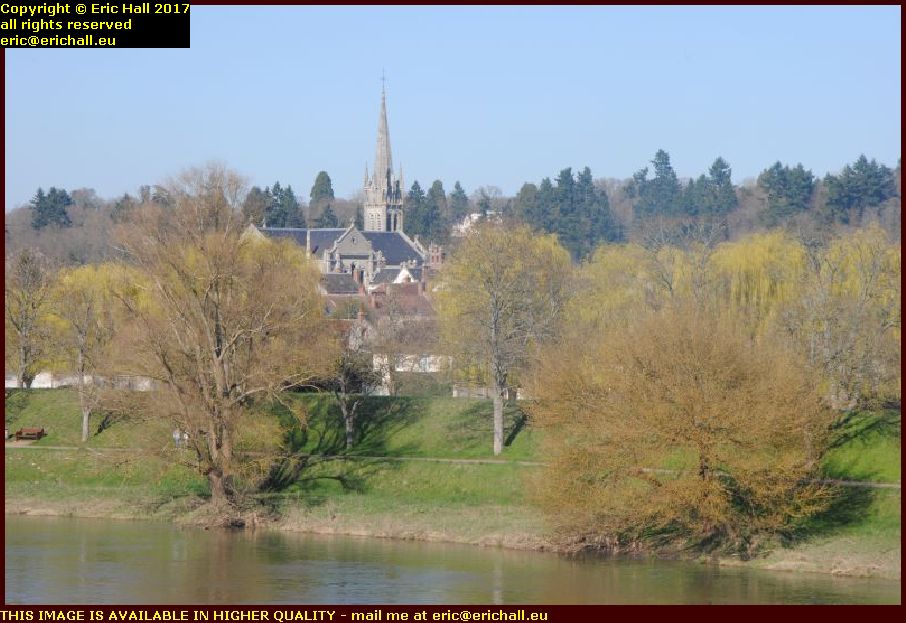 So having had my butty and a good chat, I went for a wander around. A slow wander, it has to be said, because the day was really hot. Easily the best day of the year to date.
So to let me put you in the picture, let me tell you a little about the history of where we are. Everything here is centred around the first of the canals to be built here, and that goes back to, would you believe, the early 17th Century.
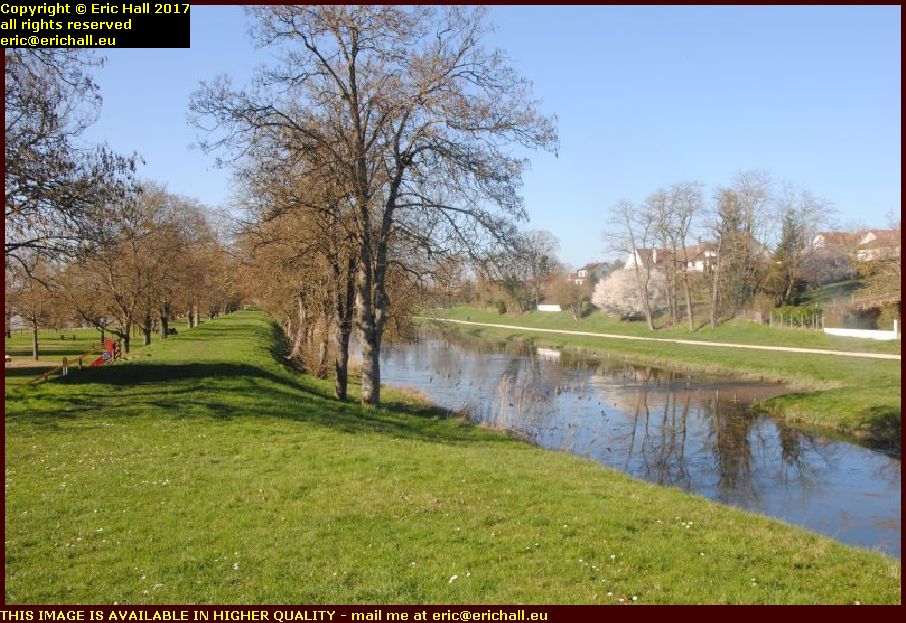 We mentioned yesterday when we talked about Cosne-sur-Loire that the river here was a major transportation route, right back as far as history records. Roman roads were of course very well-known and very well-built, but technology didn’t exist for the transport of large amounts of items.
We saw, when we were in Clamecy a few years ago, how the timber from the Forests of Morvan was cut down and floated off to Paris where it was used as firewood.
 In any case, the techniques of road-building were for all intents and purposes lost once the Romans had passed on, and what passed for roads in early medieval days were nothing but beaten earth and descended into an impassible morass at the first sign of heavy rain.
There was thus no possibility of sending heavy loads by road, and so rivers became the only reliable method of transport.
 Anyway, we move forward to the start of the 17th Century and the decision by Sully, the First Minister of King Henry IV to improve business between the different regions of France. Da Vinci had come up with the idea of canal locks and so Sully decided that a canal should be built to link the valleys of the River Loire and the River Seine, incorporating Da Vinci’s ideas.
Construction began in 1604 and after a pause following the assassination of the King, the canal was finally opened in 1642. It was one of the very first in Europe to use locks.
 As boats became bigger and bigger, and traffic became heavier, navigation on the River Loire in places became more problematic. As a result, a canal was built in places parallel to the river to avoid the most difficult stretches of the river.
This section here that we can see runs (or rather, ran, because some of it has been abandoned) from Chatillon sur Loire to a short distance beyond Briare where it joins up with the original entrance to Sully’s canal.
 But commerce, evolving as it does, required a new navigation system and this led to a modernisation of Sully’s canal and a “regularisation” of the route. This led to a new trace being built, and this required an aqueduct across the River Loire and the parallel canal.
In 1889 a decision was made to build the aqueduct across the river, and Gustave Eiffel and his company was brought in on the project, with construction of the metalwork entrusted to Daydé & Pillé. Construction began in 1890 and the first boat, the Aristide, crossed over on 16th September 1896.
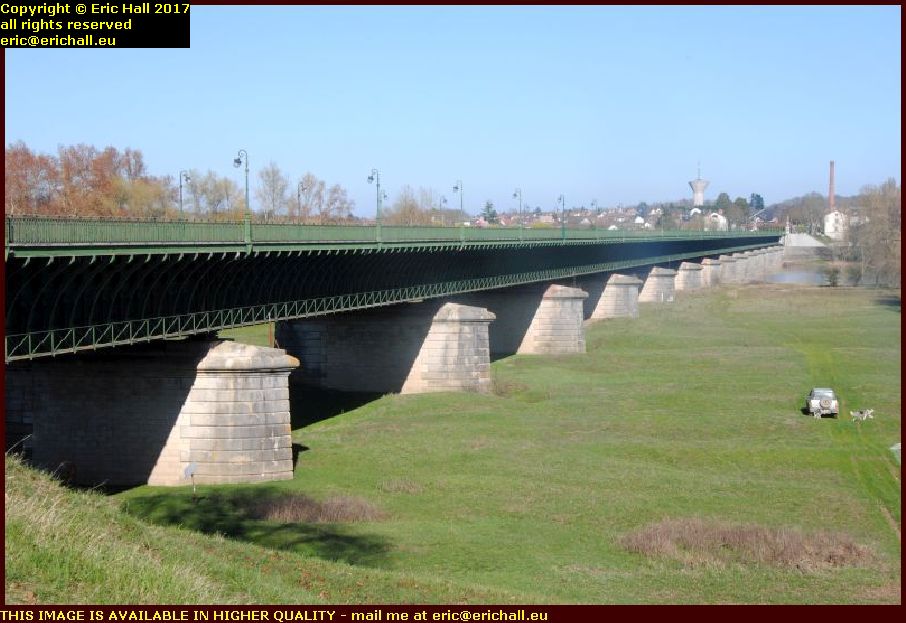 662 metres long, the aqueduct is, and it’s absolutely beautiful. It became registered as a national historic monument in 1979 and what surprises me is that it took so long for its importance to be recognised.
And important it is too, because For many years it was the longest metal canal aqueduct in the world, maintaining its place at the top of the list until as recently as 2003 when it was overtaken by a new aqueduct in Germany.
 And so I went for a beautiful walk across it and back along the other side today in the glorious weather. And I have to admit that I spent a good few minutes sitting on a bench, catching my breath watching a member of the Water Board painting the decorations on the pillars.
A coffee would have been nice too but astonishingly, there wasn’t very much in the way of cafés open. Just one in fact, but it was the kind of place where you needed a bank loan to buy a drink.
 I just don’t understand people who are in business. Hordes of people wandering around and yet no-one seemed to be too interested in taking their money. Any self-respecting café owner should have looked out of his window, seen the beautiful day, seen the hordes milling about, and set out his stall accordingly.
It really is astonishing, the money-making opportunities that are being overlooked these days. No wonder there’s a recession at the moment.
Anyway, I headed back to my hotel and a lengthy chat with the landlord, putting the world to rights. And then back to my room for a doze followed by the remainder of my meal from last night. Potato salad is a very good standby and I’ll be doing this again.
Now I’m having an early night yet again. I need it.