Tag Archives: norway

Saturday 20th July 2019 – HVALSEY!!!!

Today was a really exciting day in which a great deal was accomplished. Another one of my lifetime destinations has been reached.

But it wasn’t quite like that at the start. I awoke, just for a change, at 05:00 and couldn’t go back off to sleep. But that’s not to say that I was up and about very lively. I did manage to beat the third alarm but only just, and staggered into an early breakfast looking something like the Death of Nelson. I’m not feeling myself these days which is just as well, because it’s a disgusting habit.

After breakfast I went back to my room and relaxed for a very short while before we were called to the boats, and then we set off for Hvalso.

Hvalso is better-known by its Norse name – Hvalsey – and is internationally famous as having probably the best-preserved Norse ruins in North America. It’s long-been my ambition to come here and this is probably one of the main reasons why I’m here on this voyage.

There are the remains of a magnificent stone house with all of the outbuildings and other offices. No-one can really tell the date of when it was first constructed but it was expanded over a period of several centuries culminating in some work as late as the very early 15th Century, towards the very end of the Norse settlement in Greenland.

Not only that, there are the remains of a magnificent Norse church from maybe the 13th Century and which are quite intact considering that it has been abandoned for 6 centuries or so. Highlight of the church though is an incredible arched window of a type that I have never seen before in Norse architecture. I had no idea that they knew the principle of arches and keystones. And what is more, it is still intact and that is even more of a surprise.

Another claim to fame is that the last written event in Norse Greenland took place here. The Norse here were never very into writing so written records are … errr … scant. But in 1408 here is a record of a wedding that took place in the church between a local girl and an Icelandic man. And after that, there is no written word that ever came out of Greenland until the 18th Century and a new breed of settlers.

The fate of the Norse is unknown and any suggestion is mere speculation. However we can rule out that they returned to Iceland or Norway despite what some people suggest. While it’s certainly true that some did – the husband at the wedding was recorded as being in Iceland a couple of years later – they would not have sent out search parties to Greenland during the next few centuries to look for any Norse survivors had they all returned to Iceland or Norway.

And suggestions that they returned because of land inheritances in the rest of Norse Europe becoming more available after the Black Death is quite clearly absurd when you consider that the Black Death took place 70 years (or three generations) previously.

And even if that were the case, it’s by no means certain that every last man or woman would leave. We’ve seen for ourselves that when the Inuit at Grise Fiord were offered the chance to return to their homeland after just 20 or so years and leave the desperately inhospitable environment of Ellesmere island, a great many of them chose to cling on.

The church here at Hvalsey was built on the site of an earlier, smaller church and one of the walls was built over part of the old graveyard. Consequently as the bodies rotted away and the graves caved in, the wall on that side sagged dangerously but has now been stabilised.

While I was there I took the opportunity to go for a wander around with the geologist. I’d been attracted to the fact that in the walls of the church were several blocks of pink granite, quite unlike the main stone in the area, that has been so well-cut that there was not a single tool mark upon them. The general opinion, from our archaeologist that they had been cut by hand seemed most unlikely to me.

However, we soon found what we had been looking for. Not too far away, a bed of granite had at some time infiltrated the metamorphic rock and at one point there was a twin-fault line that passed right through it. The granite had been cleaved by Nature on both sides to absolute perfection and there was clear evidence that some of this rock had been removed.

So that answered my question far more easily than I had imagined. My opinion of this archaeologist is going downhill quite rapidly, as regular readers of this rubbish will recall.

We also had a kind-of stone corral for horses, several foundations that looked as if they might have base of medieval tithe-barns and warehouses, and a load of stone walls, clearly man-made but using some of the heaviest stones that you could imagine.

There was also something that looked very much like an Inuit grave or cache but this was disputed, and Nature had provided the site with all kinds of wild herbs that would have been a boon to any Norse chef.

One thing that Yours Truly uncovered that had been missed by the excavators of the site was some writing chiseled into the lintel over the doorway into the church. Anyone who knows anything about European architecture of the middle period of the Second Millennium will know that builders had a habit of carving the date into the lintel. That was what I had been looking for.

But as for what the writing might be, It seemed to be something like …CLL … and the rest was covered in a heavy growth of lichen that was clearly the original growth. Obviously it’s against the Law to scrape away any of the lichen so I shall have to leave that to the experts. But it doesn’t seem to suggest any kind of Roman numeral that I might be able to identify

While all of this was going on, we were overflown by an eagle. And there was a fisherman out there catching the cod that were leaping about all over the place. It was all quite lively. What wasn’t lively though was the farm further down the valley. Greenland has 37 farms, of which 35 are working. However this one is one of the two that isn’t. It ceased operation in 2006 when the owner retired and it was bought by people who use it just as a weekend retreat.

Back on the ship and lunch, by which time we had sailed to the town of Qaqortoq. This is the largest town in south Greenland, with about 3,000 inhabitants and our stop for this afternoon.

A guide took us around the town on a guided tour and showed us the sights. We were walking around for about 90 minutes and saw plenty of things, but nothing that I would call “startling”, except for the only public fountain in Greenland.

Somewhere round by the river we fell in with a couple of little girls aged about 7 or 8 or something. They were proudly displaying a bottle in which were several tiny little fish about an inch or so long. Obviously following in the Inuit traditions There were some young teenage boys leaping off a high cliff into a freezing cold lake. Rather them than me.

We finished up in the modern church, built in 1973, and had a tour around the local supermarket to see the prices in there. Not quite as outrageous as I was expecting compared to Northern Greenland.

The museums were interesting, especially the Norse museum where there were remarks that seem to confirm some of my ideas, and then we went for a coffee at the local hotel.

A little later, I took Strawberry Moose for a walk around the town and for a few photo opportunities, which he enjoyed immensely.

Tea tonight was a vegetable biryani which was probably among the best that I have ever eaten. It was totally delicious although I would have liked it to be more spicy, as you might expect. I can’t be doing with this North American idea of spicy food.

In the evening, while everyone was watching a film, I was typing my notes when Ben the Chef came over for a chat. A huge mountain of a man he was born in Brisbane but came to the UK when he was 3 and lived in Liphook and then in Wiltshire. We chatted about quite a few things for quite some time.

He told me that one day soon we are to have a banquet of local delicacies. He had been ashore today and bought a load of whale meat and things like that for us to try. And when I say “us”, I don’t mean that I will be participating. It all sounds pretty revolting to me and anyway I’m a vegan, as regular readers of this rubbish will recall.

So I’m now off to bed. No chance of an early night with so much going on, but I’d be happy if I could just sleep through until when the alarm goes off. One of these days I might just manage it, but I’m not holding my breath.

Thursday 16th March 2017 – I THOUGHT THAT YOU MIGHT LIKE TO SEE …

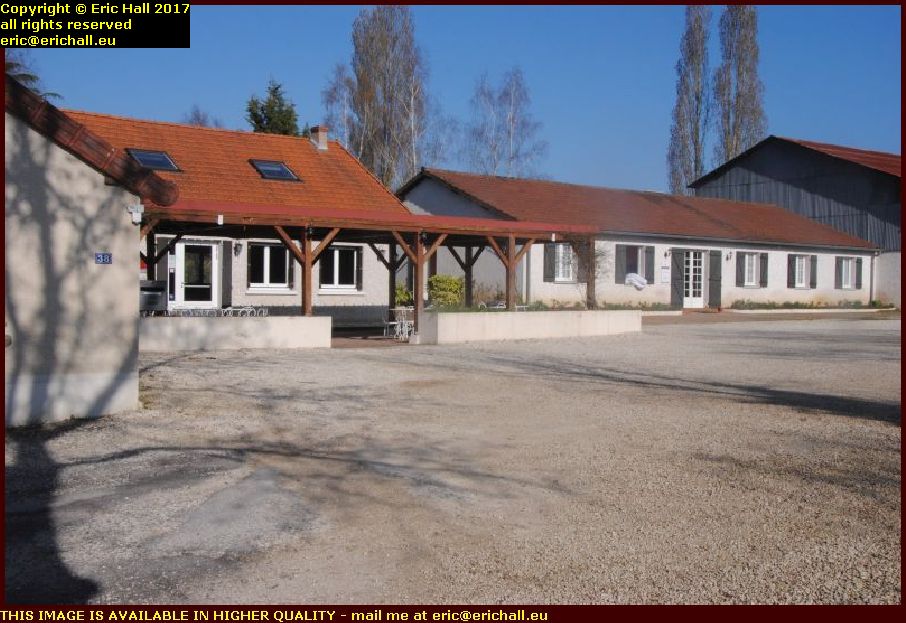
hotel des gatines cosne cours sur loire nievre france… my hotel.

It might not look very much from the outside but I’ll tell you something – and that is that it’s the first time since about 1990 that I’ve made a conscious on-the-spot decision to stay over for a second night in a hotel.

The staff is extremely friendly, the breakfast is adequate, the room is clean and tidy and the bed is one of the most comfortable that I’ve ever tried. And being right out here in the countryside, I didn’t hear a thing during the night.

The one problem with going to bed early though is that one has a tendency to wake up early too, and by 06:00 I was wide awake. I had to wait for breakfast though, which I’d booked at 07:30, and so I had the pleasure of David Bowie reminding me that it was 07:00 with his “Wake up, little sleepy-head. Shake off your clothes, get out of bed!” followed at 07:15 by Billy Cotton going “Wakey waaaaaaa…. KAY!”. Ohh the joys of “Audacity” and the ability to customise my own sound clips.

After breakfast, I sat outside in the sunshine and attacked some work that had been building up. That gave me an opportunity to have a rest and relax for a few hours. And then I hit the streets.

First stop was through the town and out the other side to the Auchan supermarket to negotiate some food for lunch. I had a good look at what was going on in there too because I wanted to see what was on offer because, as you know, I have some cunning plans. Finding the entrance to the car park was quite the thing though – it wasn’t all that easy.

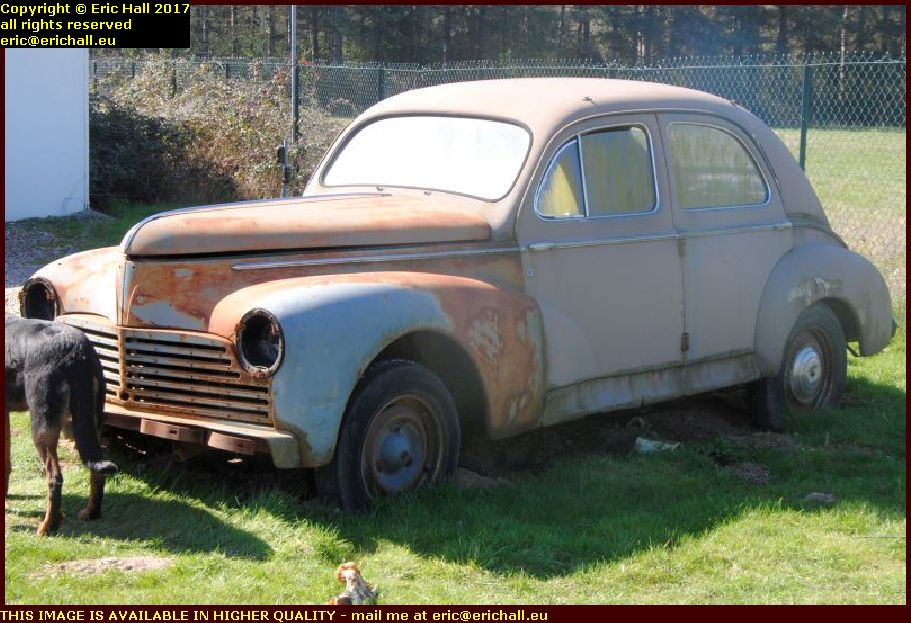
old car peugeot 203 briare loiret franceonce I was back on the road, I didn’t get very far. Only just about into the département of Loiret, where I came to a shuddering halt.

Here on the side of the road, jealously guarded by Rover, was a Peugeot 203 sitting here dans son jus as the French say. My ideal kind of vehicle and had it been a pick-up or even a van, I would have gone straight home for my trailer to tow it away.

old car peugeot 203 briare loiret franceIt’s actually at the entrance to a car body repair shop, and it does serve a purpose just sitting here outside. That’s because inside, there are several other vehicles, including another Peugeot 203, that have been restored.

The garage proprietor explained to me (we had a very lengthy chat) that he has some excellent staff working for him and when times are slack he doesn’t want to lose them. So he picks up vehicles like this and his staff work on them whenever there’s a pause in the work.

It keeps them employed, and gives them an opportunity to demonstrate their skills by bringing something like this back to life.

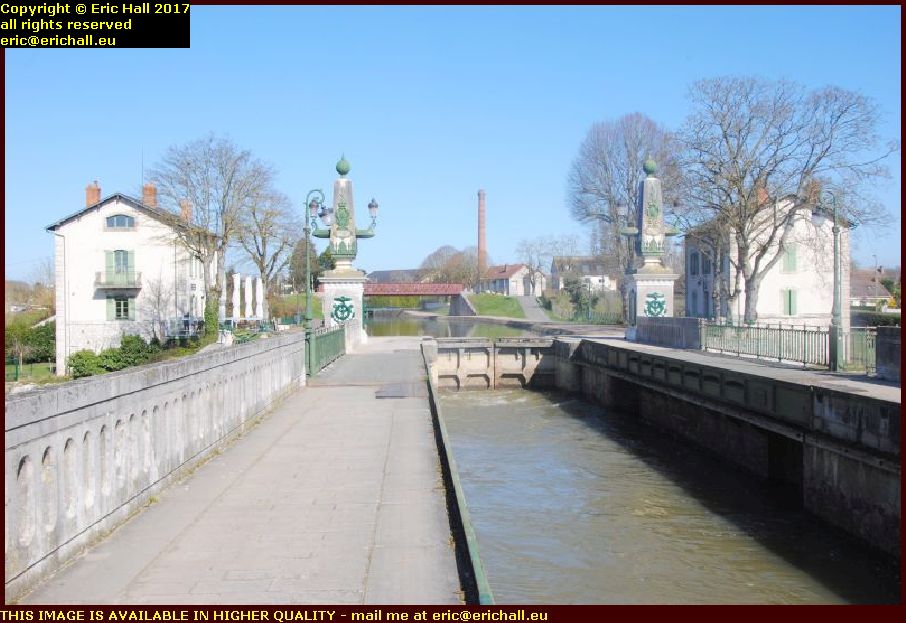
pont canal de briare loiret franceBut before long, in the beautiful sunshine, I arrived in Briare – or to be more precise, Briare-le-Canal – which was my destination for today.

And I had good reason to be here too. Being a Pisces and at home whenever I’m close to water, there are not many places closer to the water than around here. I have one beautiful river – the Loire, of course, and no less than three canals.

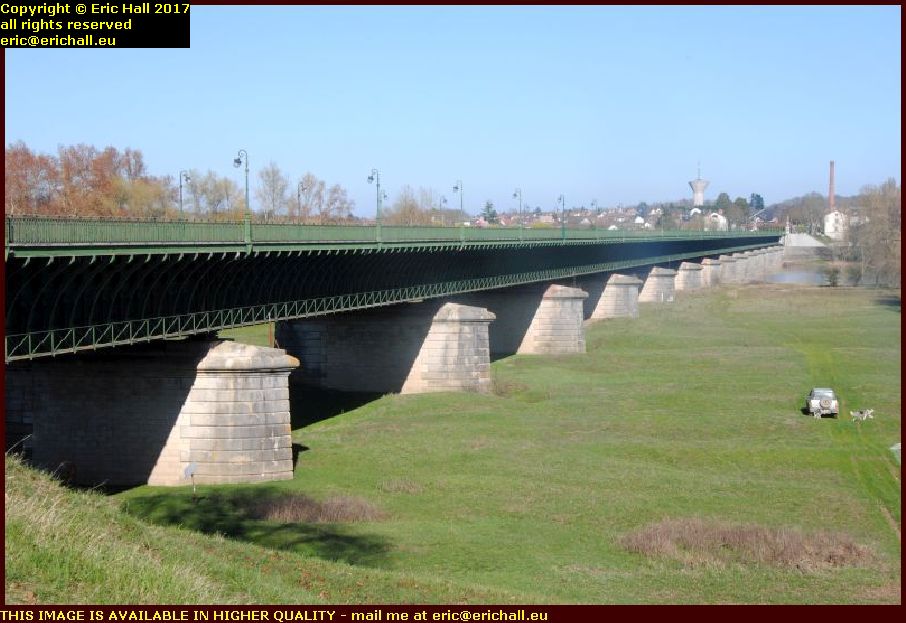
And not only that, a magnificent structure designed by Gustave Eiffel. The Pont-Canal (or aqueduct) de Briare, and it’s one of the most impressive of its type in the whole world.

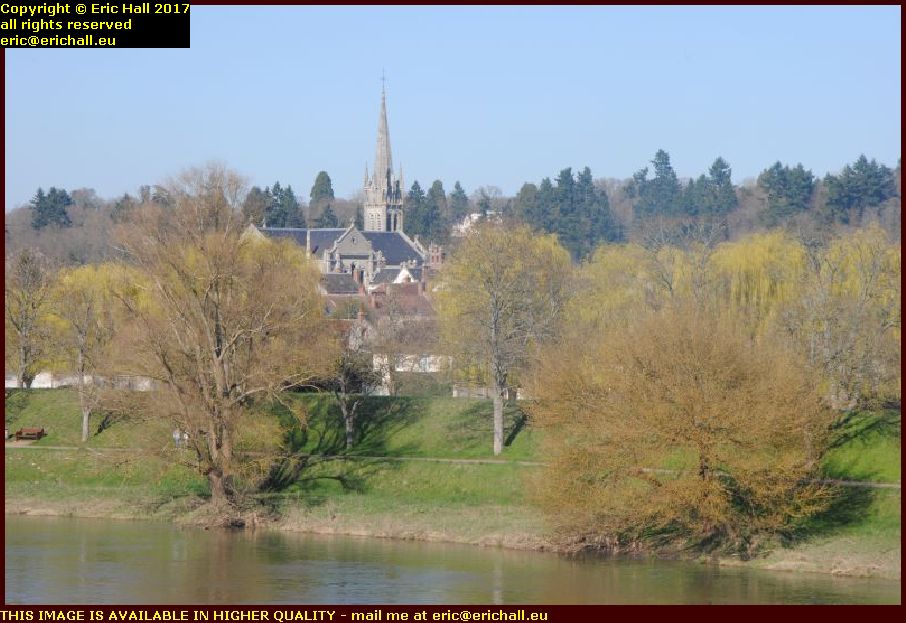
pont canal de briare river loire loiret franceBut first of all, it’s lunchtime and I attack my butty with gusto. And I’m not alone here either because I’m joined by a woman from Paris in an old Fiat Multiplas who seems to travel just as I used to in North America, with everything inside and even a place to sleep.

She reckons that she’s even been as far as the North Cape in Norway travelling like this.

I have to say that I was very impressed, because it’s rare to see someone travel like that these days, and a single woman even more so.

pont canal de briare loiret franceSo having had my butty and a good chat, I went for a wander around. A slow wander, it has to be said, because the day was really hot. Easily the best day of the year to date.

So to let me put you in the picture, let me tell you a little about the history of where we are. Everything here is centred around the first of the canals to be built here, and that goes back to, would you believe, the early 17th Century.

pont canal de briare loiret franceWe mentioned yesterday when we talked about Cosne-sur-Loire that the river here was a major transportation route, right back as far as history records. Roman roads were of course very well-known and very well-built, but technology didn’t exist for the transport of large amounts of items.

We saw, when we were in Clamecy a few years ago, how the timber from the Forests of Morvan was cut down and floated off to Paris where it was used as firewood.

pont canal de briare loiret franceIn any case, the techniques of road-building were for all intents and purposes lost once the Romans had passed on, and what passed for roads in early medieval days were nothing but beaten earth and descended into an impassible morass at the first sign of heavy rain.

There was thus no possibility of sending heavy loads by road, and so rivers became the only reliable method of transport.

pont canal de briare loiret franceAnyway, we move forward to the start of the 17th Century and the decision by Sully, the First Minister of King Henry IV to improve business between the different regions of France. Da Vinci had come up with the idea of canal locks and so Sully decided that a canal should be built to link the valleys of the River Loire and the River Seine, incorporating Da Vinci’s ideas.

Construction began in 1604 and after a pause following the assassination of the King, the canal was finally opened in 1642. It was one of the very first in Europe to use locks.

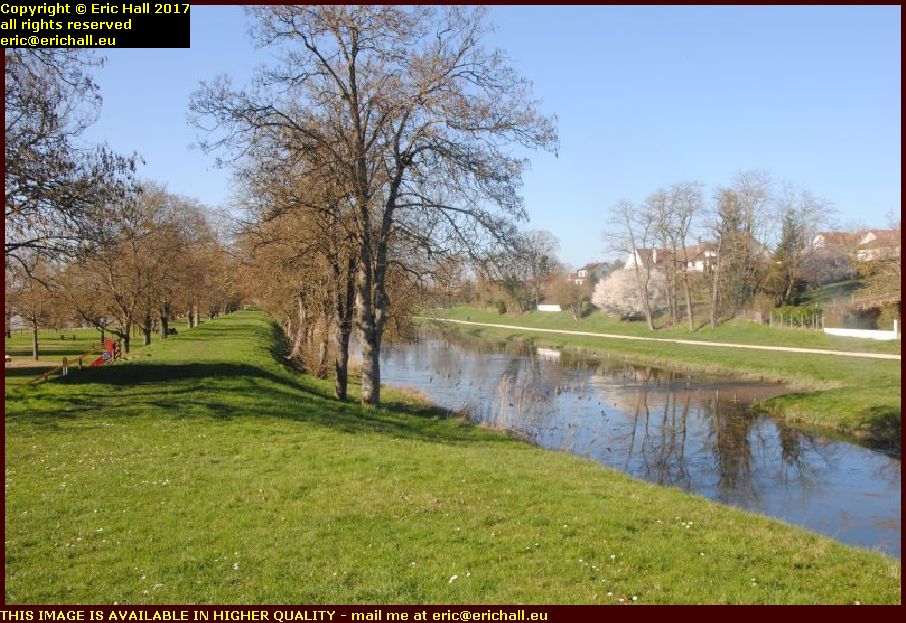
parallel canal pont canal de briare loiret franceAs boats became bigger and bigger, and traffic became heavier, navigation on the River Loire in places became more problematic. As a result, a canal was built in places parallel to the river to avoid the most difficult stretches of the river.

This section here that we can see runs (or rather, ran, because some of it has been abandoned) from Chatillon sur Loire to a short distance beyond Briare where it joins up with the original entrance to Sully’s canal.

pont canal de briare loiret franceBut commerce, evolving as it does, required a new navigation system and this led to a modernisation of Sully’s canal and a “regularisation” of the route. This led to a new trace being built, and this required an aqueduct across the River Loire and the parallel canal.

In 1889 a decision was made to build the aqueduct across the river, and Gustave Eiffel and his company was brought in on the project, with construction of the metalwork entrusted to Daydé & Pillé. Construction began in 1890 and the first boat, the Aristide, crossed over on 16th September 1896.

pont canal de briare loiret france662 metres long, the aqueduct is, and it’s absolutely beautiful. It became registered as a national historic monument in 1979 and what surprises me is that it took so long for its importance to be recognised.

And important it is too, because For many years it was the longest metal canal aqueduct in the world, maintaining its place at the top of the list until as recently as 2003 when it was overtaken by a new aqueduct in Germany.

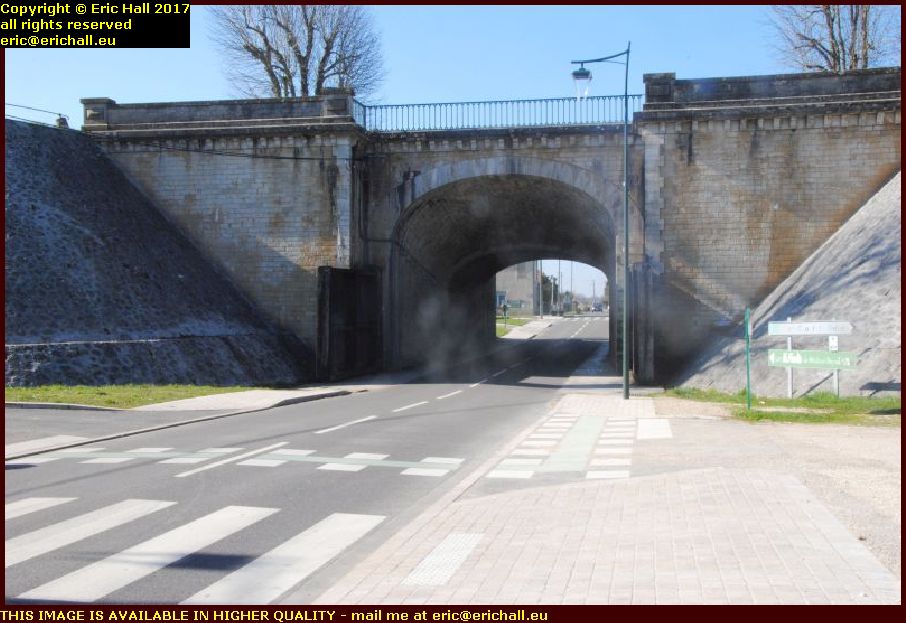
pont canal de briare loiret franceAnd so I went for a beautiful walk across it and back along the other side today in the glorious weather. And I have to admit that I spent a good few minutes sitting on a bench, catching my breath watching a member of the Water Board painting the decorations on the pillars.

A coffee would have been nice too but astonishingly, there wasn’t very much in the way of cafés open. Just one in fact, but it was the kind of place where you needed a bank loan to buy a drink.

pont canal de briare loiret franceI just don’t understand people who are in business. Hordes of people wandering around and yet no-one seemed to be too interested in taking their money. Any self-respecting café owner should have looked out of his window, seen the beautiful day, seen the hordes milling about, and set out his stall accordingly.

It really is astonishing, the money-making opportunities that are being overlooked these days. No wonder there’s a recession at the moment.

Anyway, I headed back to my hotel and a lengthy chat with the landlord, putting the world to rights. And then back to my room for a doze followed by the remainder of my meal from last night. Potato salad is a very good standby and I’ll be doing this again.

Now I’m having an early night yet again. I need it.

Thursday 7th July 2016 – IT WAS 06:20 ..

… when I was awoken this morning, but that’s being just a little economical with the truth as I had quite a bad night last night. I hadn’t been feeling so good for much of the day – probably a delayed reaction to my medical treatment – and last night I was having the most excruciating stomach cramps. I found it very hard to drop off to sleep, and when I did, I was awoken with a horrible stabbing pain. And that’s how I’ve been for much of the morning too, although it did ease off round about lunchtime.

Nothing however had prevented me from going on another nocturnal ramble. This time though, we’ll turn our attention back to the late 1920s. Not many people know this of course but Queen Elizabeth and Princess Margaret had a younger brother. However he was something like Prince John, kept out of public life because of his behaviour (although this is, I admit, being rather unkind to Prince John in real life) and young ladies, mainly of the serving classes, were sent to “entertain” him. And I was the “product” of one of these irregular unions. This gave me unrivalled power on the back stairs of Court and I was regularly being approached by The Powers That Be to handle situations that required delicacy and discretion but with which the official Royal Family did not wish to become involved. Yes, it certainly was quite exciting, that’s for sure.

I had an early breakfast – finished long before the alarm went off, and then I tried to do a few things here and there but ended up crashing out for an hour or so. I managed a walk to the shops too and stocked up with lunch items, seeing as how I’ve run right out.

This afternoon I haven’t done too much because I’m still not feeling 100% right now. Although I had a lengthy chat with Liz this afternoon, as well as crashing out yet again. But I managed a shower, a shave, clean clothes and the like as well as doing some tidying up, for I’ve been out gallivanting with Alison tonight and we put the world to rights for hours.

Now I’m back home, feeling a little better than I did last night, and I won’t be awake for long. I’m off to bed.

But in other news, the B Liar says that the World is a better place because of the Iraq War. You try telling that to the hundreds of thousands of civilians who have been massacred this last few years, including the hundreds who have been killed this last couple of days. How can anyone believe anything that this monster is telling us? If he has anything to say, he should save it for his War Crimes trial, although the way the British Establishment is, he’ll never make it to the Hague.

And in yet more news, hats off to Connahs Quay Nomads of the Welsh Premier League, who beat Stabaek tonight in Norway in order to progress to the Second Round of the Europa League.

Tuesday 7th June 2011 – HAVING LEFT DAVE’S …

… last night at something silly, I made it as far as Berwick-on-Tweed where I spent the night.

There’s a car pool place on the edge of town with a couple of discreet corners ideal for having a kip, and ideal for having a few other things too by the looks of it. Next morning, I even found a pair of tights on the ground.

We’ve been here before so we don’t have a photo but it’s a nice clean place with a washroom so there’s everything that you need to hand.

Once I’d organised myself properly I crossed the border into Scotland and headed off down the A1 in the direction of Edinburgh. On the by-pass, I kept my eyes peeled and eventually found the road that I needed.

rosslyn chapel roslin edinburgh scotlandWhere I’ve come to is Rosslyn Chapel, which is situated in the village of … errr … Roslin, south of Edinburgh. The village of Rosslyn is somewhere else – New Zealand or the USA or somewhere.

Everyone will know the story behind Rosslyn Chapel because you’ve all read the Da Vinci Code and/or seen the film, and this is where the action takes place

But it’s not (necessarily) that which has brought me here.

rosslyn chapel roslin edinburgh scotlandAs I said yesterday, something that cropped up in Canada last October was what had brought me here.

There have long been claims that Henry I Sinclair, Earl of Orkney, Baron of Roslin and ancestor of the current owner of the Chapel, had visited North America 100 years before Columbus.

Of course, this is quite possible.

  • He held his title of Earl of Orkney in allegiance to King Haakon VI of Norway, gifted on 2 August 1379.
  • He is known to have been in Norway on many occasions
  • Norway certainly knew of the existence of the old Norse colonies in Greenland
  • In 1347 a boat loaded with timber from “Markland” (almost certainly the North American coast) made an error of navigation and fetched up in Iceland rather than Greenland. This would have inevitably become known to the Norwegians (Iceland was a Norwegian possession at the time)
  • Sinclair was said to be an intrepid seaman known for his curiosity

And from there we move into the realm of speculation.

rosslyn chapel roslin edinburgh scotlandJust because something is quite possible, that is far from saying that it is probable, or even likely.

Many people do however make such a claim and when we were in Nova Scotia last October we came across his alleged landing site. It’s no part of my story to pass any opinion on this. I’m having no part in any argument.

But the fervent supporters of the Sinclair North American landings pointed out that Rosslyn Chapel contains many carvings that can only be plants found only in North America and unknown in Europe until the 16th Century.

rosslyn chapel roslin edinburgh scotlandThey say that seeing as how the Chapel was built in 1456 (which, incidentally is long after Sinclair’s death), it could only be because Sinclair had seen them on his travels.

Why I had come here was to see the carvings and persuade the authorities to allow me to photograph them – permission is not often given.

But I nearly didn’t go in at all now. There have been considerable complaints about the Chapel “cashing in” on the popularity of the Da Vinci Code and when they told me how much the admission would be, I nearly passed out on the spot.

Seeing me standing there open-mouthed, the woman on the cash desk reassured me “but it’s half-price for senior citizens”.

I wasn’t sure whether to thump her or to storm out in disgust but the parsimonist inside me got the better of my emotions. But I’m afraid my ego has touched rock-bottom now and I’m inconsolable.

rosslyn chapel roslin edinburgh scotlandIt’s no wonder that the Chapel is undergoing repair. With the money that they must be raking in, they could cover the place in gold plate.

However, it’s an ill-wind that doesn’t blow anyone any good. I spent quite some time chatting to a tour guide about the Templars and Sinclair and all of this, and the upshot was that I was invited into the office to see the Director.

I imagine that people claiming to be serious visitors have to “pass the test” – something that happened to me in the USA in 1999 when I ended up sitting behind the controls in the cockpit of Lindbergh’s The Spirit of St Louis – or, at least, the famous “Warner Brothers” replica B159.

I was permitted to take a couple of photographs “for private study” and not for publication so unfortunately you can’t see them, and I was allowed to peruse the private papers of the Chapel.

Furthermore, the curator will photocopy all of those that I found interesting and e-mail them to me, and so I certainly had my money’s worth there.

And as for the photos?

  • The Director of the museum told me that people overlook the fact that the interior of the chapel was redesigned in the 1860s and its possible that the designs could date from then. The original plans for the Chapel have never been discovered.
  • Others have said that the designs are imply abstract forms
  • And me? Well, I’ve seen more convincing and realistic maize and pineapple carvings elsewhere

And don’t forget. Sinclair had been to Norway – and doubtless other parts of the Norwegian Empire too. Greenland was part of the Norwegian Empire. Travellers from Greenland had been to both North America and Iceland – which was part of the Norwegian Empire.

No-one – apart from Yours Truly of course – has ever mentioned the possibility that what Sinclair might have seen had been brought back from North America by a Greenlander and Sinclair had seen it elsewhere.

But before we leave the site, let me first remind you of my theory about churches and castles.

rosslyn chapel roslin edinburgh scotlandRegular readers of this rubbish will recall that I’ve drawn your attention … "on many occasions" – ed … to the superb “defensive” site of many churches, such as this one here.

I’ve said … "at great length" – ed … that in my opinion, these sites started out as fortress sites with a small chapel inside the fortress.

As the need for fortresses declined and as the population in the vicinity grew in number, the size of the fortress would decline and the church would become more important

Rosslyn Chapel is actually built on the site of what was formerly a fortified site

And as for the myths and legends? Make up your own mind. There’s been enough nonsense written about this place without me adding to it.

From Roslin I drove all the way back to Hexham to see how Dave was doing with his rewrite of the text for the pages of his website.

Regular readers of this rubbish will recall my magnum opus about Riccarton Junction.

One thing that I was keen to do was to see the junction where the line for Hawick left the Newcastle-Carlisle line and the remains of the famous bridge over the Tyne.

border counties bridge river tyne hexham ukThat’s not too far from Hexham as it happens, and a lovely walk along the banks of the Tyne so with Dave acting as guide and navigator, off we set.

It didn’t take too long to track it down, but unfortunately, all traces of the railway junction have long-been obliterated.

That’s hardly a surprise since the line was closed in 1958.

border counties bridge river tyne hexham ukAfter many vicissitudes we were eventually able to scramble up onto one of the piers where I was able to take several photos of the remains of the piers.

It wasn’t easy to see how they had been built, seeing as they were all swathed in sheaves of debris brought down by the river in spate.

You can imagine the force of the water that can roar down here when you see all of this

border counties bridge river tyne hexham ukAs you might (or might not) know, the death knell for the railway sounded on 6th August 1948, when this part of the country was hit by a devastating storm and torrential rain that lasted for 6 days.

A 7-foot tidal wave of water swept down the River Whiteadder, the River Tweed was recorded as being 17 feet above its usual water level

Much of the railway infrastructure was badly damaged – the East Coast main line between London and Ednburgh was so badly damaged that it took 11 weeks before it could reopen.

The Tyne did not escape and the Border Counties Bridge – which was never a particularly stable bridge, was badly damaged. Engineers affected a temporary repair but this really WAS only temporary and didn’t last too long.

And with the volume of traffic on the railway, which was never substantial, it was decided that it was not cost-effective to rebuild it.

Passenger services were withdrawn in 1956 but some kind of desultory freight service struggled on for a couple of years.

border counties bridge river tyne hexham ukOne thing that I noticed lying scattered around the site were all kinds of remains of cast iron.

Many railway bridges of this period were built out of cast-iron and we’ve seen plenty of remains on our travels.

All of this looks to me very much like what I would expect to see had I been looking for the remains of cast-iron bridge columns.And when I find the time, I’ll tell you how they were assembled

remains of masonry border counties bridge river tyne hexham ukThe rails were removed, the junction was erased, and the bridge was demolished.

And there are still several lumps of masonry lying around that could well have come from the bridge.

This looks pretty much like railway-bridge brickwork to me

Back at Dave’s house we started to proof-read Dave’s text that he had now finished but one thing led to another and with bouncing a few ideas around we ended up totally rewriting it.

Not that I am complaining by any means, but it was 05:30 and broad daylight when I finally left there.

Another task all done and dusted.