Tag Archives: skytrain

Sunday 3rd September 2017 – THE HOLY GRAIL …

kyle reid alphabet fleet harbour grace newfoundland canada septembre september 2017… of ship spotters everywhere, and here she is, in all that remains of her sad glory.

This is the Kyle and she is probably the most famous ship in the whole of North America.

As Labrador and the coasts of Newfoundland opened up at the turn of the 20th Century, someone by the name of Reid started a regular shuttle service along the coasts serving most of the isolated habitations.

You need to remember that the network of roads in Newfoundland and Labrador is a comparatively recent phenomenon.
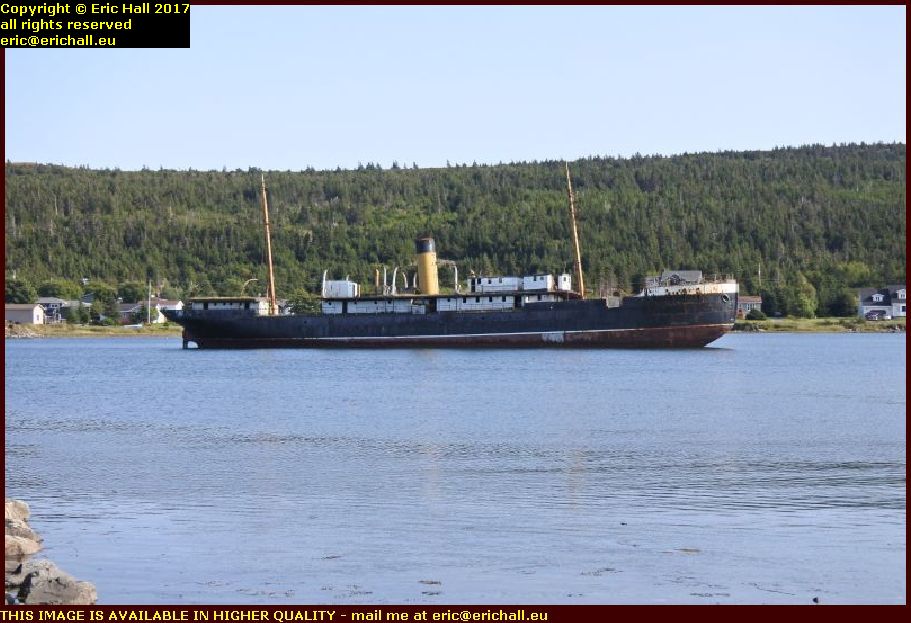
kyle reid alphabet fleet harbour grace newfoundland canada septembre september 2017He had a series of ships built in Scotland and on the Tyne and named them after places there, in alphabetic order, and these ships became known as the “Alphabet Fleet”.

The most famous of all of these ships was the Kyle. Built in 1913, she was not the biggest, but she was certainly one of the fastest. And she was certainly the strongest, being specially reinforced for fighting her way through the ice up the Labrador coast.

She was the longest-lasting too.

With modern shipping regulations, the abandonment (voluntary or otherwise) of many isolated communities, the start of the modern road network and marine disasters in the treacherous waters, the Alphabet Fleet diminished quite quickly, although Kyle survived and passed on to the whaling trade

kyle reid alphabet fleet harbour grace newfoundland canada septembre september 2017At the end of her working life in the late 1960s she was moored up as discussions were taking place as to her future.

But one night in 1967 she broke free of her moorings and ran aground here at the head of the bay at Harbour Grace.

And here she sadly remains, and will remain here until the end of time, I imagine. It’s impossible to refloat her, as she’ll break her back and attempts to sell her for scrap have been met with the most vehement opposition by the inhabitants of Harbour Grace who see her as the symbol of a bygone age.

But The Kyle is not the only famous symbol of Harbour Grace – it’s quite a famous little place.

And its main claim to fame is the role that it played in Transatlantic air history.
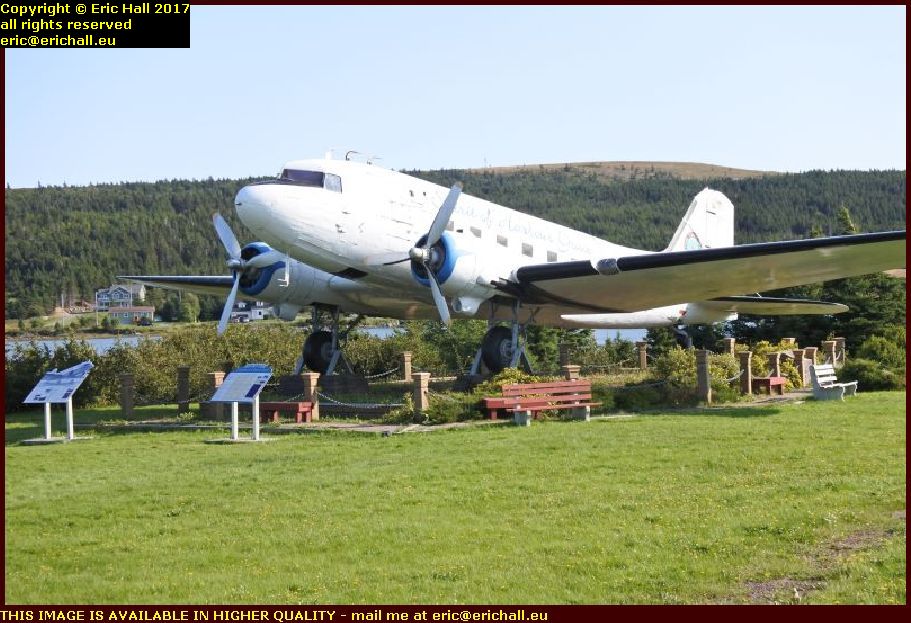
newfoundland canada septembre september 2017You are reminded about that by the presence here of a Douglas C47 Skytrain, the freight version of the DC3 Dakota.

This is CF-QBI “Spirit of Harbour Grace”, built in 1943 and had an eventful 50 year working life firstly with the US Air Force in North Africa and then with a variety of small businesses, spending many hours in the air around Newfoundland and Labrador.

When she was finally laid up in 1993 she was donated to the town as a static memorial to the aeroplane heritage of the town.
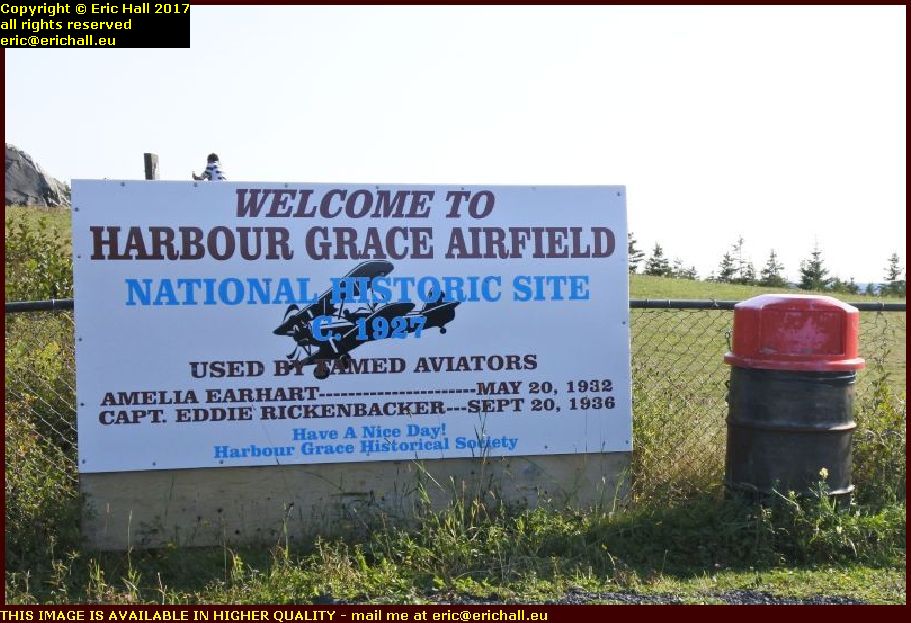
harbour grace airfield newfoundland canada septembre september 2017And this is the reason for the claim to fame of Harbour Grace’s footprint in the history of Transatlantic Air History.

There were a great many attempts to fly the Atlantic in the period 1919 to 1939 – some of which succeeded and many of which didn’t.

And many of those attempts took place from the improvised, hastily constructed air strip here.
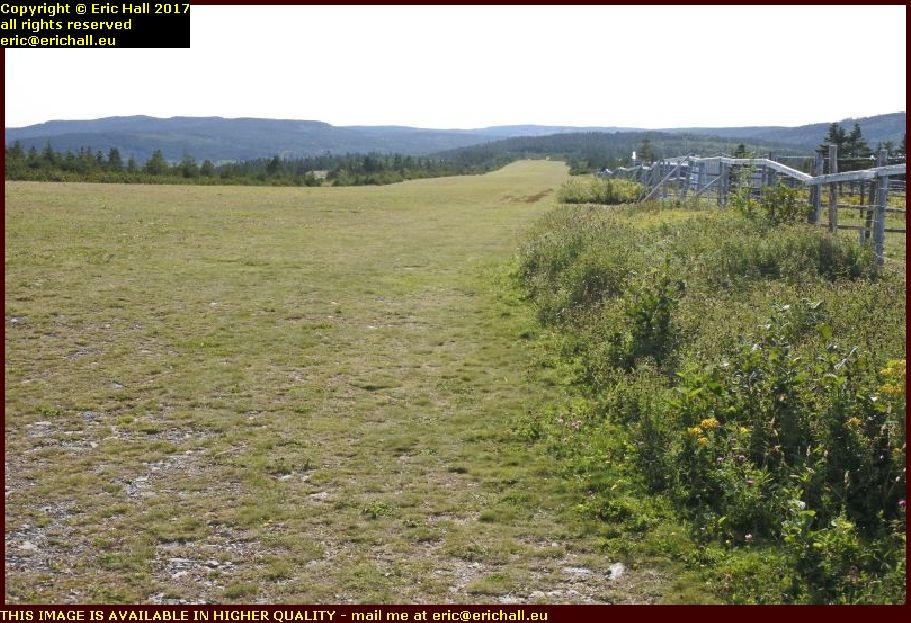
newfoundland canada septembre september 2017The sad thing about it all is that, as regular readers of this rubbish will recall, we’ve visited many sites from where these early flights left, and there is nothing much left today

Here at harbour Grace though, it’s probably the best-preserved of all of the early Transatlantic airstrips and it was somehow very pleasant and satisfying to be walking in the footsteps of people like Amelia Earhart and Wiley Post.
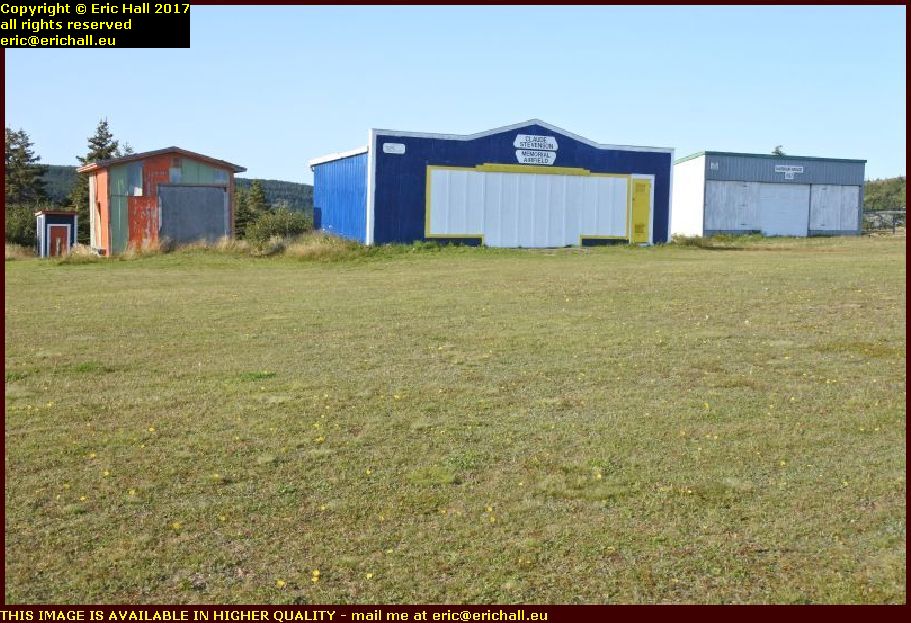
harbour grace airfield newfoundland canada septembre september 2017But we were lucky though.

It’s clearly not an airfield up to modern standards, and a radio listening post was stuck on here during World War II.

After that, it was left to decay and would have been completely overwhelmed by nature had not a spirited campaign by local people not led to its recovery and restoration.

Last night I’d had a good night’s sleep at Donald’s – his sofa really is comfortable – and after breakfast we had another really length chat.

So comfortable had I been that I was even able to go off on another ramble, although it wasn’t a very pleasant one. I was in something of a panic. I’d arrived in Portsmouth (and Southampton) and I needed to be at the airport – presumably in London or somewhere like that. It was early morning and my flight wasn’t until about 13:30 but even though it seemed as if I had plenty of time, there just wasn’t the transport to take me there. For example, a train leaving at 06:45 didn’t arrive until 12:40 which was far too late. it was just totally bizarre for London (or Birmingham, or even Manchester) wasn’t anything like that far away.

While I was there I took advantage of Donald’s shower (which was beautiful) and he bunged my clothes in the washing machine which was really nice of him.

It goes without saying that I appreciated the hospitality.

tow bar tray st johns newfoundland canada septembre september 2017Stocking up on fruit, veg and breadat the Dominion Superstore later, I noticed this handy device.

That’s the kind of thing that I need if ever I change Strider for a smaller car. It can sit in the rear of the car until I go off on my travels and everything can be dumped on there and chained down.

And so I made a mental note.

Having done the shopping, I left St John’s on the Trans-Canada Highway and headed off in the direction of Harbour Grace, the Kyle and the airfield, stopping to make myself a butty on the way

And having done what I needed to do, and booked a room at a motel in Carbonear, I set off through the town.

belle carnell clam harvester harbour grace newfoundland canada septembre september 2017There’s a big port here – which used to be one of the bases for the Alphabet Fleet of course, but now it’s mainly fishing boats that tie up.

And that includes the massive 3600-tonne clam harvester Belle Carnell, based out of Halifax.

Built in 2004 she was previously the Norwegian Siddis Skipper.
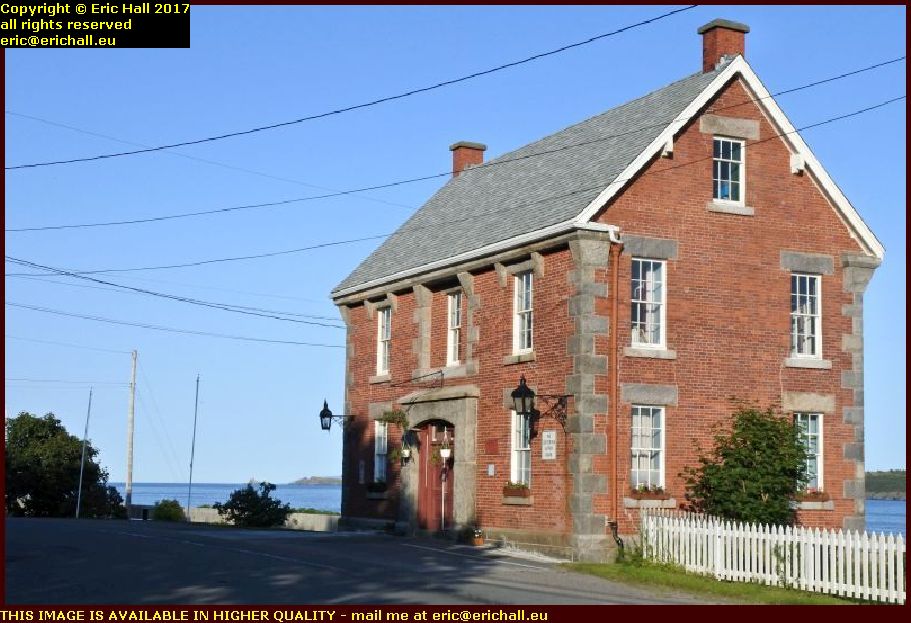
peter eastons fort customs house harbour grace newfoundland canada septembre september 2017he most famous of all of the Harbour Grace inhabitants must surely be the pirate Peter Easton.

That’s the Customs House from the 1870s there, but it’s said to be built on the site of Easton’t fortress.

he would think nothing of sailing out with his men to capture a Spanish treasure fleet, and his men became the richest pirates on the North American seaboard.

He himself retired in luxury to the south of France and ended up as Marquis of Savoy.

church of the immaculate conception harbour grace newfoundland canada septembre september 2017This however was not so pleasant.

It’s the Church of the Immaculate Conception and despite being a place of worship (and it’s a Sunday too) it was all closed up, the gates were chained and there was a “Private – No Trespassing” sign on the gate.

I shan’t go in to all of this because I’ve said it so many times before. You all know that it’s an attitude that totally dismays me.

memorial to transatlantic flyers harbour grace newfoundland canada septembre september 2017Instead, we can admire the scenery.

The museum with the flight log of the airfield was, as you might expect, closed. But in the grounds was this sculpture to commemorate the Transatlantic flyers, particularly those who lost their lives in the attempt.

Europe, the destination of most of them, is right out there, 2000 miles away to Ireland with nothing in between.

harbour grace newfoundland canada septembre september 2017But yesterday I mentioned just how beautiful Newfoundand was, and showed you a photo to prove it.

Today’s photo, looking right across Conception Bay here, merely underlines it.

I was lucky with the weather too because despite the wind it had turned out to be a beautiful day.

And so I shot off down the road to Carbonear and my motel for the night.

Tea was pasta, tinned vegetables and tinned soup all mixed up in the slow cooker – and delicious it was too. I’ll do that again.

And despite having so much to do, I’m so tired that I’m off for an early night.

See you in the morning.

Thursday 11th November 2010 – I’M BACK …

… on the road again and tonight will be my last night in North America.

This morning was rather confused though. According to Casey’s temperature gauge its 14°C outside – yet again!

This gives the lie to this idea about severe winters out here in Freezing Cold Canada doesn’t it? it’s flaming mid-November – what is the weather like in France … "it’s just as " – ed.

Mind you it’s below freezing and its snowing in Labrador.

I have just seen now on the other carriageway of this highway – heading in the direction of Windsor a vehicle that I am absolutely convinced is one of the big Fiat 125s.

If it is, and I cant think what else it could be, it gives a lie to the old story about “Fix It Again, Tony”, doesn’t it?

And quite a bit later somewhere on the road to Niagara Falls I saw an XKE – an E-type Jaguar – heading towards me. This was one of the late-model hard-top coupé version, and when was the last time that I ever saw one of those?

It wasn’t a convertible, though. And when was the last time I saw one of those?

And it was round about this point that I remembered that I had forgotten to take a photograph of the Ambassador Motel where I’ve been staying just now. I’m not doing so well, am I?

My road took me towards Hamilton and the airport there. And, more precisely, the Canadian Warplane Heritage Museum based at the airport.

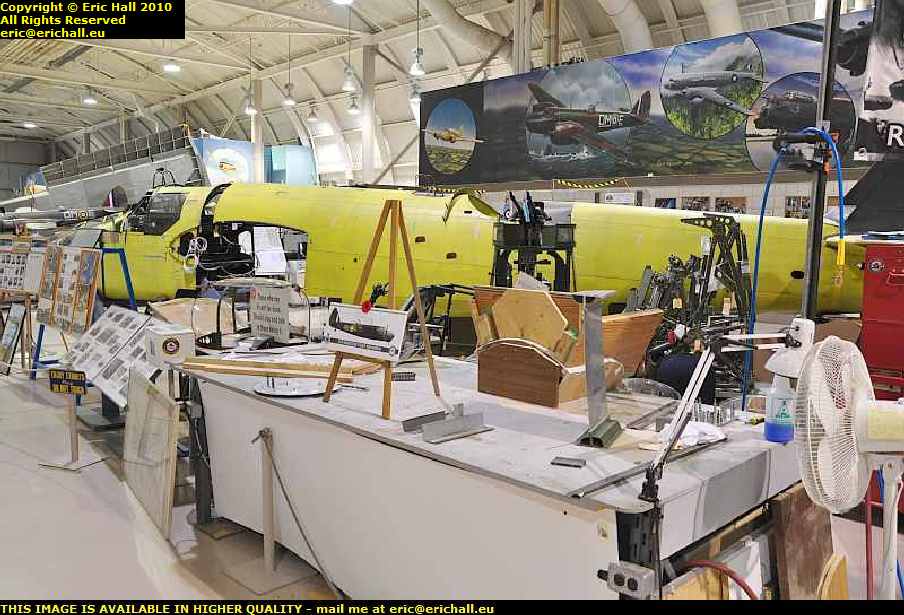
bristol fairchild bolingbroke canadian warplane heritage museum hamilton ontario canadaThe Museum tells us that its mission is “To acquire, document, preserve and maintain, a complete collection of aircraft that were flown by Canadians and the Canadian military services from the beginning of World War II to the present …”

Such as this Bristol-Fairchild Bolingbroke, which we Europeans know much better as a Bristol Blenheim.

This is a reconnaissance version, as you can tell by its elongated snout.

bristol fairchild bolingbroke canadian warplane heritage museum hamilton ontario canadaWhen I say that this is “a” Bristol-Fairchild Bolingbroke, I’m being somewhat economical with the truth. It is in fact “many” Bristol Bolingbrokes.

When they were taken out of service they were sold off for scrap and the shells were very popular with farmers as chicken coops and the like.

Even today, you can still find them on farms and in scrapyards, and a total of eight of these “wrecks” have gone into assembling this one.

supermarine spitfire Mk 16 canadian warplane heritage museum hamilton ontario canadaNo prizes for guessing what this one is.

It is of course a Supermarine Spitfire, and the cockpit and a few other bits and pieces tell you that it’s a late-model one too.

As I suspected, it is indeed a late-model – a Mark XVI from April 1945 but which never saw actual combat.

douglas dakota dc3 canadian warplane heritage museum hamilton ontario canadaAnother aeroplane in here that never saw combat – although it certainly was old enough to do so, is this one.

Again, no prizes for guessing what this aeroplane is. It’s a Douglas DC3 – the legendary Dakota.

It’s always been a civilian aircraft – not a converted C47 “Skytrain” like so many were. She first flew in 1939 and spent the war years flying for Eastern Airlines.

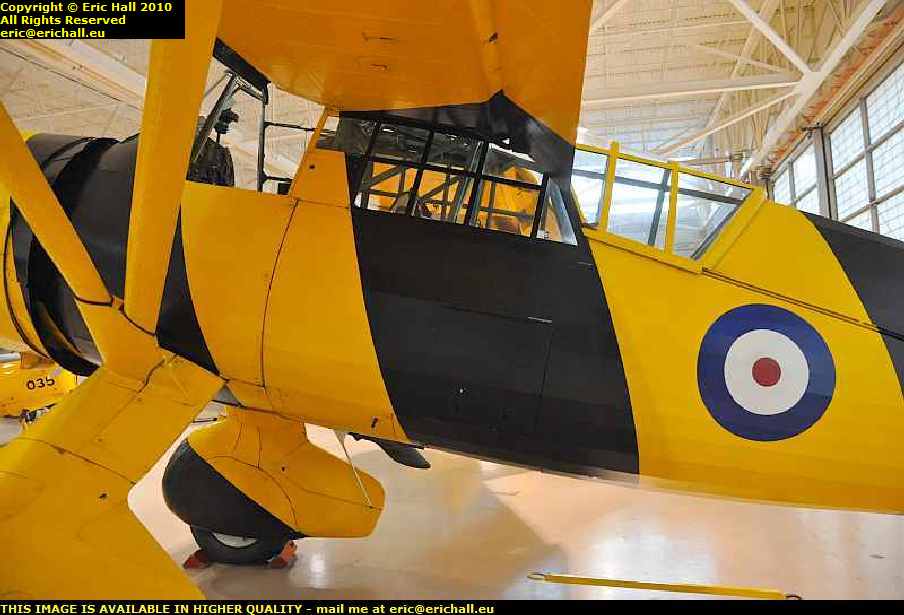
westland lysander canadian warplane heritage museum hamilton ontario canadaNow here’s an aeroplane that I’ve been looking forward to seeing.

It’s a Westland Lysander and you may be surprised to learn that I’ve never seen one of these “in the flesh” before.

Built for an Army Co-operation role, there was a mix-up over the specifications and it turned out to be totally unsuited to the task.

canadian warplane heritage museum hamilton ontario canadaHowever, its slow speed (stalling at only 65 mph), very short take-off and landing requirement and rather spacious interior soon found the aeroplane ideally suited for another role.

These were the planes that, painted black, used to fly out in the dead of night to land in lonely fields deep in Occupied Europe.

There, they would put down Resistance leaders, bring in supplies and pick up evading or escaping airmen and the like

north american mitchell b25 bomber canadian warplane heritage museum hamilton ontario canadaHere’s another fine example of military aviation – the very-much unsung B25 Mitchell Bomber.

Not very successful against front-line German fighter opposition, their deployment was much more common in the Pacific and Mitchells were the first Allied aeroplanes to drop bombs on mainland Japan.

This one didn’t though – it wasn’t built until 1945 and so missed the war. It was discovered on a airfield in Wilmington, Delaware, in 1975, patched up, and flew in to Hamilton under its own steam for a programme of restoration.

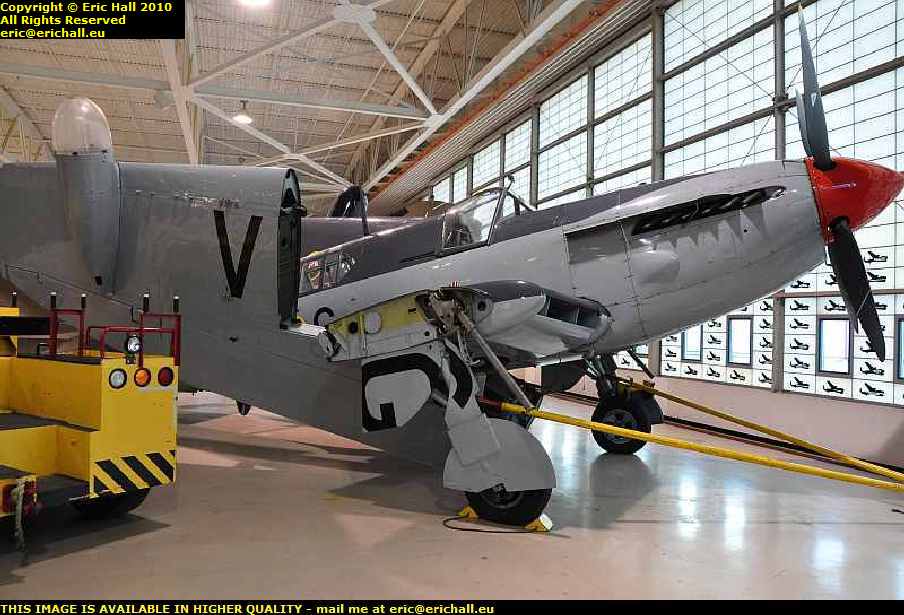
fairey firefly canadian warplane heritage museum hamilton ontario canadaI reckoned that this was a Fairey Fleet Air-Arm machine but wasnt sure quite what it was. Subsequent enquiries revealed that it’s a Fairey Firefly.

These were carrier-based fighters (hence the fold-up wings) and were two-seaters. They carried a navigator because it’s much more difficult to concentrate on navigation over the sea – with no reference points or landmarks that a pilot might immediately recognise.

Although dating from 1943, this one is a “peacetime” 1951 model and comes from Australia.

Loads of other aeroplanes here, but there was only really one that I was interested in seeing of course.

air museum hamilton ontario canada avro lancasterThe museum is the proud possessor of one of the very few remaining Avro Lancasters – and furthermore one of the only three that still flies.

My interest though was from another point of view entirely. I blagged my way in to see the assistant-director of the museum with the express purpose of talking to her about KB882.

Her response was frightening. “Ohhh – we could use it as spares for ours!”

air museum hamilton ontario canada avro lancasterThat is what I call sinister and that will be an even worse fate than that which it is currently experiencing. I rather wish that I hadn’t said anything now.

Don’t forget – KB882 flew over Germany on wartime missions – it has far more history than the one here.

I’m coming round more and more to the conclusion that the only hope for the future for KB882 is that if I put my money where my mouth is and buy it myself.

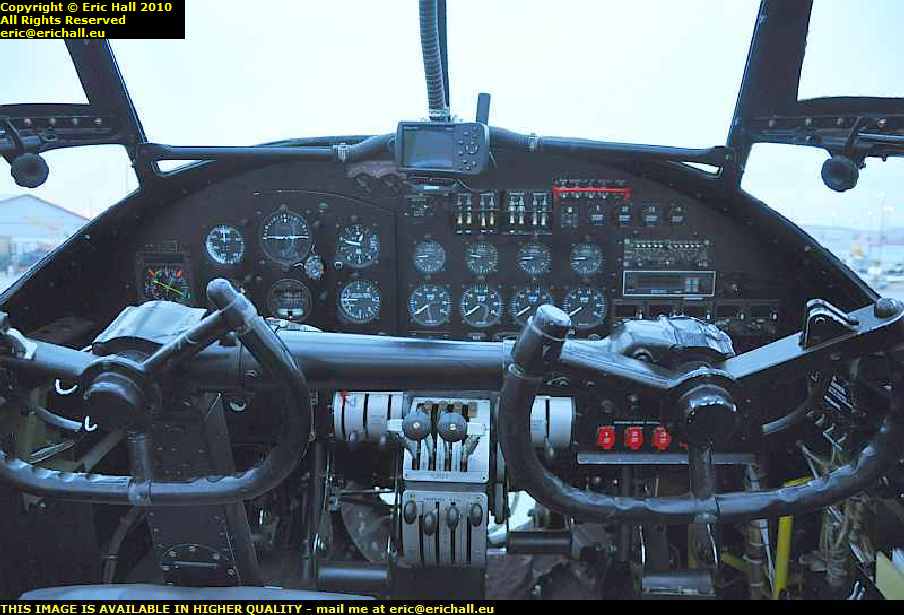
air museum hamilton ontario canada avro lancaster flight deck controlsI went off to seethe … "is this a typing error or a Freudian slip?" – ed … aeroplane and had a wander around inside it and a sit at the controls.

That has to be one of the highlights of the voyage.

It cheered me up a little – but only a little. I was definitely shocked to the core.

air museum hamilton ontario canada avro lancaster upper gunnerI actually felt quite sorry for the poor people who spent all of their air-time crouched over these guns.

It can’t have been very pleasant for anyone to have sat here behind your twin .303s watching someone with a couple of 0.5mm cannon and a barrage of 8x.303s coming swooping down towards you and knowing that you might as well just throw stones at them for all the good that your defensive armament will do.

air museum hamilton ontario canada avro lancaster tail gunnerbut the position which no-one wanted to occupy – unless he was a complete psycopath – was the rear gunner.

Night-fighters did most of their stalking from the rear and it’s inevitable that the rear of the Lancaster is going to be the first aiming point of the night fighter.

I don’t care what anyone says, the Mark I eyeball was never as good as the Lichtenstein radar carried by the nightfighters and the first warning that the rear gunner received was a fusillade of cannon shells and machine-gun bullets.

air museum hamilton ontario canada avro lancaster bomb bayThe museum was in a hurry to close (have I been here THAT long?) but I had just enough time to stick my head inside the bomb bay.

Just imagine one of Barnes Wallis’ Bouncing Bombs or 10-tonne “Grand Slams” stuck up there!

But I had to go. So much more that I wanted to see too but here they were, throwing me out.

But what a place it is, though. A museum curator who “knows the price of everything but the value of nothing” – that’s a harrowing thought.

Makes me wonder what else have they cut up at that museum that they are keeping quiet about?

And now for my last night in North America, which I’m at Fort Erie.

peace bridge buffalo new york usa fort erie canada Port Erie is just like Windsor – a Canadian city with a big American City just across the River Niagara there.

That’s Buffalo over there, and we’ve been there before – and it seems like 100 years ago now.

But here we have a railway museum, the start of the Welland Canal (that enables ships to by-pass the Niagara Falls) and a few other things too;

peace bridge buffalo new york usa fort erie canadaLike a big bridge – the Peace bridge of 1927 in fact.

Named to celebrate 100 years of peace between the USA and Canada, construction started in 1925 and was opened to the public on 1st June 1927.

At the time, it was the only bridge between Niagara Falls and Minnesota across the Canada-USA border that could take road-going vehicles.

peace bridge buffalo new york usa fort erie canadaAs you admire the colour changes, let me tell you that the bridge is built of 9800 tons of steel – of which 9,000 tons is in the structure and 800 tons as reinforcement in the concrete.

Altogether, it’s 5800 feet long, which is about 1.1 miles in real money and it spans a river where the average current is about 10 mph.

That’s actually quite a speed for a river.

canadian customs facilities peace bridge buffalo new york usa fort erie canadaSome of the most spectacular Canadian customs facilites are here too. That building down there never dates from 1927 – I promise you that!

It incorporates the toll plaza apparently and dates from 2005. There are 14 lanes for cars and special facilities for lorries, of which over 4,000 pass through every day.

As a result, the facilities are often overwhelmed and there is talk of some kind of pre-clearance facility similar to the European TIR idea.

I found a motel at a reasonable price and I put a tin of beans in the slow cooker before I went on my ramble.

On the way back I went to look for some chips to have with them but would you believe … in the whole of this town near where I’m staying where there are three or four fast-food places, there’s not a six of chips in sight.

And so I sulked off for an early night.

I’m off to Toronto where my aeroplane will await me at 20:50. And I’m already depressed about leaving Canada. I shall be inconsolable by the time I get back to Europe.