Tag Archives: bagpipes

Monday 9th July 2018 – NOT ONLY DID I …

… make it to Canada today, I was actually in Newfoundland and Labrador too!

But more of that anon.

With something of a very disturbed sleep (and I’ve no idea why) I finally crawled out of bed at some time rather later than the alarm.

There was plenty of work to be done this morning but for some reason or other I wasn’t really in the mood enough to do it. I don’t know where my energy seems to have gone to at all.

Anyway, at 09:00 and the morning rush-hour gone, I went outside and hit the streets. First stop was to load up with food as the lunchtime stuff is getting low, but would you believe that I drove all of the 45 kilometres to Serre, all the way through the city of Arras and several other small towns, and didn’t even find a single supermarket?

Serre was one of the vital points on the Somme front line that needed to be taken, but the attack had bogged down long before the village had been reached. The “Accrington Pals” who had attacked the village had been decimated.

All around the area are several cemeteries that contain the bodies of the fallen that were recovered from the barbed wire when the battlefield was cleared after the German retreat in early 1917 and were still being recovered in the 1920s.

One piece of land that had been part of the front line had been given to the City of Sheffield and it’s known as Sheffield Park. Tile has worn away many of the features but you can still see the trenches and the shell holes quite clearly.

Narrowly avoiding being squidged by a French lorry driver who was speeding and not paying attention, I visited a few other cemeteries of note and then headed for the Hawthorn Redoubt.

This was a prominent hill overlooking the front line and the British Army dealt with it by the simple expedient of tunneling underneath it and packing the tunnel full of explosives. The explosion of the mine at 07:28 was the signal for the attack to begin.

The crater is certainly impressive – it has to be seen to be believed, but it’s by no means the largest that was exploded on that day. It is famous however as its detonation was actually captured on film.

Down the road from there I entered Newfoundland and Labrador. This is another corner of a foreign field that is forever Canada, although I can’t claim asylum there (I did ask).

It’s where the Newfoundland Regiment, all 800 of them, were ordered into attack but due to a misunderstanding, instead of going through the communication trench to the front line, they left their trenches in the rear and advanced in the open, in full view of a couple of German heavy machine guns.

It has to be said that there were a couple of hundred German machine gunners on the Somme front line, and they alone counted for a very large proportion of the 60,000 or so British casualties on the 1st July.

By the time the Newfoundlanders reached the front line, there were just 95 left. They probably hadn’t even wounded a single German.

I ended up having quite a chat with a nice Canadian girl from St Johns who told me that her great grandfather’s brother is still lying somewhere out there on the battlefield.

Here we were interrupted by a band of pseudo-Scottish pipers who insisted on attempting to play Scotland the Brave and Cock o’ the North and were most unimpressed when I suggested that they went to practise a Highland Fling on the field containing the unexploded ordnance.

Next stop was the Thiepval Ridge and its massive memorial to the missing. Over 75,000 soldiers who lost their lives on the Somme have no known grave and when you see the size of the shell holes that remain, it’s hardly surprising.

Their names are all recorded here,but you’ll see several gaps that are clearly where names have been filled with cement. Bodies are regularly discovered even today on the battlefield and if they are identified, their names are removed from the memorial.

And there are several cases of the “missing” subsequently coming to light, having gone to ground in rural France.

The leader of the pipe band and his acolyte came over to me here (they had been going from memorial to memorial trying to play the pipes) and demanded an explanation of my earlier comments. This led to quite a heated and animated discussion, particularly when I suggested how he could obtain a better sound from his pipes (a method which involves eating several plates of baked beans).

It seems that all of these Scots pipe bands who died for freedom only died so that Scots pipe bands can express their freedom and no-one else is allowed to have any freedom of expression if it disagrees with the opinions of the Scots pipe bands. But I put him right on that score and he slunk off with a flea in his ear.

A good pipe band is a magnificent thing, but a poor pipe band is one of the worst things in the world to have to suffer to hear. It’s even worse than a mouth organ, and regular readers of this rubbish willknow my opinion about that.

The sky had clouded over by now, but I carried on, visiting Sausage and Mash valleys, where a couple of machine guns on a spur of high land in between them decimated the attacking soldiers.

It’s here thuugh that we have the Lochnagar Crater. This was the largest mine exploded on the day and you can tell that by the size of the crater.

Cecil Lewis, an RFC pilot who was flying over it on the day, gives a vivid description of it in his autobiography Sagittarius Rising.

Back 40-odd years ago there were plans to fill in and redevelop the crater, as has happened with a couple of others, but a British person bought the land to preserve its integrity and he’s made quite a passable job of a tourist attraction of it.

But from the top of it, you can certainly see the futility of attacking up “Sausage” and “Mash” valleys.

It was already 19:00 by this time and so I shot off back to Lens. I’d had no food at all during the day, so I was well-pleased in stumbling across a LeClerc supermarket where I could grab some stuff to make a butty – just before they closed the doors too.

And back here in the heat I had a shower and washed my clothes before eating it too.

But 143% of my day’s activity on the fitbit told its own story. By 21:30 I was tucked up in bed and I’ll do the rest tomorrow.

Friday 18th August 2017 – SO HERE I AM …

… sitting on the coach station in Montreal waiting for my bus to Florenceville, totally exhausted. Luckily there’s a seat right by the gate that I need because I won’t be able to crawl much farther – I’ve had a hectic day!

I had another good sleep last night – which is hardly a surprise after all of the walking that I did yesterday, and then spent half an hour trying various key combinations of the laptop to see if I could fire up the keyboard, because you’ve no idea how inconvenient this external keyboard really is.

But all to no avail.

I nipped out to Tim Horton’s for breakfast and, much to my dismay, we were having a torrential rainstorm. What a way to finish my last day in Montreal.

Back here I started to pack and despite having emptied some stuff out of the suitcase, it seems to be even more full than it was before and it’s becoming something of a struggle to close it up. Either I shall have to dump some stuff or Strawberry Moose will have to go on a diet.

First stop was round at Josée’s. She works as a co-ordinator of some kind of project for reinsertion of people into the mainstream and part of their work includes running a series of craft workshops. It’s Zoe’s birthday tomorrow and I wanted to buy her a present, and I’d seen some stuff there that looked really nice.

So braving the rainstorm off I set, and I did have quite a lucky find. I stumbled across a second-hand computer shop where they had 50 laptops for sale, all of which seemed to be at bargain prices. Far from being the latest spec of course but if this one is about to give up the ghost I can organise a quick replacement.

open air music concert montreal aout august 2017Taking my leave of Josée I wandered up the hill to see what was going on. I noticed that a corner of the park had been closed off.

It seems that there’s an open-air music concert this weekend and they were all there setting up the stage.

Well, I wish them all the best of luck and I hope that the weather improves because it will be rather miserable if it doesn’t.

london transport routemaster montreal aout august 2017These people can give you much more idea of what the weather is doing right now.

I bet that you wondered what happened to all of the Routemasters that were phased out of London. The Londonders might not appreciate them but the rest of the world does and they are scattered all across the globe.

This is JJD274D with its top cut off being used as a sightseeing bus and the passengers are clearly enjoying it despite the rain.

You’ll notice that the rear platform has been “turned” for “driving on the left” operation

chinatown montreal aout august 2017The weather slowly started to clear itself up so I headed back into town.

I’d heard about “Chinatown” and on my walk with Josée the other day I’d actually gone past it, so it seemed like a good idea to go into town that way.

But I do have to say that despite the banners and artificial arches it’s something of a disappointment. I’m not sure what I was expecting but I was expecting more than this

complexe desjardins montreal aout august 2017By now it was approaching lunchtime so I made my way into the big Complexe Desjardins.

There’s a huge food court in the basement and also this magnificent fountain that’s really well-worth admiring – a performing art in its own right.

I had a good prowl around the different food outlets but ended up as usual at the Subway for my 12-inch vegetarian without cheese, and mustard sauce.

And here’s a thing!

Do you know what the must surprising thing in the world is?

It’s to discover that you are sitting on one of these toilets that has an automatic flush that sets itself off into motion about 30 seconds after you’ve closed your eyes for a little doze.

You may remember from yesterday that there were some ships in port but I was unable to read their names.

The weather wasn’t right for sunbathing so I reckoned that I’d go for a walk along the docks to see what they were.

soldiers period costume montreal aout august 2017That was however not counting on some kind of invasion by some kind of colonial troops. Not British “redcoats” quite clearly, but there was obviously something going on somewhere.

But I wasn’t in the mood to go and check it out – despite the depressing weather there’s an ice-cream van selling vegan ice-cream down at the Old Port and I reckoned that I deserved a treat.

war memorial clock tower montreal aout august 2017We’ve seen the clock tower – the war memorial to the Canadian merchant marine victims of World War I – on several occasions, but never from this angle.

I’ve taken a little detour round to the offices of the Montreal Yacht Club to make “certain enquiries”.

One idea that has gone through my mind on several occasions is the idea about hiring a cabin cruiser for a week or two to have a cruise down the St Lawrence, and the Yacht Club seemed like the best place to make enquiries.

st lawrence river cruises montreal aout august 2017But apparently that possibility doesn’t exist on the St Lawrence, which is very depressing.

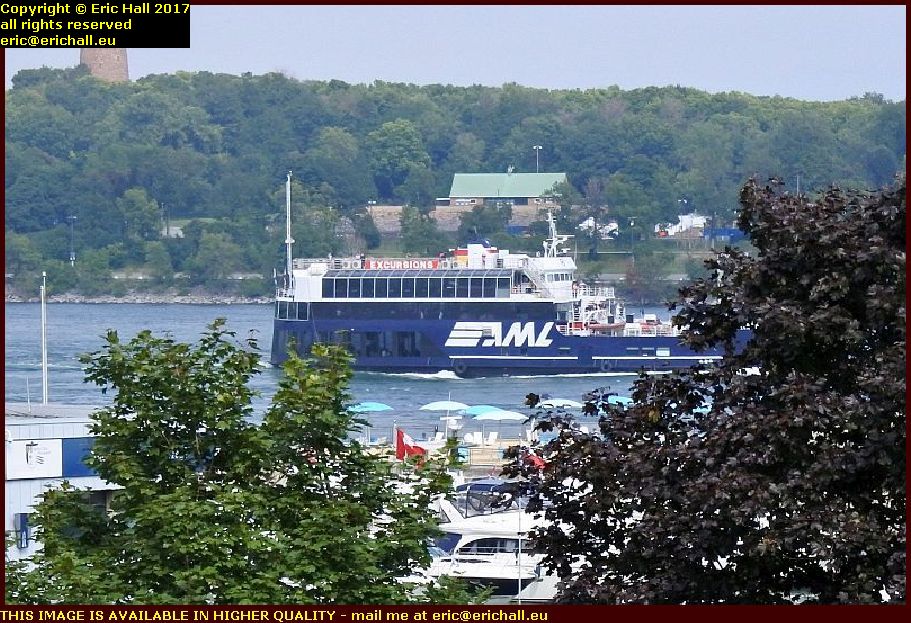
There are however plenty of “organised” river cruises something similar to this one, but that idea doesn’t appeal to me too much.

And Josée told me about the cruise liner that sails from Montreal to the Iles de la Madeleine, but regular readers of this rubbish will recall that we saw that ship in dry dock downriver a couple of years ago and we had a good look over it.

gare viger canadian pacific railway montreal aout august 2017We were at the Gare Viger yesterday and although the building is still there, it’s difficult to see where the railway lines ran, due to modern construction that seems to have wiped out part of the track bed.

But not far away is this road viaduct that doesn’t seem to be serving much or a purpose these days.

It made me wonder if the railway lines passed underneath here at one time as they curved round to join up with the lines that run through the port.

old pumping house montreal aout august 2017There were steps up to the roadway so I climbed up. This was the road out of the city to the east and so I followed it.

Underneath in the shadow of the Pont Jacques Cartier is this weird building that looks like some old steam pumping house.

The slogan carved on the walls is “Concordia Salus” which is the official slogan of the City of Montreal, so it was formerly a municipal building of some description.

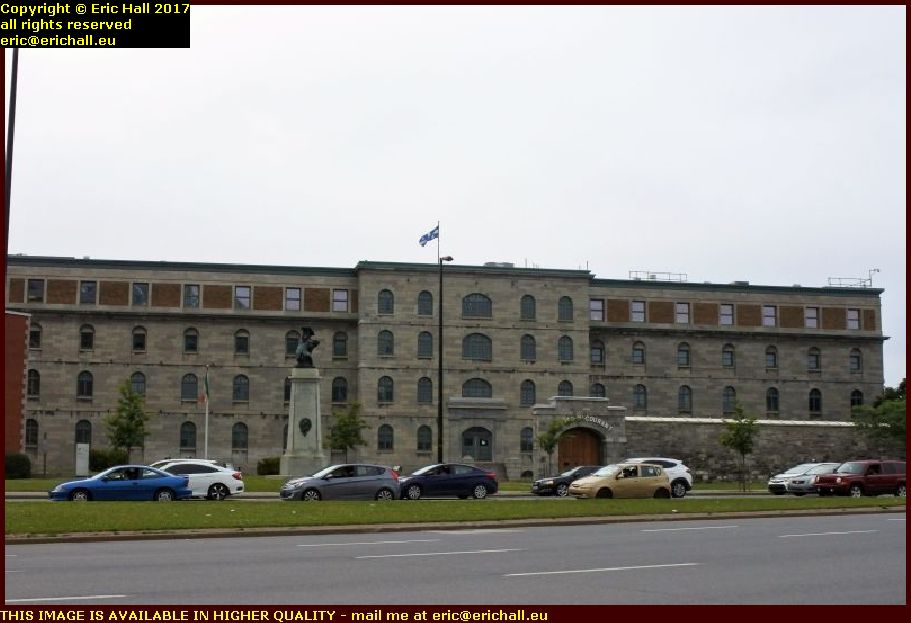
prison des patriotes montreal aout august 2017This on the other hand is a building belonging to the Quebec Provincial Government as you can tell by the Quebec flag that’s flying from the roof.

If you are thinking to yourself that this has something of the air of being the local nick, you are quite right – it’s the “Prison des Patriotes” – the old “Pied au Courant” gaol where the perpetrators of the 1837-1838 rebellion were incarcerated.

It’s now a museum.

pont jacques cartier montreal aout august 2017but let us turn our attention to the Pont Jacques Cartier for a brief moment, seeing as we are passing underneath it.

That bit that we see here isn’t even half of it. That’s the Ile Sainte Helene over there – not the south bank of the river, and there’s just as much, if not more bridge on the other side of the island leading over to Longueil

st lawrence river manitoba port de montreal aout august 2017While I was wandering around the docks earlier I fell in with a couple of Port security guards, so I asked them about the Manitoba.

They hadn’t even noticed that it had been there moored up for over a year so they couldn’t tell me what was going on with it.

But they did say that it was attended and that there was the occasional maintenance crew aboard, so it wasn’t abandoned or laid up.

Nevertheless, according to my own research, she’s been in port now for 486 days – since April 17 2016/

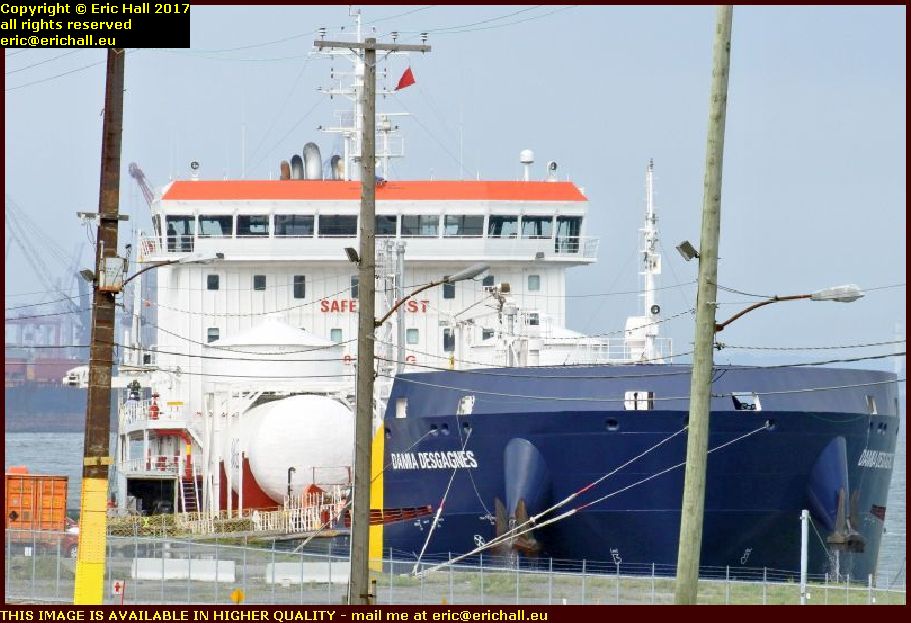
damia desgangnes port de montreal aout august 2017The next ship in at the docks is the Damia Desgagnes.

She’s a gas tanker of about 15;000 tonnes and has arrived in port from a voyage around the Great Lakes via the Welland Canal.

You’ll remember that we stuck our noses into the Welland Canal on our trip in 2010

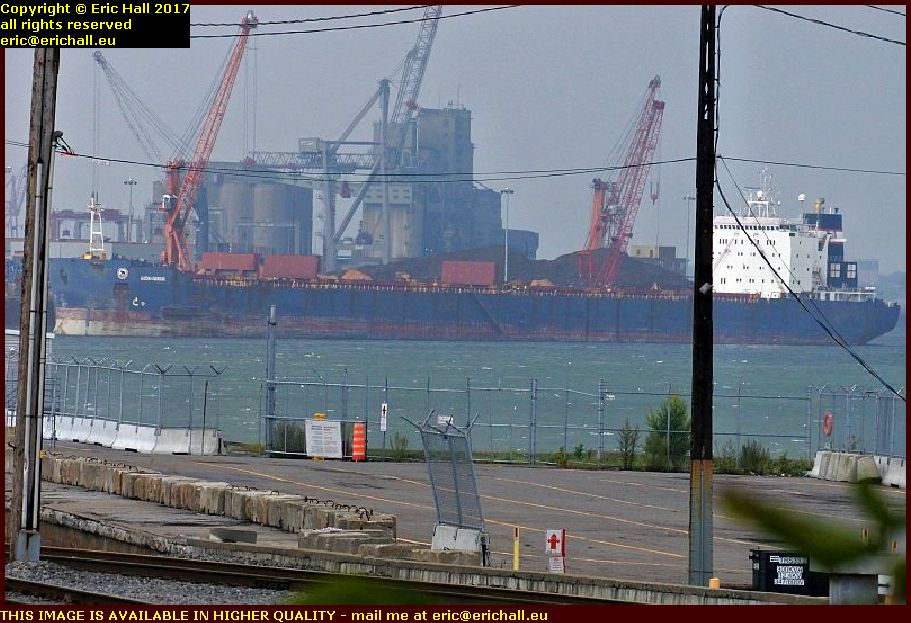
algoma guardian port de montreal aout august 2017Way over there in the distance we have the huge Algoma Guardian.

Not as huge as all that though – a mere 23;000 tonnes and built in 1987.She’s come in from Quebec, having been on a voyage down through the Great Lakes.

And even as I speak she’s back on her way up the lakes again.

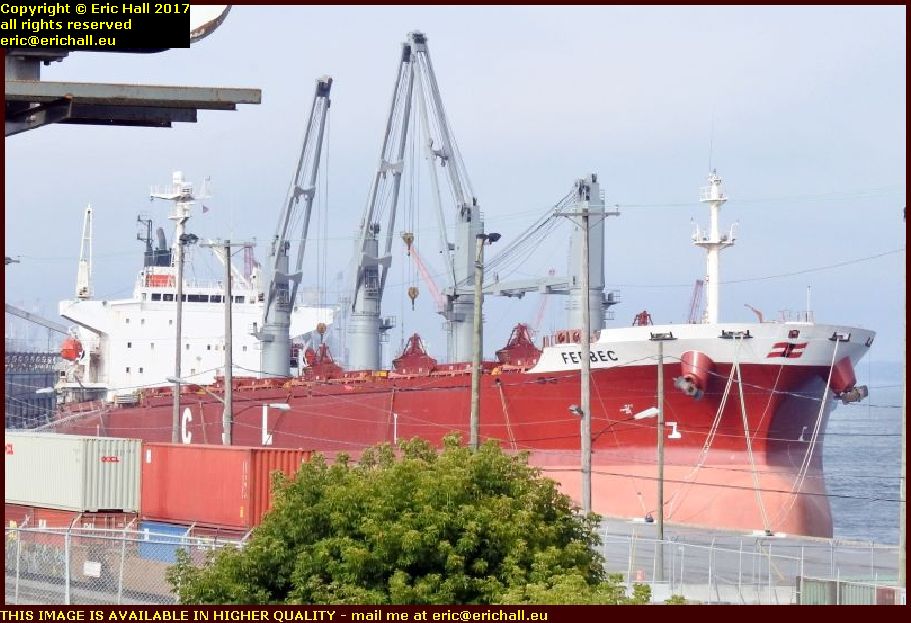
ferbec montreal aout august 2017Final ship – at least – that I could see, is the Ferbec, a bulk carrier of just over 27;000 tonnes.

Owned by the Canadian Shipping Lines, as you can tell, she arrived in port almost 3 weeks ago on a marathon journey that started on Christmas Eve in Shanghai.

Yes, I’ve been having my money’s worth here in the Port of Montreal, haven’t I?

It’s a long walk back into the centre of town and so, dodging the hordes of beggars that seem to be on every street corner here in ?ontreal; I headed back down the rue Ste Catherine Est.

speed camera rue ste catherine est montreal aout august 2017And no surprises for guessing what I have stumbled upon here. I’ve heard about the installation of speed cameras here in Quebec and this is what one of them looks like.

But judging by the state of the roads around here, I wouldn’t want to be doing any more than 50kph. I’ve seen parts of the Trans-Labrador Highway that are in better condition than this.

I don’t know where the City is spending all of its money, but it’s certainly not on the public highway.

public piano rue ste catherine est montreal aout august 2017For those of you with a musical bent, you’ll enjoy Montreal right now.

I talked earlier today about the open-air concert and we’ve mentioned the public pianos when we’ve been here in earlier years.
They are still here – at least, this one in the rue Ste Catherine est is – and the guy who was tinkling away at the ivories wasn’t all that bad at all.

Not only that, while I was having a coffee outside the Tim Horton’s; some giutarist came and set himself up to busk in the street.

“I’ll take a photo of him in a minute when I’ve finished my coffee” I mused to myself” but by that time he had packed up and cleared off. It had been a long day and I was pretty exhausted.

bad bagpiper montreal aout august 2017But my luck was in – if that’s the correct phrase – higher up the street.

I happened to catch a performance by the worst bagpiper in the world – and I’ve heard some bad pipers, I’ll tell you that.

Everyone has to learn and that everyone has to start somewhere, that’s for sure, and I’m all in favour of live music, but there ARE limits all the same.

I’d be embarrassed to be out on the streets playing like that for money.

While I’d been on my travels I’d been looking out for a likely place to eat, and I’d noticed another falafel place. That was my next stop as by now it was after 19:00.

But to say that I was disappointed was an understatement. The food was reasonable but the price ended up being utterly extortionate so I’ve crossed that place off my list for next time.

A stagger back to the hotel for my suitcase which I had left in the cupboard, and then off round the corner to the bus station.

The bus was in early so I could grab a comfy seat, which is always nice and useful. Internet and electricity too so that I could listen to some good music.

And the irony of having spent a good hour or so crawling underneath the Pont Jacques Cartier is that we actually drove over it on our way out of town.

Didn’t stop at Longueuil though – no-one wants to board there apparently, so next stop is the Sainte-Foy interchange on the outskirts of the city of Quebec.

Sunday 11th December 2011 – HAVING MADE …

… good time last night and covered a lot of ground, and being to cold to sleep for too long, I was up and about today in plenty of time.

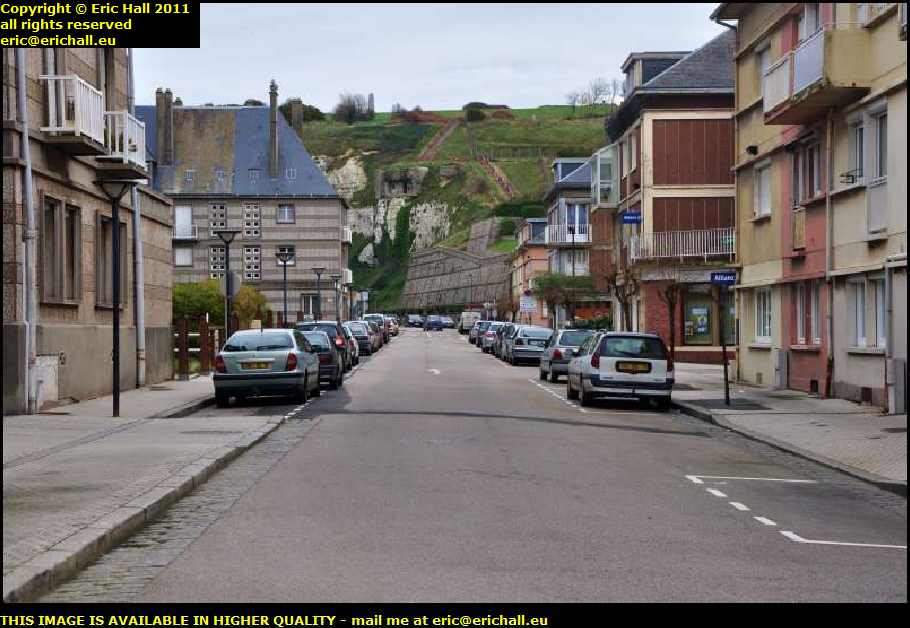
st valery en caux franceOf course, it goes without saying that I’m open to all kinds of sightseeing opportunities when I’m on my travels, so when I saw a sign for “St Valéry-en-Caux”, I was off.

St Valéry-en-Caux has something of a reputation dating from World War II and the Fall of France.

The town was the site of the “last stand” of the British Army on Mainland Europe in June 1940

st valery en caux franceThe British Army’s 51st Highland Division had been detached from the rest of the British Expeditionary Force in order to go to assist the French at the Maginot Line.

They had thus escaped being encircled and trapped in Dunkirk, and they retreated to the west.

The plan was to evacuate them from St Valéry-en-Caux – not the ideal place but the only place possible that had not been overwhelmed or threatened by the Germans’ rapid advance.

The navy duly arrived on 10th June, but the troops had not yet arrived. And having suffered an aerial attack, they pulled back offshore.

The soldiers arrived shortly afterwards and hastily threw together a defensive perimeter around the town to protect the evacuation, but the Germans were too quick.

The arrived hot on the heels of the Highlanders and overwhelmed the perimeter quite quickly.

By the time the ships returned next day, it was already too late. The fighting was all over and practically the entire 51st Highlander Division had been led off into captivity.

memorial 51st highland division st valery en caux franceIn 1950 a memorial stone to the 51st Highland Division was erected on the cliffs on an eminence that dominated the town.

That’s it up there on the skyline in the centre of the photograph.

The erection was, apparently, something of a ceremony, with the pipers of the Black Watch playing “The Last Post”.

st valery en caux franceI actually saw a photograph of the town on that occasion, and it didn’t half look a mess – even 5 years after the end of the War.

The town was fortified quite heavily by the Germans as part of “The Atlantic Wall” so it’s no surprise that heavy fighting took place around here later in the War.

The amount of destruction in the town, and the fact that the fortifications escaped so lightly, is some kind of testament to German thoroughness.

st valery en caux franceThat is of course one reason for visiting the town. There are plenty of others too.

It’s quite a historic place, being first mentioned in a Charter of 990, although legend has it that the town actually dates from the 7th Century when a religious institution was founded here as part of the plans to evangelise the coast.

Nothing has been seen to confirm this, and no trace of a likely building has ever been discovered.

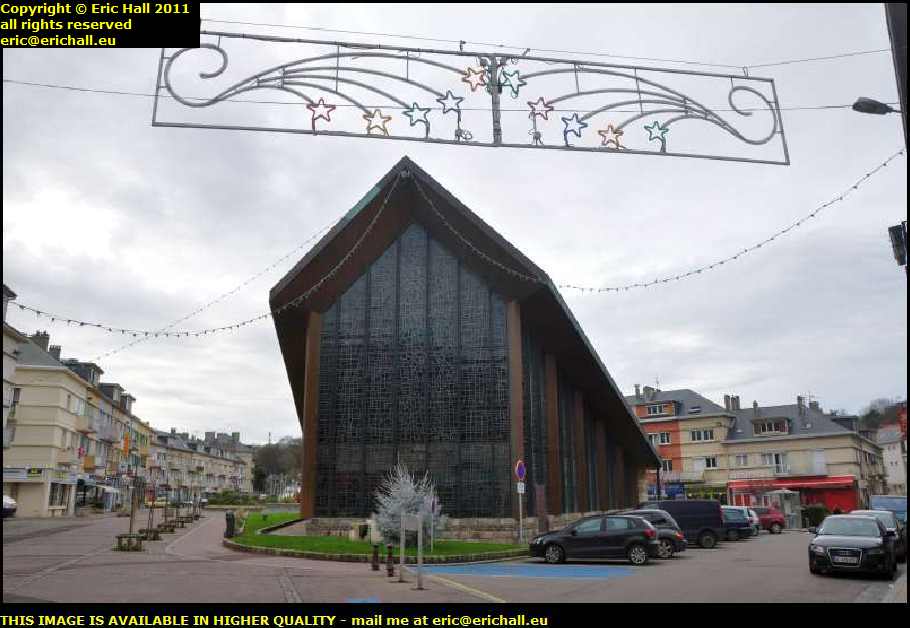
Chapelle Notre Dame du Bon Port st valery en caux franceFirst port … if you pardon the expression … of call in St Valery-en-Caux has to be the Chapelle Notre Dame du Bon Port – the Chapel of Our Lady of Bon Port – the “Good Port”.

This magnificent wooden structure, designed by Raymond Jules Lopez, and situated in the … errr … Place de la Chapelle.

It dates from 1963 and replaces a much older chapel that was destroyed during the war.

Chapelle Notre Dame du Bon Port st valery en caux franceAnd in an irony that seems to have gone right over everyone’s head, the stones from the original chapel – about which nothing much seems to be said – were used for a very secular purpose – to build the casino in Veulettes sur Mer.

Its stained-glass windows, designed by André-Louis Pierre, are said to be magnificent and are best viewed from inside, something which I was very keen to do.

And so in a situation that somehow only I seem to be able to manage to conjure up, the church is closed today and the doors are locked.

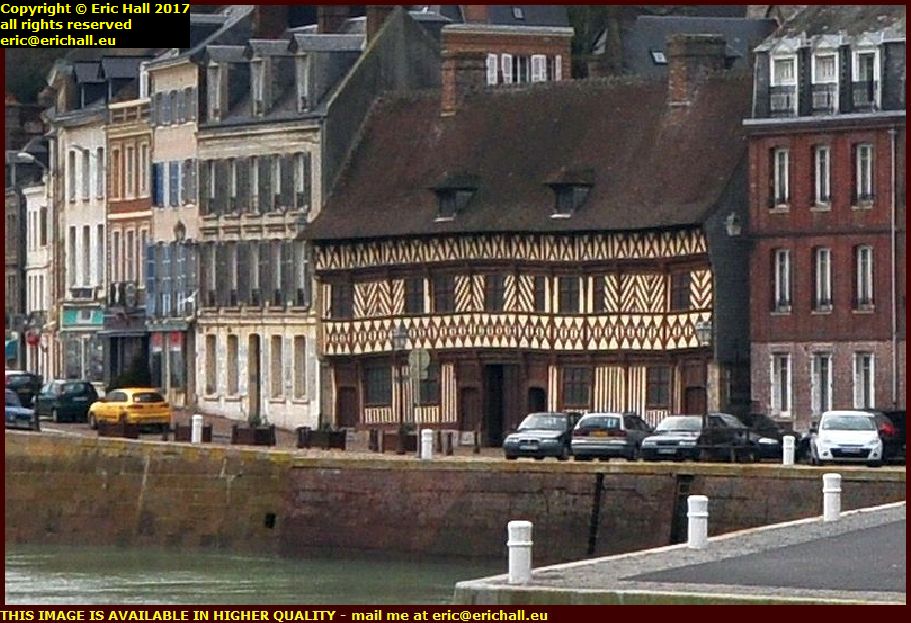
Maison Henri IV st valery en caux franceThe most magnificent building in the town is what it known as the “Maison Henri IV”.

Built in 1540 by the wealthy Guillaume Ladiré, it earns its name from a story that suggests that the French King Henri IV spent a night here in 1593.

It’s said by many to be the finest “Normandy-style” half-timbered house in the region and who am I to disagree?

Yet another claim to fame possessed by the town, and about which people are quite reticent, is the fact that a major rail crash took place here on 17th January 1945.

The fact that it happened in wartime and involved armed forces means that it never received the publicity that it might otherwise have done had a news blackout not been in force.

A train loaded with American soldiers was coming into town when a brake failure cause it to overrun the buffers at the station. 89 American soldiers were killed and 152 injured.

Finally, and most importantly, there’s a transatlantic telephone cable – the TAT 14 – between North America and Europe that runs out to sea here. According to the American Secret Service, this is a vital communications link and so the area is considered by the US military to be a “strategic point”.

We all know what that means. Iraq and Afghanistan were considered by the US military to be “strategic points” too.

Blimey! Is that the time?

My ferry leaves in 90 minutes and I have about 50 kms to travel. And to check in, and to board. And I’ve never been to le Havre so I don’t know where the port is!

I shall have to put my skates on!

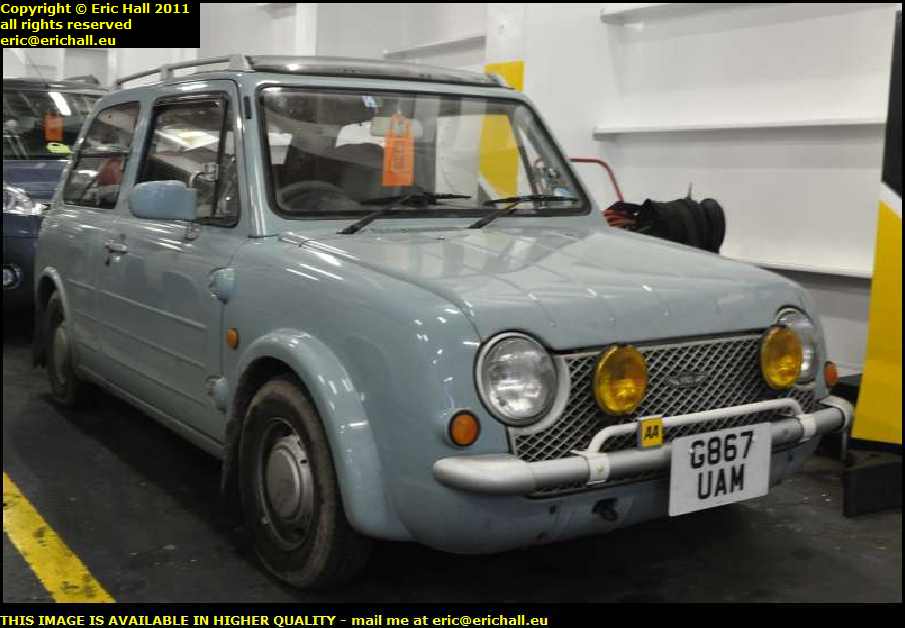
nissan pao grey import le havre franceMade it to the port and on the ship with half an hour to spare (good old Caliburn) and I’m glad that I did because just look at my travelling companion!

It’s one of these Nissan Pike-style retro cars made in Japan in the late 80s and early 90s. This one is the Pao – the estate-car version.

Rare as they come, I’ve never seen one before and I probably won’t ever see one again because these had a very limited production run – and that was for Asia only.

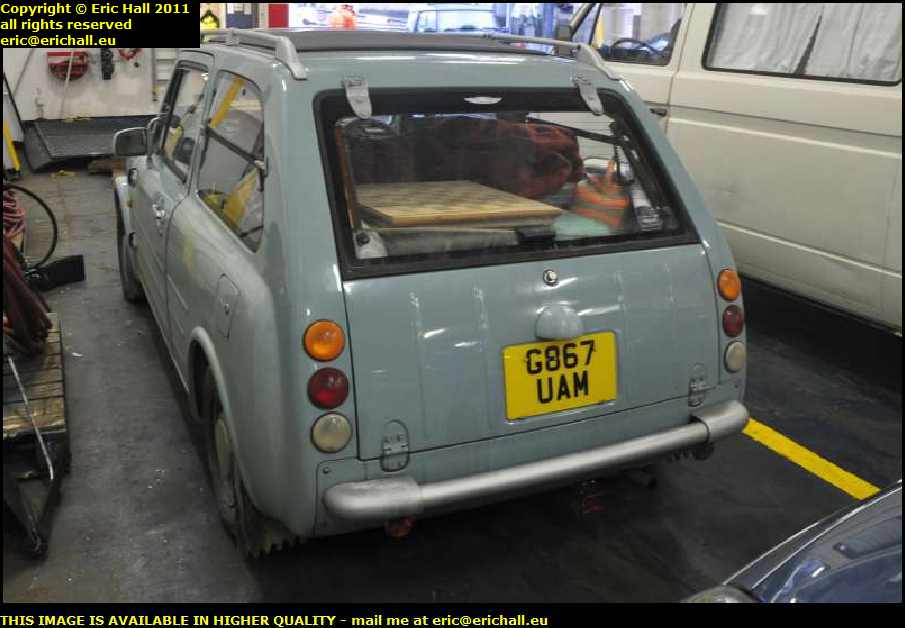
nissan pao grey import le havre franceThey don’t have a class type approval and so were never officially imported into the UK.

Only individual cars can be brought in – the so-called “grey imports” – and they need modifications before they can be used on British roads.

You’ll notice the add-on rear foglights underneath the rear bumper, for example. That’s a real give-away if you want to see if a car is an official mainstream import or a grey import like this.

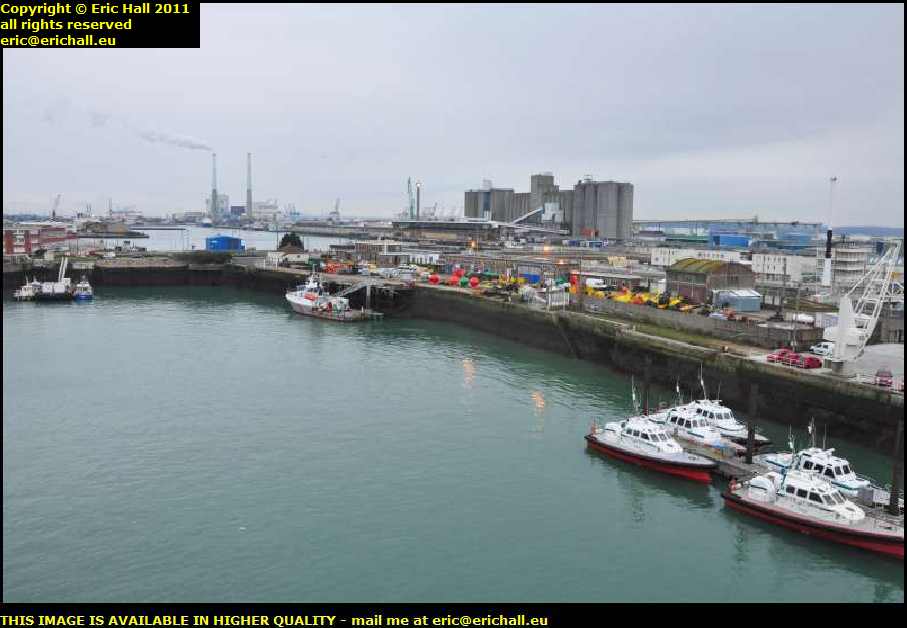
le havre franceAs for me, having parked up Caliburn and photographed the Pao I went hot-foot, or chaud pied as they say around here, up to the deck to see what I could see.

Having spent my early afternoon in St Valery-en-Caux rather than Le Havre, I hadn’t seen too much of the city, so I needed to see what I could see from on top.

First thing to see of course is the River Seine – the town is situated right at the mouth of the river.

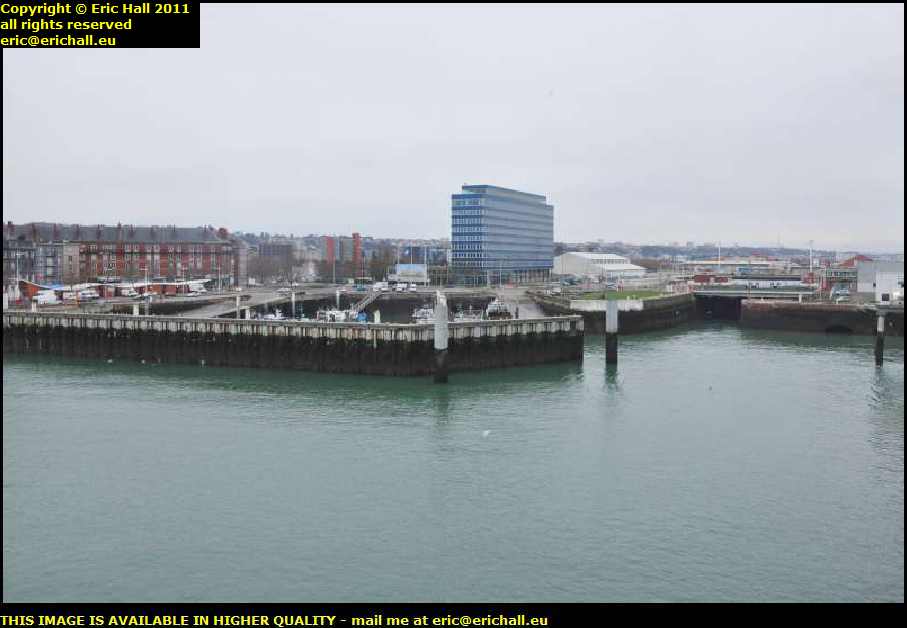
le havre franceIt’s not really a historic place as such, like many French towns and cities. It’s effectively a “planned town” built on the orders of King Francois 1st in 1517.

With the expansion of France’s maritime power in the 15th and 17th Century, the town was intended to take advantage of its ideal situation here.

As more and more ships were sailing, and the ships themselves grew in size, the port of Rouen was overwhelmed. Goods could be unloaded here and trans-shipped by barge up the Seine to Paris

le havre franceMind you, that’s not to say that there was never a setttlement here. Evidence has been uncovered suggesting settlement from the dawn of European humanity.

More-or-less continual occupation from Neolithic times is suggested.

There was an Abbey here in the immediate vicinity at the time of WIlliam the Conqueror and there were certainly a couple of small fishing villages here when Francois I became interested in the site.

le havre franceBut like most things, it was the era of the Industrial Revolution that saw the spectacular growth of the port.

Continual development has been taking place over the last 180 years, and it’s now one of the major ports of the country.

There’s a considerable amount of heavy industry as you might expect. Oil refineries, cement works and all of that, all based on the raw materials that are brought in.

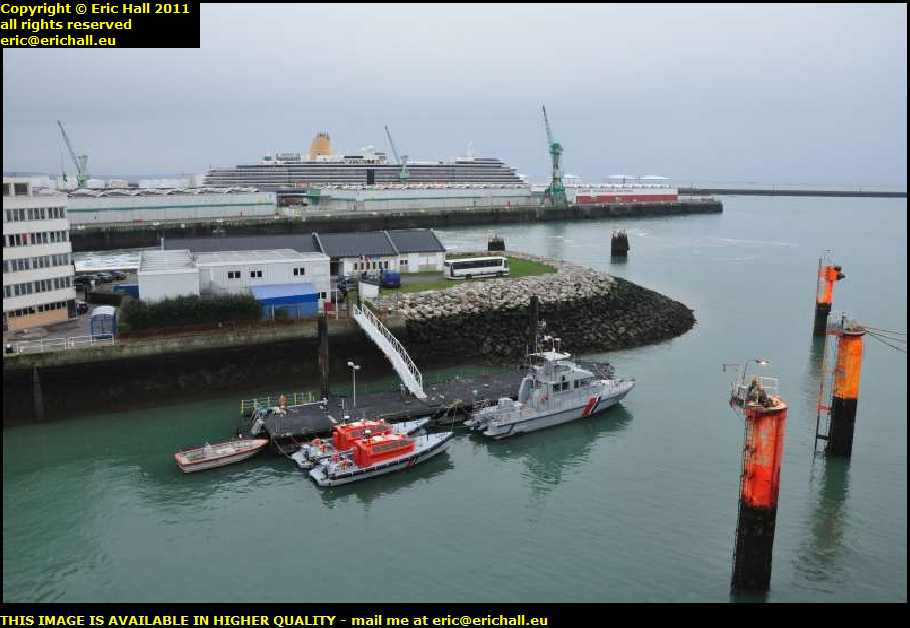
le havre franceMammoth cruise ships call here today as you can see.

But that’s just a sad reminder of the days when the great French transatlantic liners of the Compagnie Générale Transatlantique sailed from here.

And the huge ship-building works – the Ateliers et Chantiers du Havre – closed down in 1999. That was a major blow for the town.

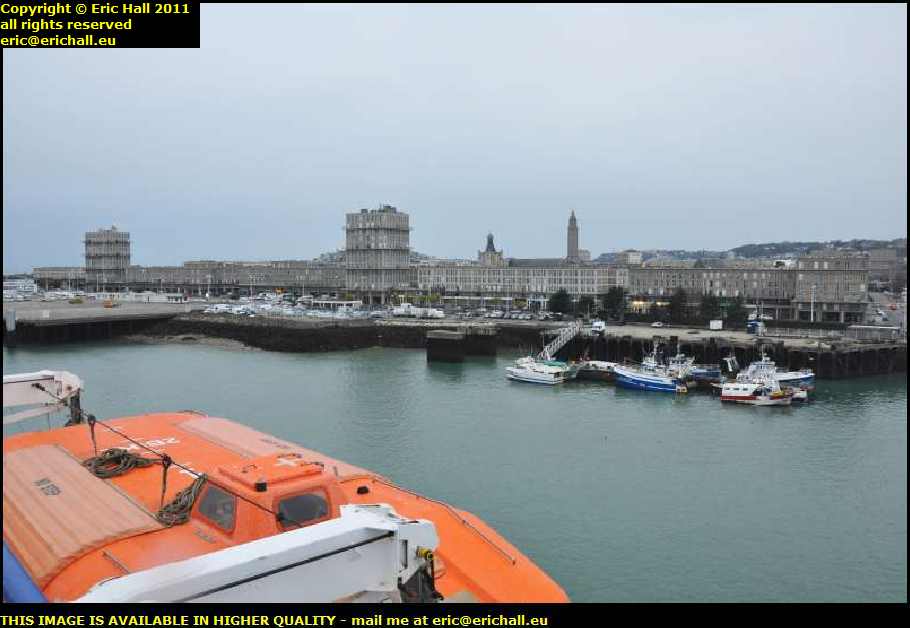
le havre franceThe city was totally destroyed by the Allied air forces during the war – and the rebuilding has not been kind, as you can see.

The worst of the air raids took place on 5 an 6 September 1944 by the RAF Bomber Command.

They dropped a total of 10,000 tonnes of bombs on the city, destroyed 12,500 buildings and killed over 3,000 civilians. 350 boats and ships were sunk.

And all to no purpose either because the port had already been badly damaged and the German defenders were camped well outside the town.

The reason of this destruction has always for the French been a total mystery. Many conspiracy theories, such as the wish to damage French post-war maritime commerce, have abounded ever since.

In the lounge of the ship for five and a half hours of one of the most comfortable crossings of the English Channel, I was in Pompey – or Portsmouth to the uninitiated.

Out of the docks and round the back streets is one of the best chippies in the whole of the UK and I felt so much better once I’d wolfed down a helping of beans and chips liberally doused in malt vinegar.

The M27 and the M3 to Winchester took me to the A34 to Oxford, and then the A43 as far as the edge of Towcester where there’s a quiet lay-by for the night.

And guess who forgot to plug his heated seat in so that he could warm up his bed?

Sunday 18th July 2010 – I have been severely critical …

“What, you, Eric? Shurely shome mishtake” – ed … about the way that people in North America treat their heritage. And not just on the odd occasion either. And not just in one country, as a matter of fact. However I do recognise that there are some people who are making a valiant effort.

I am ashamed to say that in my own neck of the woods the lack of interest in culture and heritage and all of this is just as apparent as it is in North America. And that is just what is on public view. There is much more that is going on behind closed (and locked doors) that the public never has the opportunity to see.

art exhibition fete des myrtilles st julien la geneste puy de dome franceI’ve been on my travels today and one of the places I visited was the Fete des Myrtilles at St Julien-la-Geneste.

There was an art exhibition taking place in the church and Marianne the local journalist was there to photograph it. She blagged her way into the church tower to take a photo of the exhibition and asked me whether I would like to go – she knows that I have an interest in boldly going where the hand of man has never set foot.

fete des myrtilles chemin de la croix st julien la geneste puy de dome franceAnd so up in the tower it was – and this was the sight that greeted me. I know that Medieval religious art is two-a-penny and not usually particularly good but that is no reason in my opinion to just chuck it in a corner out of the way where no-one is ever likely to go and just leave it there to fester, to let rats and mice make a nest for it and when in 100 years time everyone has forgotten all about it, quietly burn it somewhere in a lonely field.

According to Marianne it is something to do with the Chemin de la Croix which is something that means nothing to me but seems to be of some kind of significance. Marianne was pretty busy so I didn’t have time to ask her but I’m seeing her at a meeting tomorrow night and so I will interrogate her.

But it appals me how people can treat significant objects in this despicable fashion . Yes, I’m having another “Lancaster Bomber” moment, aren’t I?

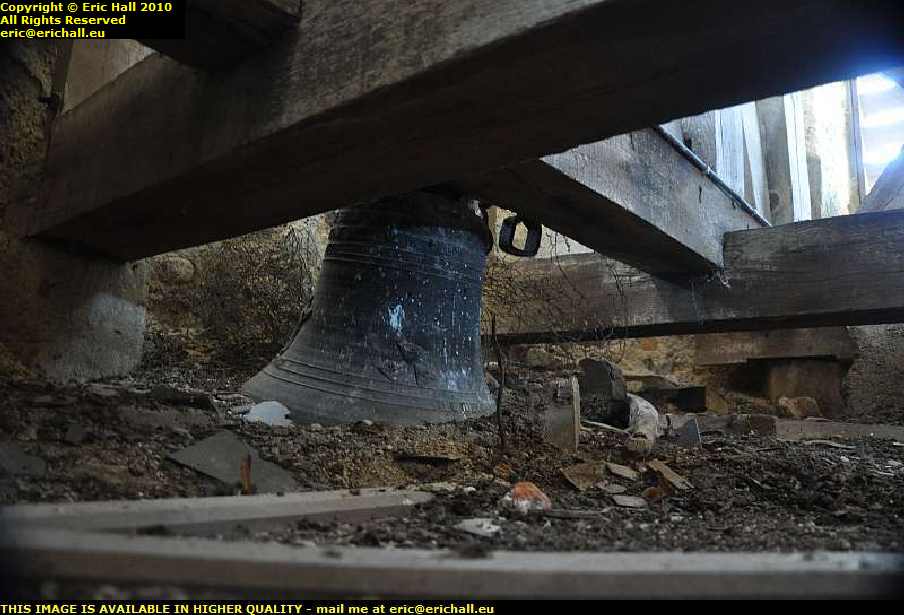
church bells st julien la geneste puy de dome franceThings weren’t any better up in the top of the tower either. I took the opportunity to shin up the rickety wooden ladder and force the trapdoor so that I could go into the bell housing. And I bet no-one had been up there for fifty years either.

There were three bells in the belfry and the original pulling gear was all there, although it looked as if it had been disconnected for a hundred years.

church bells st julien la geneste puy de dome franceAnd so we had one bell which was electrically connected to chime the hours and half-hours, although Terry did ask me how they managed in view of the frequent power cuts that they have around here.

The second, which was slightly smaller, was still hanging but disconnected and the third, the smallest of the trio, had been taken down and just flung in a corner where it sat.

Of course, just as I stuck my head into the bell housing, the clock chimed half-past three.
“I bet Marianne did that on purpose” said Terry.
“I don’t know why you are complaining” said Marianne. “You should be grateful that it wasn’t twelve o’clock”.

It’s nice to have friends.

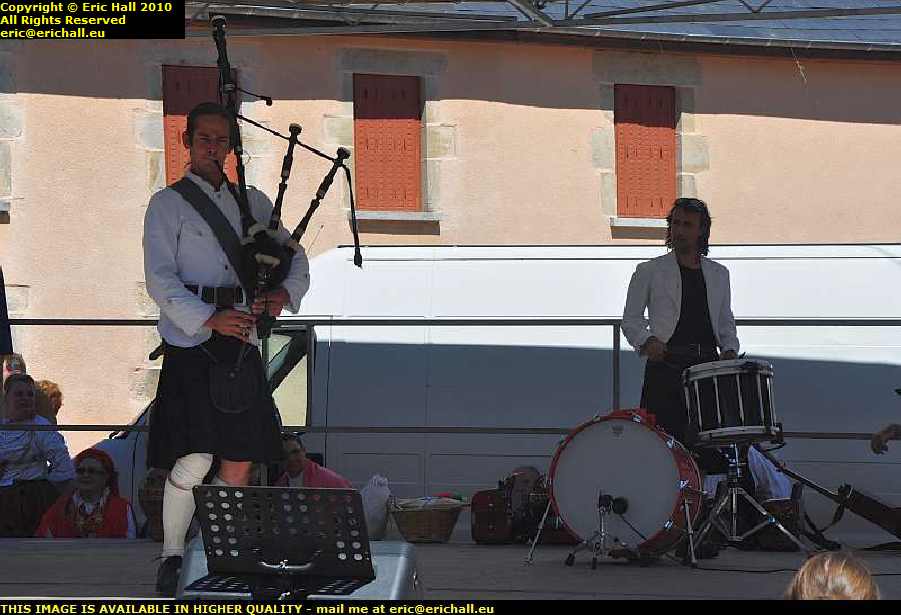
canadian piper bagpipes st julien la geneste puy de dome franceYou may remember that we were here a few years ago and were entertained by a guy from Canada who played the bagpipes and his friend who played the drums. They were back here again today, bringing their bagpipes and drums with them and they entertained the crowd for a short while.

Hardly a traditional French entertainment, you might think, but this is part of the beauty of living here. There are all kinds of people from all over the place living here and they have brought their cultures with them.

renault novaquatre st julien la geneste puy de dome franceThat wasn’t all of the excitement either. This car was parked up around the back of the church and so I went for a closer look, and it took me quite by surprise because it’s a comparatively rare car and I didn’t expect to see one here.

It’s a Renault Novaquatre, a model that was built for just a couple of years. Launched in the Autumn of 1937, it was never a popular car. Few were made and production ground to a halt in the summer of 1940 when the Renault factory was taken over by the Germans, and never restarted after the war.

Back home, I helped Lieneke with her gardening for a while and then Terry and Liz came round for the scaffolding. They invited me back for tea which was nice of them and as Liz had baked vegan ginger cake I gratefully accepted. I was even given a doggy bag!

But earlier in the day I’d been to the brocante at Le Quartier. I had had a good day there, spending a whole €10:50 on a map of the French railway system in 1962, a hold-down switch for my doorbell, a kind-of lance for weed control, a ladle for the composting toilet and – biggest prize of all – a heavy-duty electric paint sprayer. Jerome from Pionsat’s 3rd XI was there too and we had a good chat.

But I’m on the warpath again about these paintings.