Tag Archives: marconi

Wednesday 3rd November 2010 – AND NOW THAT MY MEMORY CARD READER SEEMS TO BE WORKING …

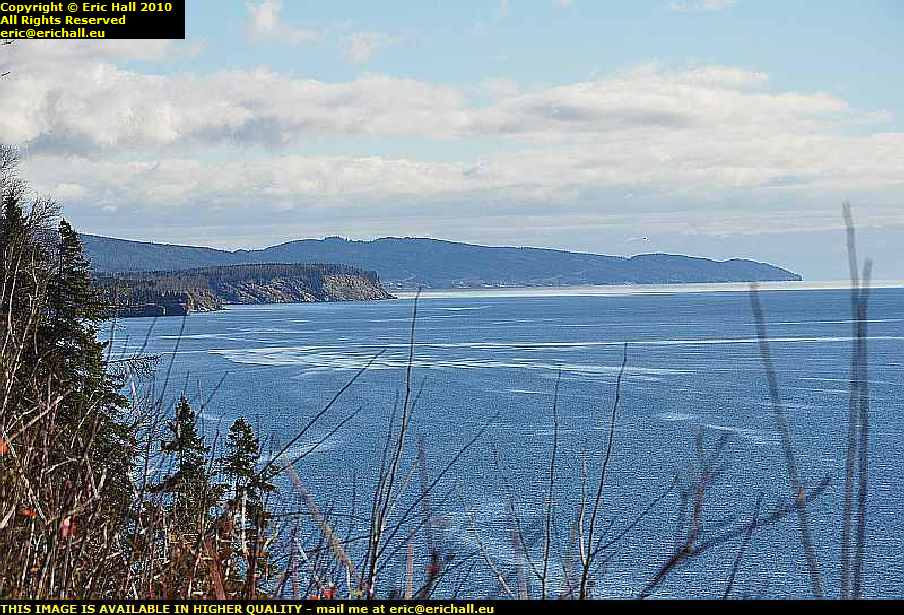
beautiful scenery gaspesie gaspe peninsula quebec canada… I can show you some more pictures of the Gaspe Peninsula to make you realise just how beautiful it is and how happy I would be to stay on here.

In fact I’m still here now despite my words of yesterday, for I missed the 17:00 ferry by a country mile. That was mostly because I had spent a nice hour or two wandering around the town of Gaspe to see what there was to see – of which there was plenty.
beautiful scenery gaspesie gaspe national park quebec canada
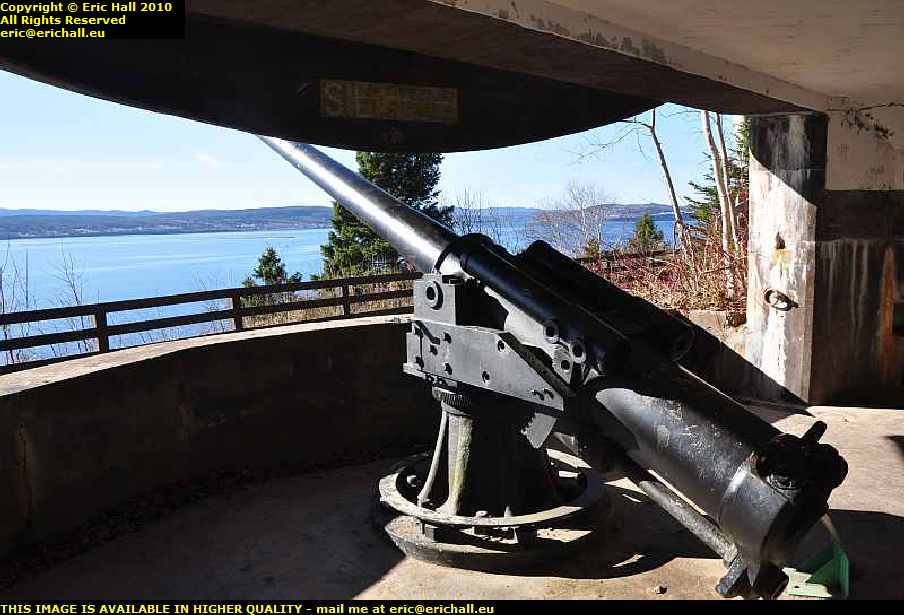
I then went off down to the headland for a nosy and I was still there at 13:00. One claim to fame of Gaspe Bay is that it was fortified as a base for the Royal Navy if the UK fell to the Germans in 1940 and not only is there a fort in the hills to protect the harbour, it also still has its guns.

And after a bit of a clamber and a hike across the cliffs I managed to track it down. And yes, its guns are still there as you can see.
beautiful scenery gaspe national park quebec canada
I couldn’t get down to the far end of the Point though. What with one thing and another (and once you get started you would be surprised just how many other things there are) I’d left it far too late to go there on foot. It’s not possible to go all the way down to the end.

But not to worry. There were still plenty of things to see in the area and I can always come back here again, can’t I?

Now followers of my outpourings will know that I wrote some stuff about the coffin ships – the sailing ships that took the Irish to the New World in the wake of the potato famine in the late 1840s.

I mentioned the cholera that they endured and there was also the starvation on board ship if supplies ran out, as well as countless other sufferings that the passengers had to endure.
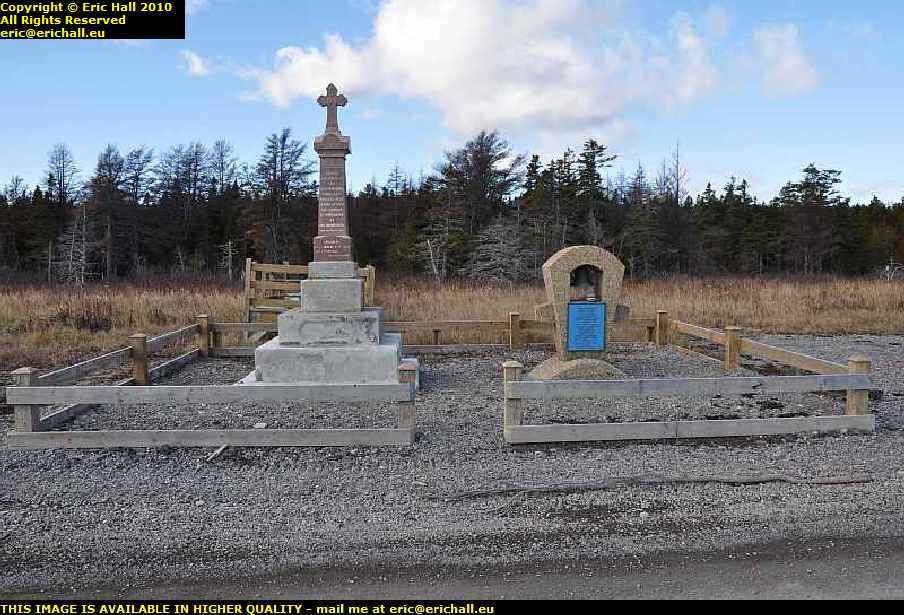
memorial April 28th 1847 ship Carrick's of Whitehaven cap des rosiers gaspe quebec canada
But one suffering that must always have been on their minds was the risk of shipwreck and I went to visit the site of the shipwreck of one such coffin ship – the Carrick’s of Whitehaven out of Sligo that ran aground just off Gaspe Point on 28th April 1847.

It’s pretty much largely forgotten now, being isolated in the middle of a huge new road system (such as would be huge out here) and the monument to the 187 immigrants lost and the communal grave of the 84 whose bodies were recovered is nevertheless pretty poignant.

There was a further update to this story at the beginning of June 2019.

There has always been an apocryphal story about a mass grave relating to victims of the disaster, and starting in 2011 following a severe storm, bones started to be washed ashore close to the memorial.

This was followed by the unearthing of several other sets of bones on the beach in 2016.

An analysis of the bones was published by Parks Canada, which suggests that the age of the bones together with the likely diet identified during a DNA analysis corresponds with that which one might expect to see in victims of the Carrick’s disaster.
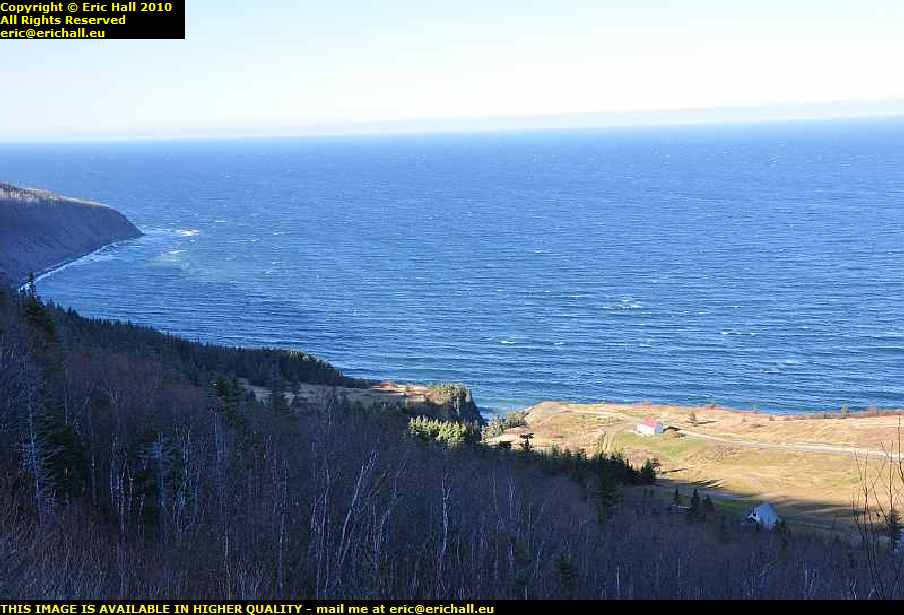
marconi radio station pointe a la renommee gaspe quebec canadaYou might remember me talking about Marconi and his bouncing of messages across the Atlantic. Of course once they reached land at Cape Race they would need to be bounced by shore stations and we saw one of those on the coast of Labrador.

The next one further down is on the north shore of the Gaspe Peninsula here at Pointe à la Renommée and after trekking about 6kms down a dirt track that would be a match for the bad ones of Labrador and then descending 150 metres to the shoreline I managed to find the remains of that as well.

motel le campagnard matane quebec canadaAnd so I’m still on the Gaspe – in a motel in Matane.

It’s Thursday tomorrow so there’s only one ferry and that’s at 08:00 so that’s a 06:00 alarm call. I won’t be up for long. And if I can’t get a place on that then I shall have to drive down the south bank of the St Lawrence and head for Quebec City that way.

I can’t afford the time to wait until Friday to get across.

Monday 18th October 2010 – "KEEP OUT! I AM WORKING CAPE RACE!"

marconi radio station cape race lighthouse newfoundland canadaIf ever 7 words changed the fate of so many people, it was “Keep Out, I am Working Cape Race”.

At the turn of the 20th Century Marconi perfected his radio  transmission system and it had the potential to overwhelm the cable line that had been laid across the Atlantic many years before.

Although he had managed to transmit directly across the Atlantic from shore to shore, it wasn’t as yet a practical proposition to do it consistently and so he set up a station at Cape Race – the nearest to Europe – and another one at Valentia in Ireland – the nearest to North America.

He then put his operators, whose wages his company paid for, on board ships, with the promise to the shipping lines that they would receive and transmit important navigation information between ships with the aim of making the oceans a safer place. And it is a fact that losses and deaths in the important shipping lanes declined significantly.

However, the sinking of the Titanic stunned the world and at the subsequent public enquiry Marconi gave his evidence that seemed to confirm the instructions that had been issued to his employees concerning the priority that “navigational” messages were to receive

But as the enquiry unfolded, it became clear that Marconi had been … errrr… economical with the truth. What was really happening was that Marconi was using the ships to bounce messages across the Atlantic by radio. And when the Titanic came into the range of the radio station at Cape Race the radio operator started to transmit a battery of Marconi’s commercial messages that lasted for three hours.

During this period, the Californian had become embedded in the ice and as the radio operator of the Californian knew that the Titanic was on the same track as his ship but an hour or so behind, he tried to send an urgent message to the Titanic to give it a warning.

It was then that the operator on the Titanic cut him off with his curt message, and the ice warning never made it to the Titanic‘s captain. The fate of the Titanic was thereby sealed.

At the subsequent public enquiry the Chairman asked the radio operator of the Californian “I’m sure you didn’t mean to listen but could you say what character of messages the Titanic was transmitting?”
The operator replied “I’m sure that these messages were of a private nature”.

trepassey bay newfoundland canadaNow this is Trepassey Bay, with the town of Trepassey in the background. Trepassey Bay is only an hour or so from Cape Race and the town played an important part in the history of aviation.

If you ask most Americans who was the first to fly the Atlantic they would reply “Charles Lindbergh”. But in fact much to their surprise and to the surprise of many others, at least 91 people (maybe 92 if a mysterious stowaway is included, and maybe even 94 if the mysterious fate of a pair of Portuguese aviators is ever unravelled. They disappeared on a flight across the South Atlantic and were never found, but a raft made from parts of their aircraft was discovered washed up on a remote part of the coast of Brazil) crossed the Atlantic before the Flying Fool.

Most British people would reply “Alcock and Brown” – but to the surprise of many people, that’s not correct either. What Alcock and Brown actually achieved was the TOP flight across the Atlantic.

There was an earlier trans-Atlantic flight by a US Navy Pilot by the name of Albert Read. However his flight was a little different. It was in a seaplane along a route marked by a line of US Navy ships, he made several stops on the way, had a break in the Azores before starting again for Lisbon, and the two other seaplanes that accompanied him failed to make the journey.

Nevertheless it is the first trans-Atlantic crossing no matter by what standards you measure his flight, and it has never ever received the credit that it deserves. And of course he set off from Trepassey Bay in Newfoundland.

commander read memorial plaque trepassey bay newfoundland canadaIf you hunt around the town you might, if you are lucky, eventually find a little plaque to commemorate Read’s efforts.

As for Amelia Earhart, the first woman to cross the Atlantic by air and who set off from here (and she did not pilot the aeroplane, no matter who insists that she did. In her memoirs she states that “Schultz did all the flying … I was just baggage, like a sack of potatoes”), and the Marquis of Pinedo, who was first to fly the Atlantic in both directions and who set off from here on the return trip, there’s nothing at all.

marconi radio station cape race lighthouse newfoundland canadaSo from Trepassey I went off to see Cape Race, seeing as I was here.

And I was lucky too. Although the place was closed up, someone had come by to collect the post and she allowed me to visit the museum. There are quite a few artefacts there from the time of the Titanic, and they were recovered on site.

When the Marconi station closed down, it was simply bulldozed into the earth with everything still inside. When the museum was proposed, the volunteers scavenged in the debris for the artefacts to exhibit.

seal bay bulls newfoundland canadaThis gentleman set the seal on my little trip, and gave me his seal of approval. Sitting there on his rock giving me a round of applause as I drove past him.

What with porcupines, moose and bear, and now seals coming along to mark my progezss, I’m having more than my fair share of wildlife. I’m disappointed that I haven’t seen Godzilla however.

merkur sierra xr4i tor cove bay bulls newfoundland canadaAnd despite what you might be thinking, this is NOT a Ford Sierra.

This is actually a Merkur Sierra – for the Sierra and the Scorpio were exported to North America under the Merkur trade name. The experiment didn’t last very long at all and you will be very lucky to be able to find one these days. I couldn’t believe my luck.

So now I’ve found a little Bed and Breakfast on the edge of St John’s, and I am immensely happy that I bought that cheap little GPS in Windsor a few weeks ago – it’s more-than paid for itself just with tracking down these obscure places.

Saturday 16th October 2010 – WE MADE IT TO L’ANSE AUX MEADOWS TODAY

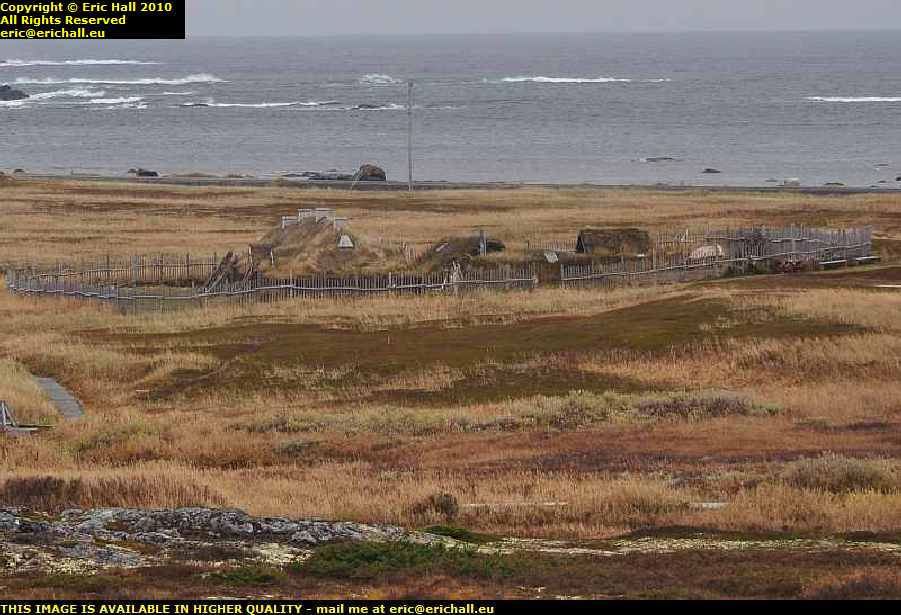
l'anse aux meadows viking settlement norse newfoundland canadaThe view is spectacular and you can understand why the Norse chose this particular site.

There are two crescent-moon shaped bays, both well-sheltered, next to each other surrounded by cliffs to the prevailing northern side, and a low bank behind to stop the easterly winds. The boats could be brought right up to the village when weather conditions were right but a sandbank has intervened these days.

l'anse aux meadows viking settlement norse newfoundland canadaUnfortunately, the place was all closed up and locked, but having driven all of this way to get here, I was not going to be thwarted.

A visitor centre with a low roof miles from anywhere where there isn’t anyone about is not going to be a barrier to anyone who is sufficiently determined, and 10 minutes later we were in the park.

ruins viking norse remains l'anse aux meadows newfoundland canadaIt’s a little confusing at first – they have built some replicas of the Viking buildings, but these are some way from the remains of the original Viking ruins.

The remains of the original buildings are surprisingly open. They are not fenced off at all to anyone so you can wander around them.

bog iron l'anse aux meadows viking settlement norse newfoundland canadaThere are all kinds of traces of bog iron too just floating on the surface of the bog. The Norse travellers would have found this very useful to repair their ships.

But after that I had to clear off smartish-like because the heavens opened and I was soaked to the skin just walking back to the car. And I don’t have long here and I have a lot to do.

You may not think it but Newfoundland is huge, much bigger than it looks on a map and I have to travel from here, at the extreme north-east, down to the Marconi station at the extreme south-west, and its over 1300 kms, would you believe.

deer lake motel newfoundland canadaAnd so in a kind of minimalist mode I’ve made it this evening to Deer Lake where I can pick up the Trans-Canada Highway eastward.

The motel isn’t as cheap (by a long way) as I’d been hoping, but around here there are not so many choices. There was a cheap bed-and-breakfast but no-one answered when I knocked on the door. It made me wish that I had bought a mobile phone as well as a Sat-Nav.

beautiful scenery north west newfoundland canadaThe drive along the Viking Trail down from l’Anse aux Meadows to here was almost 500 kms, you know and we went through some wonderful scenery, because Northern Newfoundland really is beautiful.

There are some really nice mountains and massifs and had the weather been better and had I had more time, I could have taken hundreds of photos along here but I was in a rush.

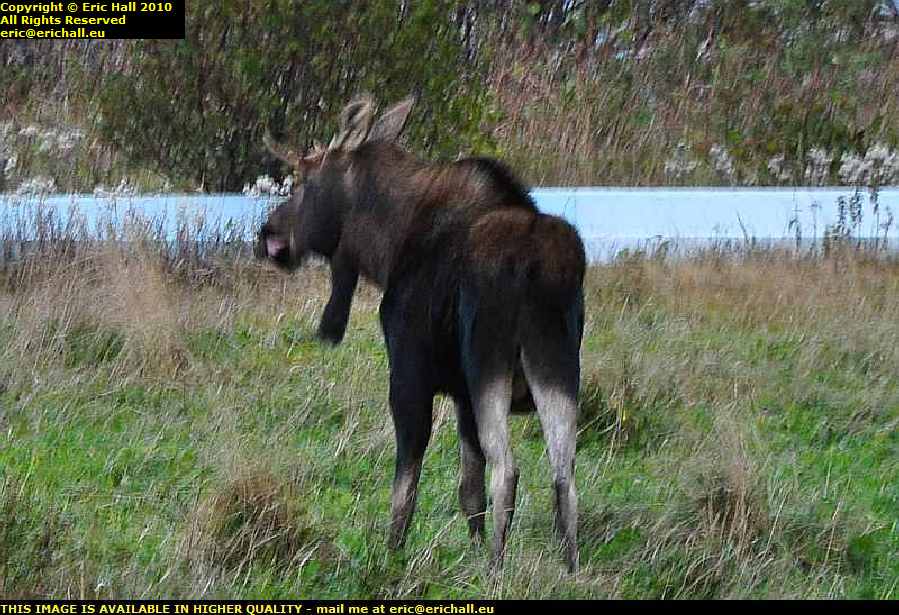
moose newfoundland canadaWe also saw some of Strawberry Moose‘s cousins. One was quite a good clear shot which came out blurred due to the darkness that was surrounding me.

As for the second – there were about 3 vehicles in a line – I was the middle one – and in the darkness and we were travelling at speed, suddenly the front car slammed on his brakes and screeched to a stop, and we saw four long legs in the headlight beam disappear into the forest. He had just had a close encounter with a moose. It was noticeable that for the remaining 30 kms to Deer Lake his speed dropped from over 100 kph down to about 70 kph.

Tomorrow I’m back on the highway and I want to do all of it to Saint Johns in one go. If I can find somewhere cheap to stay I’ll do 2 nights there, visit Cape Race and the Transatlantic Air Museum, and then head back to the south-western corner (Newfoundland is like a big triangle) to my ferry Thursday night.